Culture

Authenticity Needs No Translation
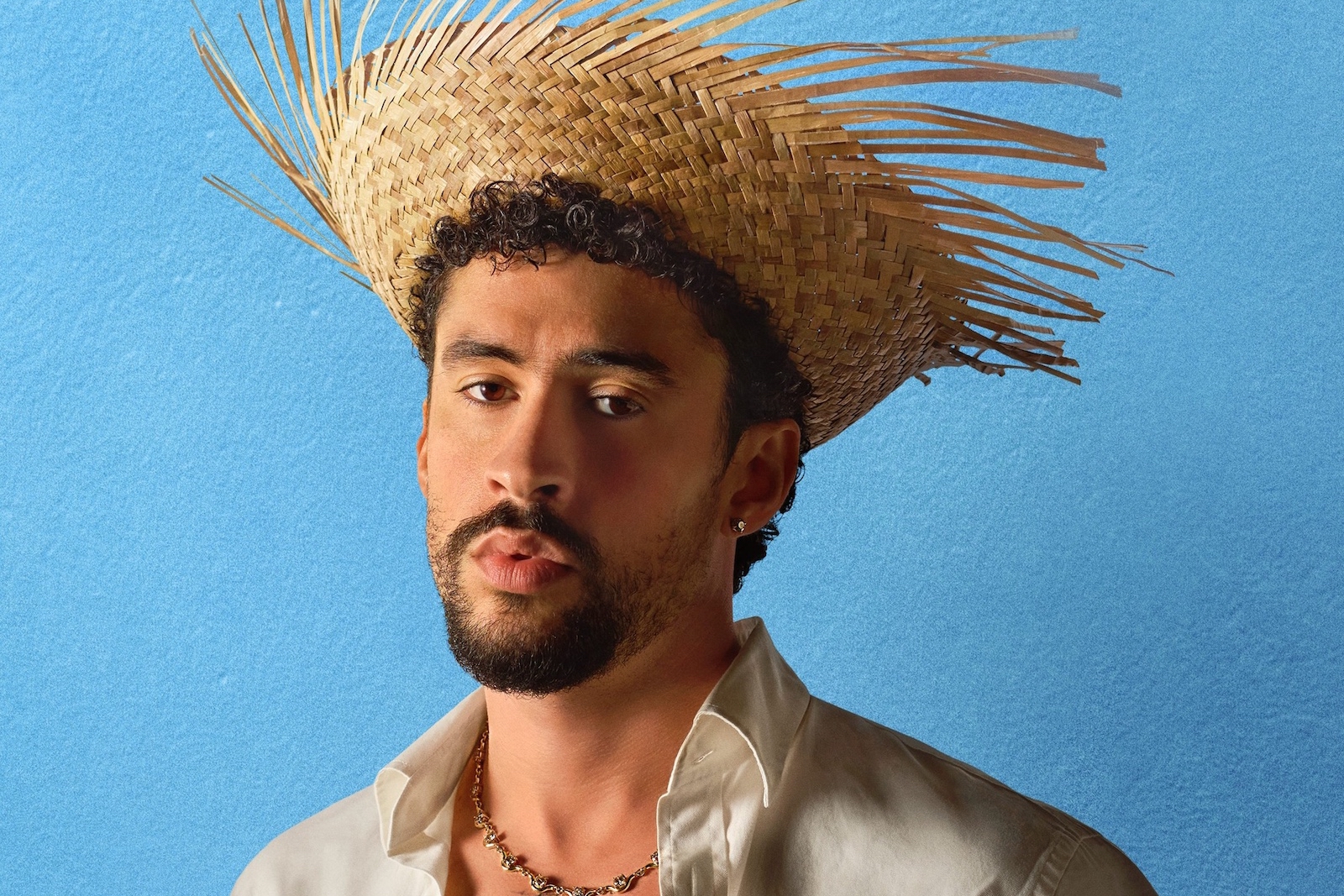
The story of Bad Bunny—born Benito Antonio Martínez Ocasio—is usually framed as a triumph of music. Look closer, though, and it reads more like a case study in belonging: how it is constructed, how it is denied, and how, on rare occasions, it is reclaimed on one’s own terms. Long before the Grammys and the Super Bowl, there was a grocery bagger in Puerto Rico who made a quiet but radical decision: he would not translate his inner life to make it palatable for anyone else.
In doing so, he revealed something both simple and difficult to live by: authenticity does not require translation. It requires a stage willing to receive it.
For years in Puerto Rico, the young artist lived far from global platforms and sold-out arenas. By day, he bagged groceries in a supermarket; by night, he returned home to record music in his bedroom. There was no studio, no team, no industry backing. He uploaded songs to the Internet without knowing whether anyone was listening, or whether anyone ever would.
For a long stretch, almost nothing happened. No viral spike, no contracts, no applause. Only repetition. Only belief. Only the quiet, unglamorous discipline of someone who sensed he had something worth saying, even if the world had not yet learned how to hear it.
The shift began, as these things often do now, online. In 2016, a producer came across one of his tracks. But that moment, while useful, was not decisive. The real turning point was not discovery—it was refusal.
For decades, the unwritten script for global success required a kind of self-erasure. To belong in broader markets, one softened the accent, diluted the heritage, and compressed identity into something more exportable. The pattern extended well beyond music. It showed up in boardrooms, in classrooms, in the social choreography of upward mobility.
Latin artists, in particular, were handed a familiar formula: cross over by crossing out parts of yourself. Sing in English. Smooth the edges. Reframe who you are. Many of the most successful artists followed that path—Ricky Martin, Shakira, Enrique Iglesias—not out of weakness, but because it worked. The rule was rarely spoken aloud, but it governed everything: to be global, you had to translate yourself.
Bad Bunny declined.
He did not translate his lyrics. He did not neutralize his Puerto Rican accent. He did not reshape himself into something more digestible. Instead, he doubled down—on Spanish, on collaboration within Latin music, on a cultural vocabulary that did not seek permission. And, crucially, he trusted a structural shift the industry had not fully reckoned with: the rise of the Internet as an equalizer.
Streaming platforms, especially Spotify, weakened the old gatekeeping system. Listeners no longer needed intermediaries to decide what mattered. They could choose directly—and what they chose, in growing numbers, was not translation but specificity. Spanish lyrics. Regional sounds. Identity intact.
Bad Bunny would go on to become the most-streamed artist in the world for four consecutive years. Yet the more consequential milestone came later. In 2026, his album Debí Tirar Más Fotos won Album of the Year at the Grammy Awards—the first predominantly Spanish-language album to do so. It was not merely a personal achievement; it was a recalibration of the industry’s definition of excellence.
When he stepped onto the stage of the Super Bowl, he brought more than a setlist. He brought context. Plastic chairs. Children asleep on laps. Elderly men playing dominoes. The texture of a neighborhood, transplanted intact onto one of the most-watched stages in the world. It was intimate, unvarnished, unmistakably Puerto Rican.
Viewers who did not speak Spanish still understood. Or, more precisely, they felt something before they could translate it. That is the force of authenticity. When translation is no longer the priority, permission becomes irrelevant.
This is why the story exceeds the man.
It gestures toward a broader pattern—one that plays out quietly in everyday life. The softened accent in a meeting. The edited biography in a professional setting. The instinct to make oneself smaller, clearer, less disruptive to existing norms.
These are not trivial adjustments; they are strategies of survival in environments that signal, subtly or not, that full presence is unwelcome.
How often does someone lower their voice to avoid being “too much”? How often is a personal history trimmed to fit a more acceptable narrative? How often does the pursuit of belonging demand a kind of self-editing that borders on disappearance?
The impulse is understandable. It emerges from a basic fear: that the unfiltered self will not be legible, let alone accepted. Sometimes it does not feel safe to be authentic. Sometimes the cost of misunderstanding seems too high. Sometimes belonging feels urgent enough to justify compromise.
And yet, the compromise rarely delivers what it promises.
Authenticity does not require translation—but the world often insists on it. It asks for quieting, for adaptation, for the removal of anything that might unsettle. It rewards conformity with access, even as it withholds something deeper: recognition.
The problem, then, may not be the individual at all. It may be the stage.
We often mistake proximity for belonging. We trade our peculiarities, our origins, our truths for a seat at the table, only to discover that the seat comes with conditions. Psychologists Roy Baumeister and Mark Leary describe belonging as a fundamental human need. But when that need is met through self-erasure, what we achieve is not belonging but performance.
Performance can secure access. It cannot create home.
Research from Cornell University defines belonging as a sense of security and support grounded in acceptance, inclusion, and identity. If a space demands that identity be muted in order to remain, it is not a space of belonging. It is a space of endurance.
True belonging does not reward silence. It emerges from presence—accent intact, history visible, identity unfiltered.
This is the lesson embedded in Bad Bunny’s trajectory, though it is easy to miss amid the spectacle. The shift from supermarket aisles to stadium lights is not just a story of talent or timing. It is a story about conditions—about what becomes possible when the stage expands to accommodate the truth, rather than requiring the truth to shrink.
The broader implication is less comfortable. The world does not change because people learn to fit in more efficiently. It changes when enough people refuse to.
That refusal is rarely dramatic. More often, it looks like consistency—the decision to trust one’s voice before it is validated. It looks like discernment—the ability to recognize when a given environment is too narrow for what one carries. And it looks like self-trust—the belief that origin is not a liability to be managed but an asset to be deployed.
Stop trying to become a more palatable version of yourself. Step onto whatever stage you can find—or build one—without translating the core of who you are. What follows may not be immediate recognition. It may not be easy. But when authenticity is finally met, it does something translation never could: it creates resonance.
And resonance, unlike approval, has a way of finding its own audience.