
Christian Nationalism and the Crisis in the U.S. Military
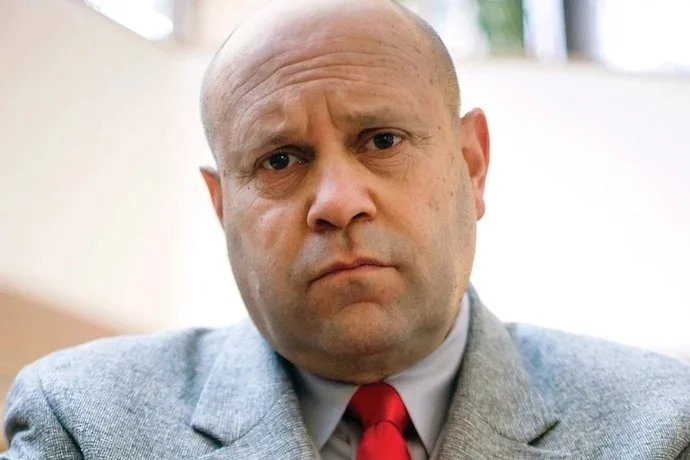
Michael Weinstein has spent more than two decades in a fight he believes is existential—not merely for the U.S. military, but for American democracy itself. A 1977 honors graduate of the U.S. Air Force Academy and a former Air Force judge advocate, Weinstein later served in legal posts within the Reagan White House, including during the Iran–Contra investigation. In 2005, he founded the Military Religious Freedom Foundation (MRFF) after concluding that religious coercion—particularly forms of militant Christian nationalism—had taken root inside the armed forces.
Since then, MRFF has represented more than 100,000 service members and veterans of every major faith. Although the overwhelming majority of its clients identify as Christian, many seek the foundation’s help because they feel marginalized for not conforming to a particular ideological or theological mold. Under Weinstein’s leadership, MRFF has challenged what it sees as institutional favoritism toward Christian nationalist currents within the U.S. military and federal government—pressures that, in a strictly hierarchical system governed by the Uniform Code of Military Justice, can carry consequences far beyond social discomfort.
In this conversation, Weinstein discusses an escalation in threats against him and his staff—including an online message offering money for his assassination—alongside what he views as a broader surge in white Christian nationalism within the U.S. military. He reflects on the movement’s cultural accelerants, from film to political rhetoric, and argues that internal ideological fracture weakens military cohesion and emboldens foreign adversaries. For Weinstein, the stakes are not partisan. They are constitutional.
Scott Douglas Jacobsen: Let’s begin with a recent development. You received an online message that invoked some of the most violent and racially charged language in American history and included an explicit solicitation of violence against you and your staff. Although it has not yet been reported in the press, it is documented and publicly accessible. What did this message reveal to you about the current threat environment—and how does it differ from the hostility you have faced in the past?
Mikey Weinstein: A comment was posted on our website eight nights ago, last Saturday. We did not detect it immediately. We noticed it on Sunday evening due to IT issues. Generally, we receive between a dozen and eighteen grotesque, highly antisemitic threats each day, many by phone. This one stood out even by our standards. It used horrific language and included a solicitation offering $20,000 for my assassination and $5,000 for each staff member.
We immediately contacted law enforcement and the district attorney. We have a close working relationship with law enforcement in New Mexico. Our home has extensive security, including infrared cameras and defensive measures such as non-lethal and lethal measures, and elite, attack-trained working German Shepherds. We maintain a strong defensive network.
Even so, receiving something like this is deeply disturbing. It is intended to terrorize. It is clearly a felony. It was routed through an anonymity infrastructure associated with the Tor network, making it extremely unlikely to identify the sender. That is the cost of fighting MAGA. We are accustomed to threats, but this one was off the scale.
Church groups have publicly prayed for women in my family to develop fast-moving, metastasizing, inoperable breast cancer. Others have prayed for me to develop rectal cancer. Our windows have been shot out twice. Animals have been beheaded and left at our home. Swastikas and crucifixes have been painted on the house. Beer bottles and feces have been thrown at the property. About a year ago, feces were smeared across our mailbox.
Some of this reaches the news. Much of it does not. This is the price of standing up. That is why we provide military clients and veterans with anonymity, action, results, and protection—especially anonymity.
February 4, 2004, marked our entry into this fight with the release of The Passion of the Christ. We refer to it as the “Jesus Chainsaw Massacre.” The film was pushed through the cadet and officer chain of command at my alma mater, where three of my children were enrolled at the time.
This pattern continues from film to film—from The Passion of the Christ to Melania, the recent documentary. Days ago, military personnel from eight installations, both overseas and within the continental United States, reported being pressured to attend screenings to “support the country.” Our role is to chronicle, expose, intervene, and confront.
Service members do not typically contact the ACLU, Americans United, or the Southern Poverty Law Center, although we work closely with all of them. We focus with precision on white Christian nationalism, where nuclear weapons and drones are controlled. You are currently in a war zone, so you understand this reality.
About a year ago, my son spent a month in Ukraine driving vehicles from Poland into Ukraine for the Ukrainian military.
Why do movies matter? Because when people sit in a dark theatre or stream content at home, attitudes change. Consider Leni Riefenstahl, the Third Reich’s most effective propaganda filmmaker. She was technically brilliant, and her work reshaped public psychology.
From this perspective, we are at war. You are in a physical war zone. We are in a domestic war against Christian nationalism—the jet fuel of MAGA. We saw this trajectory in the early 2000s and take no pleasure in being correct. It is now everywhere.
When Christian nationalism appears in elementary schools, high schools, and universities—such as the British Columbia analogue to Liberty University you mentioned—the same pattern is replicated across institutions: Liberty, Regis, and many others.
Among sanitation workers, police, firefighters, and legislators, the problem is severe. In the military, it is off the scale. A subordinate cannot simply say, “No, sir,” or “No, ma’am,” and refuse to attend a mandated activity. In the U.S. military, failure to obey a lawful order—such as reporting to a required appointment—can result in criminal punishment under the Uniform Code of Military Justice.
Sexual relations outside of marriage are not automatically a felony in the civilian sense, but adultery can be prosecuted under the UCMJ when it undermines good order, discipline, or unit cohesion. I know this firsthand. I spent seven years as an Air Force judge advocate and handled those cases. The Supreme Court has made clear that the compelling governmental interest of the U.S. military is to maximize effectiveness and lethality in defending the nation’s constitutional rights. You are a journalist. I am a civil rights activist. In the military, many First Amendment rights are lawfully restricted.
The military maximizes effectiveness through good order, morale, discipline, cohesion, health and safety, and mission accomplishment. Conduct that damages those factors can be criminally sanctioned. In civilian life, adultery may be irrelevant. In the military, it can violate the Uniform Code of Military Justice.
Christian nationalism has a stranglehold across this country. You see it in Minneapolis and elsewhere, but what is harder to process is what is happening now, including within the military. Some people are waking up and asking friends and family for absolution for having been drawn into MAGA. They now recognize that they were wrong and want to move on. The question is whether absolution should be granted. I do not offer it. I have no forgiveness to give to those who enabled this.
I look at the calendar. It is Sunday evening in Ukraine, February 8, 2026, and late Sunday morning in Albuquerque, New Mexico. It feels like 1933 Germany. That is the historical parallel that weighs on me.
We are dealing with sailors, soldiers, Marines, airmen, and members of the Space Force, who are called Guardians. The Space Force remains part of the Department of the Air Force. This also includes the Coast Guard, which operates under the Department of Homeland Security in peacetime, and the U.S. Maritime Service, including the Merchant Marine Academy, which falls under the Department of Transportation. These institutional distinctions matter.
Anyone actively serving Trump in an obsequious, uncritical way is supporting a Christian nationalist agenda. That includes political figures such as J.D. Vance and others aligned with that movement. The divide in this country is no longer just a chasm; there are visible warning signs. History shows that such signs precede civil conflict.
My concern is that if Democrats regain the House of Representatives and possibly the Senate, Trump could again be impeached. If convicted, the question is whether he would leave peacefully. That refusal could act as a catalyst for widespread unrest in early 2027.
This is not about politics in the ordinary sense. People talk about losing friends or family members over politics. This is not politics. This is morality. Anyone who insists otherwise is fundamentally mistaken.
We are well beyond that point. Within the U.S. military, the danger is not limited to isolated acts of violence. It includes threats to invoke the Insurrection Act and deploy military forces domestically, potentially in support of agencies such as ICE or Customs and Border Protection. That prospect is deeply alarming.
This is where we are now. We serve more than 100,000 clients, with hundreds more reaching out every month. We do what we can to protect them. That is why we are doing this interview. We document patterns, preserve evidence, and prepare for accountability. We may have crossed too many Rubicons to return to normalcy, but if accountability comes, it will be ethical, legal, and moral.
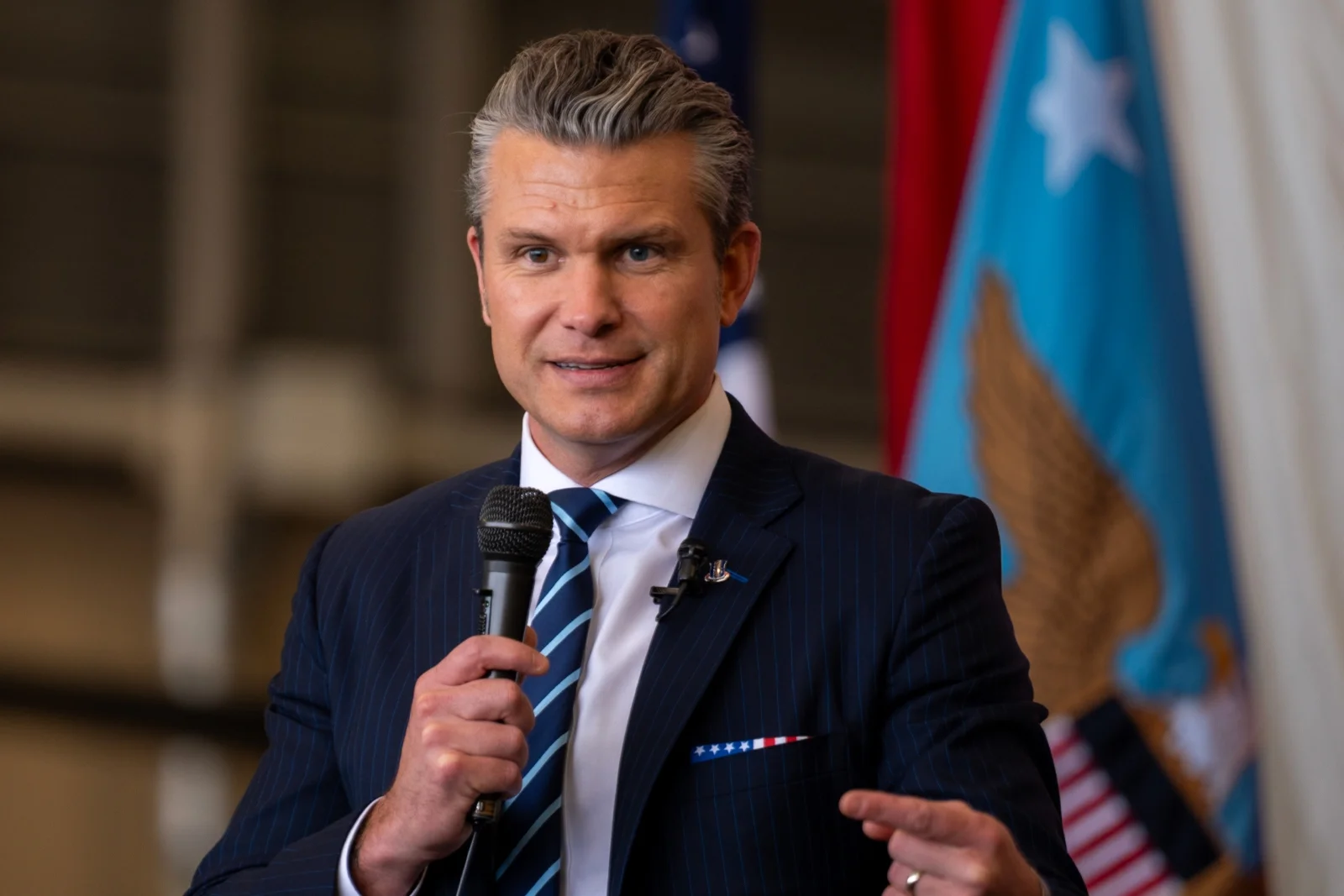
Right now, we are careening toward the abyss of Christian nationalism. Figures such as Pete Hegseth exemplify this trend. I have publicly criticized him as embodying a militant, misogynistic vision of what he frames as “warrior Jesus.” I want to be clear that these are my views. About 95 percent of our clients—well over 100,000—are Christians, yet many are being oppressed for not being considered “Christian enough.”
We also represent, by our estimates, about 18 percent of Muslims serving in the U.S. military. We have represented members of every major religious and nonreligious tradition: Muslims, Jews, Christians, atheists, agnostics, secularists, and humanists. To our knowledge, the only group we have not represented is a Scientologist. We are still waiting for Tom Cruise to call, although he is not, in fact, a Navy pilot.
Jacobsen: A brief follow-up. You’ve often traced the origins of your activism to the fallout surrounding The Passion of the Christ. With Mel Gibson now developing a sequel, what concerns—if any—does that raise for you based on what you witnessed two decades ago?
Weinstein: Yes. Mel Gibson has publicly discussed plans for a sequel, commonly referred to as The Resurrection of Christ. Based on experience, I expect to see the same dynamics we witnessed at the Air Force Academy following the release of The Passion of the Christ in 2004. The film was released on February 4, 2004, and in its aftermath, we observed pressure within military command structures to encourage attendance.
I expect similar patterns now, including military leadership using its authority to pressure, or “voluntell,” subordinates to attend screenings. I would also expect coordinated efforts to shape public perception, including audience-driven ratings activity on sites such as Rotten Tomatoes. These dynamics function as propaganda. This is precisely what ignited our involvement more than two decades ago.
We are now in our twenty-third year. It took nearly two years after those initial incidents for us to establish the foundation, which was formally launched in December 2005. We understand what this means historically and institutionally. In my view, a sequel would act as another accelerant for Christian nationalism.
I would not be surprised if senior figures attempted to normalize attendance while maintaining plausible deniability. We have already seen Pentagon officials deny issuing formal orders while simultaneously praising the film itself. This pattern—denial paired with endorsement—is familiar. It resembles political strategies where responsibility is deflected to unnamed aides while the message is still amplified.
Jacobsen: Viewed from the perspective of foreign adversaries, how does internal ideological turmoil within the U.S. military alter the strategic balance? In what ways might this kind of fragmentation serve the interests of rival states or non-state actors?
Weinstein: If you look at this from the perspective of an adversary, division is an invitation. There is a quote I often use: you cannot wish for a strong character and an easy life, because the price of one is the other. When a military force is internally divided—ideologically, religiously, or culturally—it weakens cohesion.
You are Canadian. In recent years, you have seen threats and rhetoric about forcibly absorbing territories—Greenland, for example—and even repeated statements about making Canada a “51st state.” We have also seen reports of quiet political conversations in places like Alberta about secession. All of this signals instability.
History shows that strong fighting forces have often been diverse but unified. The Roman army was composed of people from conquered territories, yet it functioned as a cohesive whole. Alexander the Great’s army was similarly diverse and effective. The British Army and Navy operated similarly during the height of the empire, incorporating people of diverse ethnicities, cultures, religions, and nonreligious traditions.
What emboldens enemies is not diversity. It is fragmentation. When adversaries see internal division, they do not hesitate. They exploit it.
Diversity is what makes us strong. What figures like Pete Hegseth argue for—explicitly or implicitly—is a vision in which the ideal American, and especially the ideal service member, is a straight, white, Christian male, preferably blond-haired and blue-eyed. History has seen that model before. It should sound familiar.
If you are sitting in Iran, Russia, North Korea, or within extremist organizations such as ISIS, al-Qaeda, Boko Haram, or similar groups, watching your primary adversary tear itself apart is cause for celebration. Internal division generates a strategic advantage for enemies.
We are in contact with individuals currently going through basic training in the Army, Navy, Air Force, and Marine Corps. What they describe is fear and uncertainty—particularly about how to distinguish between lawful and unlawful orders.
Service members ask themselves questions such as: if I were ordered to do something fundamentally immoral or illegal, how would I know? American history provides cautionary examples: Kent State, where National Guard troops shot students, and the My Lai massacre during the Vietnam War.
I am a graduate of the Air Force Academy, and my family includes three generations of graduates of the military academy. Even with four years of training, there is relatively little sustained education on evaluating the legality of orders. Under the Uniform Code of Military Justice, orders are presumed lawful. However, the responsibility ultimately falls on the individual service member to refuse an unlawful order. Following an illegal order can itself result in criminal liability.
As a result, there is fear, confusion, and moral distress within today’s U.S. military. The tightening grip of Christian nationalism is driving this environment. It does not require universal participation to succeed.
Historically, authoritarian movements have relied on committed minorities. Hitler did not require majority support at the outset of the Nazi movement. Stalin’s inner circle was similarly small relative to the population. In the U.S. military, structural hierarchy magnifies minority influence. When someone graduates from ROTC, Officer Training School, or a service academy and is commissioned as an ensign or second lieutenant, that individual immediately outranks the vast majority of service members. Even the most junior officer outranks the most senior enlisted personnel as a matter of law.
That structural reality means ideological capture at the officer level has a disproportionate impact. This dynamic emboldens not only nation-state adversaries but also terrorist organizations that observe fragmentation and moral paralysis within U.S. forces.
This is why this work is not a nine-to-five job. I routinely work fifteen-hour days, from early morning until late at night, including weekends and holidays. It is a war. Passive disengagement is no longer an option. People cannot simply wait and hope things resolve themselves.
This is not only about what future generations may ask—what did you do when this was happening? It is about whether life, democracy, and this long-running democratic experiment are worth defending. After nearly 250 years, sitting on the couch and pretending none of this matters is a choice with consequences.
Jacobsen: Beyond state adversaries and organized extremist groups, there’s the more diffuse threat of lone actors radicalized online. How does this broader ideological ecosystem shape individuals who may never formally affiliate with a movement, yet internalize its grievances and act independently in its name?
Weinstein: We already see organized extremist groups such as the Three Percenters and the Proud Boys functioning as part of this ecosystem. Beyond that, the more dangerous threat is lone actors radicalized online. I was a psychology major at the Air Force Academy, but I do not pretend to understand why individuals choose violence fully. What I do understand is that ideological ecosystems normalize grievance, dehumanization, and violence.
The email threat we received is an example of that radicalization. Whether or not an individual formally affiliates with a group is irrelevant. The danger lies in the ideology itself and in how it legitimizes violence in the minds of isolated individuals.
Whoever sent that message clearly believed they were protected by anonymity. The language suggested bravado—“you cannot catch me because I used Tor”—and a belief that anonymity infrastructure would shield them. That confidence appeared to embolden the threat itself: offering $20,000 to kill me and $5,000 for each staff member.
We have more than 1,200 people working with us. Like most civil rights organizations, including the ACLU, the majority are volunteers. We maintain representatives on most military installations, both domestically and overseas, including on nuclear submarines and aircraft carriers. That scope matters when evaluating the seriousness of the threat environment.
Whoever sent that message likely believed they were acting with the approval or blessing of Trump-era rhetoric. I receive enormous volumes of hate mail—emails that begin with slurs, phone calls, and other harassment. For some of these individuals, this behaviour is framed as righteous or sanctioned.
There is no consistent truthfulness in Trump’s public conduct. In my view, he lies habitually, and many of those around him repeat those falsehoods. We have seen demonstrably false claims circulated about individuals such as Renee Good and Alex Prady, and those lies have had real-world consequences. I struggle to understand what it takes for some people to recognize that this behaviour is wrong.
I also struggle to understand how, when Trump began running in 2015, people could not see what he was. That failure to recognize character is part of why something troubling has happened socially. When people meet now—in restaurants, libraries, or public spaces—there is an almost immediate sorting. Within seconds, people try to determine which side of the divide the other person is on.
It has become binary. You are either MAGA or not MAGA. You either resist or you collaborate. If you do neither, you are effectively collaborating. History shows similar dynamics. This was true in Germany in 1933, under Pol Pot, and during the Inquisition. That is where we are now, but with nuclear weapons and constant sabre-rattling against allies such as NATO, Canada, and Britain.
We even hear rhetoric about annexation or secession—talk about Canada as a “51st state,” or encouragement of separatist ideas elsewhere. At the same time, we do have a governing document in this country: the U.S. Constitution. That framework still matters.
When the discussion turns to Israel and Palestine, nuance is often treated as antisemitism by MAGA-aligned voices. Any acknowledgment of Palestinians as human beings is framed as hostility toward Jews. Yet the antisemitism I encounter daily is explicit and direct. I am Jewish. I am not particularly religious, but that does not matter. My surname alone is enough.
I am a lawyer. If my last name were something else and I were an auto mechanic, I am confident we would not experience even a fraction of the hatred and threats we face.
Jacobsen: Thank you very much for the opportunity and your time, Mikey.