
Christopher Atwood on Empathy, War, and Telling Ukraine’s Story
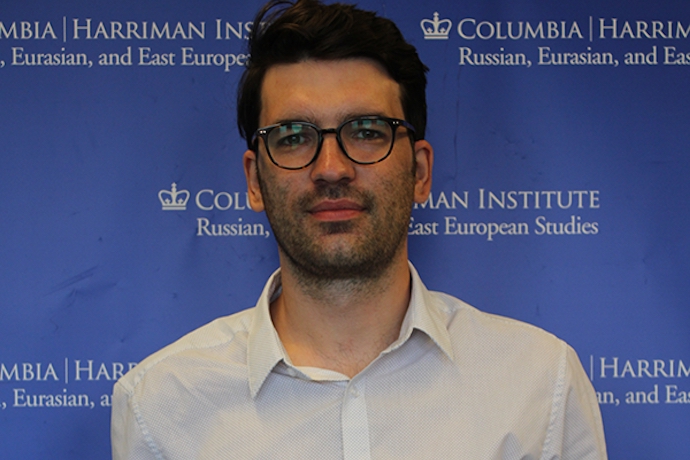
Christopher Atwood is editor-in-chief of Ukraïner in English and leads Ukraïner International’s efforts to bring Ukraine’s wartime stories to global audiences. An American media professional with experience in journalism, politics, advocacy, communications, and genocide research, he focuses on making Ukraine emotionally accessible to readers without reducing its experiences to abstraction or spectacle. His work emphasizes empathy, cultural context, decolonization, and ethical interviewing as tools for communicating the human consequences of war.
In this interview with Scott Douglas Jacobsen, Atwood explains how empathy can help audiences comprehend a war whose scale often overwhelms the imagination. Drawing on the destruction of Kyiv’s Lukianivska neighborhood, the historical memory of Guernica, and his experience conducting interviews, he argues that meaningful communication begins with reciprocal recognition: Ukraine’s suffering is more likely to be understood when Ukrainians and their advocates also engage sincerely with the histories and traumas of others.
 Scott Douglas Jacobsen: Why is empathy such an important tool for communicating the realities of war?
Christopher Atwood: The way I look at it is that everyone implicitly understands that war is bad. One of the issues we have with people understanding Ukraine is that people cannot comprehend war.
I can speak from my own experience. The main subway station that was destroyed is Lukianivska. There is a market next to it, and the market was completely obliterated. The next subway station is Dorogozhychi, and those subway stations are named after the neighborhoods they are in. I have lived in the Lukianivska-Dorogozhychi area since 2018. I was in New York from 2021 to 2025, completing my master’s degree, followed by advocacy and political work. But I visited Ukraine every year during that period, usually for about a month or two, and I always stayed in this neighborhood.
I have been connected to this neighborhood since at least 2012 or 2013. I have had friends here, and I have always visited it whenever I have been in Ukraine. It just so happened that this was a neighborhood I was drawn to.
As someone who has worked on genocide, atrocity crimes, the destruction of culture, and the realities of this war, I still could not wrap my head around what it would feel like to have something that formed the daily background of my life completely destroyed. I could never have imagined the emotion that would provoke.
Believe me, I tried. I am an empathetic person. I tried very hard to understand what people were going through. But it is something you cannot explain. You can only feel it.
In an odd sense, as awful as it is, I am glad I had this experience in this place because it has given me a more profound understanding of what many other people are going through and what they feel when something so close to them is destroyed in this war. Of course, I am not Ukrainian, so that layer can never be added to my emotions, but what I experienced was still similar.
The point I am making is that, as much as we may try, it is impossible to fully understand and contextualize how terrible war is. You hear phrases like “war is hell on earth,” and we all agree with them. We understand them. We feel profound pain and sadness when we think about the suffering caused by war, especially a war of aggression and destruction on the scale Russia is carrying out in Ukraine.
But we can never fully understand it. It becomes a very abstract concept. You become overwhelmed with emotion when you look at the images, and then you shut yourself away from it.
What anyone doing Ukraine-related work can do is make space to empathize with other situations. When I talk about making it easier for others to empathize with us, the only way that becomes possible is if we begin by empathizing with them.
I am in a privileged position where I have the capacity to do this because, again, I am not Ukrainian. Our team comes from around the country, and some people have more emotional capacity to engage with certain topics than others. I would never expect any individual Ukrainian to proactively try to empathize with every situation.
For example, I am constantly trying to understand other people’s historical and cultural contexts. This year, we made two videos, one in Spanish and one in English, about the Nazi bombing of the Spanish town of Guernica. The person running our social media content is originally from Spain. We were talking, and he told me that the anniversary is commemorated every year and remains very important to Spanish people.
I thought it would be appropriate to point out that this methodology, this military strategy of completely obliterating everything in front of you, was used by the Nazis. That is why Guernica remains such a profound national trauma in Spain.
We made a video commemorating the anniversary of that atrocity and drew a parallel to what is happening in Ukraine. European politicians often say that we can never allow something like this to happen again. The president of Germany went there in 2025 and said exactly that. It is a very interesting thing to say when you consider what Russia did to Mariupol, what it has done in Kherson, and what it has done in many places that effectively no longer exist as cities.
From a Spanish perspective, seeing a Ukrainian publication recognize and empathize with that historical experience, something that shaped your understanding of the world, makes it easier to accept that perhaps you should care about Ukraine through this same frame.
Maybe showing someone a picture of the destroyed market near my apartment is not enough to sway them. But contextualizing it through the idea that they have experienced something similar and saying, “I understand your pain,” is very powerful. I now feel that I can personally understand their pain in a way I could not before.
That is a very powerful tool, as long as it is sincere. As long as we do the work and genuinely listen to people, it can be extraordinarily effective. If it becomes cynical or is used simply to manipulate people into supporting your cause, they tend to see through it very quickly. That is how I would describe the interplay between empathy and the war itself.
Jacobsen: How can an interview transcend conventional journalism and become a genuine human connection?
Atwood: I think it comes down to the same principle: not losing sight of the fact that you are both human. Whether you are a journalist or anyone else, understanding the humanity of the people you interact with, and actively seeking it out, matters.
Even when someone is perhaps less than savory, it is important to understand who they are, what drives them to do the things they do, and what emotions or reasoning lie behind their actions. Even if that reasoning is illogical, nonsensical, or hateful, trying to understand it and put yourself in that person’s shoes is part of what human connection is built upon.
Human connection is ultimately built on sharing emotions and experiences and letting someone know that you understand what they are going through. It is not just saying, “I feel you. That really sucks,” although that is a good start. It is also being able to say, “I have had something similar happen to me.” That can help people feel that something deeper connects you because you have undergone a comparable experience.
Of course, you cannot do that journalistically if it means surrendering your integrity or abandoning the attempt to be as unbiased as possible. We cannot be entirely unbiased, but we can strive to be as impartial as possible when reporting on a situation.
That is what makes an interview a connection: remembering that we are human and that our interlocutors are human. They are not merely subjects. The best journalists I have met, by which I mean those who produce the strongest work, are the ones who sincerely care about the humanity of the people with whom they interact.
Even with sources they never cite, they can build relationships while maintaining professional distance and upholding their ethics.
Jacobsen: Thank you very much for your time, Christopher.