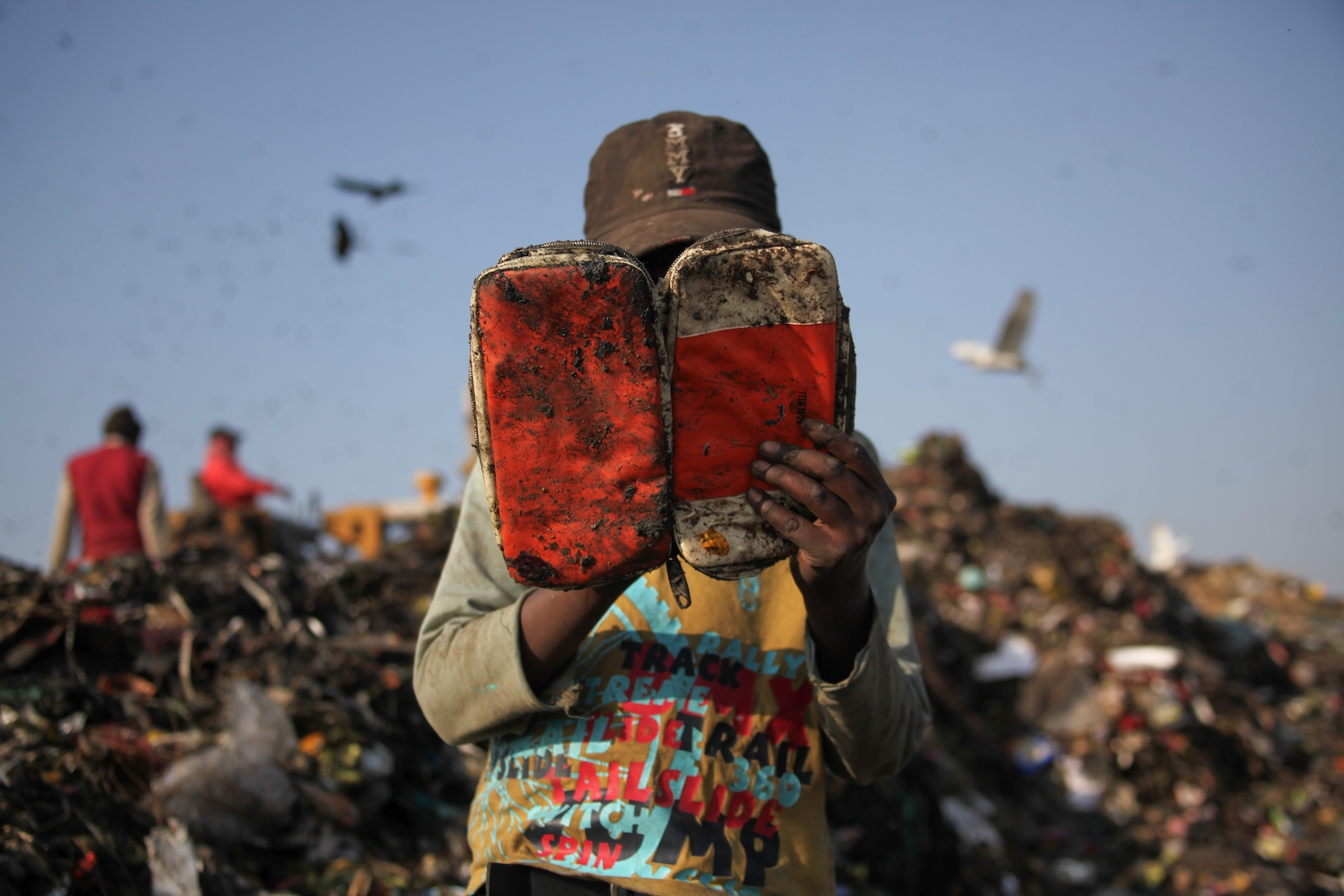

Morocco Has Cut Child Labour. The Hardest Part Comes Next
Morocco has made striking progress in reducing child labour over the past several years. Yet behind that improvement lies a stubborn reality: tens of thousands of children are still working, overwhelmingly in rural communities where poverty, limited educational opportunities, and economic insecurity continue to place young people at risk.
The country has strengthened its legal protections and brought much of its labour framework into line with international standards. But the persistence of child labour illustrates the limits of legislation when families remain economically vulnerable and children find themselves pulled out of classrooms and into the workforce.
According to Morocco’s High Commission for Planning (HCP), nearly 101,000 children between the ages of 7 and 17 were engaged in economic activity in 2024, representing 1.3% of the country’s children in that age group. The figure marks substantial progress: the number of working children has fallen by 59.1% since 2017 and by 8.2% since 2023.
The improvement, however, has been anything but evenly distributed.
Child labour remains overwhelmingly concentrated in rural Morocco. Approximately 78,000 working children lived in rural areas in 2024, compared with around 23,000 in cities. Some 2.5% of rural children were economically active, five times the 0.5% recorded in urban areas.
The statistics also reveal who is most vulnerable. Around 89% of working children were between the ages of 15 and 17, while 84.6% were boys. Perhaps most troubling is the relationship between work and education: 87.7% of working children had already left school, while just 10.7% continued to attend classes.
Laws Have Changed. Reality Has Been Slower.
Morocco’s legal framework sets 15 as the general minimum age for employment. For hazardous work, the minimum age rises to 18, reflecting international labour standards intended to protect minors from occupations that threaten their health, safety, or moral development.
Morocco has ratified both of the International Labour Organization’s principal conventions governing child labour: the Minimum Age Convention, 1973 (No. 138), and the Worst Forms of Child Labour Convention, 1999 (No. 182). Morocco ratified Convention No. 138 in 2000, establishing 15 as the minimum employment age, and Convention No. 182 the following year.
These protections reflect an important distinction that can sometimes disappear in discussions of child labour: not all work performed by someone under 18 automatically constitutes child labour. International standards distinguish between legitimate forms of youth employment and work that is exploitative, dangerous, or undertaken by children who are too young to be legally employed.
Children below the minimum working age cannot legally enter ordinary employment, while anyone under 18 must be shielded from hazardous work and other prohibited forms of exploitation.
On paper, then, Morocco has constructed a relatively robust system of protection. The more difficult question is what happens when those protections collide with economic necessity.
Rural Morocco Remains the Epicenter
The geographic disparity is difficult to ignore. Children in rural areas are significantly more likely to work than their urban counterparts, reflecting broader inequalities in income, schooling, infrastructure, and employment opportunities.
Agriculture plays an especially important role. According to HCP data, 70.3% of working children in rural Morocco were employed in agriculture, forestry, or fishing in 2024.
For economically vulnerable households, a child’s labour can become less a matter of choice than part of a broader strategy for survival. Where adult employment is scarce, household incomes are unstable, and schools are difficult to reach or remain financially burdensome, children can become part of the family economy.
The costs can extend far beyond the immediate work itself. Employment can interrupt education, narrow future opportunities, and expose children to physical risks at precisely the age when schooling could provide an alternative path.
That connection between work and education is especially significant given that nearly nine in ten working children had already left school. Child labour is therefore not simply a question of whether children are working. It is also about what they are losing when work replaces education.
Progress Without Victory
The decline since 2017 nevertheless represents meaningful progress. Morocco has reduced the number of children engaged in economic activity by more than half in seven years—an achievement that should not be understated.
But neither should the remaining scale of the problem.
More than 100,000 children are still economically active, and the risks become more acute when that work is dangerous. Recent reporting based on HCP figures indicates that approximately 62,000 children were exposed to hazardous work in 2024.
That number complicates an otherwise encouraging national trend. Reducing the overall prevalence of child labour is important, but success cannot be measured by statistics alone. It must also be judged by whether children are being protected from dangerous conditions, whether they remain in school, and whether families have viable alternatives to relying on their children’s earnings or labour.
Morocco’s experience underscores the gap that can emerge between legal progress and social reality. The country has established protections against child exploitation, and the decline in child labour demonstrates that meaningful improvement is possible. But laws operate within an economic environment, and they cannot by themselves eliminate the pressures that send children into fields, workshops, or other forms of employment.
The persistence of child labour therefore points toward a broader policy challenge: improving access to education, strengthening social protections for vulnerable families, expanding decent employment for adults, and addressing the particular disadvantages facing rural communities.
Morocco has already demonstrated that the trajectory can be changed. A 59.1% decline since 2017 is substantial. But the next stage will be harder, because it requires reaching precisely those children most likely to remain beyond the protection of national averages: those outside the classroom, inside the labour market, and living in households where economic survival can take precedence over childhood.
The ultimate measure of Morocco’s progress will not simply be how far the number falls, but whether the children who remain most vulnerable are given a genuine opportunity to stay in school, grow up safely, and enter adulthood without having sacrificed their childhood to work.