Culture
Jensen Huang and America’s Dangerous Habit of Ethnic Scapegoating
Following Japan’s attack on Pearl Harbor and America’s entry into World War II, President Franklin D. Roosevelt ordered the forced removal and incarceration of Japanese Americans in what the government euphemistically called “relocation centers.” Roughly 120,000 people, most of them American citizens, were deprived of their freedom because their ancestry made them targets of suspicion. Their ethnicity became a substitute for evidence, with devastating consequences.
As China’s rise intensifies its geopolitical and technological rivalry with the United States, there is a troubling danger that some of those same prejudices could resurface. The controversy surrounding Jensen Huang, the founder and CEO of Nvidia, raises uncomfortable questions about where legitimate national-security concerns end, and ethnic suspicion begins.
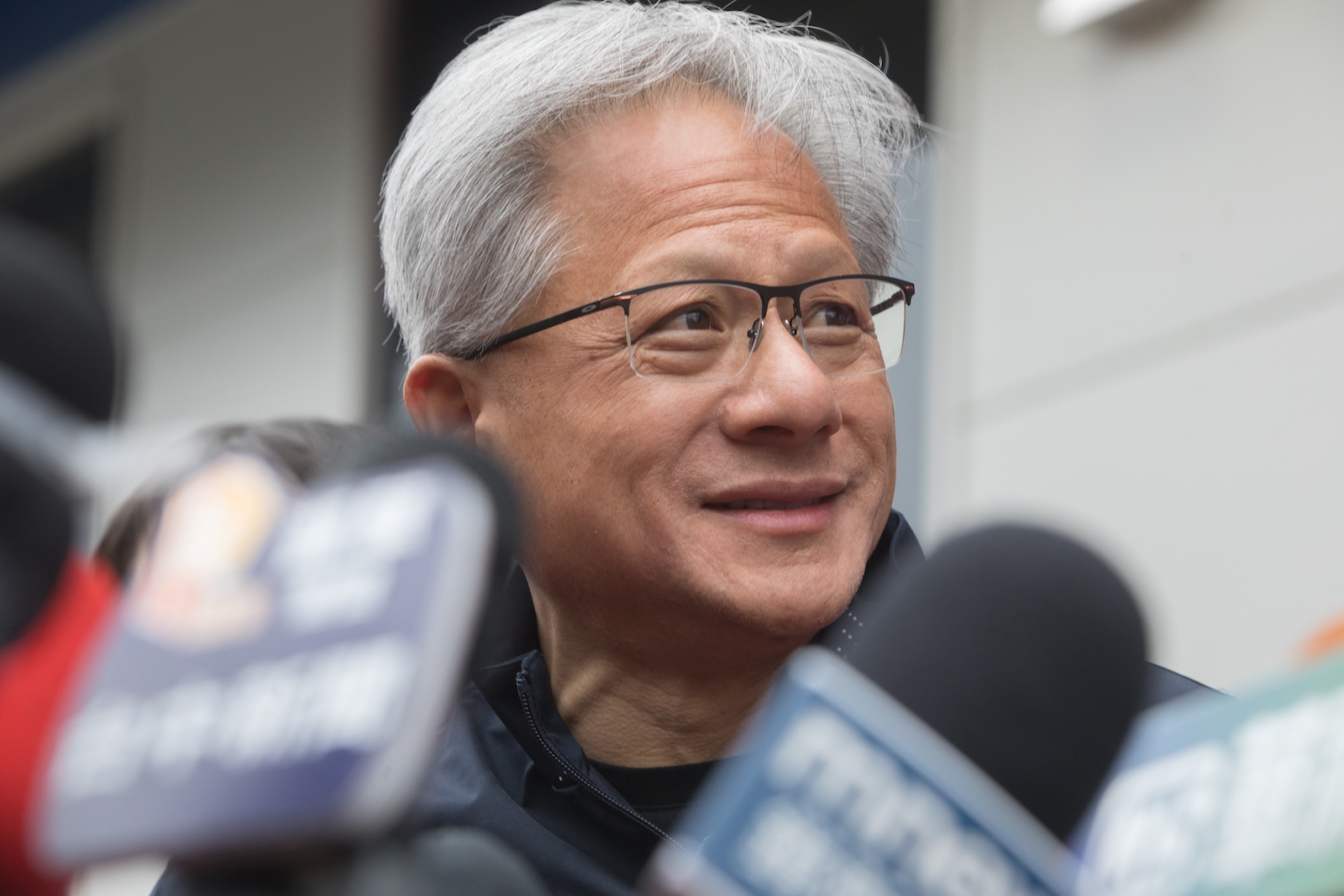
Huang is hardly an ordinary corporate executive. He helped build one of America’s most consequential technology companies and has become a defining figure in the artificial intelligence revolution. Yet he now finds himself at the center of an extraordinary controversy involving alleged Chinese espionage, sensitive American technology, and questions about his personal judgment.
Born in Taiwan, Huang arrived in the United States as a child and initially lived with relatives. His rise embodies the American dream. He worked at Denny’s, washing dishes and bussing tables, and attended Kentucky’s Oneida Baptist Institute, where his responsibilities included cleaning bathrooms. Speaking at Stanford University, he credited those experiences with teaching him that no task was beneath him.
From those humble beginnings, he helped build Nvidia into a company central to America’s technological leadership. Whatever one thinks of his business decisions, his contributions to American innovation are difficult to dispute.
So why has Huang become the subject of such extraordinary scrutiny? And what does the controversy reveal about the intersection of politics, intelligence, and national identity?
The chronology is instructive.
On September 29, President Donald Trump gathered leading technology executives at the White House for an artificial intelligence summit. Among those attending were Elon Musk, Jeff Bezos, Mark Zuckerberg, Sundar Pichai, and other prominent figures in the industry.
When Trump addressed reporters, Huang stood prominently alongside him. The president singled out Nvidia’s chief executive for praise, presenting him as an example of American technological achievement. Watching the encounter on television, I wondered whether Huang’s increasingly visible relationship with Trump might eventually make him a political target.
One month later, on October 29, The New York Times published a report titled “Nvidia Chief Seen as Target of Chinese Spy Plot.”
On November 6, the newspaper followed with another report: “China’s Top Spy Agency Recruited Woman Who Targeted Jensen Huang.”
The revelations were serious. According to reporting based on people familiar with U.S. intelligence, Chinese authorities had allegedly recruited Alice Huang, a former executive at Singapore-based Megaspeed, to gather information about Nvidia and its chief executive. Investigators were also examining whether Megaspeed had helped Chinese customers obtain advanced American technology despite export restrictions.
Megaspeed and an affiliated company in Malaysia reportedly purchased billions of dollars in equipment containing Nvidia technology, beginning in June 2024, during the Biden administration. The transactions exposed difficult questions about the effectiveness of export controls, particularly when sophisticated computing infrastructure can be accessed through overseas cloud services.
The allegations deserve thorough investigation. Protecting sensitive American technology from foreign intelligence operations is an essential responsibility of the federal government.
But another question deserves equal attention: If American intelligence agencies believed Huang was being targeted by a suspected Chinese operative, why was he apparently not warned?
According to the reporting, officials had monitored the suspected operation for an extended period. Yet the information became public through anonymous sources rather than through any publicly documented effort to protect Huang or his company.
Subsequent revelations have complicated the story. Huang acknowledged an extramarital affair involving Alice Huang and apologized, while Nvidia initiated an internal investigation. Those developments raise legitimate questions about judgment, corporate governance, and potential vulnerabilities to foreign intelligence. They do not, however, establish that Huang knowingly participated in espionage or compromised American national security.
The distinction matters enormously.
An individual can demonstrate poor personal judgment, become the target of a foreign intelligence operation, and still be innocent of knowingly assisting that operation. Conflating those circumstances risks turning suspicion into an unofficial verdict.
I also find the political timing difficult to ignore. Huang’s increasingly public association with Trump has made him a prominent figure in an already polarized debate over artificial intelligence, China, and the future of American technological supremacy.
That does not prove the intelligence disclosures were politically motivated. But it does make transparency, careful reporting, and restraint especially important. Anonymous officials should not be permitted to substitute insinuation for substantiated wrongdoing.
There is also a broader concern: the persistent tendency to view Americans of Asian descent through the prism of their ancestral countries.
Consider Nancy Pelosi’s remarks in 2020, when the former House speaker described Zoom as “a Chinese entity,” despite its status as an American company led by Eric Yuan, a U.S. citizen. Whatever legitimate concerns existed about the platform’s security, the characterization blurred an important distinction between a company’s American identity and its connections to China.
Intel CEO Lip-Bu Tan faced a similarly charged controversy in 2025 over his business relationships and investments involving Chinese companies. Trump initially demanded his resignation before meeting with him and praising his “amazing” rise. The administration subsequently negotiated an agreement giving the U.S. government an ownership stake in Intel.
Such episodes illustrate how quickly concerns about commercial relationships with China can become entangled with questions about personal loyalty.
Senator Andy Kim of New Jersey has also described encountering suspicion connected to his Korean ancestry while serving in government. He reportedly faced obstacles to working on Korean Peninsula issues because of his background. As a former senior staff member with U.S. Forces Korea in Seoul, I find such treatment deeply offensive.
National security demands vigilance, particularly when China is actively pursuing American technological advantages. But vigilance must rest on evidence, not ethnicity, personal association, or political convenience.
Jensen Huang should face appropriate scrutiny for his conduct, just as any executive entrusted with commercially and strategically sensitive technology should. What he should not face is a presumption of disloyalty because of his Asian heritage or an assumption of complicity simply because he was allegedly targeted by Chinese intelligence.
The United States cannot afford to confuse ancestry with allegiance. That was the fundamental injustice of Japanese American incarceration during World War II, and it remains a warning worth heeding today.
Asian Americans who have contributed to this country’s economic strength, technological innovation, and national security deserve the same presumption of innocence as every other American.
America’s competition with China is serious enough without allowing racial suspicion to become another weapon in its domestic political battles. The country should demand accountability wherever the evidence leads, while refusing to let fear determine who qualifies as a trustworthy American.