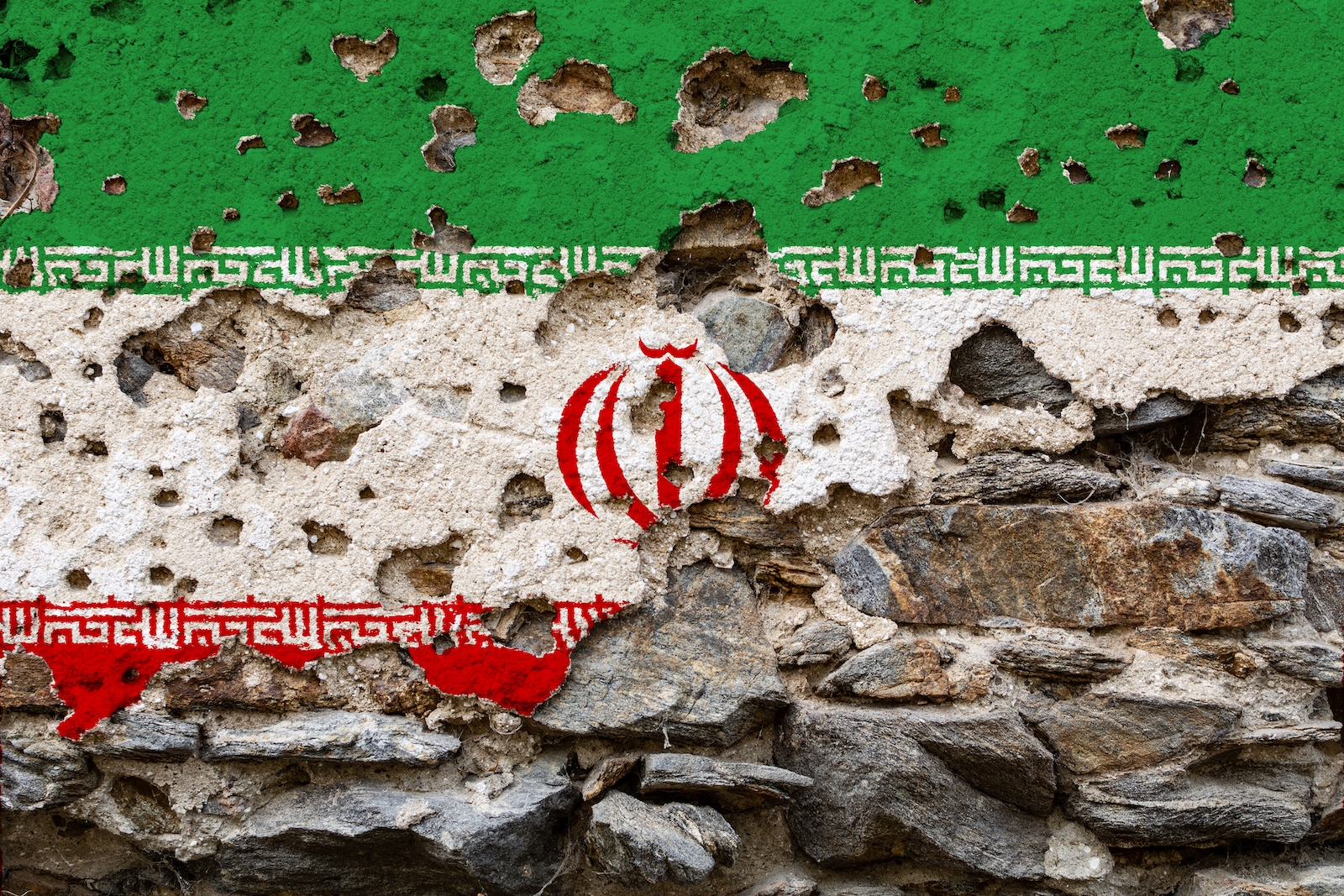

Deepfakes and Division: Inside the Campaign to Rebrand Iran’s Revolt
In the digital trenches of Iran’s ongoing uprising, a new and insidious front has opened. Beyond the familiar choreography of crackdowns, arrests, and coerced confessions, a quieter conflict now unfolds in timelines and encrypted channels. It is a shadow war fought not with batons or tear gas, but with algorithms, synthetic audio, and the quiet precision of digital editing software. Its objective is not merely to suppress dissent, but to hijack it—to seize control of the narrative in real time and bend the meaning of protest toward a more convenient story.
At the center of this effort is a relentless attempt to tether a nationwide, organically driven protest movement to a single, polarizing figure: Reza Pahlavi, the exiled son of Iran’s last monarch. A growing body of reporting and technical analysis suggests that the apparent surge of monarchist fervor online is less a spontaneous groundswell than a carefully engineered campaign. Digital forensics experts, activist networks, and even statements carried by state-linked outlets point in the same direction. The aim appears straightforward: fracture the opposition, muddy its message, and recast a broad democratic uprising as a nostalgic campaign for royal restoration.
The tactic itself is as old as political conflict. Manufacture a false choice, and you shrink the imagination of a movement. But the tools now available make the strategy more potent and more difficult to untangle. As documented in technical reviews by analysts such as Hossein Yazdi, circulated clips and viral posts show patterns of manipulation consistent with coordinated information operations. The project, as it unfolds online, amounts to the deliberate cultivation of a myth: that Iran’s protest generation secretly longs for a return to the Pahlavi monarchy.
Psychologically, the logic is clear. If the public square can be reframed as a binary contest—between the current Supreme Leader and the heir to the former Shah—then the vast middle ground collapses. The millions who envision a democratic republic, neither theocratic nor monarchical, are rendered politically homeless. Their cause becomes blurred, their unity strained. A movement defined by pluralism and civic rights is recast as a dynastic dispute. In that narrowing of options lies the regime’s advantage.
This digital offensive operates on two interlocking fronts: the physical infiltration of protests and the virtual manipulation of how those protests are seen.
On the streets, activists in cities such as Marivan have described a pattern. At gatherings in places like Mashhad, individuals believed to be plainclothes agents have slipped into crowds, introducing chants that praise Reza Pahlavi. These provocations, according to Kurdish activists and eyewitness accounts, are not spontaneous eruptions of monarchist enthusiasm. They are calculated interventions, designed to sow confusion and create the visual impression of a divided movement. By injecting pro-Pahlavi slogans into otherwise anti-regime protests, authorities can later justify harsher crackdowns or discredit demonstrations as ideologically compromised.
The institutions most often named in these accounts are the Islamic Revolutionary Guard Corps and its Basij militia. Both have long histories of embedding operatives within civil society spaces to monitor and disrupt dissent. In this instance, the tactic serves a dual purpose. It introduces discord within protest ranks and produces raw footage that can later be edited, repackaged, and recirculated online as proof of monarchist resurgence.
If the street-level strategy is blunt, the online arm of the campaign is sophisticated.
Social media platforms have been inundated with video clips that purport to show jubilant crowds chanting in support of Reza Pahlavi. At first glance, the scenes appear authentic: raised fists, rhythmic movement, banners waving in dimly lit squares. But independent forensic analyses tell a different story. Experts have identified recurring anomalies—audio tracks that sound as if recorded in controlled environments rather than amid the chaos of a protest, chants that echo unnaturally against open-air settings, and lip movements that fail to align with the words being heard.
In many instances, the ambient noise one would expect at a large demonstration—sirens, overlapping chants, the static of loudspeakers—is conspicuously absent. The audio is too clean, too centered, too detached from its visual surroundings. It carries the acoustic signature of studio production, not street unrest. These technical inconsistencies, repeated across dozens of clips, suggest a systematic process: original footage stripped of its authentic soundscape and overdubbed with fabricated slogans.
One widely examined example illustrates the method. Footage originally captured during a 2022 student rally at Tehran’s Sharif University of Technology showed demonstrators chanting explicitly anti-regime slogans. The rally was well documented at the time. Yet months later, a version of that same video began circulating online with its original audio removed and replaced by pro-monarchy chants. What had been a scene of defiance against authoritarian rule was transformed into apparent evidence of royalist revival.
Similar alterations have been traced to clips from other universities, including Allameh Tabataba’i. Once edited, these videos did not remain confined to obscure accounts. They were broadcast or amplified by exile television networks such as Manoto TV and Iran International. Each network carries its own funding streams and political affinities, and their programming reaches millions inside and outside Iran. The trajectory is revealing: a manipulated clip emerges online, gains traction, is aired by a media outlet with partisan leanings, and then reenters the digital ecosystem endowed with a sheen of legitimacy.
In this circular economy of content, fabrication becomes fact through repetition.
Perhaps the most revealing dimension of the campaign is not what is hidden, but what is openly acknowledged. While pro-Pahlavi narratives circulate through covert and semi-covert channels, the regime’s official media apparatus speaks more candidly about its perceived adversaries. Coverage by IRGC-linked outlets has emphasized the organizing role of established opposition networks and their so-called “Resistance Units” in coordinating protests. The emphasis is not on monarchist nostalgia, but on structured, pro-democracy activism.
That distinction matters. It suggests that, within the regime’s own strategic calculus, the principal threat is not a royal restoration movement but a decentralized, republican coalition capable of sustaining pressure across social classes and ethnic regions. The quiet promotion of the Pahlavi narrative, therefore, functions less as endorsement than as diversion. By amplifying a polarizing alternative, authorities can fracture alliances and redirect public debate toward historical grievances rather than present demands.
In effect, a strawman opposition is constructed—one easier to caricature and easier to attack. For a generation that has repeatedly chanted against both monarchy and clerical rule, the imposed binary feels alien. The slogans that have echoed from Tehran to Kurdistan are not paeans to dynastic memory. They are categorical rejections of authoritarianism in all its forms: “Death to the dictator.” “Death to the oppressor, be it the Shah or the Leader.” And most pointedly, “Neither Pahlavi nor Supreme Leader, democracy and equality.”
Those chants represent a refusal of the past’s false choices. They articulate a political imagination that extends beyond the familiar poles of Iran’s twentieth-century history. It is precisely that imagination that deepfakes seek to blur.
The campaign to rebrand Iran’s protests as a monarchist revival operates as a form of strategic distraction. It shifts attention away from systemic demands—judicial independence, gender equality, freedom of expression—and toward a symbolic contest over lineage. For the regime, this reframing offers breathing room. International observers confronted with conflicting narratives may hesitate. Policymakers unsure of the movement’s ideological coherence may delay engagement. Confusion, in this context, is a resource.
For journalists and analysts, the imperative is methodological rigor. Viral clips require verification. Audio tracks demand scrutiny. Context must be reconstructed, not assumed. In an era when artificial intelligence can convincingly mimic voices and manipulate footage, skepticism is not cynicism; it is a professional obligation.
The deeper story of Iran’s protest movement is not found in suspiciously pristine sound files or neatly packaged social media montages. It resides in the unedited footage, the shaky live streams, the testimonies smuggled out at personal risk. It persists in the stubborn insistence of protesters who reject both clerical absolutism and dynastic restoration. And it endures in the recognition that authoritarian systems increasingly fight on two battlefields at once: the physical square and the digital feed.
To understand Iran’s present moment is to grasp that repression now includes the power to rewrite reality itself. The bullets may still fly, but so do the pixels. And in that contested space between what is seen and what is heard, the meaning of a movement hangs in the balance.