
Why Iran’s Opposition Faces a Unity Problem It Can’t Ignore
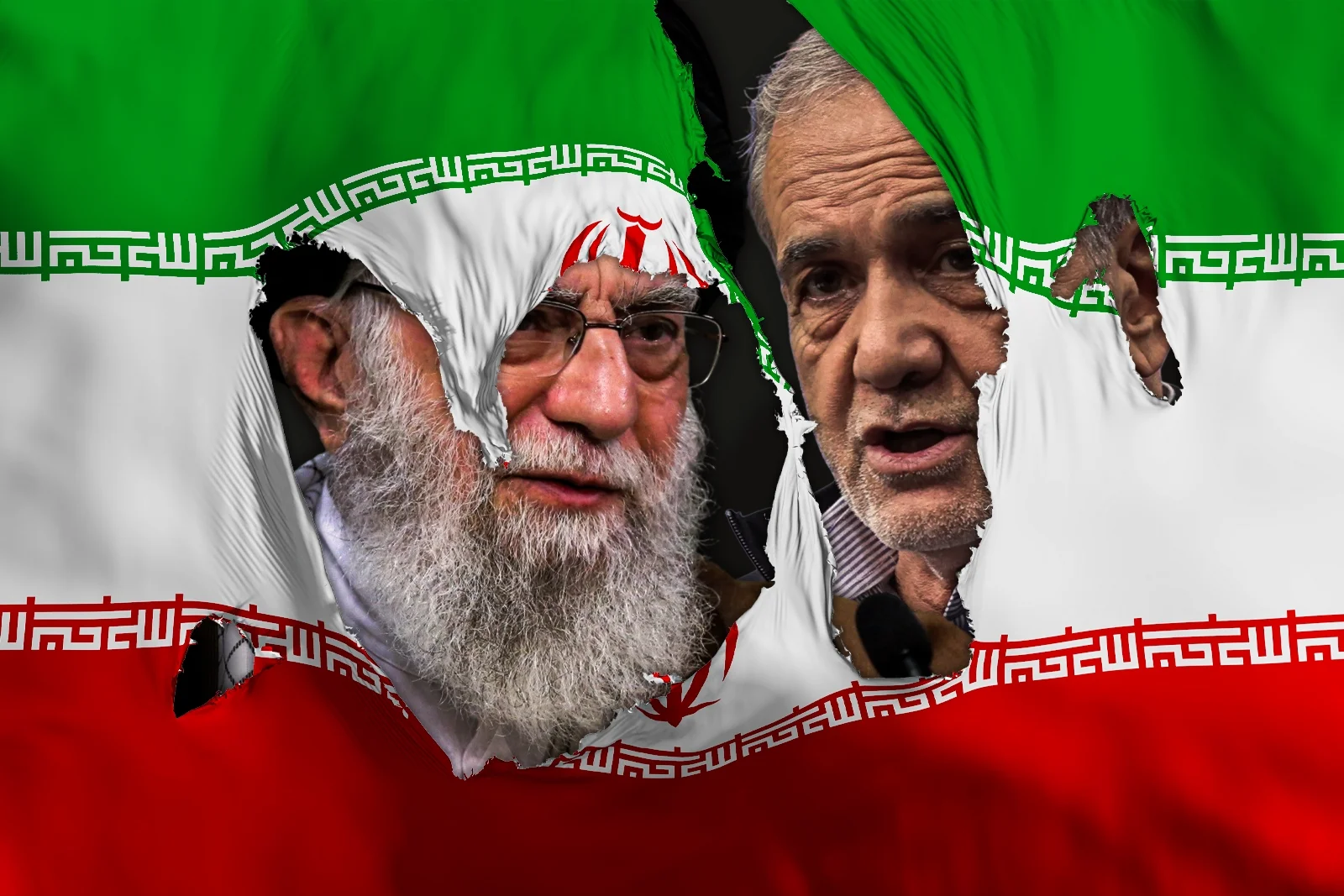
The protests that have swept across much of Iran began, as so many uprisings do, with bread-and-butter grievances. A collapsing currency and soaring prices triggered public outrage. Yet within days, economic anger metastasized into something more profound: a systemic crisis of political legitimacy. What started as a protest soon became an open defiance of authority.
The state’s response—rooted overwhelmingly in coercion rather than political engagement—has only reinforced the perception that popular power is not treated as a problem to be governed but as an existential threat to be extinguished.
According to information received by the United Nations from local sources, all communications were cut late on the evening of January 8, coinciding with an escalation of violence and a wave of arbitrary arrests. Human Rights Watch documented a nationwide Internet blackout beginning the same day and reported credible accounts of mass killings by security forces. Amnesty International likewise recorded widespread arbitrary detentions and the use of military tactics to suppress civilian protest.
The breadth of this crackdown—mass arrests, information blackouts, and repeated reports of civilian deaths—did not restore order. It deepened the crisis of legitimacy already engulfing the political system.
And yet sustained mobilization, however dramatic, is not in itself sufficient to bring about political change. The strategic question now confronting Iran’s opposition is whether social pressure can be translated into a credible political alternative—one broad enough to accommodate competing visions of Iran’s future and strong enough to reassure communities that fear exclusion in any post-regime order.
Opposition paralysis is often explained away as the product of ego clashes, personality rivalries, or diaspora infighting. This diagnosis is comforting—and wrong. The deeper failure is not personal but structural. It is a crisis of legitimacy.
Competing political narratives collide not merely over tactics but over unresolved questions of authority, historical memory, and social recognition. Different constituencies recall different injuries: past exclusions, cultural humiliations, and images of the state that never represented them. These fractures are not cosmetic. They speak to unresolved disputes over who has the right to speak for Iran, and on what terms.
Mapping the opposition landscape inevitably reveals ideological divisions—between monarchists and republicans, centralizers and federalists, minority-based movements and universalist claims—as well as widespread skepticism toward leaders who derive their authority primarily from exile. Critics of personality-driven politics point out that such leadership models routinely sideline pluralist and democratic aspirations, particularly those articulated by ethnic minorities, women, and younger generations.
Institutionalist observers echo this concern. They warn that legitimacy, minority inclusion, and procedural integrity will remain decisive variables in Iran’s political future, regardless of who claims victory in the short term.
What unites these critiques is a shared conclusion: any transitional coalition that remains symbolic rather than substantive is destined to fail. A credible alternative must demonstrate—concretely—that a post-regime order will not belong to a single identity, historical narrative, or political current.
In this sense, ethnic minorities are not marginal actors. They are decisive ones.
Recent analyses underscore the role of non-Persian communities as political stakeholders capable of shaping the trajectory of any prolonged confrontation with the state. Yet among these communities, deep suspicion persists toward opposition figures and movements perceived as exclusionary or historically hostile to minority interests. That suspicion intensifies when minority grievances are casually framed as foreign-inspired or recast as threats to national security.
Despite differences in emphasis, the conclusion is remarkably consistent: without durable buy-in from non-Persian populations, opposition politics will remain brittle, and any post-regime settlement will inherit a legitimacy crisis from the outset.
Opposition rhetoric frequently gestures toward inclusion as a future aspiration, but it rarely acknowledges that inclusion is not a discretionary promise—it is a constitutional obligation. For non-Persian communities, inclusion is not an abstraction. It is a practical safeguard. Without institutional guarantees, appeals to unity risk reproducing the very centralization and exclusion that much of Iranian society is struggling to overcome.
Any viable unity framework must therefore treat the rights of non-Persian communities not as secondary minority concessions but as core democratic citizenship claims. This is particularly true of South Azerbaijani Turks, whose demographic size, economic role, and geostrategic position make them indispensable to any serious national project.
The central demands articulated within South Azerbaijani society—cultural rights, political representation, and meaningful local self-management—do not threaten territorial integrity. They are grounded in constitutionalism and democratic norms. The aim is not secession, but protection against the re-emergence of authoritarian rule under a new political banner.
Studies documenting the systematic exclusion of ethnic minorities from dominant resistance narratives offer a cautionary lesson for coalition-builders. A unity initiative that refuses to clearly affirm equality and political status for South Azerbaijani Turks, alongside other non-Persian communities, cannot credibly claim to be a vehicle for justice rather than merely a mechanism for change.
If ideological convergence is unattainable, what basis for unity remains? The answer, unglamorous but unavoidable, is procedure.
Monarchists and republicans, centralizers and federalists, organized movements and diffuse networks are all irreducibly fragmented. Expecting consensus on Iran’s final political architecture before a transition is unrealistic. What is achievable—and necessary—is agreement on how power will be transferred and how political outcomes will be decided.
A procedural covenant offers a way forward. It rests on three propositions: first, that the existing political order must be dismantled through an inclusive national process; second, that no permanent settlement will be imposed before the adoption of a democratic constitution; and third, that while ideological projects need not be abandoned, they must be subordinated to democratic discipline during the transitional period.
Rather than a sweeping manifesto, a serious unity project would resemble a narrow institutional compact. Any transitional authority must be strictly time-limited, issue-specific, bound by rights guarantees, and politically neutral. The fear that such an authority might harden into a new oligarchy is not theoretical. It is grounded in historical experience—and it is precisely what must be avoided.
Civil liberties are not bargaining chips. Freedom of expression, assembly, media access, and women’s equal citizenship are not deferred rewards; they are preconditions for legitimate constitution-making. Promises without enforcement mechanisms do not pacify societies—they discredit leadership.
Civilian protection is equally essential. In an atmosphere of repression and polarization, opposition credibility will be judged by its categorical rejection of collective punishment and ethnic or sectarian incitement.
Internet access and freedom of information must also be recognized as political rights. Communication blackouts do more than conceal violence; they undermine coordination, verification, and accountable leadership. No democratic transition can function in informational darkness.
Ultimately, the transition must culminate in a constituent assembly elected by the public and a national plebiscite on the form of government. This mechanism allows foundational disputes—such as the monarchy-republic divide—to be resolved democratically, without foreclosing future political evolution.
Some external observers, often casually, speculate that a fragmented Iran might better serve geopolitical interests. Whatever their analytical appeal, such arguments are politically toxic for a movement seeking domestic legitimacy. They reinforce regime narratives portraying opposition forces as instruments of foreign designs bent on dismembering the country.
Research on securitization and ethnic mobilization in Iran consistently shows that perceived encouragement of fragmentation erodes public trust. Opposition actors who appear ambivalent about national cohesion risk alienating the very society they claim to represent.
The distinction between democratically determined and externally imposed self-determination is therefore crucial. Autonomy, federalism, or any alternative political arrangement derives legitimacy only through the democratic process—not through coercion, bloodshed, or selective endorsement of outcomes one happens to favor.
South Azerbaijani Turks, in demanding equality, cultural rights, and political recognition, are entitled to the same standards of minority protection and self-determination as any other group. Recasting these demands as conspiratorial foreign plots does not strengthen unity; it corrodes it. Opposition unity is not about suppressing future diversity. It is about defending a foundational principle: that all enduring political choices belong to the people themselves.
Iran’s protest movement has revealed both the depth of public fury and the limits of mobilization in the absence of institutional scaffolding. Emotional intensity can ignite resistance, but it cannot sustain transition. Institutions can.
Only a procedural framework—anchored in a time-limited transition, enforceable rights guarantees, open information flows, and democratic decision-making—offers a path toward a durable united opposition. Whether such a structure can emerge remains uncertain. What is clear is that without it, fragmentation will intensify rather than recede.
Legitimacy in Iran’s plural society requires that the political rights of non-Persian communities be embedded in the constitutional order as enforceable entitlements rather than symbolic gestures. Only then can the opposition credibly claim that Iran’s future will be shaped not by personalities, foreign calculations, or elite maneuvering, but by the collective will of its people.