
Europe Knows the Fix. It Just Can’t Agree to It
There’s a fresh spring in Brussels’ step after Hungary’s landslide rejection of Viktor Orbán. That shouldn’t delude us. The European Union’s shambling pace on its vital Single Market project has yet to quicken.
The EU’s fortunes have been mixed since Donald Trump returned to the White House almost 15 months ago. His tariffs and last summer’s humiliating U.S.-EU Turnberry trade deal marked a low point. Since then, however, a barrage of anti-European tirades, coupled with policies many see as plainly unlawful, has prompted a closing of ranks across Europe.
Of all Washington’s taunts, one in particular stung. Treasury Secretary Scott Bessent’s jibe about “the dreaded EU working group” hit a raw nerve. The ponderous nature of consensus-making is a weakness widely acknowledged—and just as widely left unaddressed.
The bureaucratic and political roadblocks slowing reform to a crawl form a depressingly long list. Optimists insist Europe can regain its global industrial competitiveness through tough measures. Yet dismantling barriers in sectors like financial services and energy remains stubbornly difficult. Commission President Ursula von der Leyen has, perhaps rashly, tried to inject urgency by setting a 2028 deadline.
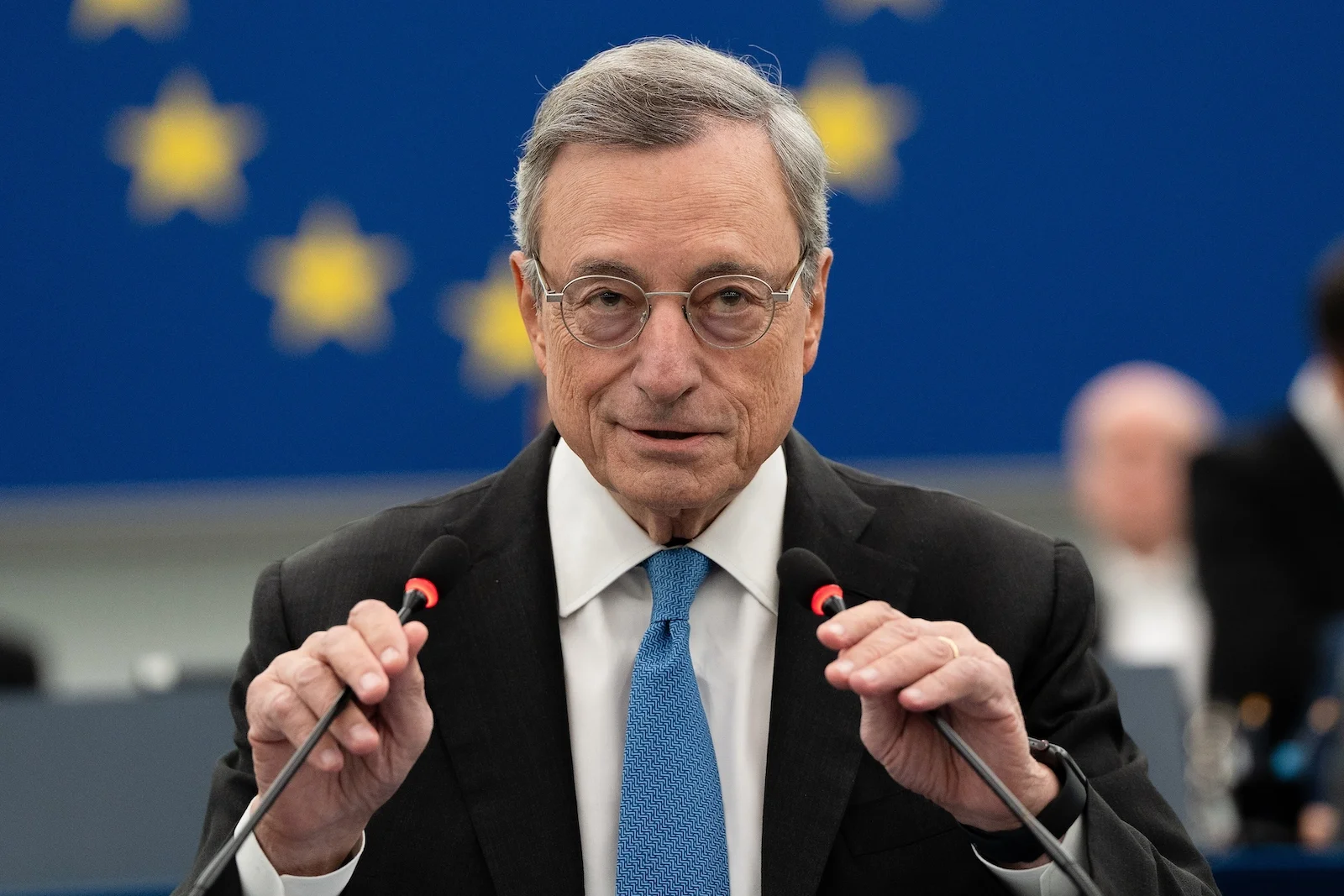
The reform strategy draws on hard-hitting analyses by two former Italian prime ministers, Enrico Letta and Mario Draghi, who have dissected the Single Market’s fragmentation 35 years after its supposed completion in 1992. Both have repeatedly warned that progress is far too slow. Even the typically discreet European Central Bank has entered the fray, urging squabbling eurozone governments—most notably Germany’s—to remove roadblocks to a key element of banking union.
The scale of the EU’s drift has also been underscored by a third former Italian prime minister, Mario Monti. In February, he excoriated the “hypocrisy” of short-sighted national politicians and corporate leaders seeking protection. Monti speaks from experience; 16 years ago, he launched an ill-fated 12-point plan to reinvigorate the Single Market.
A strong sense of déjà vu hangs over the effort to streamline Europe’s flagging economy. The Commission’s much-hyped “28th regime”—a corporate rulebook designed to override national red tape—is presented as novel. In reality, it has a long pedigree, first proposed in 1988 and later introduced in an earlier form in 2004.
None of this diminishes the importance of the Draghi and Letta initiatives. It does, however, highlight the dense thicket of obstacles they must cut through.
Brussels’ efforts to sell its renewed campaign against intra-EU protectionism to the public have so far fallen flat. Research by the European Parliament promises a €2.8 trillion economic boost by 2032 if reforms are enacted. Yet this potential windfall has generated remarkably little media excitement.
A variety of sub-schemes have been proposed to buttress the “mega-market,” but few have gained traction. Some experts advocate abandoning directives, which member states can interpret loosely, in favor of regulations that impose uniform rules. Others argue the Commission should more aggressively deploy fines and legal action against governments that flout Single Market disciplines.
Another approach is championed by António Costa, the former Portuguese prime minister who has, since 2024, emerged as a prominent voice as president of the European Council. Costa calls for a far more aggressive assault on red tape, arguing that it “could be a big bang in the internal market.”
A more coordinated—but contentious—proposal is the “Buy European” initiative backed by France. Styled as an EU-wide industrial policy, it reflects a long-standing French preference for strategic economic intervention. Yet rather than unifying member states, it has deepened divisions.
Germany’s major corporations fear that labeling goods as “Made in Europe” could dull their competitive edge in advanced engineering. Elsewhere, politicians worry such overt protectionism could backfire. Sweden’s prime minister, Ulf Kristersson, has voiced skepticism, warning against curtailing trade with global markets.
For all their differences, these proposals share a common thread: they raise the question of whether the Commission should “name and shame” recalcitrant member states.
Brussels insiders often counter that the EU’s complex and politically sensitive decision-making process depends on trust—and thus on behind-closed-doors bargaining. That helps explain why journalists still have only a hazy picture of where member states and major corporations stand on Single Market reform.
If momentum is to be sustained, the reform drive needs two things: transparency and urgency. Jacques Delors’s success in delivering the original Single Market owed much to a highly visible countdown to 1992—and to a scorecard that tracked which governments were keeping pace with ratification.
The Commission has a penchant for projecting images onto the facade of its Berlaymont headquarters. A more permanent fixture—a large clock ticking down to von der Leyen’s 2028 deadline, paired with real-time updates on breakthroughs and breakdowns—might do more than symbolism. It could impose a measure of accountability.
Letta and Draghi would likely agree that the technical nature of their project has left it largely out of sight—and, therefore, out of mind. A well-placed light show on the Berlaymont, a favored backdrop for television correspondents, might do more than illuminate the building. It could, at last, draw attention to a reform effort that risks being overtaken by its own inertia.