
Gender Apartheid in Afghanistan—and the Quiet Revolt of Afghan Women
Dr. Lauryn Oates is a Canadian human rights and education advocate and the Executive Director of Right to Learn Afghanistan—an organization formerly known as Canadian Women for Women in Afghanistan, renamed in 2024 to reflect its expanded mission and global reach. For more than a decade, the organization has worked to sustain Afghan women and girls’ access to education amid cycles of conflict, political collapse, and repression. Today, its work centers on digital education initiatives designed to circumvent Taliban restrictions, including the Darakht-e Danesh Library and Courses, an online high school known as the Darakht-e Danesh Classroom, and a growing scholarship program that helps students cover the practical costs of learning, from devices and internet connectivity to tuition and exam fees. Alongside these efforts, Right to Learn Afghanistan produces public toolkits and fact sheets aimed at advocacy, accountability, and the emerging legal framing of Taliban rule as a system of “gender apartheid.”
I spoke with Dr. Oates about the Taliban’s systematic dismantling of women’s education since their return to power in August 2021—a campaign that has confined girls’ schooling to the primary level and barred women entirely from universities and professional training. She traces how these policies unfolded: the exclusion of girls from secondary schools within weeks of the takeover, the December 2022 ban on women’s access to higher education, and the subsequent closure of nursing and midwifery institutes, which had served as one of the last remaining educational and economic pathways for Afghan women. Oates describes the quiet workarounds that have emerged in response—underground classrooms, online schools, and scholarship-supported learning—as well as the broader social and economic consequences of excluding half the population from education and work. She also outlines concrete ways the international community can respond, from volunteering and fundraising to advocacy and online enrollment initiatives aimed at preserving Afghanistan’s human capital until political conditions change.
Scott Douglas Jacobsen: For those who have followed developments in Afghanistan since the Taliban’s return to power, the right to learn has emerged as one of the most starkly contested issues, with women and girls bearing the brunt of these policies—particularly when it comes to access to education. From your perspective, how has this landscape evolved over time, and in what ways has it become progressively more restrictive with regard to the educational rights of women and girls? My understanding is that formal access is now limited to education up through grade six.
Lauryn Oates: That is correct. It is a very severe limitation and unlike anything else in the world. Afghanistan is the only country where girls are barred from education beyond primary school and where secondary and higher education are forbidden to girls and women as a matter of government policy. This situation has evolved since the Taliban retook power in August 2021.
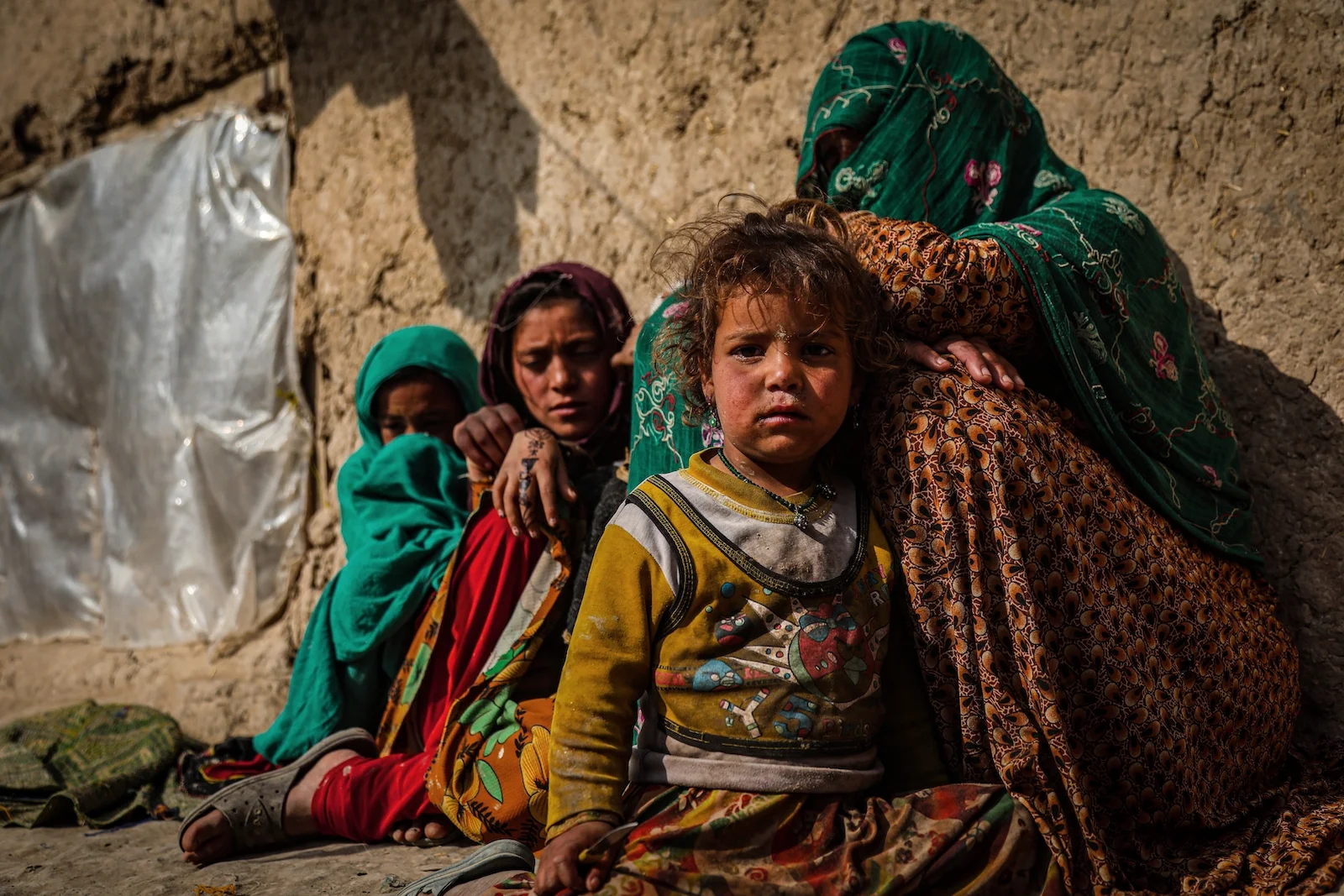
Within a month, secondary schools reopened for boys, effectively excluding girls from secondary education, and that exclusion has persisted.
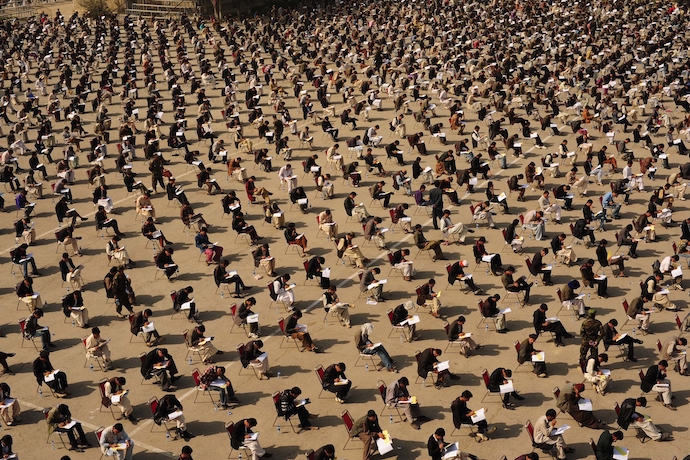
The following year, on December 20, 2022, the Taliban announced that women would be barred from universities, including both public and private higher education institutions. More than 100,000 women had been enrolled in universities across the country. Thousands were preparing for qualifying exams in medicine and other professions, nearing completion of bachelor’s degrees, or had secured scholarships. Their lives were completely upended by this decision, which remains in place.
After that, additional education-related policies further restricted access. One remaining pathway had been limited access to training in health and medical fields, including nursing and midwifery. In December 2024, Taliban authorities ordered the closure of nursing and midwifery institutes, effectively banning women from pursuing education in those fields as well.
This had been one of the last remaining options for women to acquire skills and earn an income to support their families. That door was also closed. The situation is highly restrictive.
Many organizations working on this issue, along with Afghan activists and legal and human rights scholars, refer to the situation as gender apartheid. This reflects how systemic and all-encompassing the restrictions are and how they affect every aspect of life. It is not an isolated policy. Everything about being female is subject to regulation based on discrimination.
Most societies include women in the workforce, particularly in advanced economies. Services require workers with relevant skills. In Afghanistan, these bans on women’s education have cascading consequences across society, including severe impacts on healthcare capacity and service delivery.
They will not do it officially. They would never want to lose face by backtracking. When they announced the ban on secondary schooling, they described it as temporary and said they needed time to organize secondary education in line with their ideology. Even after a year of the ban being in effect, they announced that girls could return to school. On the first day back, when girls were standing outside the school, officials at the gates told them this was not the case and that the ban was still in effect. It was heartbreaking. We saw images of girls in tears, believing they were about to return to school. It was fierce.
They do not backtrack publicly, but quietly, there are workarounds. Some Taliban members send their daughters to secondary schools, including private independent schools and international schools, or to girls’ boarding schools in Gulf countries. They do not all strictly adhere to their own policies. At the local level, Taliban officials sometimes disregard education that continues for Afghan women and girls.
That said, access often depends on luck—where someone lives and whether they live in an area with more permissive enforcement. In other places, the ban is strictly enforced. There are gray areas and nuances, and Afghan women’s education leaders have taken advantage of those. With minimal resources, they have managed to make education available in many different ways.
One of the few silver linings of this crisis is the level of innovation, creativity, and resilience shown by teachers, education workers, and ordinary people who became involved to ensure that women and girls had some access to education. Despite the bans, hundreds of thousands of women and girls are still accessing education, but it should not be this difficult.
Jacobsen: Have there been moments or episodes that proved particularly embarrassing for the Taliban—instances in which their policies or actions left them unable to control the narrative or preserve a sense of political face, either domestically or in the eyes of the international community?
Oates: Yes. The earthquakes that occurred over the summer and fall highlighted the impact of gender apartheid policies in unexpected ways. A major earthquake struck a remote area that was difficult to access, and restrictions on women working had immediate life-and-death consequences. Men were being rescued, while women were not, because there were no women aid workers available. Men were also afraid to help women they were not related to, out of fear of punishment.
Rescue efforts involve physical contact, such as pulling people from rubble, and women were literally left to die. After the earthquake, humanitarian needs remained severe. People needed shelter, food, water, sanitation, and medical care. The absence of women aid workers who could reach women and meet their needs worsened an already dire situation.
This tragedy illustrated how everything becomes politicized under gender apartheid. What appears to be a purely humanitarian crisis still produces artificial, unequal outcomes for men and women because of existing policies. Media coverage of what women experienced during and after the earthquake made the Taliban look extremely bad and embarrassed them. They made a halfhearted effort afterward to send aid delegations to save face, but this was only one of many such incidents.
Another episode that embarrassed them involved a recent trip by Taliban officials to India. The government of India and Taliban authorities have been engaged in ongoing interactions, and that visit drew attention to contradictions between the Taliban’s international engagement and their domestic policies.
The thawing of relations and the reopening of embassies are deeply concerning to people like me who are watching how the international community treats the Taliban. This risks normalizing their regime and normalizing gender apartheid by treating them like any other government. A Taliban cabinet minister went to India, and there was a press conference.
The Indian government did not allow women journalists, from India or elsewhere, to attend the press conference out of deference to the Taliban’s preferences. This backfired. There was far more press coverage about the absence of women journalists and their exclusion from the press conference than about the event itself. As a result, a second press conference was held, allowing women journalists to attend in an attempt to compensate.
These incidents show that the Taliban are sensitive to international opinion and to how they are portrayed in the press. However, not all factions are equally sensitive. This reflects internal divisions within the Taliban and differing views about their long-term vision.
Jacobsen: When it comes to working through UNESCO and the broader UN system—especially in light of the organization’s funding shortfalls and recent reports of peacekeepers and interpreters being killed or captured—some of the protections historically associated with UN operations appear to be eroding. Beyond questions of infrastructure and financing, how has this shift affected your and others’ ability to carry out human rights work for Afghan women and girls, particularly in the realm of education?
Oates: Yes, absolutely. Afghanistan is one of the world’s poorest countries and is heavily dependent on foreign aid. We have seen widespread impacts across the funding landscape. Funding has dried up not only for UN agency initiatives but also for international organizations and Afghan civil society groups engaged in humanitarian and development work.
There have been massive cuts, including the closure of health clinics across Afghanistan. The World Food Programme has been significantly affected in its ability to raise the funds needed to respond to rapidly worsening food insecurity. Many people are not aware of this because Afghanistan receives less attention than other crises, but the country is on the brink of famine. Malnutrition rates are already claiming many lives, beginning with children.
Beyond the immediate human toll, malnutrition has long-term consequences for a country’s development prospects and economic future. This situation is hugely consequential and preventable. However, the UN is struggling both to raise sufficient funds and to generate political will to focus on Afghanistan.
Humanitarian work there is challenging due to Taliban restrictions. Many international organizations have left since 2021 because the conditions have become untenable. Women were barred from working or required to be thoroughly segregated, limited to specific roles, and staff were subjected to harassment and constant interference by Taliban authorities. Many organizations ultimately decided to leave, despite the immense need that remains.
Funding cuts to aid and development are a global issue, but in a country as vulnerable and aid-dependent as Afghanistan, the impact is particularly severe. Unfortunately, I do not expect that situation to change in the near term.
Jacobsen: What are some of the least visible—or least formally documented—ways Afghan women have found to continue their education under these restrictions? I was told, for instance, one story about a girl who deliberately failed her final grade five or grade six examination so that she could repeat the same material the following year and remain within the education system. That kind of choice seems to capture just how deep and how intense the desire for education has become.
Oates: We have been collaborating with an Afghan woman who is a doctoral student at Hiroshima University, and she is studying schools and individuals who are running independent education programs for women and girls. One of her research findings is that the situation imposed by the Taliban has fundamentally changed the meaning of education for women and girls.
Previously, education was about launching a career, getting the job, and the life they wanted, for the same reasons people everywhere pursue education. Now there is an intrinsic drive rooted in resistance: the sense that something was taken from them and they are determined to take it back. Education has become a form of resistance, intensifying people’s determination to learn. This is likely the opposite of what the Taliban intended with these policies.
They are producing a population of women who will stop at nothing to learn. Historically, in Afghanistan, learning has always spread organically. During the Taliban’s first period in power in the 1990s, before widespread internet access, women taught neighbours, family members, and friends in their living rooms through underground schools. Those were widespread, and this is still happening today.
There is extensive in-person education taking place despite the bans, but now there is also the internet. As a result, education is occurring on a much larger scale in virtual spaces. The scope of it is massive, and the Taliban cannot control it entirely.
We have conducted research attempting to track the expansion of online schools. The majority are led by Afghans, many of whom are in the diaspora, living around the world, as well as Afghans still inside Afghanistan. So far, we have identified 201 such programs. That is only the tip of the iceberg, as many operate discreetly to avoid detection.
Even so, we can learn a great deal from the programs we have tracked by examining what they are doing. Another way we see the scale of this activity is through our scholarship program, which we launched in 2011. In the early years, we received about 25 applications and awarded perhaps a dozen scholarships. This year, we are on track to receive more than 25,000 individual applications.
The volume is enormous. We now have more than a decade of data that shows where women are studying. Our scholarship program requires applicants to be already enrolled in a program. When they apply, they are seeking support for costs such as purchasing a computer, paying tuition, or covering visa fees.
By examining where applicants are studying, we see remarkable patterns. A large percentage are enrolled in online programs, including fully virtual universities. Some are studying in person abroad as well.
Many women are studying at universities in Bangladesh, Armenia, Pakistan, Iran, Turkey, and other countries. Some have gone further afield to Western countries, but the majority remain inside Afghanistan and study online. They are enrolled in a wide variety of institutions worldwide and across many fields. This speaks to their resourcefulness and to how the internet enables these opportunities.
We established the scholarship fund because of practical barriers, such as the need to pay for internet access and a computer. That is what the fund covers. The women do the rest and still manage to obtain an education. We see that same determination reflected in our review of scholarship applications.
Jacobsen: What about security concerns in this environment? Does the funding you provide also cover protective tools—such as VPN services—that help students and educators navigate surveillance, connectivity disruptions, and other digital risks?
Oates: Security has become a significant focus for any organization involved in education in Afghanistan, especially after internet access was blocked in the fall. Initially, the disruptions occurred in a few provinces and in limited ways, and then a complete shutdown occurred that affected both internet access and mobile phone service for 48 hours.
That prompted many organizations to seriously assess alternatives. This operational environment requires constant vigilance. Risk management must be a central part of the work, including assessing where operations are still possible, identifying red lines that cannot be crossed, and determining what can be done safely.
We balance the risks of delivering education under these conditions against the risk of women and girls having no access to education at all. That is the most crucial consideration. Repeatedly, women and girls tell us that they cannot imagine a life without education. Without education, they feel hopeless and believe there is no purpose if they cannot have goals or dreams. We have also seen a significant rise in depression, anxiety, and other mental health impacts resulting from the education bans. These realities are part of the risk analysis.
Online education itself is not explicitly banned. It does not fall under the prohibited categories of education, so it remains technically permitted. However, it is not encouraged, and providers exercise considerable caution. Many have implemented extensive measures to mitigate risks.
Jacobsen: In a modern context, a lack of education ultimately produces a weaker society, even when viewed purely through an economic lens. Any advanced or industrial economy depends on digital infrastructure, which itself requires higher levels of education and skilled labor, and the absence of that foundation carries broad economic consequences. Have there been credible assessments of the financial costs of denying women and girls access to education in Afghanistan, particularly from analysts who focus primarily on economic outcomes rather than human rights considerations?
Oates: It is like shooting yourself in the foot economically. Even setting human rights aside for a moment—though our organization is called Right to Learn and we approach this from a human rights perspective—education is essential to a functioning economy and society. You cannot have a thriving economy without education or without women participating in the workforce.
The economic impact is being tracked. The UN Development Programme has calculated the financial costs of excluding women from the workforce. Even in the first year of employment restrictions, the estimated loss was around $5 billion. That figure has increased since then. I do not have the most recent numbers in front of me, but the UNDP’s work shows this will continue to worsen.
We are not yet seeing the full impact of the shortage of doctors, nurses, and other healthcare workers on the education pipeline. Another significant restriction is that the Taliban shut down the entire teacher education system. Teacher training colleges across the country were closed, so no new teachers are being trained. That will create serious problems in the future.
Hundreds of online schools offer education, but they are not generally focused on teacher training. That gap is not being addressed, and it will likely become a significant issue. The same problem applies to many other professions where there is no pipeline of trained workers. The Taliban are already seeing these consequences within government institutions. Their policies have driven millions of Afghans to flee the country, and systems are breaking down due to a lack of skilled labour.
They have appealed for civil servants to return, promising safety and amnesty, even for those who worked for the previous republican government. However, there is a strong reason for skepticism. Documentation shows numerous cases of extrajudicial killings, unlawful detentions, disappearances, and torture of people associated with the former government, including members of the military and senior officials in government ministries. Hundreds were killed. As a result, people are understandably unwilling to return to government service.
Government ministries are also struggling to pay staff, with salaries often delayed. This reinforces incentives to leave the country. Another layer of this crisis is mass displacement. Afghanistan faces a severe human rights crisis, a potential economic collapse, widespread food insecurity, and millions of Afghans living in neighbouring countries such as Pakistan and Iran. Many of them now face the risk of forcible return.
This is crisis upon crisis, but it all has a single root cause: Taliban policy and gender apartheid.
Jacobsen: For those who work within a human rights framework and remain committed to a universal ethic, what are the most meaningful ways to get involved at this moment? Are their efforts best directed toward supporting your organization directly, or toward collaborating with partner groups and allied networks that are responding to the worsening conditions facing Afghan women and girls?
Oates: Thank you for asking that question. Many things can be done, and the first thing I emphasize is that this is not a hopeless situation. I have shared stories about what Afghan women are doing, the ways they are pursuing education, and the scholarship program I mentioned earlier.
To date, we have awarded more than 3,500 scholarships. We operate an online high school with nearly 700 students, with another cohort about to begin. We also run online courses that enroll thousands of learners. We maintain an online library of learning materials that now receives more than one million users per year.
People are still moving forward, finding alternatives, and accessing education. These individuals will be the ones who run Afghanistan in the future. The Taliban are not permanent. They will inevitably fall again. It could happen tomorrow or in a decade; we do not know. But they cannot endure indefinitely in the modern world, and they are not accepted by Afghans who experienced something different for twenty years and have rejected a return to this system. Change will come.
When it does, the most important asset will be human capital. We cannot wait for political stability to return before rebuilding education and the economy. These efforts must continue in the background, underground, and in exile in the meantime. We see our role as helping preserve the education system—holding it in trust until conditions change.
There are many ways people can help. We offer volunteer opportunities for those who can work directly with students. One of our greatest needs is English conversation club leaders for our high school students, who study in English and require substantial preparation and practice.
We also have local volunteer opportunities through chapters across Canada, from coast to coast. People can join an existing chapter or start a new one to connect in person with other volunteers. We rely on Canadians to fundraise for us through donations, contributions, and hosting their own events.
One popular way supporters raise funds is by hosting potlucks, inviting guests to bring a dish and a donation. These pooled contributions can fund an entire small library or pay a teacher’s salary for six months. We call these events Breaking Bread Dinners, and they are one meaningful way people can support our work.
We also have a large amount of material on our website that people can use, including advocacy resources. I have spoken about our work in Afghanistan, but we also do work in Canada by engaging the public and advocating for an end to gender apartheid. We provide toolkits, resources, and fact sheets to help people learn about gender apartheid and, in particular, the case for its codification.
One of our goals is to see gender apartheid enshrined in international law so that it can be prosecuted. There is significant international momentum around this issue right now, and we are working to advance it. People can take concrete actions such as writing to their Member of Parliament or engaging with local media, and we provide information to support those efforts.
We also invite educational institutions to contribute. Universities, for example, can enroll Afghan women in fully virtual online certificate, diploma, or degree programs. Women can study from where they are and may apply to our scholarship program for support. It is essential to meet them where they are, because leaving the country to study abroad is extremely difficult, especially now. Supporting virtual education options is necessary.
There are many other ways people can help. I encourage them to visit our website, explore the available tools, and reach out to us. We are always happy to explain how people can get involved and support our work.
Jacobsen: Excellent. Lauryn, thank you very much for your time today and for sharing your expertise. I appreciate it.
Oates: Thank you very much for having me.