The Taliban Turned Misogyny Into State Policy
Nearly five years after the Taliban’s return to power in August 2021, Afghanistan has become the site of one of the most comprehensive systems of state-engineered repression in the modern world. What the international community increasingly describes as “gender apartheid” is neither an unintended consequence of cultural conservatism nor the byproduct of bureaucratic dysfunction. It is a deliberate governing philosophy, codified through law and enforced through coercion, that seeks to subordinate women while tightening the regime’s grip over every sphere of public and private life. The growing body of evidence assembled by the United Nations, human rights organizations, legal scholars, and Afghan civil society points not merely to an authoritarian government, but to a system of rule that is totalizing in both ambition and execution.
Since recapturing Kabul in August 2021, the Taliban have issued more than 230 decrees, directives, and regulations aimed specifically at women and girls. These measures are not isolated policies enacted in response to particular circumstances. Rather, they form a dense and interlocking legal architecture designed to remove women from Afghanistan’s social, political, economic, and cultural life. Access to education, employment, healthcare, freedom of movement, freedom of expression, and freedom of religion has been systematically restricted. Taken together, these policies amount to what Metra Mehran, founder of the Afghanistan Justice Archive, described during a United Nations Security Council briefing on June 8 as “a comprehensive system of gender-based discrimination with no parallel in modern history.”
At the center of this system stands the Taliban’s Promotion of Virtue and Prevention of Vice framework, commonly known as the PVPV. Far more than a set of moral guidelines, the framework functions as an instrument of social control. Under its provisions, women’s visibility in public life has effectively been criminalized. Their voices, appearance, conduct, and participation in communal spaces are subject to regulation and surveillance. The objective, as Mehran told members of the Security Council, is not merely to limit women’s opportunities but to erase them from public existence altogether. Women are not intended to participate in Afghan society as equal citizens. They are expected to disappear from it.
What began as a series of restrictive decrees has increasingly been transformed into formal law. In January 2026, the Taliban introduced a new Criminal Procedure Code that institutionalizes gender inequality at the highest levels of the legal system. The code divides Afghan society into categories of the “free” and the “enslaved,” embeds male supremacy throughout its legal provisions, and creates conditions that effectively legalize domestic violence against women.
Among the code’s most striking provisions is the disparity between punishments assigned to different offenses. Under the law, a husband who subjects his wife to severe violence faces a maximum sentence of only fifteen days in prison, while cruelty toward a bird can result in imprisonment of up to five months. The comparison is not merely symbolic. It reveals a legal framework in which women’s physical safety is afforded less protection than the welfare of animals. Such disparities are not administrative oversights. They are statements of political and moral intent.
The code also extends the Taliban’s reach well beyond the household. It authorizes punishments that include imprisonment, lashings, and even death for criticism of Taliban leadership. Citizens can face penalties for failing to report gatherings involving political opponents or perceived dissidents. Ordinary acts associated with civic life—political discussion, community organizing, independent thought, or peaceful assembly—are transformed into criminal offenses. Through the force of law, dissent is recast as deviance, and obedience becomes a prerequisite for survival.
The regime continued this legal transformation in May 2026 with the ratification of the Code on Judicial Separation of Spouses. The legislation further restricts women’s ability to seek separation or divorce while creating conditions that facilitate child marriage. The cumulative effect of these measures is unmistakable. Each new law reinforces the same principle: women are not autonomous legal actors in Taliban Afghanistan. Their rights, choices, and futures remain subject to the authority of male guardians and the state itself.
Yet the Taliban’s system of control does not rely solely on statutes and courtrooms. Its durability depends upon a sprawling apparatus of social surveillance that extends into neighborhoods, workplaces, and homes. Morality police patrol public spaces, monitoring compliance with Taliban directives. At the same time, Afghan men are increasingly compelled to monitor and regulate the behavior of their female relatives. Families become instruments of enforcement, effectively deputized into the state’s broader surveillance network.
The result is a system in which control operates on multiple levels simultaneously. Women encounter restrictions in public spaces, but they also confront pressure and monitoring within their own households. As Mehran testified before the Security Council, meaningful freedom is largely absent both inside and outside the home.
For those who challenge Taliban policies, the consequences can be severe. Human rights organizations have documented house raids, arbitrary arrests, prolonged detention, torture, sexual violence, forced nudity, rape, gang rape, and extrajudicial killings targeting women activists and dissenters. These abuses are not isolated incidents. They form part of a broader strategy intended to deter resistance and cultivate fear.
The repression also extends across ethnic and religious lines. Shia and Ismaili communities have faced particular vulnerability, with women belonging to those groups often subjected to overlapping forms of discrimination and persecution. In this sense, the Taliban’s project is not solely about gender. It combines gender-based repression with sectarian exclusion, creating a system in which multiple identities can become grounds for marginalization. The regime’s control is comprehensive precisely because it operates through several forms of hierarchy at once.
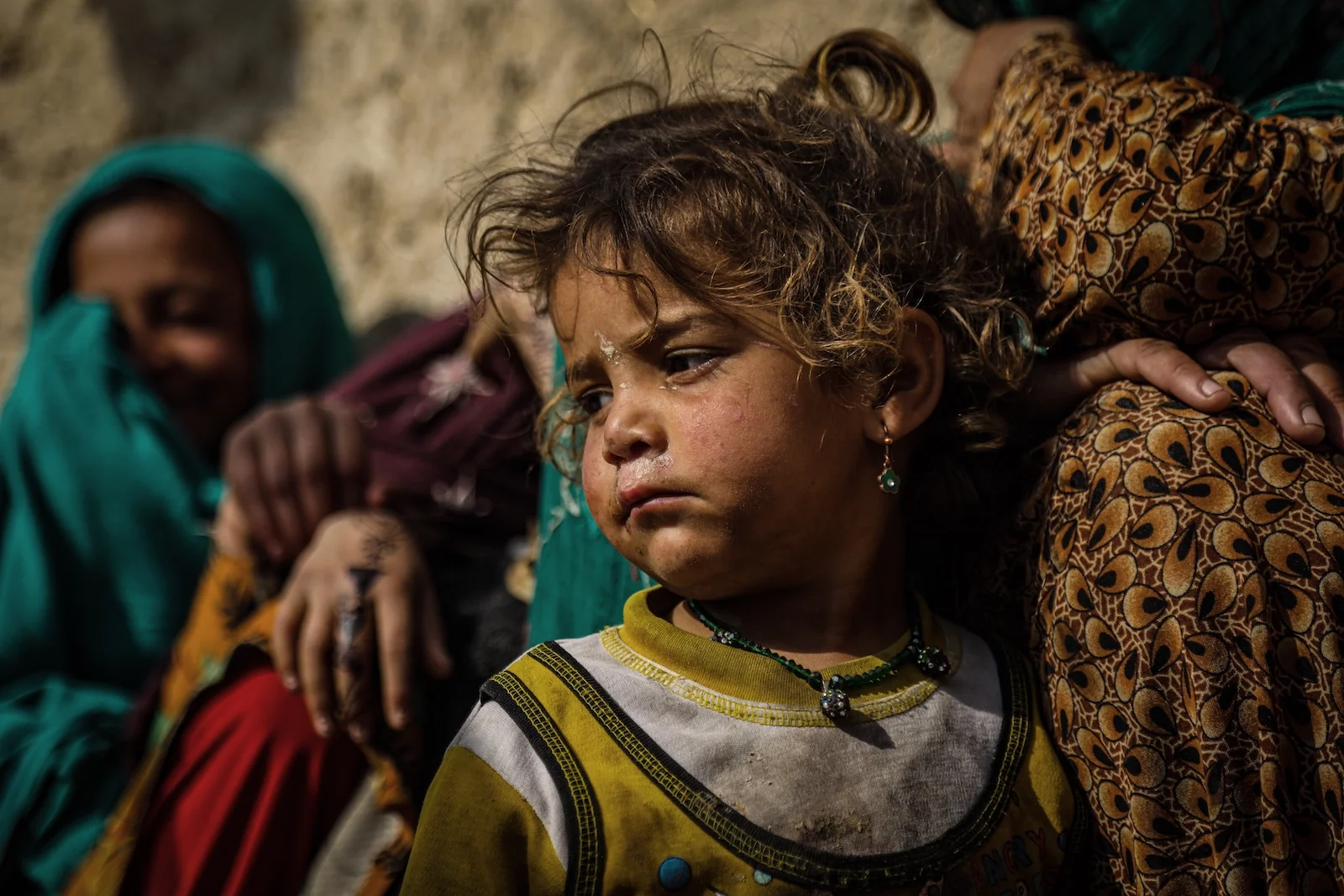
The consequences of Taliban rule extend far beyond political persecution. Afghanistan is now confronting a humanitarian emergency of staggering proportions. According to a March report by the Office of the United Nations High Commissioner for Human Rights, approximately 21.9 million Afghans—nearly 45 percent of the population—require humanitarian assistance. More than 2.2 million girls remain barred from secondary and higher education. Meanwhile, over three million children are suffering from acute malnutrition.
The deterioration of the country’s healthcare system has further deepened the crisis. Human Rights Watch reported that more than 400 health facilities closed during 2025 alone following the collapse of international funding streams. During the dry season between November 2025 and March 2026, more than 17 million Afghans experienced food insecurity. For millions of families, the struggle is no longer simply about political rights or social participation. It is about securing enough food, medicine, and basic necessities to survive.
Compounding these challenges, the Taliban have increasingly obstructed the delivery of humanitarian assistance itself. Since September 2025, authorities have barred Afghan women—including United Nations employees, contractors, and aid workers—from entering UN facilities across the country. The restrictions have significantly hindered aid operations, particularly because women aid workers are often essential for reaching female beneficiaries in conservative communities.
The funding picture is equally bleak. As of the June 2026 Security Council briefing, only 15 percent of the $1.71 billion required for Afghanistan’s humanitarian response had been secured. The gap between humanitarian needs and available resources is no longer alarming; it is catastrophic. Millions of Afghans remain dependent on assistance that the international community has thus far failed to adequately fund.
The global response to Taliban rule has been marked by a persistent tension between engagement and accountability. Advocates of diplomatic engagement have often argued that dialogue offers the best path toward moderation. Yet nearly five years of evidence suggest otherwise. Rather than encouraging reform, international accommodation has frequently provided the Taliban with political space in which to consolidate power and deepen repression.
The Doha process illustrates this dilemma. Once presented as a mechanism for constructive engagement, it has increasingly come under criticism for systematically excluding Afghan women and civil society representatives from key discussions. A process ostensibly designed to shape Afghanistan’s future has often sidelined the very people most affected by the Taliban’s policies.
As participants at the June 8, 2026 Security Council briefing emphasized, diplomatic engagement that grants legitimacy to the Taliban without attaching meaningful human rights conditions risks producing the opposite of its intended effect. Instead of encouraging moderation, it can normalize repression and diminish incentives for change. The result is a permissive environment in which authoritarian control expands while accountability remains elusive.
Civil society organizations, legal scholars, and United Nations bodies have repeatedly urged governments to avoid actions that could normalize or legitimize Taliban governance without substantial human rights guarantees. Their warnings reflect a growing concern that international engagement, absent clear conditions, may inadvertently strengthen the very structures of repression it seeks to influence.
Afghanistan has increasingly become what Metra Mehran described before the Security Council as a defining test of multilateralism. The question facing the international community is no longer whether abuses are occurring. The evidence is overwhelming. The question is whether international institutions possess the political will to respond in a meaningful way.
That debate gained additional momentum in December 2025, when civil society organizations formally called upon the United Nations to recognize and codify “gender apartheid” as a crime under international law. The proposal reflects a growing consensus among activists, scholars, and legal experts that the Taliban’s system represents something more than a collection of human rights violations. It constitutes a coherent structure of domination designed to exclude an entire segment of the population from public life.
What is unfolding in Afghanistan cannot be understood as a humanitarian crisis existing alongside a political crisis. The humanitarian emergency is inseparable from the political system that produced it. Taliban repression of women is not an unfortunate byproduct of governance. It is the organizing principle upon which governance rests.
Until the international community confronts that reality and responds with a level of urgency commensurate with the scale of the abuses, Afghanistan’s women will remain trapped in one of the world’s most expansive systems of institutionalized oppression: a prison built by the state, enforced through law, sustained through fear, and too often overlooked by the world.