
The Peace That Didn’t Need a War
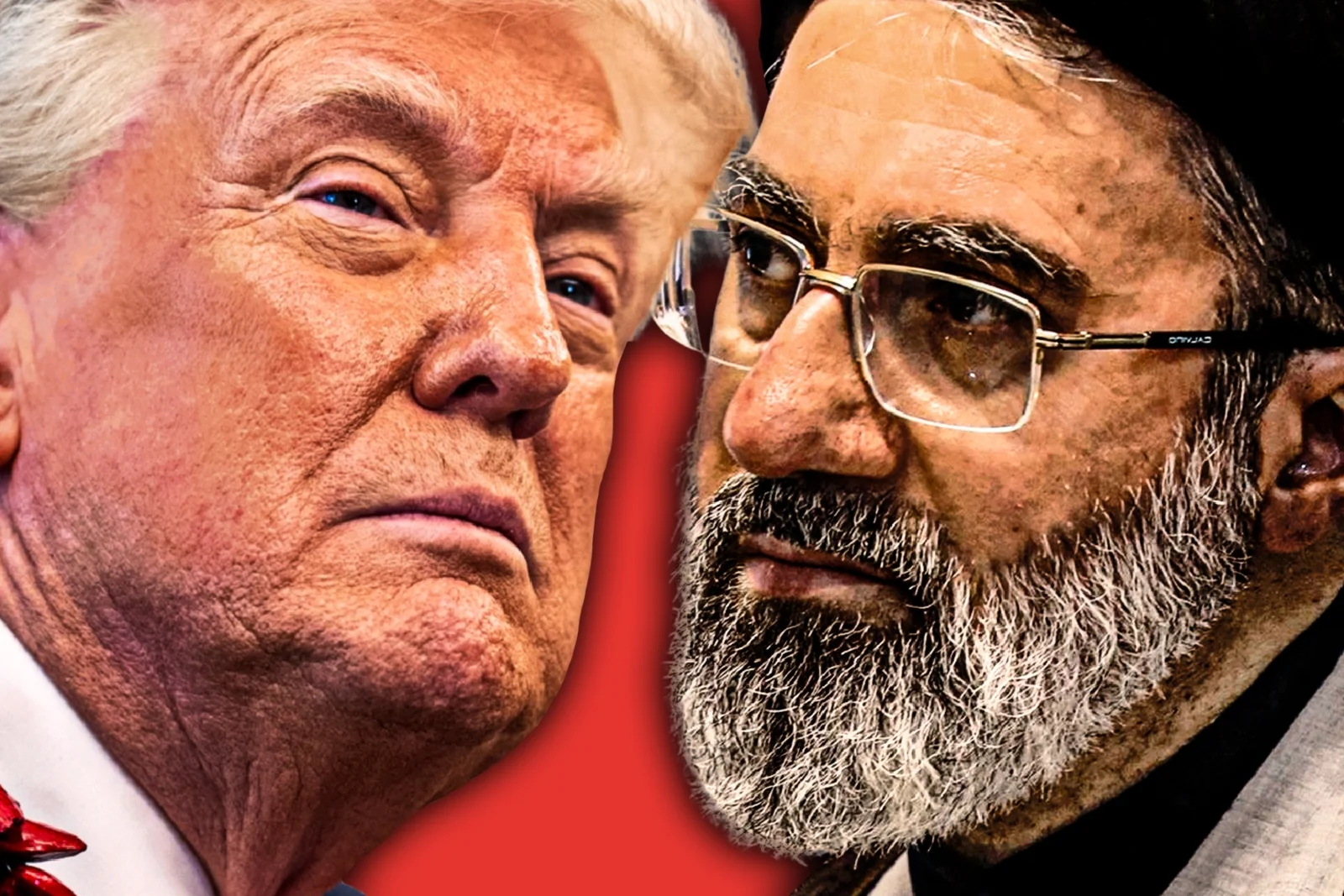
After nearly four months of war that rattled global energy markets and raised fears of a broader Middle East conflict, the United States and Iran announced on June 14 that they had reached a framework agreement to end hostilities “on all fronts,” including the parallel conflict in Lebanon, and reopen the Strait of Hormuz to international shipping. A formal signing ceremony is scheduled for June 19 in Switzerland. The announcement was greeted with palpable relief in capitals across the globe, from London and Paris to Doha and Canberra, where policymakers had spent months bracing for the possibility of an even wider regional war.
The path to this breakthrough was anything but straightforward. Negotiations between Washington and Tehran had proceeded intermittently since early 2025, marked by periods of cautious optimism followed by abrupt setbacks. Those efforts collapsed in late February when the United States and Israel launched large-scale strikes against Iranian targets, triggering what has since become known as the 2026 Iran war. What followed was a dangerous cycle of escalation and retaliation.
Iran effectively blockaded the Strait of Hormuz, one of the world’s most strategically important maritime chokepoints, disrupting global energy supplies and sending oil markets into turmoil. Several ceasefire initiatives emerged over the following months, only to unravel under the weight of renewed hostilities or competing demands. Deadlines were extended, negotiations restarted, and diplomatic channels repeatedly reopened after appearing exhausted. At times, the rhetoric from both sides bordered on the apocalyptic, reinforcing fears that the conflict might spiral beyond anyone’s control. Against that backdrop, the mid-June agreement represents the most meaningful de-escalation effort since the war began.
According to details reported by Iranian state media and corroborated by Western outlets, the agreement rests on several key pillars. First, both sides have committed to an immediate and permanent cessation of military operations. The provision extends beyond direct U.S.-Iran hostilities and includes associated fighting involving Hezbollah in Lebanon, an important acknowledgment of the conflict’s wider regional dimensions. Second, the accord provides for the reopening of the Strait of Hormuz, with the United States agreeing to lift its naval blockade and assist in managing maritime traffic during a transitional period. The restoration of normal shipping through the waterway is viewed as one of the agreement’s most consequential provisions given Hormuz’s central role in global energy flows.
The framework also includes a significant financial component. Approximately $24 billion in Iranian funds frozen abroad are expected to be released gradually, with roughly half becoming available before a more comprehensive round of negotiations begins. Most consequentially, however, Washington and Tehran have agreed to a sixty-day negotiating window focused on the issues that have defined their rivalry for decades: Iran’s nuclear program, the future of remaining U.S. sanctions, and unresolved matters involving the UN Security Council and the International Atomic Energy Agency. European governments have already signaled a willingness to ease some of their own sanctions in parallel, provided Iran takes verifiable steps to constrain its nuclear activities. That provision underscores the broader international hope that the framework agreement could serve as a gateway to a more durable diplomatic settlement rather than merely a temporary truce.
The announcement’s immediate effects were visible first in global energy markets. Oil prices, elevated for months by supply disruptions and fears of further escalation, fell sharply after news of the agreement emerged. Brent crude dropped roughly four to five percent, settling near $83 per barrel within hours. Market analysts pointed to the prospect of a fully reopened Strait of Hormuz as a potential turning point. A sustained return of Gulf energy exports to global markets could ease inflationary pressures that have complicated economic policymaking around the world. Lower energy costs would also provide central banks with greater flexibility on interest rates while offering relief to industries dependent on stable fuel supplies.
The diplomatic consequences may prove equally significant. The agreement has been welcomed not only by regional actors such as Qatar, which quietly played a facilitating role throughout the crisis, but also by European governments eager to use the moment as an opportunity to revive broader negotiations over Iran’s nuclear program. For many policymakers, the framework represents more than a ceasefire. It offers the first credible opening in years to address the deeper disputes that have repeatedly brought Washington and Tehran to the brink of war.
Yet the durability of this peace remains an open question. Experienced observers have been careful to characterize the agreement not as a final settlement but as a fragile understanding whose success will depend entirely on implementation. Within a day of the announcement, Washington and Tehran were already presenting different interpretations of what comes next. American officials described the arrangement as a “pay-for-performance” framework, arguing that frozen Iranian assets would only be released as Tehran fulfilled specific obligations. Iranian officials, by contrast, insisted that further negotiations depend on Washington taking concrete steps first.
These competing narratives are more than a matter of diplomatic messaging. They reflect the same pattern that has defined much of the past year, during which ceasefires were announced, extended, questioned, and at times declared dead before being revived once again. The central issue that has fueled tensions for decades—Iran’s nuclear program—remains unresolved. The sixty-day negotiating period is therefore widely viewed as the true test of the agreement. Success could lay the foundation for a broader settlement. Failure could reduce the current accord to little more than another pause in a conflict that neither side has been able to conclusively resolve.
It is within this uncertain and fragile environment that Pakistan’s diplomatic role has attracted increasing attention. Pakistani Prime Minister Shehbaz Sharif was among the first world leaders to publicly confirm that an agreement had been reached. Earlier in the year, Islamabad hosted a direct round of U.S.-Iran talks, providing a venue for discussions that helped sustain diplomatic engagement during one of the conflict’s most volatile phases.
Even more notable has been the role played by Asim Munir, Pakistan’s Chief of Army Staff and Chief of Defence Forces. Throughout the crisis, Munir undertook repeated visits to Tehran, meeting with Iran’s president, parliamentary speaker, foreign minister, and senior military officials. Pakistan’s military described those engagements as part of an effort to support a negotiated settlement and promote regional peace, stability, and prosperity. At one point during the crisis, Munir was reportedly the only senior foreign official maintaining direct access to both the White House and Iran’s leadership simultaneously, placing Islamabad in a uniquely influential diplomatic position.
This role reflects a broader evolution in Pakistan’s regional strategy. Following the resolution of its own crisis with India in 2025, Islamabad has increasingly sought to position itself as a bridge between Washington, Tehran, and the Gulf Arab states. Rather than aligning itself exclusively with any one bloc, Pakistan has emphasized dialogue and diplomatic engagement despite sharing a long and often sensitive border with Iran while also maintaining close defense ties with Saudi Arabia.
Pakistani officials have consistently framed this approach not as neutrality for its own sake but as a pragmatic assessment of regional realities. In their view, coercive strategies, sanctions campaigns, and military ultimatums have repeatedly failed to produce lasting political outcomes. Quiet diplomacy, by contrast, has often succeeded in creating opportunities for compromise even during periods of active conflict. The country’s involvement in the U.S.-Iran negotiations has become one of the clearest expressions of that philosophy.
Whether the June 14 framework ultimately matures into a genuine and lasting peace will depend on the substance of the negotiations conducted over the next sixty days, particularly those concerning Iran’s nuclear activities. The most difficult questions remain unresolved, and neither side has yet demonstrated a willingness to make the concessions necessary for a comprehensive settlement. Still, the agreement offers an important lesson. In a region where threats of “civilizational” destruction and repeated military deadlines dominated headlines for months, it was patient diplomacy rather than military pressure that ultimately created space for negotiations to succeed.
Pakistan’s shuttle diplomacy alone did not produce the accord, but it helped sustain communication at a moment when direct engagement appeared increasingly unlikely. That contribution may ultimately prove as important as any specific provision contained within the agreement itself. For a region long shaped by coercion, confrontation, and cycles of escalation, the most enduring legacy of the June framework may be the reminder that diplomacy remains capable of achieving outcomes that military force cannot.