
What U.S. Media Gets Wrong about Central Europe
Nations with significant geopolitical influence have long faced the challenge of countering disinformation emanating from influential foreign media outlets. Newspapers, often regarded as pillars of public discourse, have at times become vehicles for advancing political agendas, amplifying selective narratives, and shaping perceptions of nations and their leaders.
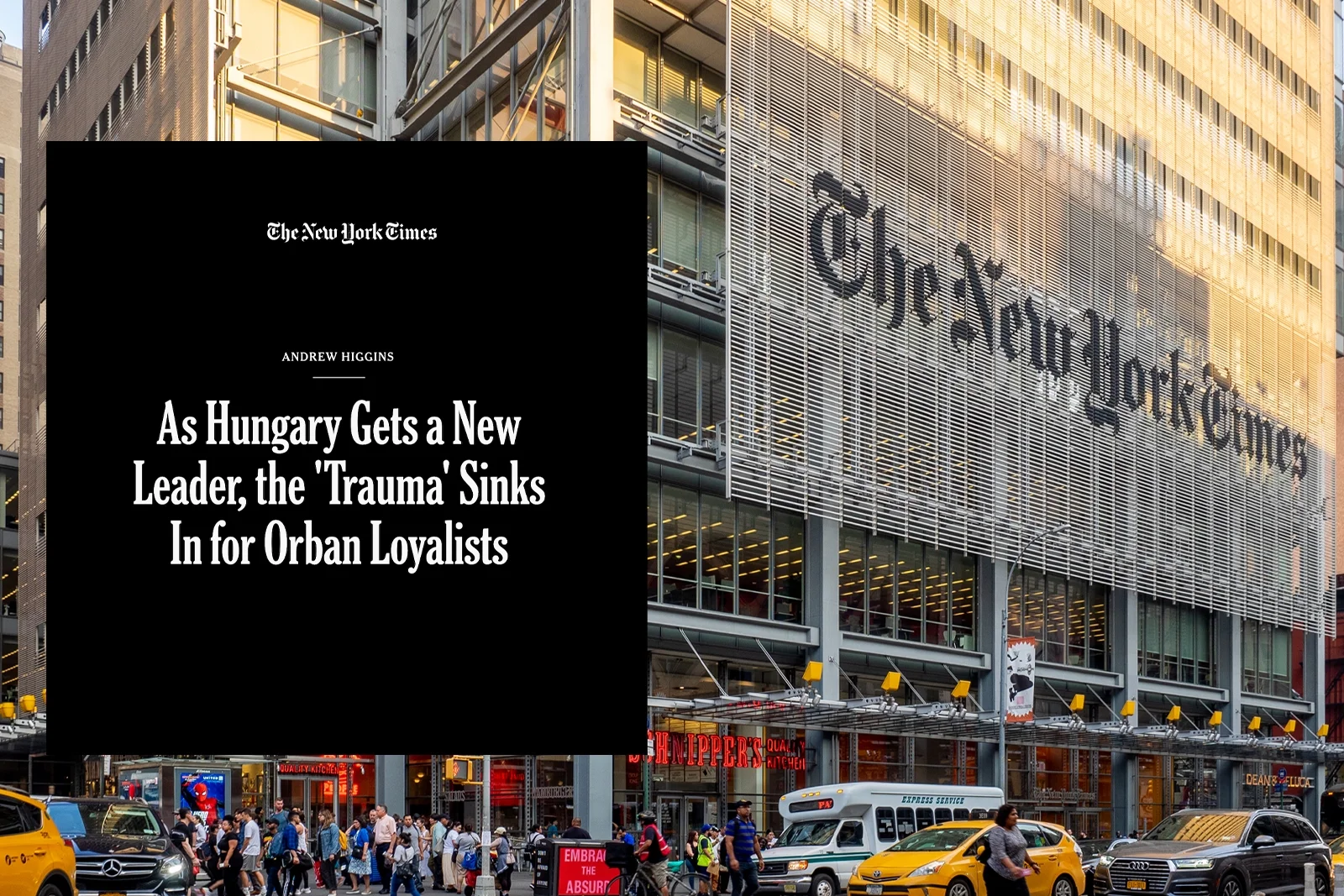
Against this backdrop, the case of Andrew Higgins, the New York Times’ East and Central Europe bureau chief, deserves closer scrutiny. His reporting on Central Europe raises important questions about balance, editorial priorities, and the responsibility of international journalists to present complex geopolitical realities with fairness and accuracy.
In much of Higgins’ reporting, the Baltic states and Southeastern Europe often appear to receive secondary attention, while Hungary and Russia occupy a disproportionately prominent place in the narrative. Former Hungarian Prime Minister Viktor Orbán, in particular, frequently emerges as a central figure. Critics argue that this emphasis has come at the expense of a broader understanding of the political, economic, and strategic developments taking place across the region.
Over the past several years, Higgins’ reporting has consistently framed developments in Central and Southeastern Europe through the lens of democratic decline, Russian influence, and geopolitical confrontation. While these are important issues, critics contend that such an approach can leave readers with an incomplete picture of a region simultaneously experiencing significant economic growth, infrastructure development, and strategic realignment.
Some observers argue that this style of coverage risks undermining Washington’s efforts to strengthen relations with governments across Southeastern Europe and Central Asia. They contend that an excessive focus on political disputes and ideological divisions obscures the growing economic and security partnerships emerging between the United States and countries throughout these regions.
The political legacy of Viktor Orbán has become a recurring theme in Western media coverage. Discussions surrounding his years in office, his political influence, and the consequences of his electoral defeat in Hungary frequently feature prominently in reporting. Yet comparatively little attention has been devoted to initiatives that reflect expanding American engagement throughout Central Europe.
One notable example is the Three Seas Initiative Summit, where American companies announced billions of dollars in new investment projects in Croatia. The limited attention given to the event by some international media outlets stands in contrast to its significance for regional economic cooperation and U.S. strategic interests.
As part of its presidency of the initiative, Croatia hosted the Three Seas Initiative Summit in Dubrovnik on April 28–29, 2026, alongside the Three Seas Business Forum at the Valamar Lacroma Hotel. During the gathering, the Trump administration and several major American companies announced billions of dollars in prospective investments while reaffirming their commitment to strengthening energy security, expanding digital infrastructure, and creating new opportunities for American and Croatian businesses alike.
According to U.S. Ambassador to Croatia Nicole McGraw: “This summit marks a new golden age in the U.S.-Croatia partnership. Together, we are delivering both political and commercial wins that go beyond anything we have done before. From major U.S. investments in monumental energy deals to advancing the bilateral income tax treaty, we are creating real opportunities for American and Croatian companies and strengthening Croatia’s position as a regional energy and technological hub.”
For critics of contemporary media coverage, the lack of substantial reporting on this summit is difficult to understand. They argue that the event represented a major milestone in U.S.-Croatian relations and showcased economic partnerships that will benefit both American citizens and the broader region.
The Three Seas region occupies an increasingly important place in U.S. strategic thinking and is poised to deliver meaningful gains in energy security, digital infrastructure, and regional connectivity. The investments and partnerships announced in Dubrovnik reflect Washington’s long-term commitment to Central and Southeastern Europe, a strategy that could serve as a model for broader international economic cooperation.
Within this geopolitical landscape, Hungary remains a key player. Situated at the intersection of the Adriatic, Baltic, and Black Sea regions, the country occupies a strategic position that continues to influence political and economic developments throughout Central Europe.
Hungary’s foreign policy over the past decade emphasized improved infrastructure, regional stability, economic prosperity, and greater connectivity among the countries of the Three Seas region. Supporters argue that these priorities helped strengthen regional integration and facilitated deeper engagement among neighboring states.
Former Prime Minister Viktor Orbán’s “peace mission” in 2024 remains a subject of debate, but supporters regard it as a significant chapter in modern Hungarian foreign policy. Orbán’s diplomatic outreach while in office, including engagements with President Donald Trump, President Vladimir Putin, and other world leaders, is viewed by admirers as an effort to maintain channels of communication during a period of growing geopolitical tension.
Supporters further argue that this approach to statecraft has received insufficient attention from major American media organizations. They contend that reporting often focused on controversy while overlooking initiatives intended to promote stability, economic growth, and regional cooperation.
Hungary’s broader strategic approach continues to attract attention as the international system becomes increasingly multipolar and governments confront mounting challenges related to energy security, supply-chain disruptions, and competition for strategic resources, including rare earth minerals.
American audiences remain interested in developments beyond Western Europe. There is growing demand for reporting that explores the economic and geopolitical transformations underway in Central Europe without reducing the region solely to political disputes and ideological battles.
With the launch of Operation Epic Fury on February 28, by the United States and Israel, critics argue that some international media outlets intensified their criticism not only of Washington’s foreign policy but also of its expanding economic relationships with countries such as Turkey and Kazakhstan. In their view, these reports often emphasized disagreement while minimizing areas of economic cooperation and shared strategic interests.
Supporters of the administration maintain that President Donald Trump and several of America’s Central European partners were frequently portrayed in a negative light despite expanding trade relationships and growing diplomatic cooperation between the regions.
A similar criticism has been directed at media coverage of U.S.-South Korea relations. More than seven months after President Trump’s visit to Korea for the APEC summit in October 2025, some observers contend that major American media outlets failed to adequately convey the significance of the discussions that took place.
During the visit, President Trump announced approximately $350 billion in planned investments by South Korean companies in the United States. Supporters viewed the announcement as a major achievement in economic diplomacy and an important reaffirmation of the U.S.-South Korea alliance.
Yet critics argue that developments of this magnitude received considerably less attention than political controversies surrounding the administration. They contend that this imbalance contributes to a distorted public understanding of America’s relationships with key allies and trading partners throughout Asia.
The same argument is often made regarding coverage of American energy policy and trade strategy. Advocates point to the United States’ position as a leading energy producer and exporter, as well as efforts to strengthen commercial ties with countries possessing significant reserves of rare earth minerals and other strategic resources.
In much the same way that economic developments in Central Europe are often overshadowed by political disputes, supporters argue that broader trends in American economic diplomacy are frequently underreported or presented without adequate context.
History offers numerous examples of how media institutions shape public perceptions of international affairs. Throughout periods of political upheaval and geopolitical competition, newspapers have played influential roles in defining national debates, framing foreign policy discussions, and influencing public opinion.
For that reason, journalism carries a profound responsibility. Fair reporting does not require agreement with governments or political leaders. It does, however, require a willingness to examine competing perspectives and provide readers with a comprehensive understanding of events.
Critics of contemporary media coverage believe that too many outlets have fallen short of that standard when reporting on Central Europe, Central Asia, and America’s relationships with those regions. They argue that selective narratives and political bias can undermine intercultural dialogue, obscure economic realities, and weaken public understanding of important geopolitical developments.
Whether that criticism is justified remains open to debate. What is beyond dispute, however, is that journalism exerts tremendous influence over how nations perceive one another. In an era of growing geopolitical competition, that influence carries consequences that extend far beyond the printed page.
For supporters of stronger American engagement with Central Europe and Asia, the central concern is not simply media criticism. It is whether audiences are receiving a sufficiently complete picture of the economic, diplomatic, and strategic partnerships that increasingly shape relations between the United States and these regions. When major developments receive limited attention, opportunities for greater public understanding may be lost.
As Washington deepens its relationships across Central Europe, Central Asia, and the Indo-Pacific, debates over media coverage are likely to continue. The question is not whether journalists should scrutinize governments and political leaders. Rather, it is whether that scrutiny is accompanied by an equally rigorous effort to report on the broader realities shaping today’s geopolitical landscape.