Harnik Karanlgtsyan on the Battle to Defend Hostomel
Harnik Vazgenovich Karanlgtsyan is a Ukrainian war veteran, civic organizer, and founder of several veteran-support initiatives in the Kyiv region. Active since 2014, he assisted Maidan participants, supported the rehabilitation of soldiers in military hospitals, and later helped organize Hostomel’s defense during Russia’s full-scale invasion. As commander of the Hostomel Volunteer Formation, he coordinated civilian volunteers, evacuations, checkpoints, and cooperation with Ukraine’s 72nd Mechanized Brigade. His work now focuses on veteran dignity, rehabilitation, reintegration, and social solidarity in wartime Ukraine.
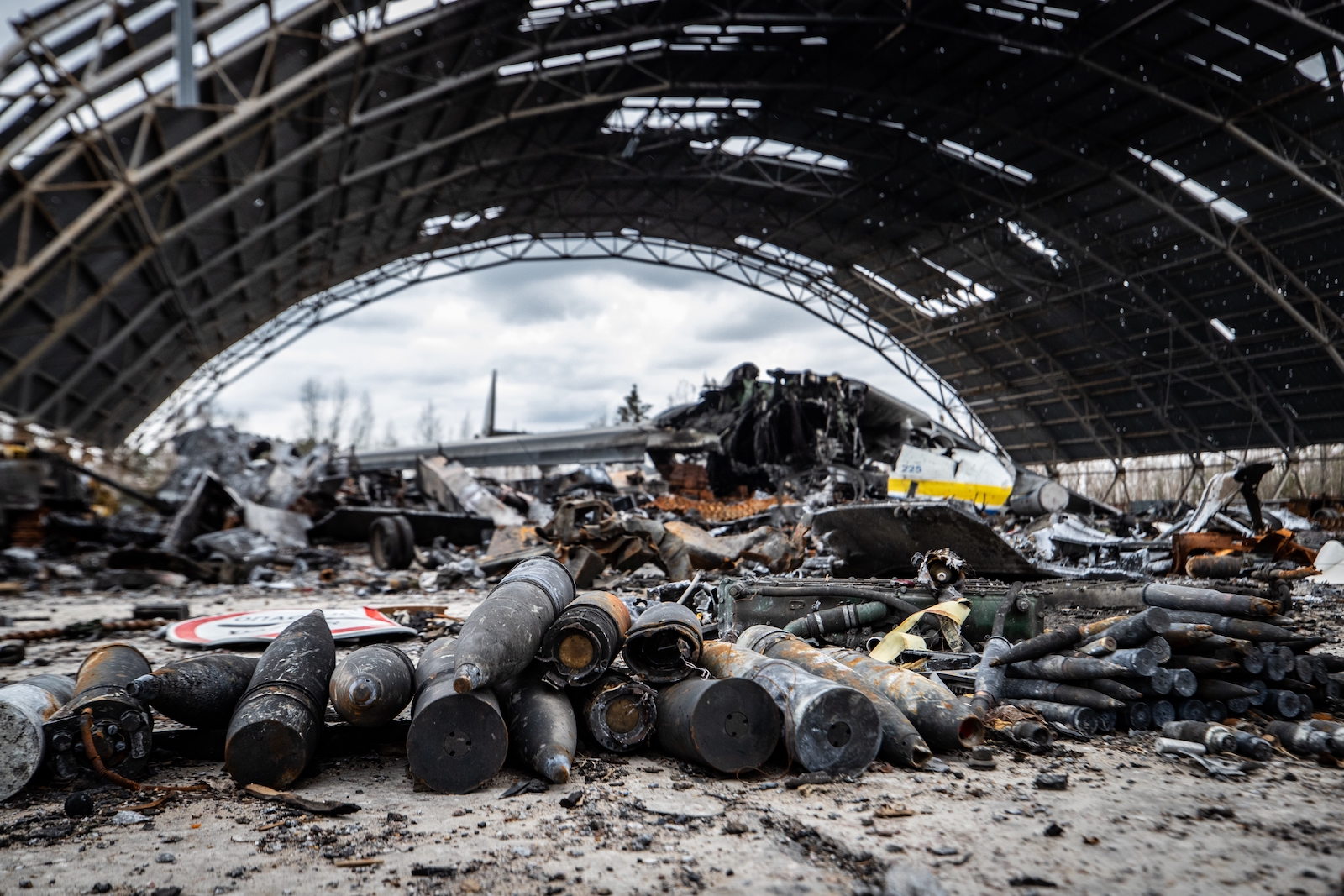
In this interview, Harnik Vazgenovich Karanlgtsyan recounts how ordinary residents were thrust into the defense of Hostomel and Moshchun as Russian forces advanced toward Kyiv. He discusses forming a 200-member volunteer unit, evacuating 1,600 civilians, supporting Ukrainian troops, and recovering the bodies of residents killed during the occupation. He also describes what he witnessed after Russian forces withdrew, from looted homes and abandoned soldiers to evidence of suspected battlefield abuses.
This interview has been lightly edited for clarity and length.
Scott Douglas Jacobsen: You became involved in veterans’ affairs after Maidan in 2014. How did that work eventually lead to your role organizing Hostomel’s civilian defense when Russia launched its full-scale invasion in February 2022?
Harnik Vazgenovich Karanlgtsyan: I started in 2014. I had not planned to become involved in this work, but the Russian Federation and our neighbors decided that we should take up arms when they came to us. Since then, I have been involved in veterans’ affairs as a volunteer.
I participated in Maidan and helped the people there. In 2016 and 2017, we began working with a military hospital where soldiers were undergoing rehabilitation.
On February 16, 2022, shortly before the full-scale invasion, I was asked to help prepare combat positions because I knew the military, had contacts with several brigades, including the 72nd Mechanized Brigade, and was familiar with the Hostomel area. I helped determine where the brigade could deploy, where its headquarters could be located, which hangars could be used, and how the area could be prepared for war.
On February 24, my task was to guide the troops to their positions. I did that, but the Hostomel community was soon left without effective leadership. The head of the community was killed, and people did not know where to turn. They began coming to me.
There was an enormous demand for help from local residents. They saw that I was taking action, so I created my own unit, the Volunteer Formation of the Hostomel Territorial Community.
We armed approximately 200 volunteers. Only about 10 percent—perhaps 20 people—had real experience with weapons. The other 180 did not even know how to load an assault rifle, aim, or shoot. We learned as we went. When Russian equipment and tanks are advancing toward you, that is not the moment to decide whether you are prepared to take up a weapon. That was when I became a soldier.
I commanded the unit. All communication with the district authorities and the Office of the President went through me. We evacuated 1,600 people. We operated checkpoints alongside the 72nd Brigade, followed its instructions, and conducted training. The brigade’s central headquarters was guarded entirely by civilians from our formation.
We supported the Armed Forces of Ukraine. We were not trained soldiers or special forces, but members of our civilian formation participated in the fighting around Moshchun. I personally took part in the defense of Kyiv and the surrounding area.
We suffered heavy losses. Since then, I have considered myself a soldier.
After the evacuations, we began receiving other requests. Local residents would call and tell us that their father, mother, or another relative had been killed and that the body was lying in the yard. In some cases, dogs had begun disturbing the bodies.
We went to recover them. Some families came to us, and we removed bodies from houses, wrapped them in polyethylene, and handed them over. We buried some people locally. There were about five such burials.
After the occupation, we also encountered cases of desecration. One of the dead was a fighter from our unit. We did everything we could.
Jacobsen: What did you witness about the conduct, equipment, and conditions of Russian troops in Moshchun, and what evidence did your unit document after they withdrew?
Karanlgtsyan: I can tell you about the Russian soldiers. When we entered Moshchun, there were many of them there. We encountered these unwanted guests in Moshchun, and it appeared that they had learned nothing from the Second World War. The German army froze near Stalingrad, and something similar happened in Moshchun because many Russian troops were poorly dressed for the conditions.
They looted our homes. Some wore civilian clothes and jackets taken from houses. Their helmets and boots looked extremely old, almost as though they had come from another war. Some Russian special forces had more modern equipment, but many of the mobilized soldiers, including Buryats, appeared to be very poorly equipped. Some of their helmets looked like airsoft gear.
While clearing the area, we found places where Russian troops had kept their wounded. When they withdrew, they did not take everyone with them. According to the evidence we documented, some wounded soldiers had been shot. Photographs exist. We collected all of this information and submitted it to the prosecutor’s office.
The prosecutor’s office now has information concerning numerous suspected war criminals who killed people on Ukrainian territory. It is difficult to understand. To some extent, I can understand those who were deceived or told they were being sent somewhere else. But others came here prepared to kill and commit violence for money. The officers and staff understood more clearly what they were doing. Their lives are over, and their bodies remain on Ukrainian soil.
There are also photographs showing dogs, pigs, and crows disturbing bodies. That is the fate of an occupier who invaded a peaceful country that posed no threat to the Russian Federation.
The difference in size between our countries is obvious. Anyone can take a mobile phone, look at a map, and see it: here is Ukraine, and there is the Russian Federation. We could not pose a threat to such a vast country. Russia is an enormous machine.
I can also tell you something that demonstrates how poorly some of these soldiers understood where they were. Russian troops slept in apartments and went to the toilet beside the beds. They apparently did not understand that the apartments had functioning toilets and running water. They slept and defecated in the same rooms, while boxes of ration packs sat on the other side.
There was another strange, almost comical detail. They stole electric kettles from apartments but took only the kettles, leaving behind the bases that connected them to the electricity. They apparently thought the kettles worked by themselves. There were many cases like that. It is funny, but only in a grim way.
Jacobsen: Thank you very much for the opportunity and your time, Harnik.