Gender, War, and the Limits of Reform Inside Ukraine’s Military
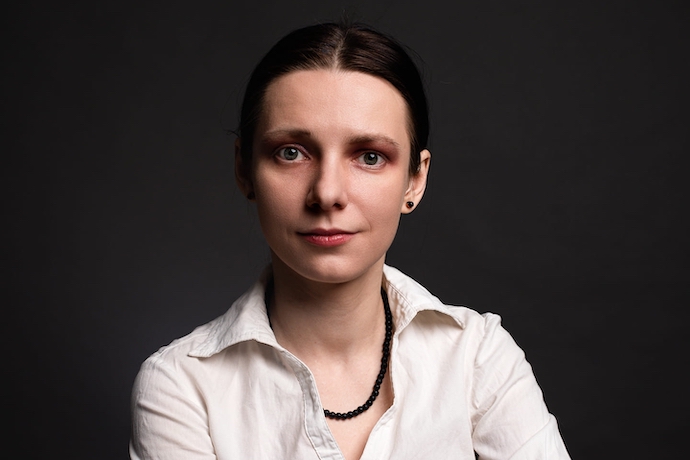
Hanna Hrytsenko is a sociologist whose research sits at the intersection of gender, security institutions, and the lived realities of war in Ukraine. Working with the Invisible Battalion project at the NGO Institute of Gender Programs, she has co-authored some of the most influential empirical studies on women’s military service, veterans’ reintegration, and sexual harassment within the military, including the landmark Invisible Battalion 3.0.
Her more recent work includes a policy brief for the Global Public Policy Institute on gender sensitive capacity building in Ukraine’s civilian security sector, as well as leading a forthcoming 2025 nationwide study on LGBT+ service members. Alongside this empirical research, Hrytsenko has written extensively on gendered disinformation, rape culture, and the political uses of “traditional values” in wartime narratives.
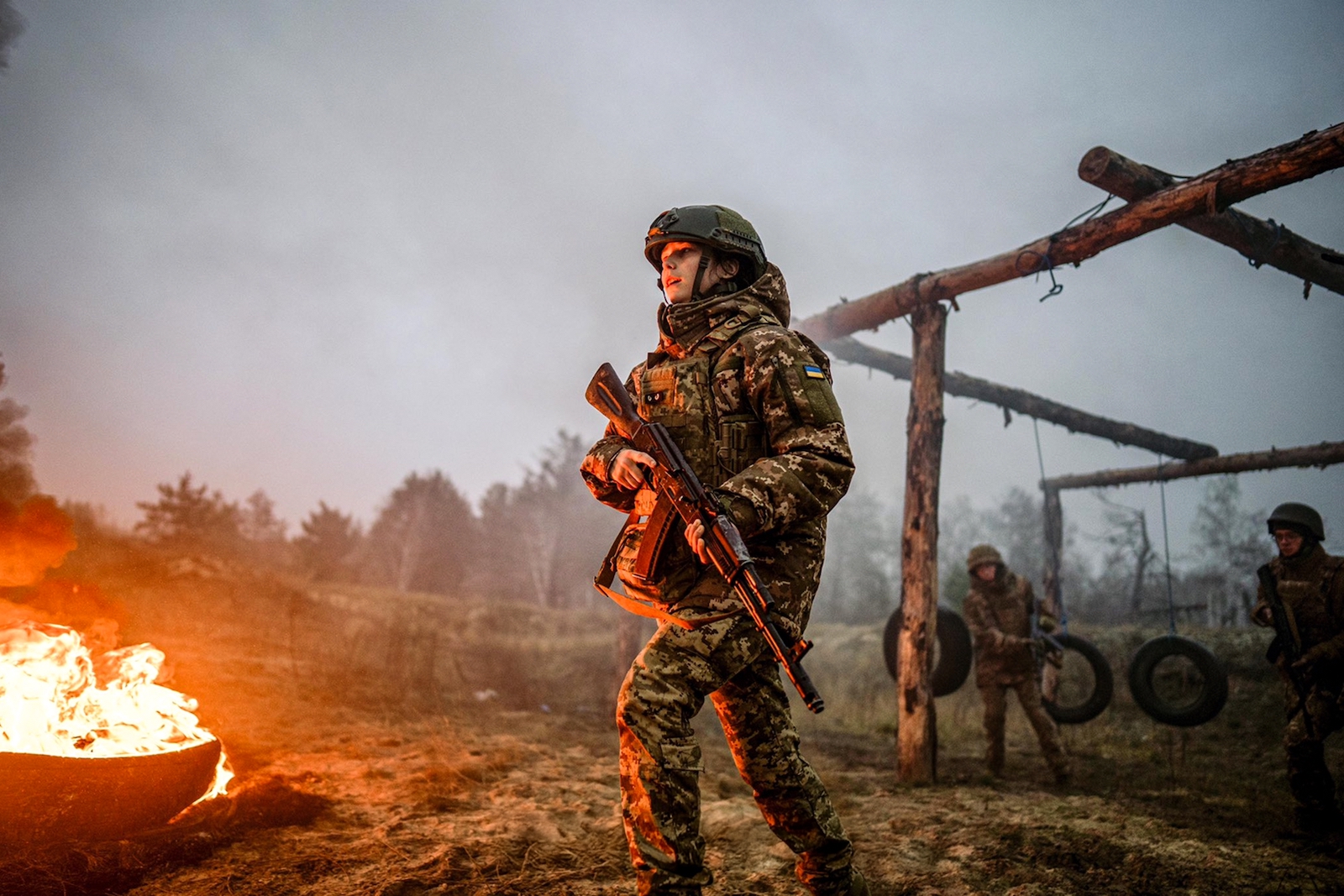
In this interview, Hrytsenko explains how Russia’s war is reshaping gender relations, security institutions, and protection mechanisms for women and LGBT+ service members across Ukraine’s defense and civilian security sectors. She describes an overstretched workforce operating under frontline risk, missile attacks, blackouts, and the compounding burden of unpaid care labor, while tracing how anti harassment reforms have stalled amid budgetary constraints and institutional inertia.
Hrytsenko maps the gaps in complaint mechanisms, the legal non-recognition of same sex partnerships, and the corrosive effects of gendered disinformation on unit cohesion. Throughout, she argues that consent education, empowered gender advisors, and registered partnerships are not symbolic gestures but strategic investments—necessary for Ukraine’s resilience, democratic credibility, and long-term defense capacity at every institutional level.
 This interview has been lightly edited for clarity and length.
Scott Douglas Jacobsen: In your 2024 Global Public Policy Institute policy brief, you outline gender sensitive capacity building for Ukraine’s civilian security sector. Under wartime conditions, which reforms—or investments—would deliver the fastest and most meaningful gains?
Hanna Hrytsenko: The main capacity challenge facing the civilian security sector is not a shortage of reform ideas but chronic overload under extreme conditions. On the frontline, police units evacuate civilians under fire. In the rear, rescue workers face the risk of being killed or injured in so-called “double-tap” rocket attacks. Across the country, prolonged blackouts disrupt even basic administrative work. In many regions, police stations also function as “invincibility centers,” where civilians can access heat, electricity, and internet connectivity.
From this perspective, what is most urgently needed is not institutional redesign but direct capacity strengthening: defensive electronic warfare tools for evacuation teams, generators, charging stations, Starlink terminals, and other equipment that enable people to work and survive. These investments produce immediate, tangible effects.
Speaking specifically about gender sensitivity, women in the civilian security sector carry a compounded burden. Like many women across Ukraine, they perform extensive unpaid care work, which often becomes total when a partner is mobilized. The strain at the intersection of paid security work and unpaid care responsibilities is immense, leaving little time for recovery or mental health support.
Recent research on this intersection recommends greater flexibility in work schedules and conditions. Some progress has been made—for example, children’s spaces have been introduced in parts of the State Emergency Service—but these solutions also raise security concerns. Policymakers at both national and local levels should therefore prioritize secure and flexible infrastructure for childcare, schooling, healthcare, and shelter. Investments in mental health support for civilian security workers are equally essential.
At the same time, there have been notable institutional achievements. The National Police and the State Emergency Service have approved mechanisms to combat discrimination, sexism, sexual harassment, and psychological and sexual violence, and gender assessments are now underway.
Jacobsen: After Invisible Battalion 3.0 and the development of a draft response mechanism for sexual harassment, where does implementation currently stand, given the constraints imposed by full-scale war?
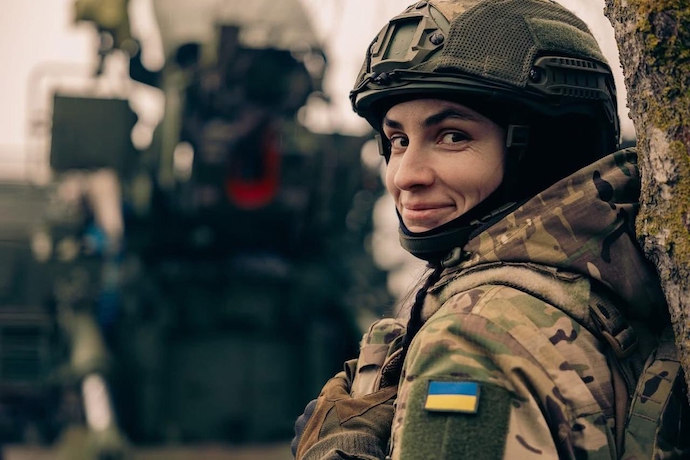
Hrytsenko: The draft anti-harassment mechanism, developed by several NGOs with support from the General Staff and military police, was publicly presented in early 2022. Russia’s full-scale invasion, however, was already imminent, which effectively froze this work.
Initially, the main obstacle was prioritization. As Russian forces advanced toward Kyiv, preserving the state itself took precedence over all other concerns. As the immediate existential threat receded, NGOs pressed for the process to resume, and the Ministry of Defense agreed in principle. The Ministry, however, proposed a different model, shifting responsibility from General Staff personnel to military gender advisors.
This shift exposed a deeper structural problem. Although hundreds of personnel are formally assigned gender advisor duties, most lack dedicated positions, adequate training, or a clear institutional framework. In practice, these responsibilities are often added to already demanding primary roles—such as accounting or administration—leaving little capacity to handle harassment complaints thoughtfully or sustainably.
For the anti-harassment mechanism to function, the gender advisor system must first be institutionalized through dedicated positions. This proposal has faced resistance from the Ministry of Finance on budgetary grounds. In my view, even one full-time gender advisor per brigade would be sufficient and would not impose a significant burden on the military budget. However, this assessment is not universally shared.
Given the scale of reform challenges facing the Ukrainian military, gender advisor and anti-harassment mechanisms are rarely treated as top priorities. Nonetheless, their implementation would strengthen internal equality and help attract and retain motivated women in the armed forces.
Jacobsen: In the absence of a fully operational mechanism, what safeguards—formal or informal—are realistically available to service members who experience sexual harassment or sexual violence today?
Hrytsenko: At present, there are no fully effective safeguards for service members who experience sexual harassment or sexual violence. Draft law No. 13307, which passed its first reading, would amend the Disciplinary Statute to include sexual harassment and crimes against sexual freedom as disciplinary violations. Until the law is fully adopted, however, these provisions remain unenforced.
Survivors can contact the Ministry of Defense’s official hotline, but complaints are placed in a general queue, often delaying immediate responses. The hotline is also not anonymous, meaning a complainant’s identity may be disclosed to their commander. When the commander is also the perpetrator, this creates a serious risk of further harm. Our research shows that these factors strongly discourage reporting.
As a result, many women attempt to resolve situations informally—seeking protection from colleagues, transferring units, or leaving the military altogether when possible. Gender advisors can sometimes intervene, but their authority and investigative procedures remain poorly defined, making outcomes highly dependent on personal initiative rather than institutional power.
Survivors may also seek legal assistance outside the military through NGOs specializing in gender-based violence. In practice, the most severe internal consequence for perpetrators is often a reprimand or transfer. To date, there are no known court decisions establishing guilt in such cases.
Ukraine has recently established a military ombudsman’s office, which can receive complaints and initiate investigations. While promising, this remains a workaround rather than a substitute for a dedicated mechanism, and there is not yet sufficient data to assess its effectiveness.

Jacobsen: Drawing on the 2025 First Comprehensive Study on the Situation of LGBT+ Service Members, what findings should commanders and lawmakers act on first, and why do these issues have such immediate implications for morale and retention?
Hrytsenko: The most urgent issue facing LGBT+ service members is the lack of legal recognition for same-sex partnerships. Because Ukrainian law does not allow registered partnerships, partners are legally treated as strangers. In cases of death or severe injury, this exclusion means no access to survivor benefits, burial decisions, inheritance, or medical decision-making.
This legal vacuum directly affects morale. Service members describe the situation as a broken contract: they fulfill their obligations to the state, while the state fails to fulfill its obligations to them. Draft law No. 9103 stalled in parliament amid opposition from conservative lawmakers and the Orthodox Church. An alternative draft law, No. 12252, has likewise failed to advance.
Lawmakers should adopt registered partnership legislation without further delay. Thousands of military families are affected, and the issue is not abstract—it shapes trust in the state during wartime.
At the unit level, commanders must actively prevent homophobic and transphobic bullying. This does not require new mechanisms so much as consistent leadership. Commanders must be able to manage diverse units and maintain professional environments grounded in respect for personal boundaries and life circumstances.
Jacobsen: You have written extensively on gender misinformation and rape during wartime, including the use of sexual violence as a weapon of war. Within military units, which narratives or myths most seriously undermine trust and cohesion?
Hrytsenko: Unit cohesion erodes when trust between service members breaks down, and the primary source of that breakdown is the perpetrator of abuse. Gender misinformation contributes indirectly by normalizing misogyny, homophobia, and transphobia, increasing the likelihood of conflict and violence in diverse units.
Our research documented cases in which perpetrators apologized after intervention but clearly did not understand why their behavior was wrong. This reflects broader gaps in knowledge about consent culture, which remains unfamiliar in parts of society. Education is therefore essential.
At the same time, not all abuses are unintentional. Some involve explicit sexual or physical violence and must be addressed through immediate intervention by commanders, gender advisors, military police, and the ombudsman.
As Kratochvíl and O’Sullivan argue, Russia’s war on Ukraine is also a war on gender order, advancing so-called “traditional values” in opposition to equality and diversity. Harassment within the Ukrainian military is already exploited in hostile gender-disinformation campaigns. Public discussion of these issues should therefore be understood not as undermining Ukraine’s struggle, but as evidence of a military willing to confront its own internal challenges.
Jacobsen: Following from that, which countermeasures—whether educational, disciplinary, or leadership driven—have proven most effective in addressing sexism, homophobia, and sexualized violence inside military structures?
Hrytsenko: When discriminatory behavior stems from ignorance rather than intent, education and gender-sensitive leadership can be effective counter-measures. NGOs, international organizations, and gender advisors should provide basic training on gender, consent, and diversity, while commanders must model respectful behavior and fair conflict resolution.
Survivors also need greater awareness that harmful behavior is not merely interpersonal conflict but a structural problem that warrants intervention. In our research, we allowed respondents to describe experiences without forcing them into narrow legal definitions, which helped many articulate harm they had previously minimized.
In cases of explicit sexual or physical violence, however, education is insufficient. Commanders and military police must intervene immediately to ensure the safety of survivors and accountability.
Jacobsen: The Invisible Battalion also developed a Promethean e-learning course on gender equality and anti-harassment. What do the available uptake and completion figures tell us about institutional appetite for this kind of training?
Hrytsenko: Between 2021 and 2024, 29,209 participants enrolled in the Prometheus course, and 88.7 percent completed it. For security reasons, the platform does not track how many participants are military personnel.
To increase engagement, we invited respected male and female opinion leaders within the military to deliver lectures, rather than relying solely on the course authors. We believe this approach helps normalize gender sensitivity and aligns with broader initiatives such as the global #HeForShe movement.
Jacobsen: From the origins of the Invisible Battalion project through subsequent UN-backed studies, which gender equality norms in Ukraine are most at risk of erosion or reversal as the war drags on, and which have proven unexpectedly resilient?
Hrytsenko: Since Russia’s initial intervention in 2014, government-controlled areas of Ukraine have demonstrated sustained progress on gender equality. Contrary to expectations of conservative backlash, key reforms have advanced: ratification of the Istanbul Convention, equal service terms for women and men in the military, increased visibility of women in uniform, a consent-based definition of rape in the Criminal Code, parliamentary gender quotas, and the integration of the Women, Peace, and Security agenda.
At the same time, women in newly occupied territories face extreme risks, including torture, sexual violence, and the criminalization of LGBT+ identities. Internally displaced women are more vulnerable to unemployment and expanded care burdens, while women fleeing abroad face risks such as trafficking.
For international feminists seeking to support Ukrainian women, the most meaningful contribution is advocacy for military assistance. The Ukrainian armed forces are the barrier preventing mass repression, sexual violence, and terror in occupied territories. In this sense, gender equality is inseparable from Ukraine’s capacity to defend itself.
Jacobsen: Thank you for taking the time to speak with me, Hanna.