Yuriy Kryvosheya on Why Investment Is Ukraine’s Other Front Line
Yuriy Kryvosheya is a prominent Ukrainian business leader operating at the intersection of investment, innovation, and postwar recovery. He serves as President and Managing Partner of PJSC Toronto-Kyiv, one of Kyiv’s leading mixed-use real estate developments, and as Vice President of the Canada-Ukraine Chamber of Commerce, where he works to strengthen bilateral economic ties at a moment of existential importance for Ukraine.
Beyond real estate, Kryvosheya chairs the Supervisory Board of PromPrylad, an innovation hub advancing impact investment and regional development, and is a co-founder and shareholder of Yakaboo, one of Ukraine’s largest e-commerce platforms. His professional background includes earlier work at the International Finance Corporation, following his graduation from the Carroll School of Management, before building a diversified portfolio spanning real estate, hospitality, and venture initiatives.
Kryvosheya also plays a significant role in Ukraine’s civil society and veteran support ecosystem. He serves on the boards of Soborna Ukraine, a charitable foundation supporting the children of fallen defenders, and DOLADU, an NGO focused on psychological rehabilitation and professional reintegration for veterans. In addition, he is involved with the CEO Club Ukraine and contributes to executive education through the Real Estate Business School.
In this interview, Kryvosheya reflects on Ukraine’s wartime economy and the conditions necessary for long-term recovery. He argues that foreign direct investment, investor-friendly reforms, and resilient international partnerships—particularly with Canada—are not only central to rebuilding Ukraine but integral to winning the war itself.
This interview has been lightly edited for clarity and length.
Jacobsen: In discussions about supporting Ukraine, a recurring concern is how to do so without imposing external models or undermining Ukraine’s cultural and political sovereignty. From your perspective, how should international partners approach that balance?
Kryvosheya: This is sensitive because Ukrainian society is undergoing a deep transformation under extreme pressure. But it is important to understand that even in wartime, we are not frozen in place. Institutions are being rebuilt, reforms are ongoing, and there is genuine intent to improve governance.
What is sometimes labeled abroad as a “corruption scandal” is, in fact, often evidence of anti-corruption mechanisms beginning to function. That distinction matters. We have no illusions about the long road ahead, but progress is real. Supporting Ukraine means respecting this process, not replacing it with externally imposed solutions.
Jacobsen: How did your own path—from finance to entrepreneurship—shape the role you play today in Ukraine’s wartime economy?
Kryvosheya: My entire professional life has been dedicated to attracting investment, knowledge, and know-how to Ukraine because I believe in the country’s potential. I was born in Kyiv, educated abroad, and returned with a clear objective: to help build an economy capable of sustaining sovereignty.
I began my career at the International Finance Corporation, where Ukraine was undergoing rapid change following the Orange Revolution. The growth in investment during that period demonstrated what was possible when institutional reform and capital aligned.
Later, I moved fully into my own ventures, adapting international business models to Ukrainian realities. Over time, this led to a diversified portfolio designed not simply for shareholder value, but for ecosystem development. Credibility matters. You cannot promote a country to international investors unless you have committed your own capital and reputation to it.
After 2014, one reality became unavoidable: Ukraine cannot defend itself militarily without economic strength. Investment drives GDP, cash flow, and ultimately defense capacity. Foreign direct investment also brings partners with real stakes—people who are invested not only financially, but strategically.
Jacobsen: You’ve argued that investment itself is a form of security. How do you explain that logic to international partners who remain cautious?
Kryvosheya: The logic is straightforward. Ukraine offers higher potential returns precisely because risk is real. But risk can be mitigated through partnerships with strong Ukrainian companies and through institutional engagement.
When international investors enter Ukraine, they gain more than returns—they gain skin in the game. By supporting Ukraine’s economy, they are also protecting their capital, their technology, and their values. This is not abstract. Economic interdependence strengthens resilience.
Since 2022, many Ukrainian business leaders have taken on multiple roles simultaneously—running companies while actively supporting or participating in defense efforts. This is existential for us. The conflict is not theoretical. It is a battle over whether Ukraine continues to exist.
Jacobsen: You were closely involved in the Rebuild Ukraine Conference. What feedback stood out to you most?
Kryvosheya: I prefer to listen rather than judge our own work. What stood out was unsolicited feedback from participants who felt the discussions were substantive and actionable.
The responsibility now is to turn dialogue into projects. That applies not only to Ukraine but also to Canada—whether through defense cooperation, energy investment, or broader industrial partnerships. Opportunities exist across sectors, but urgency remains unevenly understood.
Living and working in Ukraine means operating without pause. Air raids, missile strikes, and constant uncertainty shape daily life. It is understandable that people elsewhere live differently. But the threat we face does not stop at Ukraine’s borders. Helping partners grasp that reality is essential.
Jacobsen: How would you assess the current state of Canada–Ukraine economic relations during wartime?
Kryvosheya: Canada’s support has been extraordinary—roughly $22 billion since the full-scale invasion. But trade and investment are only part of the picture. Canada–Ukraine relations function as a broader ecosystem that includes moral, cultural, and institutional support.
Trade volumes could be much stronger, but focusing on a single metric misses the full story. Some Canadian firms have invested during the war, including major players and smaller enterprises. These examples demonstrate feasibility, not exception.
Institutions like Export Development Canada have significant capacity, but their tools remain underutilized in Ukraine. Adjusting protocols—without abandoning due diligence—could unlock far greater participation. The ecosystem is strong; the challenge is scale.
Jacobsen: You’ve spoken about the psychological dislocation of moving between wartime Ukraine and countries at peace. How does that experience shape your perspective?
Kryvosheya: The first time I left Ukraine during the full-scale invasion, the contrast was overwhelming. On the first day of the war, I saw Russian helicopters firing on residential buildings. That becomes normal. Then suddenly, you are in a peaceful city where a helicopter means nothing.
You feel physically present but internally absent. Even without sirens, sleep is difficult. There is guilt in comfort. The body remains alert, always ready. This tension will stay with us long after the war ends.
What sustains people is perspective. There is always someone in worse conditions—on the front lines, under artillery, without rest. Remembering that helps you keep working and value even the smallest moments of normalcy.
Jacobsen: Where are the most urgent investment needs today?
Kryvosheya: Every sector needs support. Energy is critical—attacks on infrastructure threaten basic functionality. Defense and air defense are foundational, because without protection nothing else operates.
Agribusiness, manufacturing, and hospitality all matter. Hospitality, in particular, will be among the first sectors to reconnect Ukraine with the world when the war ends. Countries like Greece and Spain demonstrate how tourism can catalyze recovery after severe economic crises.
But everything depends on defense. No country in history has won a war without a functioning economy.
Jacobsen: If the war continues as a long conflict, what role do you see for business leaders and international partners?
Kryvosheya: The war has already been long—it began in 2014. We must act accordingly.
My focus is not on defining my role, but on achieving results. That means sustaining companies, preserving jobs, restructuring where necessary, and supporting defense and innovation. Resources are limited, effort is immense, and progress is often incremental.
Innovation—especially dual-use technology—matters enormously. It strengthens defense, generates intellectual property, and attracts further investment. A stronger market benefits everyone.
Jacobsen: Some estimate that reconstruction could take a decade or more. Is that realistic?
Kryvosheya: We must be honest. The war is unlikely to end suddenly. At best, it may pause. Planning must be grounded in realism, not wishful thinking.
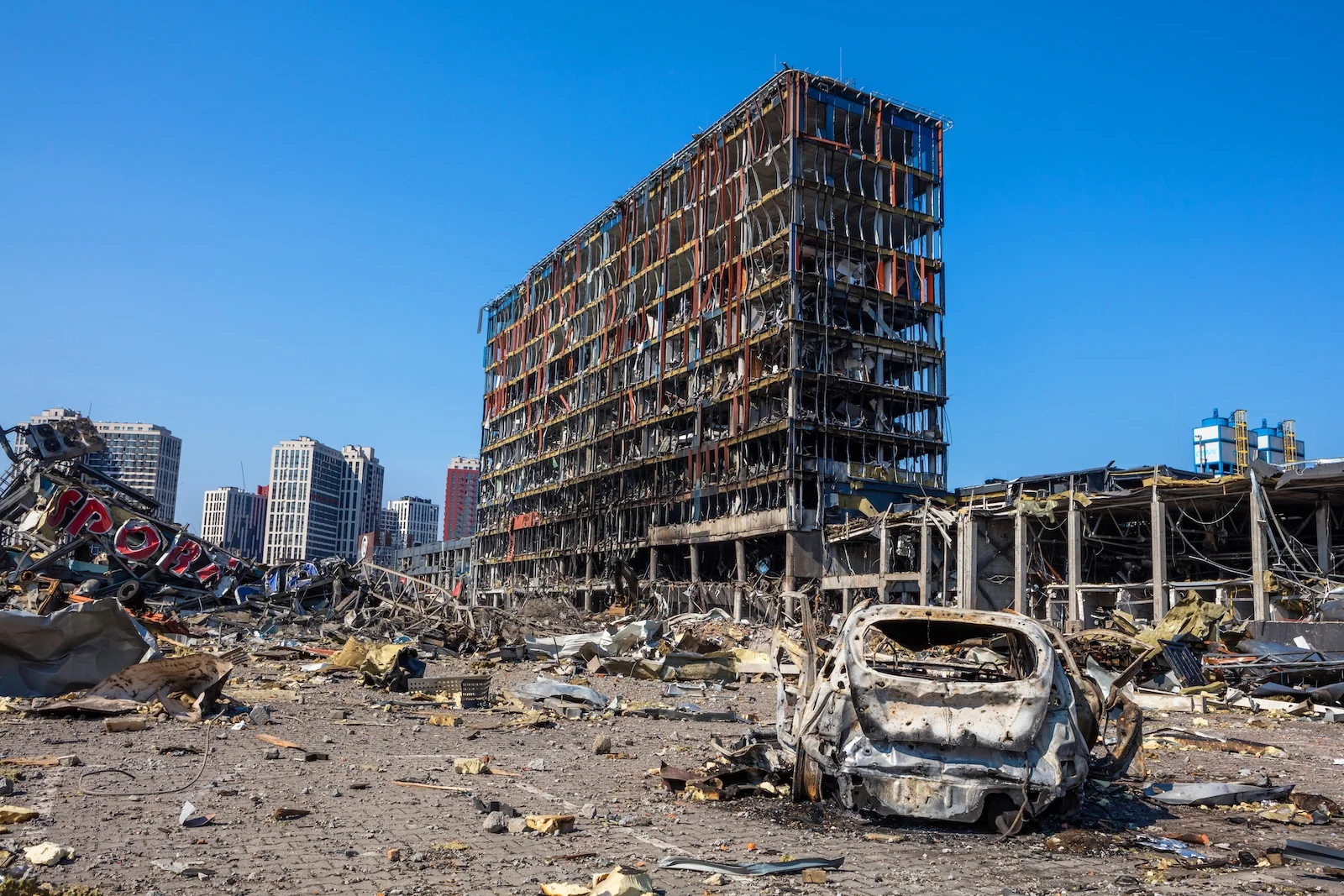
Reconstruction will cost close to a trillion dollars. That capital does not exist in ready form. To attract it, Ukraine must become an exceptionally investor-friendly jurisdiction—transparent, simple, and predictable.
Not everything should be rebuilt as before. This is an opportunity to leap forward technologically and structurally. But that requires leadership, social consolidation, and rules that genuinely encourage investment.
If peace comes, Ukraine will become the world’s largest construction site. That will generate opportunities across every sector—but only if we prepare the ground properly.
Jacobsen: Finally, is there a Ukrainian saying that captures this moment?
Kryvosheya: Experiences differ too deeply for a single phrase. Some have lost loved ones. Others are waiting without answers. Any simplification risks trivializing their pain.
What unites us is the necessity to remain strong and keep moving—whether you are in a trench, grieving, or trying to attract support. That is the shared reality.
Jacobsen: Thank you for your time.
Kryvosheya: Thank you.