Culture
Gypsy Punk’s Reckoning with War, Identity, and Russia
The Gypsy punk scene emerged in the late 1990s in New York’s immigrant communities, coinciding with the nascent Celtic punk movement spearheaded by groups such as Flogging Molly and the Dropkick Murphys. Due to its emphasis on eclecticism, Gypsy punk is better understood as a subculture rather than a clear genre of music.
In addition to the rebellious and oftentimes transgressive spirit of the broader punk culture, Gypsy punks also adopt a philosophy that romanticizes the bohemian and nomadic lifestyle of Central and Eastern Europe’s Romani people, who have managed to preserve their cultural heritage in the absence of an ethnic homeland and in the face of historical persecution.
Aesthetically, the subculture incorporates a cosmopolitan mixture of traditional folklore, national symbols, and Soviet cliches. The sound of Gypsy punk music is no less diverse, as artists frequently fuse Central and Eastern European folk styles like Jewish klezmer, Balkan hora, and Czech polka with rock, ska, and other genres not native to the region.
Though initially conceived as a cosmopolitan movement that celebrates Central and Eastern Europe’s complex history and diversity of ethnic and national identities, the Russian aggression against Ukraine—beginning with the 2014 annexation of Crimea and escalating with the 2022 full-scale invasion—has forced Gypsy punk artists and fans alike to reconsider their own identities and reassess their idealistic vision of a multicultural region without borders.
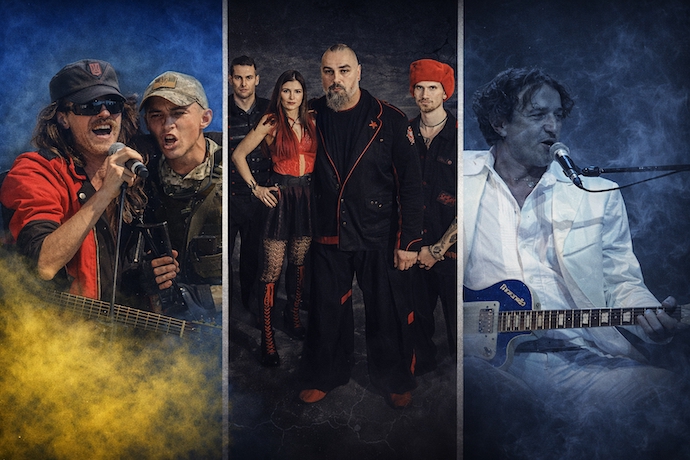
Since the commencement of Russia’s aggression, three clear currents have emerged among the subculture’s most prominent representatives. Specifically, the band Gogol Bordello has reinvented itself by abandoning its former use of Russian cultural motifs and expressing a strong stance of solidarity with Ukraine. Meanwhile, Russkaja has disbanded due to criticism of its regular reliance on Russian and Soviet motifs. Finally, the musician Goran Bregović has been banned from several countries because of his alleged support for Vladimir Putin. This article looks at each of these trajectories and closes by placing Gypsy punk within the wider debate over cancel culture and political correctness during the ongoing war.
Gogol Bordello and Reinvention
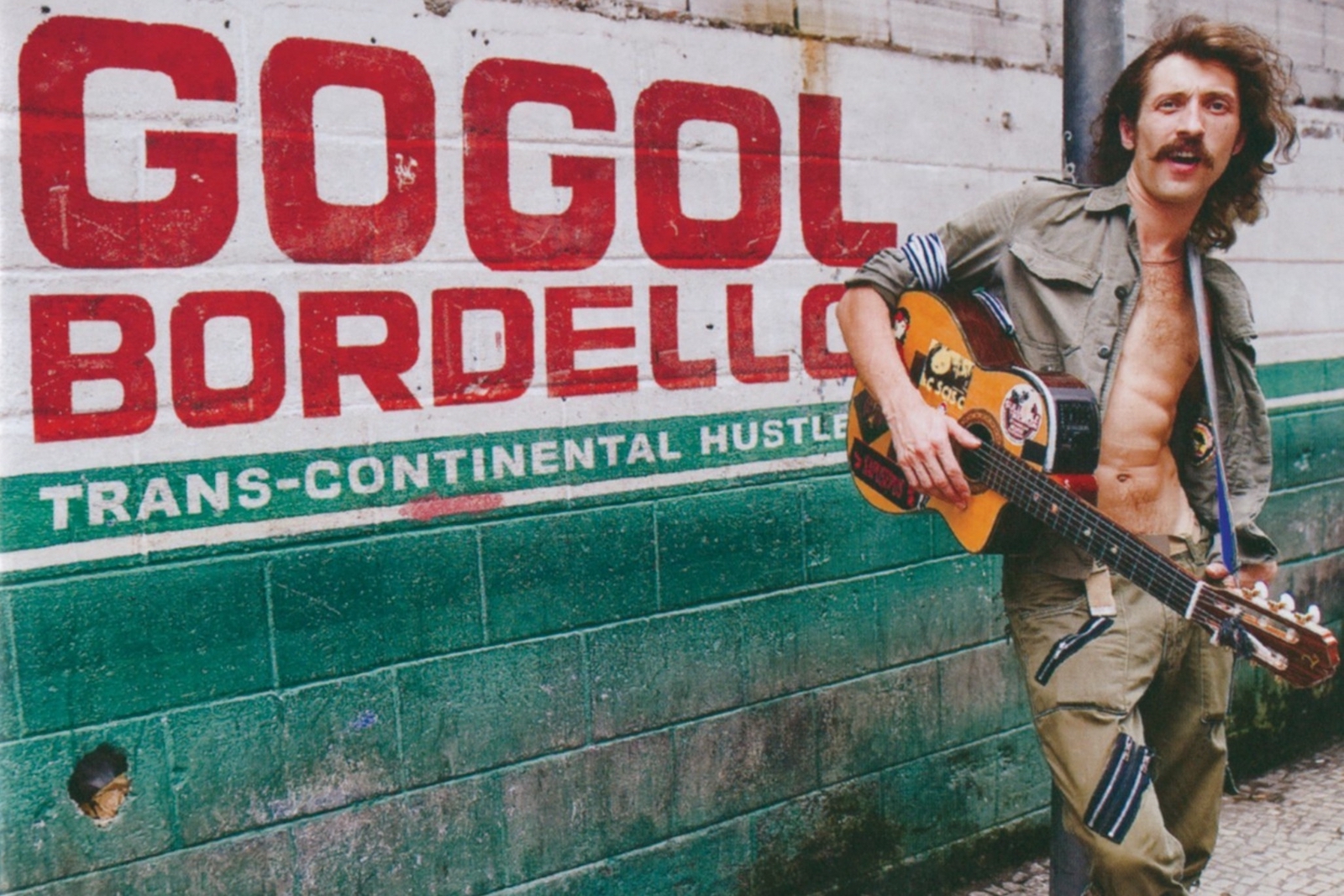
For many fans, the band Gogol Bordello is synonymous with the Gypsy punk label. Indeed, their 2005 breakthrough album Gypsy Punks: Underdog World Strike inspired a succession of followers that would eventually form the eponymous subculture. Formed and fronted by Ukrainian singer Eugene Hütz in New York City, the band’s Gypsy Punks-era lineup also featured Russian-born violinist Sergey Ryabtsev and accordionist Yuri Lemeshev.
At this point in their career, the band made frequent references to Russian culture in their lyrics, which were delivered primarily in English but also in Russian, Romani, and Ukrainian. After a series of successful follow-up albums, Gogol Bordello began to gain a following in Central and Eastern Europe, resulting in the decision to release the exclusively Russian language album Моя Цыганиада (Moya Tsyganiada/My Gypsy Saga) in 2011, which featured a cover emblazoned with the Russian tricolor flag.
The events of 2022, however, prompted the band to radically reinvent its image. Just months after Russia launched its full-scale invasion of Ukraine, Gogol Bordello released Solidaritine—this time featuring the image of a heart-shaped Ukrainian flag on the cover—as a statement in support of the Ukrainian people in their struggle.
Soon after the album’s release, the band embarked on a tour that was filmed for the documentary Scream of My Blood: A Gogol Bordello Story, in which the musicians can be seen taking breaks from their regular concert schedule to play for Ukrainian soldiers. Just earlier this year, the band released its tenth studio album, We Mean It, Man!, which ends with a cover version of the Angelic Upstarts’ 1983 protest song “Solidarity.” Although originally written to commemorate the anti-communist movement in Poland, Gogol Bordello’s version slightly alters the lyrics to recognize Ukraine’s resistance against the ongoing Russian invasion.
Russkaja and Self-Censorship
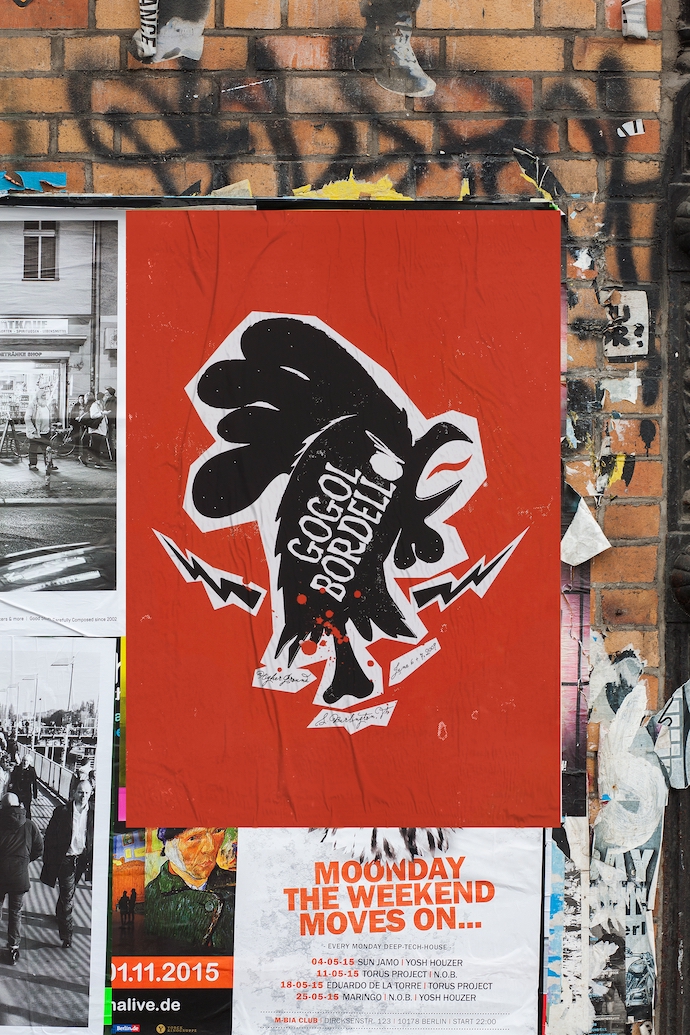
Following the success of Gogol Bordello’s album Gypsy Punks, the band Russkaja was formed in Vienna by Russian vocalist Georgij Makazaria in 2005. Featuring a lineup of mainly Russian immigrant and native Austrian musicians, the band adopted an image based on the ironic usage of Soviet kitsch. Through a discography of albums adorned with red stars, matryoshka dolls, and faux Cyrillic script, Russkaja’s music satirized both Russian cultural chauvinism and Soviet totalitarianism.
Much like Gogol Bordello, the band drew on an eclectic repertoire of musical styles and languages, although Russian was more prevalent in keeping with the group’s public image. At the time of the Russian invasion of Ukraine in 2022, Russkaja took advantage of its spring tour of the United States in support of Flogging Molly to publicly condemn the act of aggression. The following year, Russkaja released its most successful album yet, Turbo Polka Party, which climbed to the seventh position in the Austrian charts.
Despite its growing success, Russkaja disbanded that same year in response to growing criticism of the group’s public image. As a farewell to their fans, the musicians issued the following statement: “What once was fun in the band’s music is nothing but bitter now and the band members cannot go on stage anymore without feeling that bitterness in every note played and every word sung. All the lyrics written have a totally different meaning now and none of the bandmembers wants to represent this since in these times it is only associated with war, death, crime and blood spilled. The time has finally come to stop this. We tried to do statements, position ourselves publicly for what we stand and that’s peace and unity. But we can feel that it’s not enough and also it will not change anymore. We realized that this war will not stop soon and even if it would, the Soviet imagery and style is forever damaged now.”
Goran Bregović and Cancellation
Goran Bregović started his career in the 1970s as the lead guitarist for the Yugoslav rock band Bijelo Dugme, whose primary innovation was incorporating elements of traditional Balkan folk music into its otherwise contemporary Western sound. In the late 1980s, Bregović embarked on a successful solo career as a film soundtrack composer starting with Emir Kusturica’s Time of the Gypsies.
As his career developed throughout the 1990s and early 2000s, Bregović became a household name in Poland following his chart-topping collaborations with popular Polish artists Kayah and Krzysztof Krawczyk. In 2012, he released yet another successful collaborative album, Champagne for Gypsies, this time featuring a variety of guest musicians like Gogol Bordello’s Eugene Hütz and the Gipsy Kings.
Despite his commercial success and popularity, Bregović began to fall out of favor with certain politicians following his controversial response to Russia’s 2014 annexation of Crimea. After playing a concert in Crimea the following year, Bregović stated that “the Balkan people have always felt Russia’s grandeur” and added that “the West has always been a little paranoid about this. I hope they will eventually get over it.” Consequently, his subsequent live appearances in Poland and Ukraine were canceled by local authorities.
After refusing to retract his pro-Russian views even after the 2022 full-scale invasion of Ukraine, Bregović was denied entry into Moldova, whose Deputy Prime Minister Dmitry Alaiba declared that “to dance today to the music of Goran Bregovic is like dancing on the graves of all Ukrainians who died as a result of the armed conflict.” Most recently, as of 2025, Latvia has blacklisted Bregović as a persona non grata at the recommendation of the country’s State Security Service, which cites the artist’s public performances in occupied Crimea and pro-Russian rhetoric as the reasons behind the ban.
A Subculture at the Crossroads
The backlash against Russian soft power in the midst of its war against Ukraine is not limited to manifestations of the country’s “high culture” in literature or classical music. On the contrary, this new front of the ongoing culture war is most frequently fought on the battlegrounds of popular culture, where fans are forced to enter the polemical world of politics whether they want to or not.
Is Gogol Bordello’s recent reinvention of its attitude toward Russia entirely authentic, given its previous identification with Russian culture and promotion of the Russian language? Was Russkaja right in succumbing to critics who attacked the political incorrectness of its public image, despite the band’s repeated clarifications that their artistry was intended to be an expression of satire and irony?
Finally, are national governments justified in depriving their citizens of access to art and entertainment on the grounds that an artist or entertainer contradicts the government’s foreign policy, as has been the case with Goran Bregović throughout Central and Eastern Europe? These are the difficult decisions that every concertgoer, record collector, and fan club member must make in these difficult and divisive times.