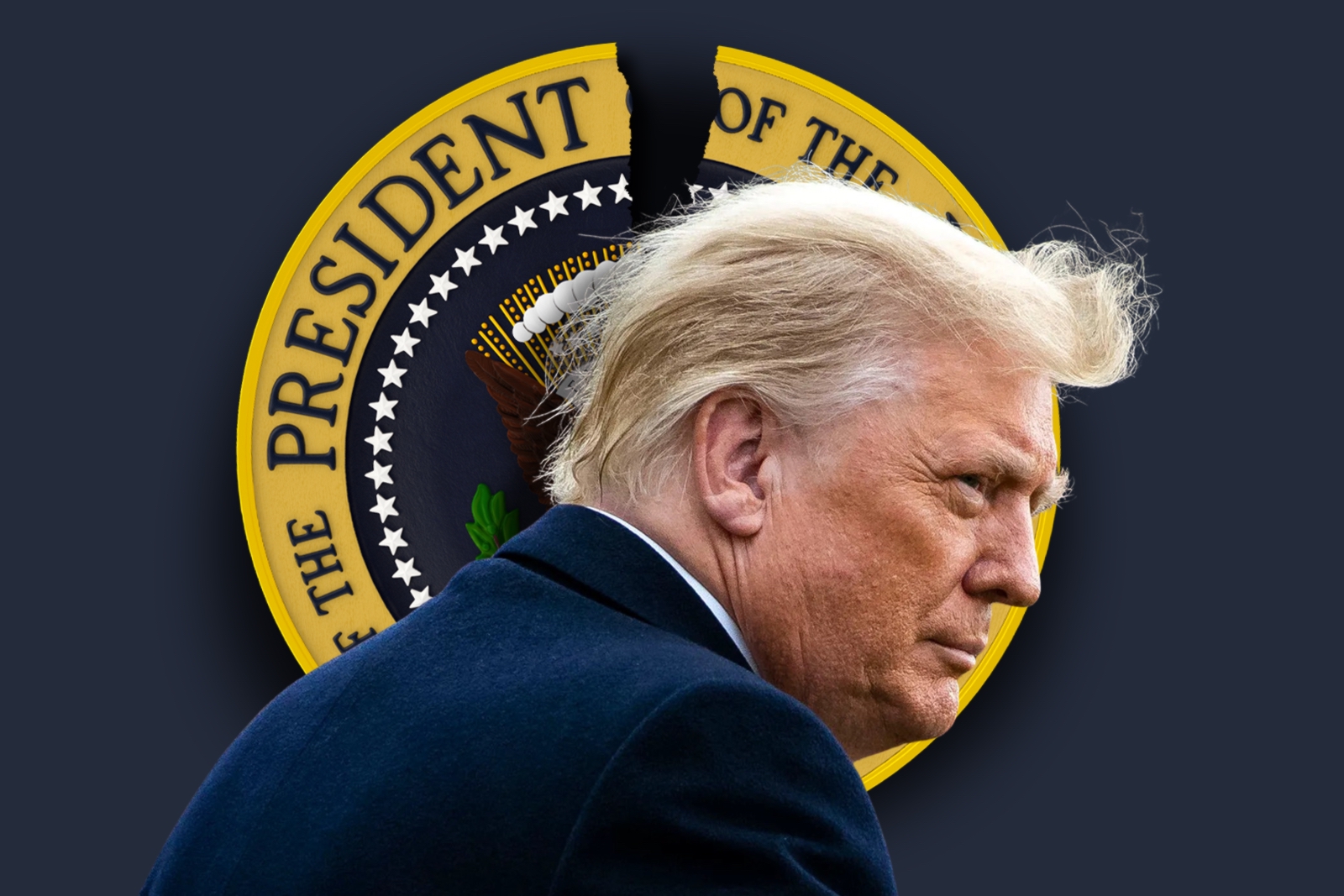

Trump Has Hollowed Out American Power
In February 1941, Henry Luce, editor and publisher of Life magazine, proclaimed that the twentieth century belonged to America, a vision grounded not in military supremacy alone, but in a confluence of economic dynamism, diplomatic creativity, cultural magnetism, and intellectual leadership. Luce urged the United States to forsake isolationism for a missionary’s role, spreading democracy and acting as the world’s Good Samaritan. The American Century that followed was no accident. It was the product of interlocking pillars of power that reinforced one another in ways its architects understood intuitively, even if they rarely theorized them explicitly.
To understand precisely why those pillars reinforce one another, and why dismantling the connections between them is so consequential, requires a detour through one of the twentieth century’s most generative works in political economy. In his 1970 treatise Exit, Voice, and Loyalty, Albert O. Hirschman argued that members of any organization facing decline have essentially two active responses: they can exit, withdrawing from the relationship entirely, or they can voice, agitating for repair and improvement from within.
Crucially, Hirschman showed that these options are not merely alternatives; they are relational. Loyalty is shown to postpone exit and to make voice more effective through the possibility of exit. Strip away loyalty, and voice loses its leverage. Foreclose voice, and loyalty collapses into exit. The three concepts are only meaningful in relation to one another.
The same relational logic governs the five pillars of American hegemony. Military hard power, economic dominance, diplomatic reach, cultural influence, and intellectual leadership do not operate in isolation; each derives a substantial portion of its efficacy from its connections to the others. Trump’s “Make America Great Again” doctrine, far from restoring American greatness, is systematically severing those connections, converting a mutually reinforcing system of power into a collection of weakened, isolated instruments. The result is an America that is, paradoxically, less great with each passing year of the policy that bears its name.

Understanding the depth of the current crisis requires a clear account of what American power actually consisted of. Scholars of international relations have long distinguished between “hard” and “soft” power, and the American case illustrates why neither category is sufficient on its own. Grand strategy refers to a nation’s collective deployment of all its relevant instruments of power to accomplish key strategic goals, and American grand strategy after 1945 was distinguished precisely by its integration of multiple instruments simultaneously.
The first pillar was military superiority, both conventional and nuclear, that made the United States the unambiguous guarantor of international security for its alliance partners. The second was economic dominance and global interconnectedness. At the end of World War II, the United States accounted for 50 percent of global GDP, held 80 percent of the world’s hard currency reserves, and was a net exporter of petroleum products. Even as that share declined, American economic institutions and the dollar-centered financial system gave Washington unparalleled structural leverage.
The third pillar was diplomatic ingenuity: the construction of multilateral institutions, including the United Nations, NATO, and the Bretton Woods system, through which the United States exercised leadership that was at least partly legitimate in the eyes of others. Harry Truman and others created a framework of permanent alliances and multilateral institutions that became known as the “liberal international order” or “Pax Americana.”
The fourth pillar was cultural influence. Soft power has been an expression of American cultural and political global hegemony since the Cold War, from the careful construction of alliances to the international proliferation of American music, fashion, and fast food. Hollywood, McDonald’s, Nike, and the great research universities were not mere products; they were instruments through which the American model became aspirational across the globe.
The fifth pillar was intellectual dominance: world-class universities, the ability to attract foreign talent, and the fusion of immigration with higher education to produce innovation ecosystems like Silicon Valley. Together, these five pillars formed a self-reinforcing system in which each element lent credibility and staying power to the others.
Hirschman’s framework illuminates the internal architecture of this hegemonic system with unusual precision. In his analysis, the power of voice, understood as the capacity to exert influence and demand improvement, depends critically on the credible alternative of exit, while exit itself is modulated by loyalty to the shared enterprise. As exit often undercuts voice while being unable to counteract decline, loyalty is seen in the function of retarding exit and of permitting voice to play its proper role. Destroy any one element and the system’s capacity for self-correction collapses.
Translated into the register of American geopolitical power, Hirschman’s insight becomes this: American military hard power functions as a credible threat, the ultimate exit option and the final recourse when diplomacy fails, precisely because it is embedded in a web of diplomatic, economic, cultural, and intellectual relationships that give other nations strong reasons for loyalty to the American-led order. Allies host American bases, join American-led coalitions, and tolerate the asymmetries of the American system not merely because they are coerced, but because they derive genuine benefits: security guarantees, access to American markets, the prestige of association with the world’s leading democracy, and the openness of American universities to their best students. These benefits are the foundation of loyalty in Hirschman’s sense, and that loyalty is precisely what makes American voice in international forums effective and American exit threats credible.
Hirschman’s framework contains a further insight that is particularly germane to the present moment: the members of an organization most capable of using voice to reform it from within are typically also those most capable of exit. When voice is foreclosed or ignored, these high-capacity actors are precisely the ones who leave. Applied to American hegemony, this means that the allies with the greatest capacity to redirect or reform American strategy, primarily the EU, Canada, Japan, and South Korea, are also those with the greatest capacity to build credible alternative arrangements. Trump’s policies are simultaneously eliminating their incentive to use voice and enhancing their capacity for exit, a combination that is structurally more dangerous than either dynamic alone.
Strip away the cultural and intellectual pillars, and the loyalty of allies erodes. Foreclose diplomatic voice through unilateralism, and partners exercise exit, seeking alternative arrangements beyond the American orbit. Weaponize economic interdependence through tariffs and sanctions against friends and foes alike, and the economic pillar ceases to generate loyalty and instead produces resentment. The lesson Hirschman drew from firms and organizations applies with equal force to hegemons: the efficiency of the competitive mechanism, with its total reliance on exit, is questioned for certain important situations. A hegemon that relies exclusively on coercive exit threats, abandoning the voice and loyalty mechanisms that sustain willing cooperation, will find its power rapidly contracting.
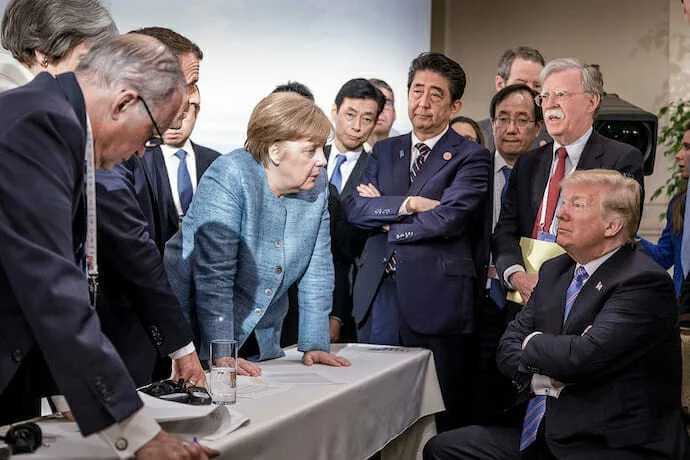
The debate over American decline is not new. According to Josef Joffe, the United States has gone through periods of perceived decline in five of the last six decades. What distinguishes the present moment from earlier episodes of declinism is that the primary source of erosion is not a rising challenger or an external shock, but a series of deliberate policy choices that are accelerating the very trends declinists have long worried about.
The indispensable theoretical guide to this dynamic remains Paul Kennedy’s The Rise and Fall of the Great Powers. Kennedy’s central argument is that great powers decline when the gap between their military and strategic commitments and their underlying economic base grows too wide, a condition he termed “imperial overstretch.” Kennedy’s prime contribution is the concept of imperial overstretch, the idea that empires fall largely because the military commitments they acquire during their rise eventually outrun the economic resources available to sustain them. Kennedy’s framework assumed that this gap opened gradually, through the structural pressures of geopolitical competition.
What is novel, and alarming, about the present situation is that the gap is being widened deliberately, through policy choices that simultaneously expand military commitments and erode the economic, diplomatic, and intellectual foundations that make those commitments sustainable.
The most instructive historical parallel is Britain’s trajectory from global hegemon to junior partner between roughly 1895 and 1945. The structural parallels between Britain’s position circa 1900 to 1925 and America’s position today are striking. Britain maintained a global military presence, held national debt at extreme levels, ran persistent current-account pressures, and saw its share of global manufacturing decline steadily. Britain’s decline was not simply a matter of being overtaken by rising powers; it was accelerated by specific policy failures.
During the 1930s, facing economic strain and overstretched imperial commitments, Britain’s acute strategic overstretch counseled appeasement, a policy that further weakened the credibility of its commitments and emboldened adversaries. The lesson is not that Britain should have fought sooner; it is that decades of underinvestment in the soft dimensions of power, combined with overextension of military commitments beyond what the economic base could sustain, left Britain without good options when the crisis arrived. The United States is now making structurally similar choices.
Hirschman observed that organizations in decline typically suffer from a failure to use voice effectively, either because the capacity for voice has been institutionally weakened, or because loyalty has eroded to the point where exit becomes the default. The United States today faces this problem at the international level: decades of accumulated loyalty among allies are being rapidly spent down, while the institutional channels for voice, including NATO, the WTO, and the UN Security Council, are being undermined by the very nation that built them.
As a result of the economic and political rise of China and Trump’s decision to undermine the liberal international order, theories of hegemonic stability have regained center stage in both policy-oriented and scholarly debates. The institutional pillars of the international liberal order seem to be experiencing an irreversible decline, which seems to have its root cause in the U.S. disengagement from multilateralism.
Tuesday will be Power Plant Day, and Bridge Day, all wrapped up in one, in Iran. There will be nothing like it! ! ! Open the Fuckin’ Strait, you crazy bastards, or you’ll be living in Hell – JUST WATCH! Praise be to Allah. President DONALD J. TRUMP
— TrumpReposter (@TrumpReposter) April 5, 2026
The ongoing U.S. military campaign against Iran, launched in February, provides the starkest available illustration of what happens when hard power is deployed without the soft power foundations that give it strategic coherence. The campaign was initiated unilaterally, without congressional authorization and without meaningful consultation with NATO allies. Its stated objectives have been inconsistent, ranging from nuclear containment to regime change. The Trump administration launched the attack on Iran without any consultation at all with NATO allies, and on the basis of justifications that are both incoherent and transparently false.
The military dimensions of the campaign have proceeded with characteristic American technological superiority: precision strikes on nuclear facilities, the killing of senior Iranian leadership, and the degradation of Iranian conventional capabilities. But the strategic results illustrate Kennedy’s insight about the limits of hard power divorced from its relational context. Airpower can destroy hardened facilities, degrade military capabilities, and kill commanders. What it cannot do is reorder domestic politics. Despite a century of promises to the contrary, it has never by itself toppled a government. The Iranian regime is vast, with sprawling religious authority, layers of officers across various armed branches and militias, and widespread control of the country’s economic assets. Regime change through bombing alone has no reliable historical precedent.
The Hirschman dimension of this failure is significant. The alliance-building that gives military power its strategic leverage, the loyalty of partners who provide basing rights, overflight permissions, and coalition legitimacy, has been systematically eroded. Italy blocked U.S. bombers bound for the Middle East from landing at one of its bases, while Spain shuttered its airspace to all U.S. military flights after confirming it had barred Washington from using two jointly-operated airbases in southern Spain for attacks on Iran. NATO leaders have repeatedly stated that the alliance is not involved in the Iran campaign. The partners whose loyalty would have translated American military capability into strategic effectiveness have exercised exit precisely because voice was never offered to them.
The Iran campaign also illustrates Kennedy’s warning about imperial overstretch. Military operations in the Persian Gulf, combined with the disruption of global oil supply through the closure of the Strait of Hormuz, are generating economic costs that fall disproportionately on the American domestic economy and the very allied relationships on which future military effectiveness depends. The fifth pillar, economic dominance, is being depleted in the service of a first-pillar strategy that lacks the other four.
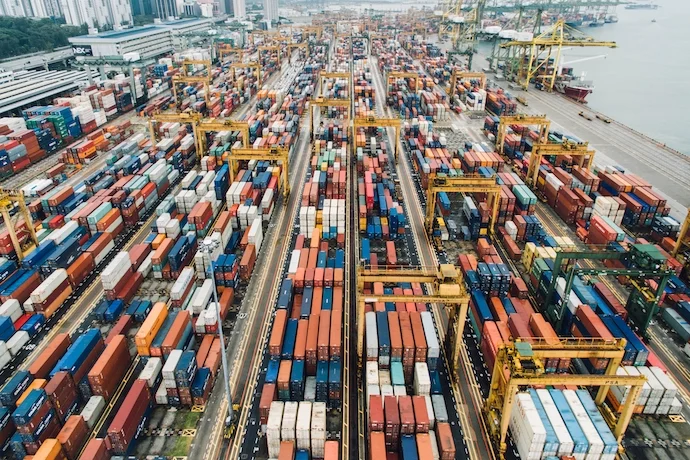
The Trump administration’s signature economic instrument, the aggressive deployment of tariffs against allies and adversaries alike, illustrates with particular clarity the self-defeating logic of treating economic power as a coercive exit threat divorced from the loyalty structures that make such threats effective. While Trump’s tariffs and “America First” unilateralism are reshaping relationships around the world, nowhere has the effect been more profound than in Canada. The consequences extend far beyond bilateral trade balances.
In Hirschman’s terms, tariffs wielded against allies without accompanying voice mechanisms, without negotiating frameworks that give partners a genuine stake in the outcome, produce exactly the wrong result. Rather than compelling loyalty, they trigger exit. The sense in Canada, Europe, and beyond is that their relationship with the U.S. has irreparably changed for the worse. Global leaders and corporate executives alike are trying to figure out how to rejigger their economies to be less reliant on the U.S. in the long run. Canadian Prime Minister Mark Carney captured the rupture with unusual directness, declaring that “the 80-year period when the United States embraced the mantle of global economic leadership, when it forged alliances rooted in trust and mutual respect and championed the free and open exchange of goods and services, is over.” This is not the language of a trade negotiation; it is the language of strategic exit.
In Europe, the response has been equally consequential. Brussels is accelerating trade talks with Canada, Japan, and South Korea, while the Mercosur free trade agreement would lead to the largest free trading area in the world. Europe must, and will, reduce its reliance on U.S. military power in the medium term. A new €150 billion EU rearmament fund is being structured to exclude American companies from competing for contracts. U.S. tariffs add to the sense of an increasingly unpredictable and unreliable partner. Allies in Europe and the Pacific are questioning foundational assumptions about their security arrangements as a result. Once loyalty to American security arrangements dissolves, so does the practical value of the military pillar, since bases, overflight rights, and coalition cooperation all depend on willing partners, as the Iran campaign is now demonstrating in real time.
The Trump tariffs are the largest U.S. tax increase as a percent of GDP since 1993 and amount to an average tax increase per U.S. household of $1,500 in 2026. The economic self-harm is thus paired with strategic self-harm: the very instrument intended to reassert American economic dominance is accelerating the exit of allied economies from the American-centered system, vindicating Kennedy’s warning that great powers decline when economic nationalism displaces the interconnectedness on which their leverage depends.
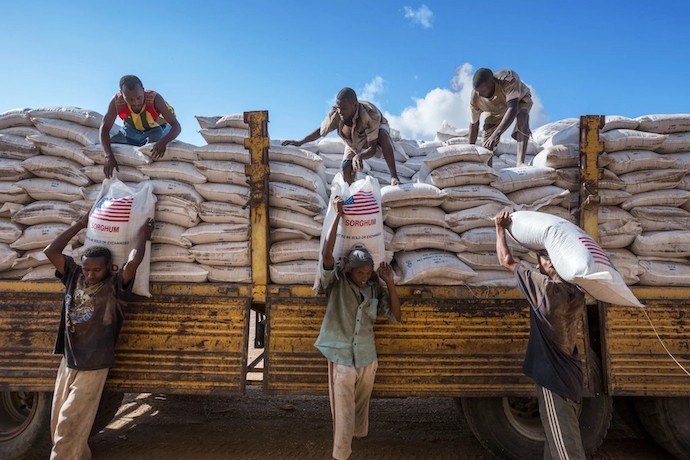
The damage to American soft power under the second Trump administration is not incidental; it is structural. In Hirschman’s terms, soft power is the primary generator of loyalty in the international system. It is what makes other nations want to remain within the American orbit, converting the raw calculus of interest into something more durable and self-sustaining. Destroy it, and the entire system depends on coercion alone, which is both more costly and less effective. U.S. soft power, which has already been in decline for at least two decades, primarily due to Middle Eastern wars, has perhaps never been so deeply called into question. Under the second Trump administration, this erosion has accelerated dramatically.
The United States Agency for International Development, widely regarded as a primary vehicle for projecting American values abroad, was effectively gutted. Voice of America and Radio Free Europe, pillars of U.S. public diplomacy, were targeted for severe cuts. These are not peripheral programs. They are the institutional mechanisms through which the United States has historically sustained the loyalty of populations, not merely governments, across the globe.
What is less commonly noted is that each pillar of American hegemony rests on a domestic foundation that is simultaneously being weakened. Military power depends on a defense industrial base that is being disrupted by the very tariffs meant to strengthen it, as imported components become more expensive and allied procurement contracts dry up. Cultural influence depends on a democratic model that others find worthy of emulation, and democratic backsliding at home corrodes that model’s appeal abroad. Most consequentially for the long run, intellectual leadership depends on federal research investment and the openness to foreign talent that generates it. Both are being cut simultaneously.
The research funding cuts of 2025 represent a particularly sharp self-inflicted wound. In 2025, the total number of new grants funded by the NSF dropped by 25% relative to the average of the previous ten years. A total of 5,844 NIH grants and 1,996 NSF grants were canceled or suspended. The proposed budget for fiscal year 2026 called for a 40 percent cut to NIH funding and a 57 percent cut to NSF funding, reductions that would set federal investment in non-defense research to levels not seen since the early 1990s. After years of steady growth, enrollments in PhD programs in the life and biomedical sciences flatlined in fall 2025, and the number of early-career grant awards fell to its lowest point since 2016. The pipeline that connects federal research investment to technological leadership, and technological leadership to military and economic superiority, is being constricted at both ends simultaneously.
The immigration dimension compounds this damage. New international student enrollment in U.S. institutions declined by 17% in fall 2025, the largest non-pandemic decline in the last eleven years. International students are not merely consumers of American education; in Hirschman’s terms, they are participants in a loyalty-generating process. Those who study in the United States, train in American laboratories, and build careers within American institutions develop enduring attachments to American values and institutions, attachments that later translate into diplomatic sympathy, favorable trade relationships, and support for American positions in international forums. When that pipeline is constricted, the loyalty dividend disappears. According to NAFSA, international students contributed nearly $43 billion to the U.S. economy and supported more than 355,000 jobs in the 2024-25 academic year, and nearly 60% of European students were less interested in coming to the U.S. at the start of Trump’s second term.
At the core of Trump’s strategic error is a fundamental misreading of what made America powerful, and it is a misreading that Hirschman’s framework makes legible. The MAGA doctrine treats American power as if it were purely a function of the first pillar: military and economic coercion, operating through exit threats. The other four pillars, diplomacy, culture, intellectual leadership, and the loyalty they generate, are treated as expendable luxuries or, worse, as vulnerabilities that expose America to exploitation.
But Hirschman demonstrated that relying exclusively on exit, on the threat of withdrawal and punishment, is a peculiarly inefficient strategy. The efficiency of the competitive mechanism, with its total reliance on exit, is questioned for certain important situations. Exit threats are credible only when loyalty exists to be forfeited, and they are sustainable only when voice mechanisms provide a less costly alternative. A hegemon that deploys exit threats constantly, against allies and adversaries alike, rapidly exhausts the loyalty capital that made those threats credible in the first place. This is precisely the dynamic now playing out. The United States has been the dominant hegemonic power on the planet since World War II. That power is largely based on its relationships with allies on every continent, especially Europe and Asia. A strategy that alienates those allies across every dimension simultaneously does not strengthen American power; it converts it into something less than the sum of its parts.
Kennedy’s concept of imperial overstretch is relevant here in a second dimension. The classic Kennedian overstretch involves overcommitting military resources beyond what the economic base can sustain. But the present situation involves a more complex dynamic: the administration is simultaneously overcommitting military resources in Iran, underinvesting in the research and educational foundations of future economic competitiveness, and eroding the alliance structures that reduce the cost of military commitments. Kennedy argued that declining powers face great difficulty in making hard choices about where to withdraw. Number-one powers that sprawled across the globe in the past, imperial Spain and Edwardian Britain, found it nearly impossible to prioritize their assets and obligations. The current administration’s answer to this challenge is not strategic prioritization but undifferentiated assertion, which is a formula for accelerated decline.
The geopolitical context in which these self-inflicted wounds are occurring could hardly be less forgiving. Harvard’s Graham Allison has argued that the United States and China are at risk of falling into what he calls the Thucydides Trap: when a rising power threatens to displace a ruling power, the resulting structural stress makes a violent clash the rule, not the exception. Among a sample of sixteen historical instances of an emerging power rivaling a ruling power, twelve ended in war. Allison’s framework has attracted scholarly criticism, but the broader structural dynamic it points to is real and sobering.
What makes the American strategic position particularly dangerous is that China’s grand strategy operates as the mirror image of Trump’s approach, and the mirror image in precisely the Hirschman sense. Where Trump relies on exit threats and forgoes voice mechanisms and loyalty cultivation, China has invested systematically in exactly those dimensions. The Belt and Road Initiative is not only an infrastructure program but also a diplomatic instrument for expanding Chinese influence through soft power. As of 2025, BRI participating countries account for nearly 75% of the world’s population and over half of global GDP. China is building loyalty in the Global South through the very instruments, infrastructure investment, institutional voice through BRICS and the Shanghai Cooperation Organization, and economic engagement without political conditions, that the United States is vacating.
The Hirschman framework adds an important dimension to the Thucydides analysis. The trap imagines a bilateral confrontation between a declining hegemon and a rising challenger. But in a world where the hegemon has systematically eroded the loyalty of its allies through unilateral exit threats, the relevant dynamic may be less a single dramatic confrontation than a distributed, multidimensional erosion. The more immediate risk is that the United States finds itself facing not one adversary but a gradually coalescing coalition of nations, some adversarial and some formerly friendly, whose loyalty to the American order has been exhausted and who exercise exit into alternative arrangements, each individually manageable but collectively representing a fundamental shift in the international balance.
This distributed exit dynamic is already visible. The EU is building trade relationships that bypass the United States. Canada is pivoting toward European security integration. Nations across the Global South are exercising exit into Chinese-sponsored alternatives. Cyclical shifts in material capabilities and the escalating costs of maintaining global leadership contribute to the weakening of hegemonic dominance, while changes in the capacity to maintain ideological legitimacy and institutional authority across the system are further factors impacting hegemonic decline. Both dynamics are simultaneously accelerating, and the administration’s Iran campaign, far from demonstrating restored American strength, is demonstrating to the world that American hard power, when stripped of its soft power foundations, is expensive, slow, diplomatically costly, and of uncertain strategic effect.
The paradox at the heart of the Make America Great Again project is that its diagnosis of American challenges is not entirely wrong, but its prescription makes the condition worse. Hirschman’s framework explains why with precision. A strategy that responds to organizational decline by foreclosing voice and relying exclusively on exit threats does not arrest decline; it accelerates it by destroying the loyalty that sustains the organization’s membership. Kennedy’s framework explains why the specific pattern of choices being made is historically familiar and historically ill-fated: the combination of military overcommitment, economic nationalism, and underinvestment in the foundations of future competitiveness is a recognizable pattern of hegemonic self-acceleration toward decline.
The five pillars of American hegemony were never merely parallel columns supporting the same roof. They were a mutually constituting system in which each element generated the loyalty, the voice capacity, and the credible exit threats that gave the others their power. Military supremacy was credible because allies trusted American intentions, cultivated through decades of cultural exchange and multilateral diplomacy. Economic leverage worked because partners valued the relationship enough to respond to voice before exercising exit. Intellectual leadership attracted talent because American universities were open, and that openness generated loyalty among generations of foreign-educated professionals who carried favorable dispositions toward the United States throughout their careers.
The domestic foundations of each pillar are equally essential and equally under threat. Research funding sustains the intellectual pillar. Democratic norms sustain the cultural pillar. Industrial policy coherence sustains the military pillar. A strategy that cuts federal research investment, erodes democratic norms, and imposes tariffs that disrupt defense supply chains is not strengthening these pillars; it is hollowing them from within while simultaneously severing the connections between them.
Trump, no longer checked by establishment advisors, unleashed a radical departure in American foreign policy that repudiated the post-World War II consensus on U.S. vital national interests and centered American power and prestige almost solely on the occupant of the Oval Office. This personalization of power is itself antithetical to the institutional foundations of American hegemony. Hegemony that depends on a single individual is not hegemony; it is dominance that evaporates the moment the individual changes. The institutions Luce’s generation built were designed to outlast any president, designed, in Hirschman’s terms, to sustain loyalty through voice mechanisms that gave partners a genuine stake in the system’s continuation.
Henry Luce wrote in 1941 that American prestige rested on “faith in the good intentions as well as in the ultimate intelligence and ultimate strength of the whole American people.” Both Luce and Hirschman understood something the current administration does not: that durable power is constituted through relationships, not extracted from them. Luce called it prestige; Hirschman called it loyalty. Both recognized that it is the most fragile and most essential component of any system of sustained influence, easy to spend down and extraordinarily difficult to rebuild.
What the current moment is consuming is not American strength in the raw sense, since the military capacity, the economic scale, and the technological base all remain formidable. What is being consumed is the accumulated loyalty capital of eighty years, the faith in American good intentions that made the American Century possible. When that is gone, no quantity of bombs or tariffs will bring it back.