How Britain Talked Itself Into Decline
Ten years ago, Nigel Farage was in political heaven. Since entering the European Parliament in 1999 at the head of a small anti-European party, he had pursued essentially one objective: to force Britain to hold a referendum on leaving the European Union. That referendum finally arrived on June 23, 2016.
His wish was granted by the coalition government led by Conservative Prime Minister David Cameron and his deputy, the Liberal Democrat leader and committed Europhile Nick Clegg.
Both men believed the British people would never willingly turn their backs on Europe. It was a miscalculation of historic proportions, arguably the gravest political error committed by a British prime minister since Neville Chamberlain signed the Munich Agreement in 1938. Chamberlain trusted Adolf Hitler’s assurances that Germany had no further territorial ambitions in Europe once Britain and France acquiesced to the annexation of part of Czechoslovakia. History, of course, rendered a devastating verdict on that judgment.
A decade later, the verdict on Britain’s rupture with Europe is becoming equally clear. Most economists agree that Brexit has imposed a substantial long-term cost on the British economy, with estimates suggesting output will ultimately be around 8 percent lower than it otherwise would have been. Outside the financial services sector concentrated in the City of London—which for more than two centuries has served as Europe’s leading center for banking, insurance, capital raising, offshore finance, and luxury property investment—the broader British economy has struggled.
Manufacturing has suffered. Aerospace exports have weakened. Automobile production has declined. Shipbuilding, chemicals, agriculture, food production, and numerous other export-oriented sectors have all faced new barriers and diminished opportunities. While London has retained much of its global financial influence, large parts of the country have experienced the consequences of reduced trade and investment links with Britain’s largest market.
One of England’s most distinguished legal minds, Lord Jonathan Sumption, has been unsparing in his assessment. Sumption, who argues that “Britain is a European country, sharing the political, economic, and intellectual culture of Europe,” has described Brexit as “an act of gross economic vandalism” and “the abandonment of five centuries of intelligent British statesmanship.”
The broader economic comparisons are revealing. In 2025, Germany exported goods worth $1.77 trillion. Italy exported $726 billion. France exported $668 billion. Brexit Britain exported $485 billion.
The consequences extend beyond trade statistics. Britain has slipped down the rankings of European OECD economies and now sits well below many of its continental competitors. As national income growth weakens under the weight of diminished trade and investment, successive governments have found it increasingly difficult to meet mounting demands. Defence spending is rising. Social welfare costs are increasing. More than one million Britons between the ages of 16 and 24 are neither employed, enrolled in education, nor participating in training programs.
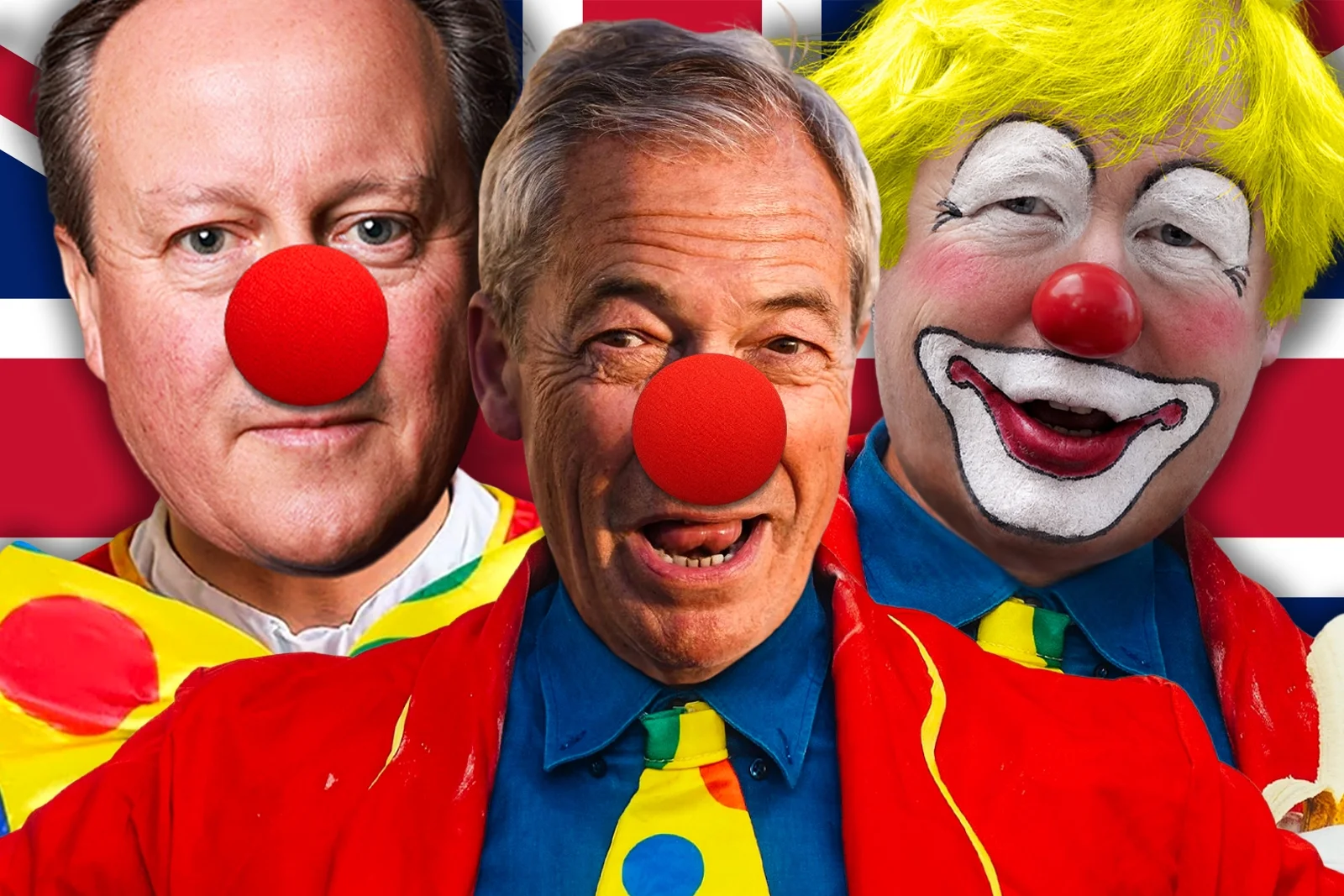
Yet many of the architects and enablers of Brexit have fallen conspicuously silent. David Cameron, Boris Johnson, and numerous business leaders, journalists, and commentators who either championed Brexit or dismissed warnings about its consequences rarely acknowledge the outcome. Nor do many figures on the left who shared a skepticism of European integration. Jeremy Corbyn, the former Labour leader often compared to France’s Jean-Luc Mélenchon, remains reluctant to state plainly that Brexit has been a strategic mistake.
A curious omertà now surrounds the subject. Political elites across the spectrum appear reluctant to confront the scale of the policy failure, fearful of provoking a backlash from Farage and the constellation of nationalist parties that have emerged around him. Some of these movements have attracted support and encouragement from figures such as Elon Musk and Vice President J.D. Vance, who increasingly view post-Brexit Britain as a valuable ally in their broader ideological struggle against Europe’s liberal democratic order.
Brexit has undoubtedly been damaging for Britain. It has also imposed costs on the wider European economy and weakened the broader project of European integration at a moment when Europe faces mounting pressure from the increasingly assertive policies of Donald Trump, Vladimir Putin, and Xi Jinping.
Yet Brexit has also produced an unintended lesson for Europe’s nationalist and Eurosceptic movements. In the immediate aftermath of the referendum, Marine Le Pen celebrated enthusiastically, decorating her social media accounts with the Union Jack and presenting Britain’s departure as the beginning of a continental revolt against Brussels. Similar sentiments were echoed by politicians across Europe who advocated withdrawal from the European Union or abandonment of the euro.
That enthusiasm did not last.
As leaders such as Le Pen and Italy’s Giorgia Meloni watched the economic and political consequences unfold, support for similar projects elsewhere largely evaporated. Talk of “Frexit” faded. Calls for Italy to abandon the euro and revive the lira disappeared from mainstream political debate. Brexit became less a model to emulate than a cautionary tale.
Ironically, Brexit has made British politics look more European than ever before.
Rather than ushering in a new era of national confidence and global influence, Brexit has contributed to a political landscape increasingly reminiscent of the instability associated with France’s Fourth Republic or the Italy of Silvio Berlusconi. Governments struggle to govern effectively. Electoral mandates quickly dissipate. Political parties fracture. Leadership changes become frequent. Policy reversals are commonplace. The result is a sense of chronic instability and a growing perception of weak government.
Public opinion has shifted dramatically. Virtually every major opinion poll conducted over the past year has shown a clear majority of voters now believe Brexit was a mistake. The recent Makerfield by-election delivered another warning signal. Nigel Farage, who devoted much of his political career to denouncing European cooperation and promising a brighter future outside the European Union, saw his message decisively rejected by voters. The pro-European Labour politician Andy Burnham secured a commanding victory.
Yet Britain’s political establishment remains hesitant to respond to this change in public sentiment. Prime Minister Sir Keir Starmer has pursued a cautious approach toward Europe, seeking practical cooperation while avoiding any suggestion of rejoining the European Union or its institutions. The result is a widening gap between public opinion and political leadership.
June 6, 1944, remains a date that many Britons remember with pride. It was the day British soldiers landed on the beaches of Normandy alongside their allies to help liberate Europe from the horrors of extreme right-wing ethnic nationalism.
June 23, 2016, has become a very different kind of national anniversary.
For a growing number of Britons, it is a date they wish had never happened.