
How Mining Laws Are Stripping Turkey’s Countryside Bare
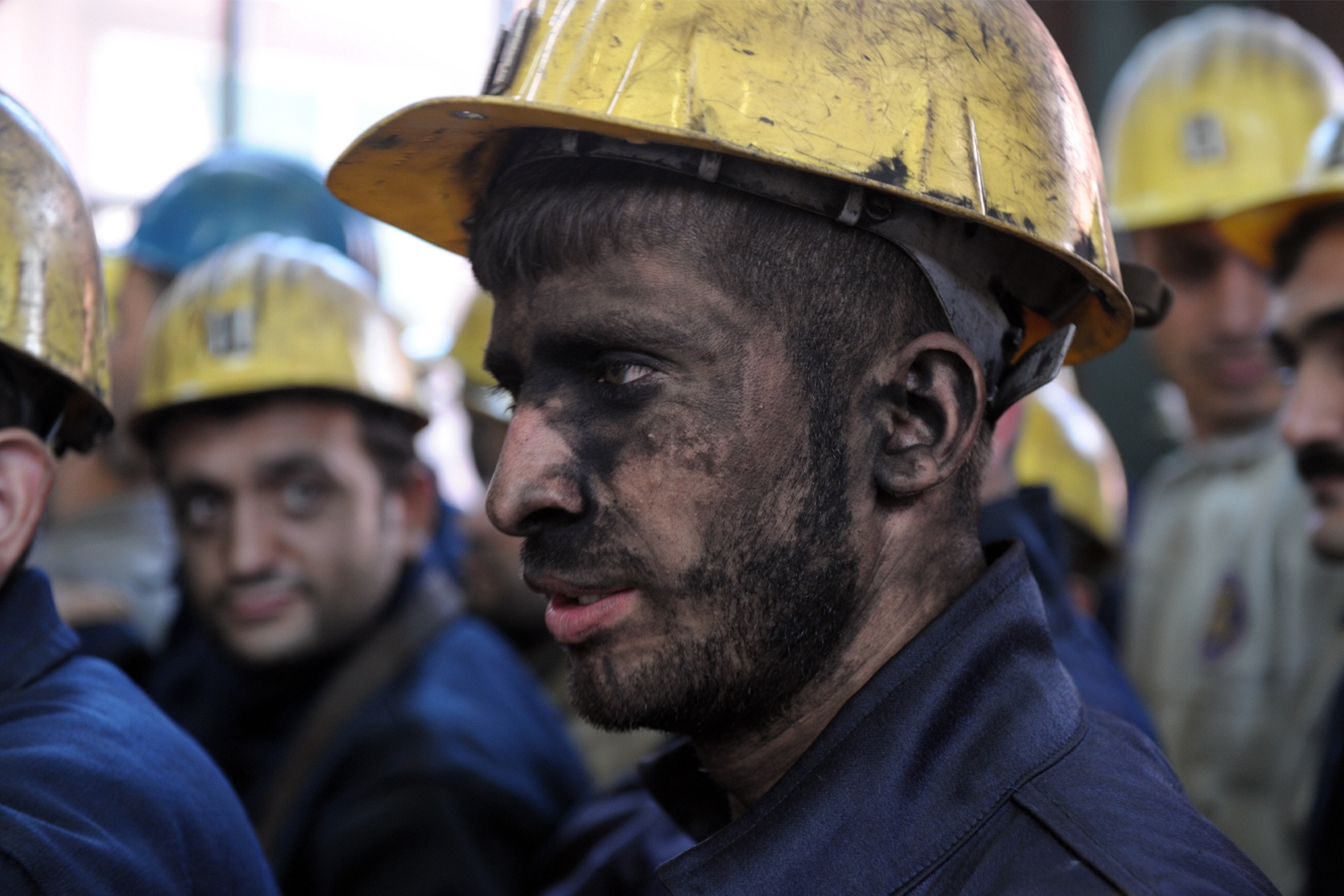
Driving from Milas, a modest Aegean town in southwestern Turkey, toward the Akbelen district on a clear November morning, the landscape initially offers reassurance. Rocky hills roll gently into olive groves and fig trees. Rural houses sit quietly amid the orchards. Yet that calm is repeatedly broken by convoys of heavy trucks barreling past, bound for the Yeniköy-Kemerköy Thermal Power Plant and the coal mines that now dominate the region.
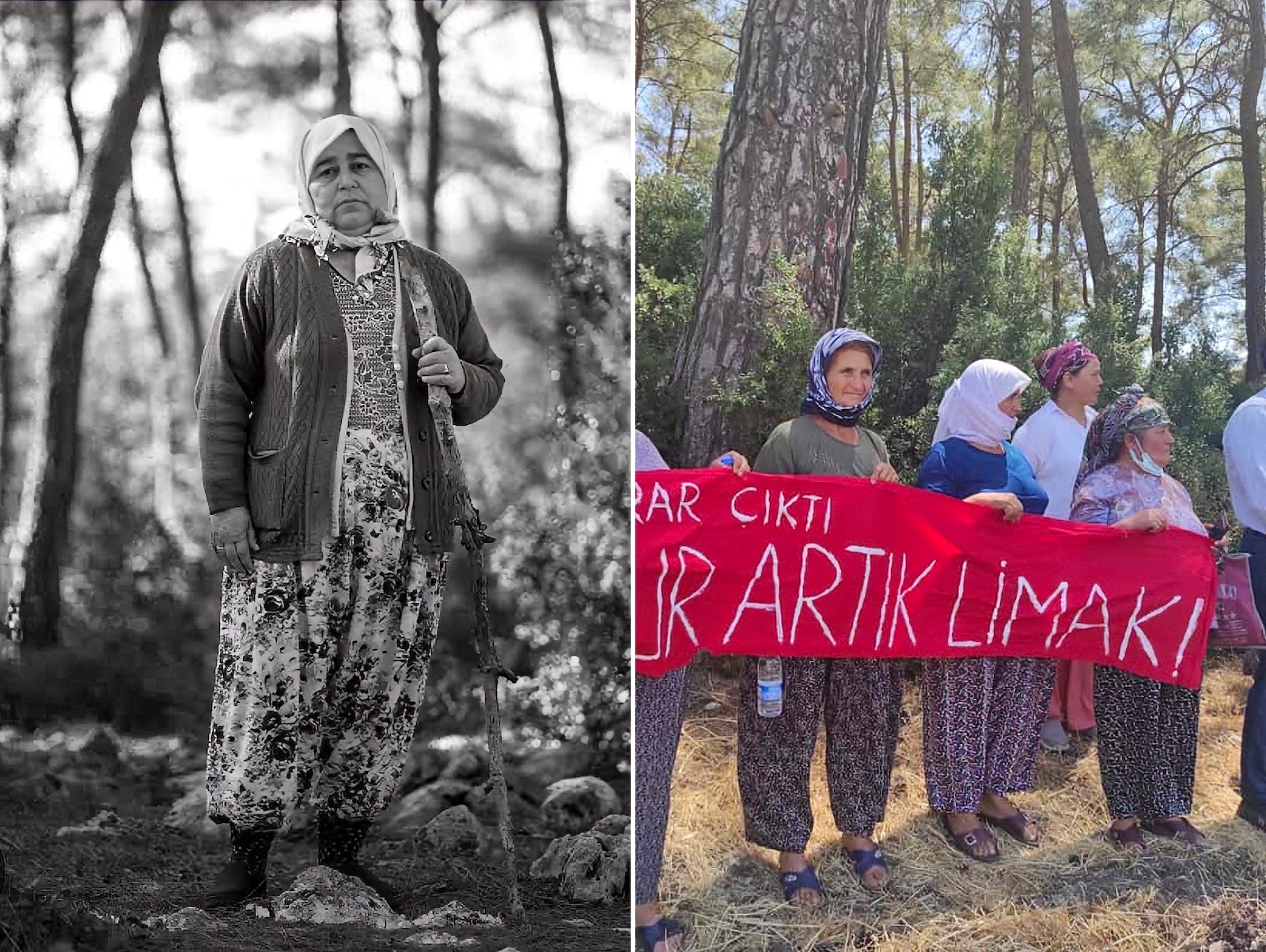
When I arrived at Nejla Işık’s home, set within an orchard of orange, pomegranate, and fig trees, the contrast was striking. Işık greeted me warmly. She is the elected headwoman of İkizköy, a village that has become a symbol of rural resistance in Turkey. For the past six years, its residents have fought against land seizures, the destruction of Akbelen Forest, and the uprooting of their olive groves to expand coal mining operations supplying the thermal power plant. In 2024, Işık was named among the BBC’s 100 most inspiring women for her leadership in that struggle.
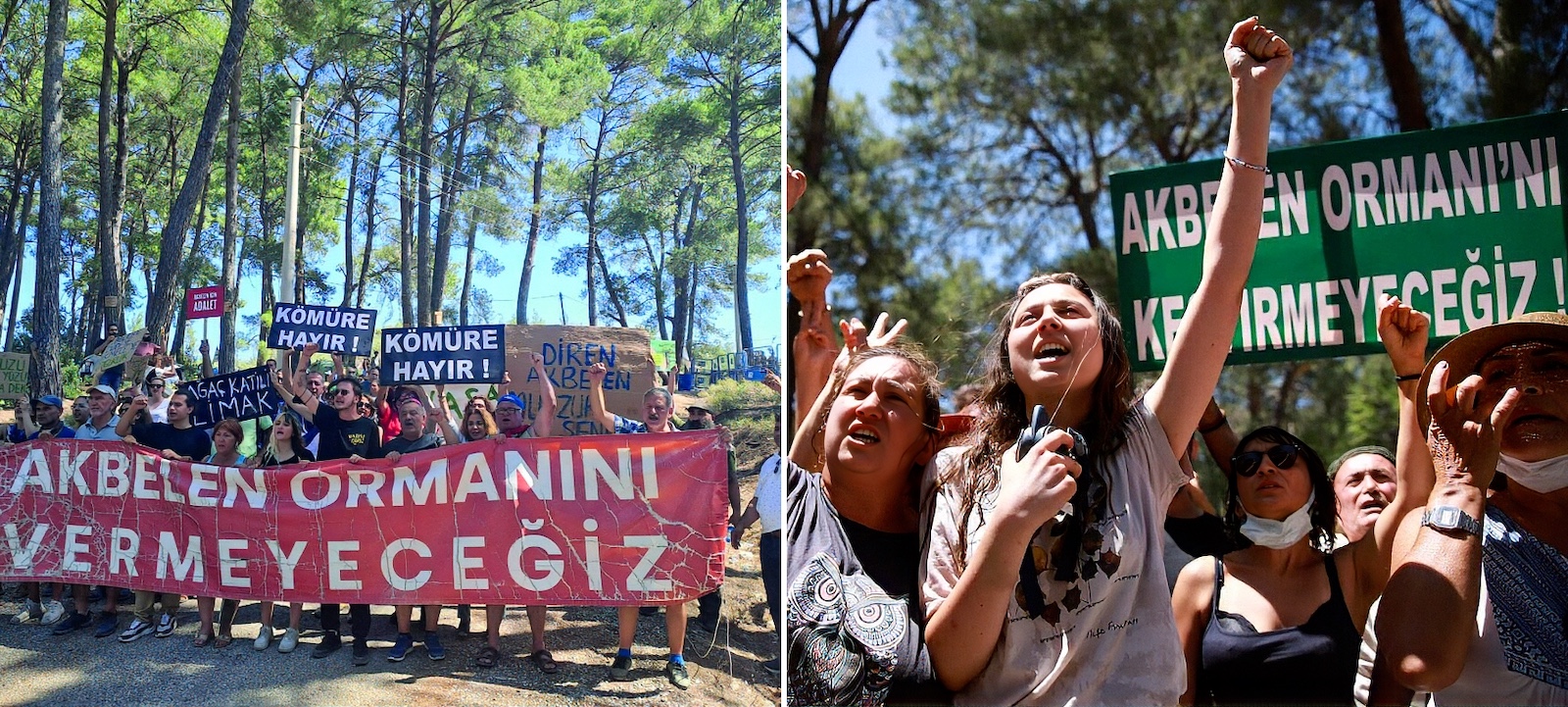
Since 2019, the 740-decare Akbelen Forest and İkizköy itself have been under threat from mining expansion plans pursued by companies closely aligned with the Turkish government. Villagers and environmental activists mounted a sustained resistance as companies attempted to clear the forest. Courts repeatedly ordered suspensions of mining activity, yet YK Energy—a joint venture of İçtaş Holding and Limak Holding—persisted regardless. Protesters were met with repression. Rural police used tear gas against villagers, scenes that shocked much of the Turkish public.
At Işık’s home, I met Sevgi Saraçoğlu, an elderly woman who has lived nearby for nearly a decade and took part in the protests alongside her husband. She described how trees in her orchard had withered since the mine began operating nearby. “We planted nearly a hundred trees,” she said. “They’ve dried up.” The passage of a new mining law last summer, she added, deepened the villagers’ despair. Her husband, Tuncer Saraçoğlu, was detained and charged with insulting the president after lamenting publicly that “they’ve taken everything we had, and still they’re not satisfied.” He was eventually acquitted. The ordeal, she said, reflected the psychological warfare villagers now endure simply for defending their land.

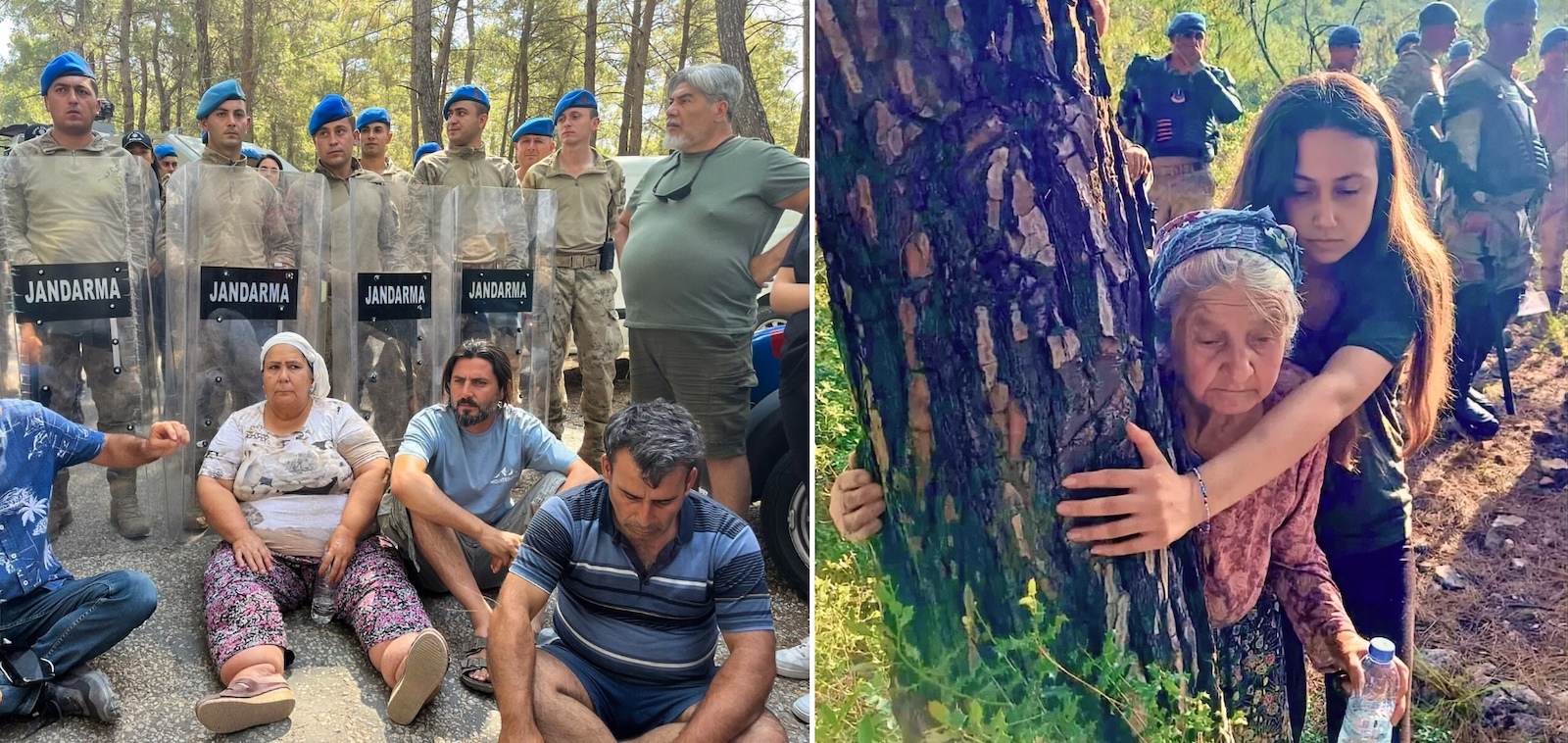
Işık herself recalls the violence inflicted by the gendarmerie during protests. “They are supposed to protect citizens,” she told me, “but they treated us like enemies of the state.” In the summer of 2023, as tree-cutting accelerated, villagers of all ages were attacked with pepper spray and tear gas fired into forested areas under extreme heat. President Recep Tayyip Erdoğan publicly dismissed the protesters as “environmentalist-looking marginals,” insisting that the Akbelen power plant was a national asset and framing opposition as a threat to Turkey’s energy security.
Environmental destruction driven by oligarchic enrichment is not unique to Akbelen. From Artvin to Kazdağları, forests, orchards, and olive groves across Turkey have become battlegrounds. Agricultural land is increasingly treated not as a public good but as expendable terrain in service of extractive industries tied to political power.
Legislation enacted in 1939 once offered robust protection. The Olive Cultivation and Grafting Law prohibited the destruction or repurposing of olive groves, recognizing olives as a cornerstone of Turkey’s agricultural economy and cultural identity. Over time, however, these protections have been hollowed out by omnibus legislation. Though olive groves remain protected on paper, they are routinely sacrificed in practice. In 2013, the overnight cutting of 6,000 olive trees in Yırca, near Soma, to build a coal-fired power plant marked a turning point in public awareness. Since then, loopholes have multiplied.
Officials justify this destruction as necessary for energy security and investment. The promised wealth, however, accrues not to workers or farmers but to a narrow circle of politically connected conglomerates.
That logic reached its apex with the “super bill” passed in the summer of 2025. Approved by parliament on July 19 by a vote of 255 to 199, the 21-article omnibus law includes an amendment allowing mining in agricultural land, including olive groves, under certain conditions. Provisional Article 45 designates olive-growing areas in Milas and Yatağan as mining zones, directly undermining the original Olive Law. Protests erupted across Turkey’s southern and western regions, home to most of the country’s olive production.
For Işık, Akbelen is not an isolated struggle. “Villagers across the country are living the same cycle of dispossession and repression,” she said. She described how the nearby village of Işıkdere was effectively erased after mining began in 2019, despite company assurances that expansion would stop there. Now İkizköy faces the same fate.
The Yeniköy-Kemerköy Thermal Power Plant has shaped the region for nearly four decades. Since its privatization in 2014, eight surrounding villages have been demolished and their residents displaced. Akbelen’s resistance emerged precisely because villagers recognized that silence would guarantee further erasure.
Beyond agriculture, Muğla lies within the ancient Carian region, rich in archaeological heritage now under threat. Mining has destroyed roads linking ancient sites such as Stratonikea and Lagina, damaged Bronze Age tombs near Lake Bafa, and scarred Mount Latmos, home to cave paintings spanning millennia. Villages like Eskihisar and Işıkdere were evacuated and excavated with minimal archaeological oversight, their heritage effectively lost.
“They excavated coal for six months,” Işık said, “and found less than expected. But they uncovered artifacts from Carian, Roman, and Byzantine civilizations. We don’t know where most of them went.” What remains, she argued, is irreversible loss. “Olive trees and water are worth more than coal.”
Despite filing 16 lawsuits since 2019 and winning several, villagers saw their victories nullified when parliament changed the law itself. Işık has been prosecuted repeatedly, accused of “occupying the forest.” In the summer of 2025, villagers traveled to Ankara, camping for 21 days in Cemal Süreya Park in a last attempt to stop the bill. They were never allowed into the parliamentary commission.
Former residents like Aytaç Yakar describe displacement as both economic and physical violence. Compensated with roughly $235 per decare, her family was forced to relocate, only to face renewed threats when expansion resumed. She recalls being beaten during protests and suffering lasting injuries. Health problems are widespread. Chronic respiratory illnesses plague villagers living near the mines.
When I later spoke in Istanbul with Masum Türker, a former minister of economy, he defended mining as a national necessity but criticized the government’s treatment of villagers. Any legitimate system, he argued, would require meaningful compensation and resettlement—conditions plainly absent today. Even then, he acknowledged, environmental rehabilitation remains largely impossible.
Journalists and activists challenging these projects face growing danger. In October 2025, environmental documentarian Hakan Tosun died after a violent street attack in Istanbul. The motive remains unclear.
Akbelen is not merely a local dispute. It is a struggle over water, biodiversity, heritage, and the meaning of public interest itself. Each felled tree disrupts ecosystems, accelerates erosion, and diminishes life that cannot be restored. For villagers across Turkey, Akbelen has become a symbol: a reminder that resistance, however costly, may be the last defense against irreversible loss.