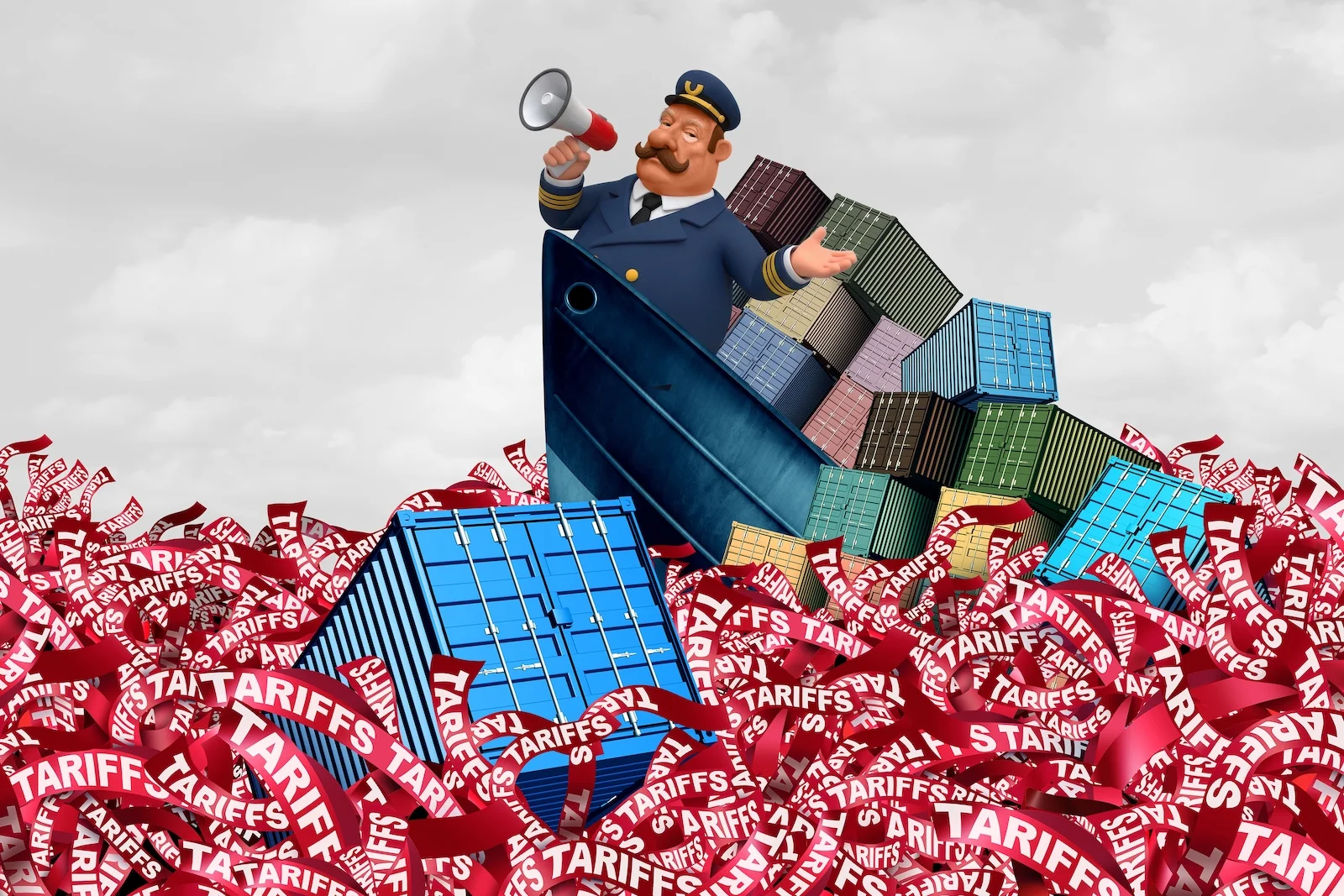

Trump’s Tariff War is Damaging the West from the Inside
Washington’s latest turn toward protectionism is not protecting America. It is quietly weakening the very economic order the West spent decades constructing.
What began as a technical dispute over tariffs has metastasized into something far more political—and far more costly. The Trump administration’s tariff campaign does not project strength so much as it reveals how easily short-term domestic pressures can override long-term economic logic.
For decades, Washington and Brussels stood, more often than not, on the same side of the global trading system. Their alignment provided a sense of stability, even during periods of market volatility and political strain. That assumption is now eroding. Each new tariff imposed on European goods sends a blunt message: rules are subordinate to political theater.
The consequences extend well beyond trade balances. The transatlantic relationship has never been solely about commerce; it has been underpinned by shared commitments in security, diplomacy, and a broader vision of a rules-based Western order. Once tariffs are introduced as instruments of leverage, that foundation begins to fray. Allies start to see one another less as partners and more as competitors, and the logic of cooperation slowly gives way to the instincts of rivalry.
Europe, for its part, has tried to avoid escalation. But restraint has limits. Brussels understands the risks of retaliation, just as it recognizes that passivity invites further pressure. This is the trap tariffs create: they force targeted economies to absorb the initial shock while allowing the initiating country to frame its actions as defensive.
That dynamic, in turn, places growing strain on the institutions meant to manage such disputes. The World Trade Organization was designed to anchor global trade in a rules-based system, preventing powerful economies from acting unilaterally. When a country as central as the United States begins to sidestep those rules, the consequences ripple outward. If Washington no longer feels bound by the system it helped construct, other countries have little incentive to adhere to it either. Norms, once weakened, rarely remain contained.
From there, the economic effects begin to compound. Protectionism rarely stops at a single measure. One tariff invites another. Retaliation follows. Markets react. Supply chains tighten. Costs rise. Businesses lose visibility. What begins as a political maneuver in Washington quickly reverberates across the global economy.
And the burden does not fall evenly. Ordinary consumers tend to feel it first. Higher tariffs translate into higher import costs, and those costs rarely stay confined to corporate balance sheets. They surface in rising prices, compressed margins, and growing uncertainty for companies already navigating fragile conditions. Tariffs, in effect, function as a diffuse tax—one that extends across the entire economic chain.
For small manufacturers, retailers, and households trying to manage monthly expenses, the consequences are anything but abstract. They manifest as delayed shipments, narrower product choices, and steadily rising costs. The rhetoric of toughness may resonate in political speeches, but its real-world effects are felt in factory floors, shipping contracts, and grocery bills. Protectionism often sounds decisive; in practice, it feels costly and diffuse.
Faced with this reality, Europe is unlikely to remain static. If Washington continues down this path, the European Union will deepen its engagement with alternative partners, including China. This does not signal a clean break with the United States, but it does suggest a gradual hedging—an effort to build resilience by diversifying economic ties. Over time, such adjustments contribute to a more fragmented global system, one defined less by coherence and more by competing spheres of influence.
At its core, this is not simply a story about trade flows. It is about power, leverage, and who gets to define the rules of the global economy. The Trump administration’s tariff strategy does not restore fairness; it chips away at a system that depends on trust, predictability, and mutual restraint.
The risks are not temporary. Once trade is reframed as a zero-sum contest, the damage compounds. Trust erodes. Institutions weaken. Alliances cool. The global economy begins to resemble a contested landscape rather than an integrated network.
The United States and Europe have too much at stake to allow this trajectory to continue unchecked. Yet the signal from Washington remains clear: long-standing rules can be discarded when they become politically inconvenient. That message lands far beyond Brussels, raising questions about whether the economic order that has governed global trade for decades can endure.
When major economies begin to weaponize trade, smaller ones absorb the first blows. Import costs rise, growth slows, and countries already under strain are pushed closer to the edge. What begins in Washington does not stay there; it ripples outward, landing squarely on European economies and beyond.
This is why the dispute matters. It is not merely a disagreement over tariffs between Washington and Brussels. It is part of a broader contest over whether global trade will remain governed by rules—or drift further into the realm of raw power politics.