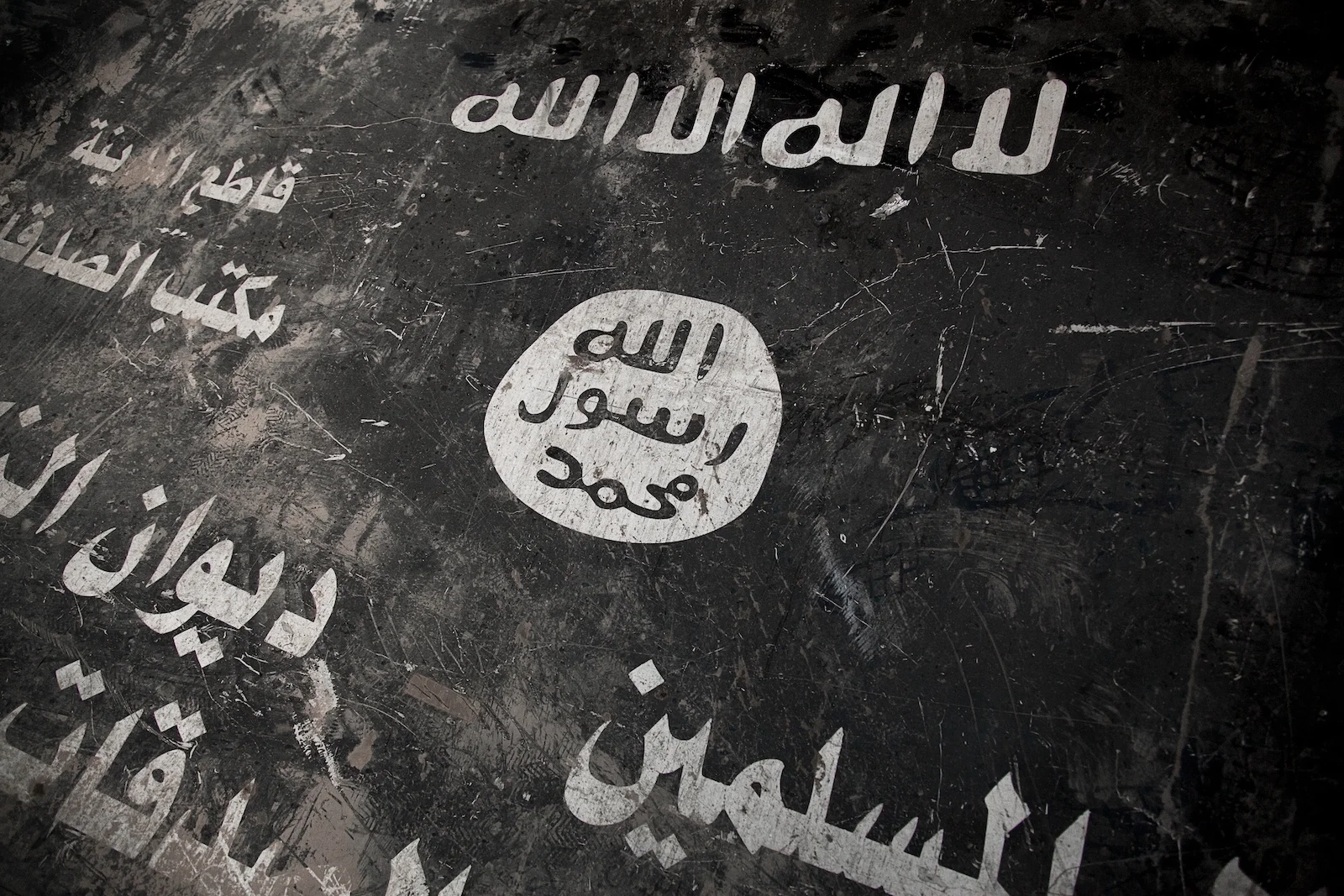

How Terrorist Propaganda Learned to Look Professional
On December 13, 2001, the U.S. Department of Defense released a 39-minute video recovered from a VHS tape seized by U.S. forces in Jalalabad, Afghanistan, about a month earlier. The figure on the screen was Osama bin Laden. The footage wobbled the way handheld recordings used to. The light was harsh, the frame drifted, and the overall quality was poor. The audio was worse: semi-coherent, often inaudible, punctuated by long stretches in which bin Laden’s words dissolved into noise. Twenty-four years ago, these grainy tapes were the norm, and the limitations were part of the message—proof, to some viewers, of authenticity and proximity.
Two and a half decades later, terrorist groups no longer depend on crude VHS recordings to spread their ideology. Today, a person can go online and find propaganda clips that arrive already processed and polished, complete with color grading, drone shots, dramatic music, and carefully staged lighting. Many resemble high-budget Hollywood trailers more than the low-fi artifacts of clandestine movements. The shift is not simply about better cameras. These videos help violent organizations project legitimacy and bolster recruitment by borrowing the visual language that modern audiences have been trained to trust.
High-quality propaganda videos have emerged as one of the most effective means for terrorist groups to attract new members, especially from Western nations. One study found that over 80 percent of ISIS-affiliated individuals arrested in the United States had watched these cinematic productions. Videos from groups like ISIS, Hezbollah, Hamas, and others function as deliberate digital weapons, designed to communicate ideology in highly contagious, easily shareable formats. In the digital age, the message is rarely delivered as a lecture; it is delivered as an experience, engineered for the scroll.
The Ease of Production
Today, drones with video capabilities are widely available for purchase worldwide. Even more consequential, most people have access to a high-resolution camera in their pocket, along with free or low-cost editing software that can mimic cinematic techniques. It has become easier, cheaper, and faster than ever to churn out slickly edited videos for mass audiences. With little more than an Internet connection, anyone can upload extremist propaganda and set it loose across platforms, mirrors, and private channels, where it can reappear even after takedowns.
Terrorist groups, especially the Islamic State, have exploited Internet culture to support their ideology, particularly by targeting young, fighting-age males with aesthetics borrowed from entertainment. Hayʼat Tahrir al-Sham (HTS), an al-Qaeda affiliate in Syria, has adopted first-person shooter (FPS) aesthetics by mounting action cameras on rifles and giving viewers a first-person view of attacks and operations. To replicate the recognizable format of popular FPS games, the requirements are minimal: a camera, basic editing tools, and the ability to paste a logo over footage. Groups like ISIS and Hamas have gone further still, adding mini-maps and animated “target markers” to soldiers and security forces in ways that mimic a familiar gaming interface. The point is not subtlety; it is familiarity, a shortcut to attention and emotional buy-in.
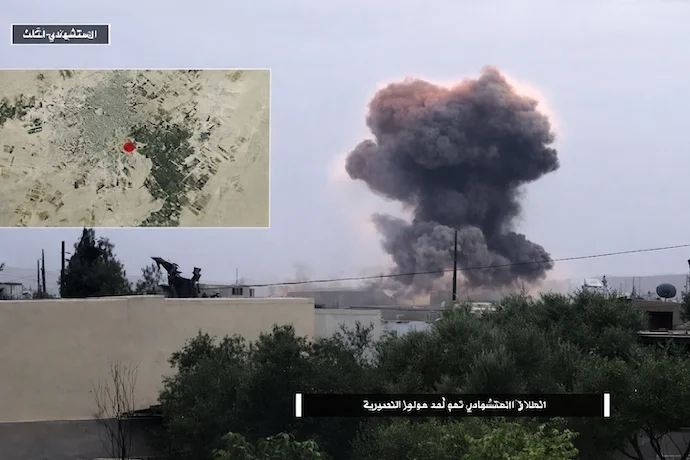
That editorial choice has consequences beyond the immediate clip. The inverted red triangle Hamas uses in its videos has been echoed by supporters who paint the symbol on Jewish places of worship worldwide, attempting to mark these sites as “targets.” All it took was a simple animation to supply a visual shorthand that can be reproduced offline. Editing, in other words, becomes a method of teaching: it trains supporters in a vocabulary of symbols that can be carried across borders and into public space.
Aside from recruitment, well-produced videos also help increase the perceived legitimacy of terrorist organizations. As governments continue to allocate more resources toward professional communications, terrorist groups that seek international authority and a veneer of sovereignty imitate the look of official state media. This creates a visual arms race in which non-state actors masquerade as legitimate governing authorities rather than extremists and outlaws. Cinematography, branding, and polish become part of the argument: not merely that the group exists, but that it deserves recognition.
Response by Social Media Companies
Terror groups looking to spread propaganda are intrinsically drawn to social media platforms. They offer large audiences, free uploads and hosting, and the ability to move from broadcast to communication and recruitment with little friction. Social media companies understand the potential for radicalization on their sites, but their efforts are often strained by scale and speed. Content can spread in seconds; moderation tends to arrive later, if it arrives at all, and the viral arc does not wait for policy teams.
Most major tech companies participate in the Global Internet Forum to Counter Terrorism (GIFCT), including Meta (Instagram, WhatsApp, and Facebook), Google (YouTube), LinkedIn, X, TikTok, and others. The GIFCT operates a hash-sharing database that assigns unique digital fingerprints to photos and videos associated with terrorist propaganda, enabling member companies to identify and remove known content quickly. Yet moderation is difficult in the Internet’s native tempo. Short-form videos of 15 to 60 seconds, among the most popular forms of media online, can rack up thousands of views before automated systems flag them or human reviewers reach them. By then, the content has already done what it was designed to do.
The problem is compounded by terror-adjacent accounts, those supportive but not directly linked to designated groups. Such accounts can repost, remix, and reshare propaganda, thereby lengthening its lifespan and extending its reach. Even when platforms eventually remove the content, each round of resharing expands the audience and increases the odds that the material finds someone susceptible, especially when it is packaged as “news,” “analysis,” or “context” rather than advocacy.
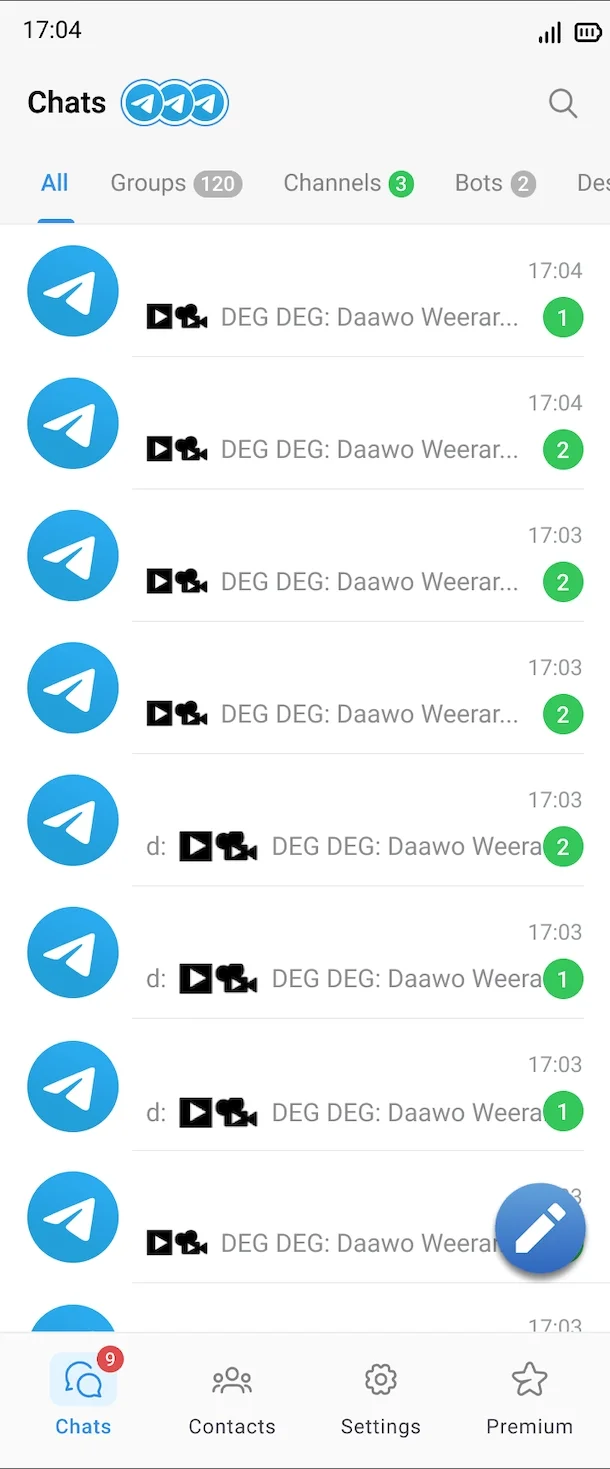
Concerningly, the GIFCT still does not include some major platforms. Telegram, headquartered in the United Arab Emirates and claiming close to 1 billion active users, is not a member of the forum. Its encrypted channels and relatively low-moderation environment have allowed extremist content to flourish, with Hamas using it to publish propaganda and Hezbollah using it to communicate with members. Al-Shabaab, a terrorist group in Somalia, has effectively leveraged Telegram as well, disseminating propaganda at speed across multiple accounts without the same fear of removal that shapes behavior on more tightly moderated platforms.
Response
As terror groups continue to expand their presence in the digital age, it will become increasingly important that governments work to counter their online influence. The question is whether democratic Western nations can respond to online extremists with the same agility that those movements bring to these platforms, while still protecting and distinguishing free speech from terrorist material. Major cooperation among intelligence agencies, governments, and social media platforms will be required to accelerate the removal of extremist content, reduce re-upload pathways, and clarify enforcement standards so that the rules are legible and consistently applied.
Beyond takedowns, Western governments can also work to counter propaganda in real time by supporting credible counter-messaging and empowering pro-democratic narratives. Used together, faster removal and sharper counter-narratives offer a realistic framework for reducing the reach of extremist media and preventing terrorists from claiming the online space. The goal is not censorship, but resilience against manipulation.