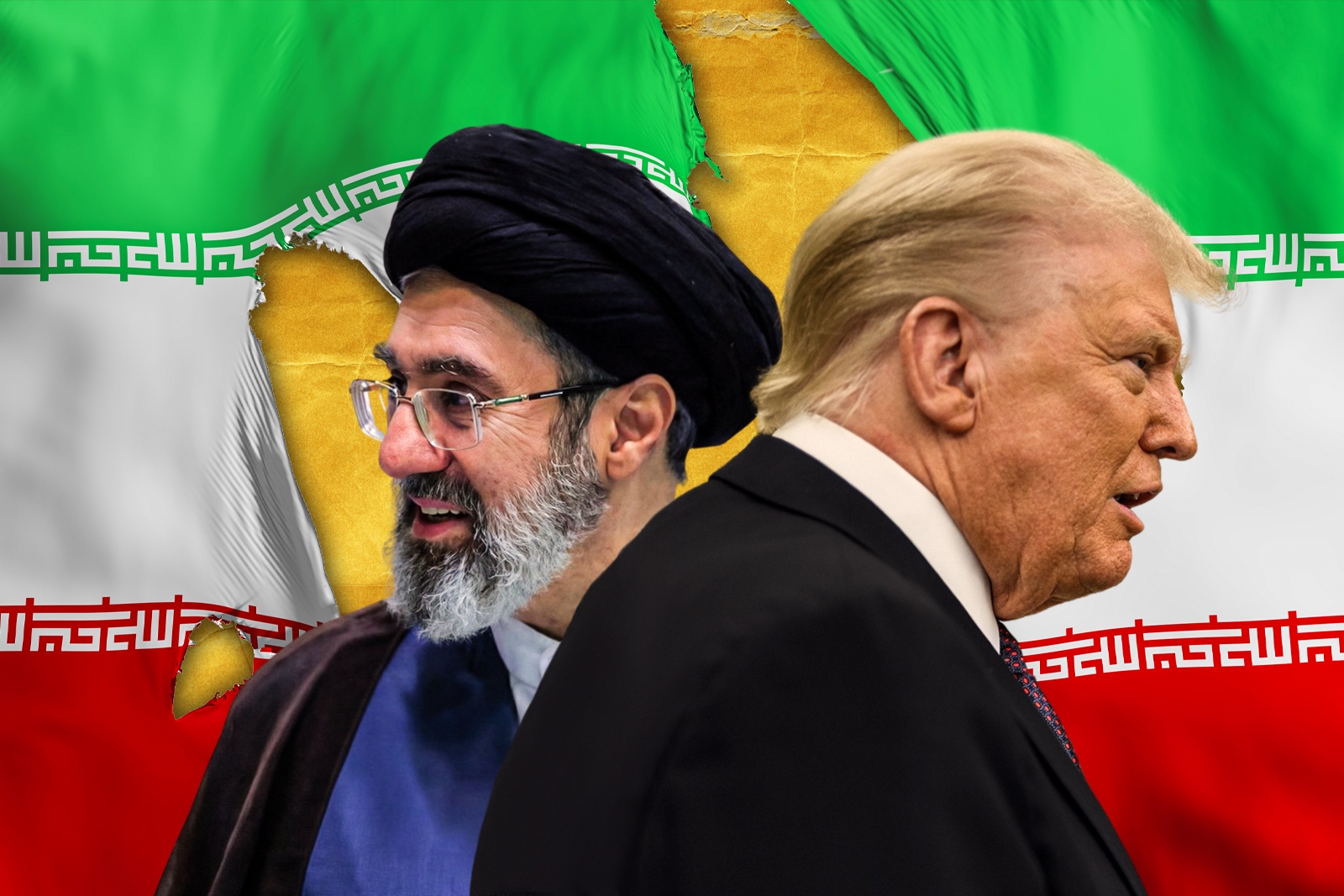

How to Stop a War That Hasn’t Started Yet
There is a familiar illusion that takes hold in moments of geopolitical tension: the belief that just a little more pressure—one more round of sanctions, one more strike, one more display of force—will finally compel the other side to yield. In the intensifying standoff between the United States and Iran, that illusion is not merely misguided. It is dangerous.
Washington and Tehran are not haggling over marginal interests or negotiating at the edges of disagreement. They are locked in a confrontation shaped by fundamentally incompatible security doctrines. The United States seeks to constrain Iran’s nuclear program while rolling back its regional influence. Iran, for its part, demands credible guarantees against military attack, economic strangulation, and regime change. These are not bargaining chips to be traded in incremental negotiations. They are red lines, deeply embedded in each side’s strategic worldview.
This is what a genuine strategic deadlock looks like.
And yet, policymakers repeatedly fall into a familiar trap: the assumption that if a comprehensive agreement is unattainable, then no agreement is worth pursuing. This kind of binary thinking has prolonged conflicts from the Iraq War to a range of lower-intensity confrontations across the Middle East. It sustains escalation long after its strategic logic has eroded, substituting inertia for strategy.
The alternative is less ambitious but far more realistic: a ceasefire.
A ceasefire is not a peace treaty. It is not a grand bargain. It does not resolve underlying rivalries or produce lasting reconciliation. What it does—if constructed with care—is reduce the immediate risk of escalation and create space for more durable arrangements, should they ever become politically feasible.
Crucially, a ceasefire does not require trust. It requires fatigue.
The contours of such an arrangement are neither novel nor unattainable. They would likely include a halt to direct and proxy attacks, a temporary cap on Iran’s uranium enrichment below weapons-grade thresholds, and the restoration of intrusive monitoring by the International Atomic Energy Agency. None of these measures would settle the deeper dispute between Washington and Tehran. That is precisely the point. Their purpose is not resolution, but stabilization—an attempt to slow a cycle that has become increasingly difficult to control.
The Problem with Historical Analogies
Opponents of a limited ceasefire will almost certainly reach for history—and, in doing so, risk drawing precisely the wrong lessons.
The most common analogy is the Munich Agreement, often invoked through Neville Chamberlain’s ill-fated declaration of “peace in our time.” The warning is familiar: that any attempt to de-escalate in the face of a determined adversary amounts to appeasement and invites further aggression.
Others may point to the Molotov–Ribbentrop Pact as evidence that temporary accommodations between rivals can enable, rather than prevent, catastrophic conflict—culminating in World War II.
These comparisons are rhetorically potent but analytically flawed.
The Munich Agreement was not a ceasefire between active adversaries; it was a concession that altered the balance of power in favor of an expansionist state. It involved territorial sacrifice by a third party and rested on the mistaken belief that satisfying immediate demands would extinguish future ones. Similarly, the Nazi-Soviet pact was not a de-escalatory mechanism but a strategic alignment, complete with secret provisions to partition Eastern Europe—directly facilitating the outbreak of global war.
A U.S.–Iran ceasefire would do neither.
It would not legitimize territorial expansion, nor would it formalize spheres of influence through covert understandings. Instead, it would aim to reduce the tempo of an already active conflict environment—one defined by proxy engagements, covert operations, and the constant risk of miscalculation.
The greater danger today is not that diplomacy will go too far. It is that it will fail to go far enough to meaningfully slow escalation.
Israel and the Limits of Bilateral De-escalation
No discussion of the U.S.–Iran standoff is complete without acknowledging Israel’s central—and complicating—role.
For Israeli leadership, Iran’s nuclear trajectory and its network of regional proxies are not abstract strategic concerns. They are immediate and existential threats. This perception has long underpinned a doctrine of preemptive action, including covert sabotage and targeted strikes designed to delay Iran’s nuclear progress.
That doctrine does not always align with Washington’s periodic preference for restraint.
The result is a structural tension: even if the United States and Iran were to reach a limited ceasefire, escalation could be reignited by actions outside that framework. A single strike—whether overt or covert—could trigger a cycle of retaliation that quickly spirals out of diplomatic control.
A ceasefire does not eliminate this risk. What it does is lower the baseline level of violence, making such spirals less likely and, when they do occur, more manageable. Incorporating Israel into even an informal understanding would not resolve its core concerns, but it could reduce the likelihood that a bilateral standoff metastasizes into a broader regional conflict.
The Case for a Controlled Stalemate
Critics will argue that a ceasefire merely “freezes” the conflict. They are not wrong.
But this is not an argument against a ceasefire—it is, in many ways, an argument for one.
Frozen conflicts are inherently unstable, but they are vastly preferable to active escalation. A controlled stalemate limits immediate harm, preserves strategic flexibility, and prevents crises from compounding into larger wars. In the absence of viable pathways to a comprehensive agreement, stabilization is not failure. It is a form of progress—incremental, imperfect, but necessary.
There is also a political reality that cannot be ignored: escalation is easier than de-escalation. Military action delivers immediate, visible results. It signals resolve and satisfies domestic demands for strength. Ceasefires, by contrast, require patience, coordination, and a willingness to absorb criticism from constituencies that equate restraint with weakness.
In Tehran, stepping back risks appearing vulnerable in the face of sustained external pressure. In Washington, restraint can be framed as appeasement in a political culture that often rewards maximalist postures. In both capitals, the incentives tilt toward defiance rather than compromise.
And yet, the alternative is a gradual slide into a broader regional conflict that neither side can fully control. The Middle East has seen this pattern before: limited engagements that expand through miscalculation, proxy retaliation, and the inexorable logic of saving face.
Stopping the Bleeding
The lesson of history is not that every pause invites catastrophe. It is that mischaracterizing the nature of a pause can lead to disastrous decisions.
“Peace in our time” failed because it mistook concession for stability. The Molotov–Ribbentrop Pact failed because it masked strategic collusion as neutrality. A U.S.–Iran ceasefire would be neither. It would not resolve the underlying rivalry, nor would it pretend to. It would simply acknowledge the limits of what can be achieved under current conditions.
The United States and Iran do not need to reconcile their differences to step back from the brink. They do not need a grand bargain or a comprehensive settlement. What they need—urgently—is a mechanism to reduce the risk of escalation and create space for future diplomacy.
That requires accepting a difficult truth: neither side is positioned to achieve its maximal objectives.
In that context, stopping the bleeding is not appeasement.
It is strategy.