

Japan’s Reinvention Runs Through Vietnam
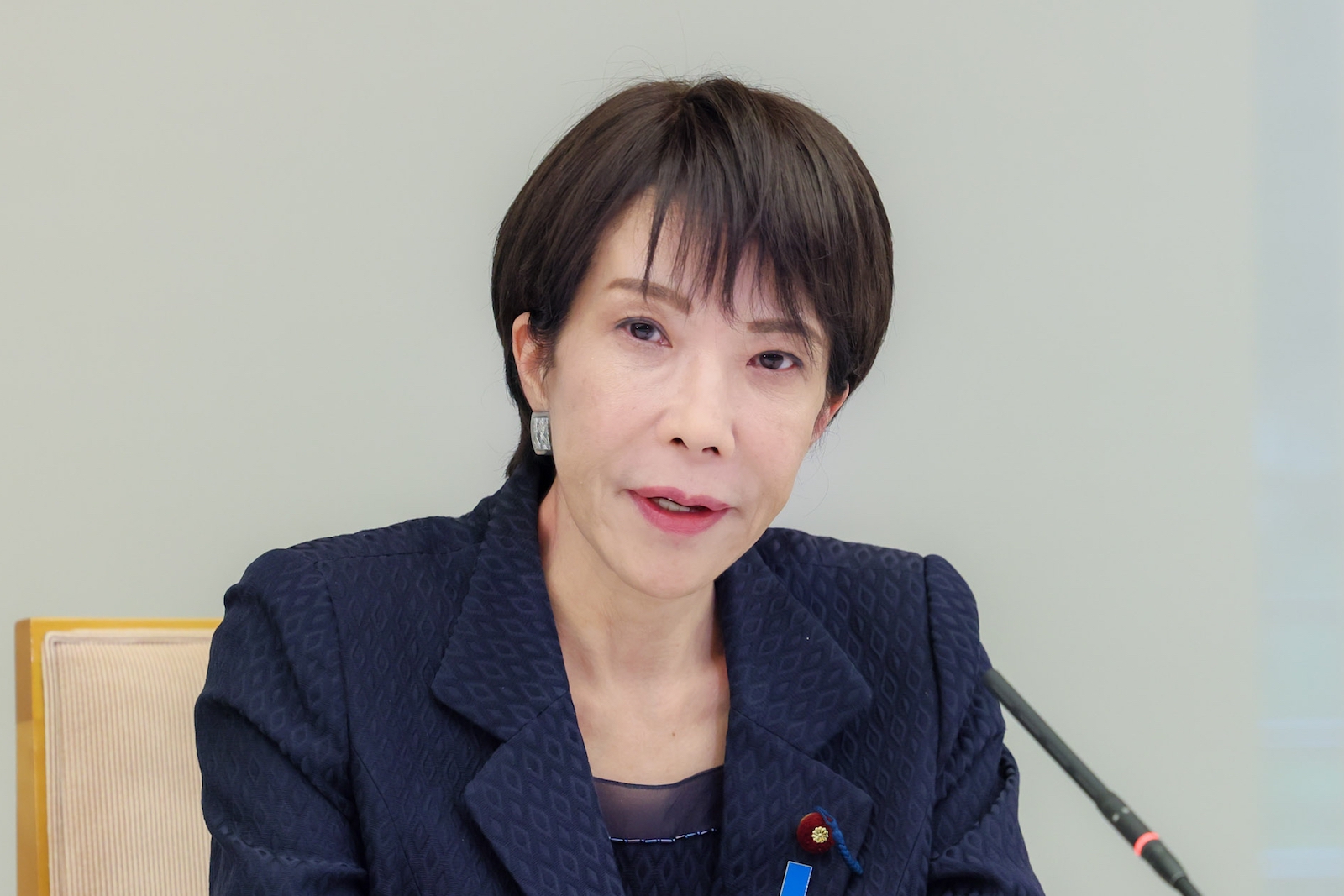
In early 2026, Tokyo made something unmistakable: the strong state is back. Not as a nostalgic return to old statism, but as a hard-edged adaptation to a world where economics and security have fused. Prime Minister Sanae Takaichi’s strengthened mandate has given Japan the political room to move toward strategic normalization, economic security, and something closer to national resilience than postwar comfort ever required.
But the real question isn’t whether Japan is getting stronger. It’s whether that strength will matter beyond its borders. Power that stops at self-protection is defensive. Power that reshapes its environment is something else entirely.
Vietnam is where that difference will be tested.
Japan’s shift isn’t stylistic. It’s structural. The security environment around Taiwan is deteriorating. Supply chains, technology, and energy are now instruments of leverage. And Japan is aging—fast—while carrying the fiscal weight of its own past successes. The old model—growth first, caution always—has run its course.
The new one is more blunt: deterrence, industrial strategy, and risk management.
Defense spending tells part of that story. But the harder problem is political, not financial. Japan has to persuade its own public to accept a state that is less about comfort and more about exposure—more spending, more risk, fewer illusions about stability. That is not a technical adjustment. It is a cultural one.
And it’s precisely why Japan can’t afford to turn inward.
For years, Vietnam–Japan relations were described in the familiar language of diplomacy: trust, complementarity, shared vision. It was all true—and mostly insufficient. Because the world those phrases belonged to no longer exists.
Today, this relationship isn’t just bilateral. It’s a test case. Can middle powers do more than adapt to great-power competition? Can they shape it?
Takaichi’s May 2026 visit to Vietnam hinted at the answer. The agenda wasn’t symbolic—it was surgical: semiconductors, critical minerals, artificial intelligence, energy systems, maritime security. This wasn’t development policy. It was an economic-security policy.
That shift matters because the global economy has changed in ways policymakers still struggle to admit plainly. Efficiency is no longer the organizing principle. Security is. Supply chains aren’t neutral. Technology isn’t just commercial. Energy isn’t just input—it’s leverage.
In that world, cooperation that doesn’t produce resilience is just growth with a shorter shelf life. And strategic partnerships that don’t produce capability are just better press releases.
So the real question isn’t whether Vietnam and Japan are getting closer. It’s whether they are getting stronger—together, and in ways that actually alter their position in the system.
Japan’s “strong state” is often misunderstood as a turn toward nationalism or militarization. It’s more pragmatic—and more uneasy—than that. This is a country that is wealthy but aging, advanced but labor-constrained, deeply allied yet still searching for autonomy.
Japan is not just acting out of confidence. It’s reacting to pressure. And that pressure is forcing a shift from managing prosperity to managing risk.
But strength is a tool, not a guarantee. It can produce a Japan that fortifies itself—or one that helps build the capacity of others.
Vietnam will decide which version emerges.
Vietnam isn’t an easy partner. That’s precisely why it matters. It has scale, geography, and ambition—but also friction: bureaucratic complexity, uneven implementation, weak supporting industries, energy constraints, and skill gaps.
This is not a plug-and-play investment destination. It’s a system under construction.
For Japan, that makes Vietnam less of an opportunity and more of an exam.
If Tokyo treats Vietnam as just another manufacturing hedge against China, the strategy is shallow. Vietnam becomes a waypoint—a cheaper node in a shifting supply chain.
But if Japan treats Vietnam as a platform for building resilience—across energy, logistics, governance, and human capital—then the relationship starts to look different. Less transactional. More structural.
The distinction is simple but decisive. Cost-based investment moves. Capability-based investment anchors.
Right now, Vietnam risks being the former.
Because in today’s system, advantage doesn’t come from being cheaper. It comes from being reliable. And reliability isn’t rhetorical—it’s measurable. It shows up in licensing timelines, power stability, supplier quality, policy predictability, and whether institutions can actually execute.
Vietnam’s challenge is that growth has outpaced capability. It has attracted capital faster than it has built depth. Infrastructure is expanding, but operational mastery is uneven. Agreements in advanced sectors are easy to sign; ecosystems are much harder to build.
The real danger isn’t exclusion from supply chains. It’s inclusion without leverage.
Japan faces a parallel adjustment. Its traditional playbook in Southeast Asia—development aid, infrastructure, manufacturing—was effective for a different era. It built relationships. It created presence. But it doesn’t go far enough anymore.
What’s needed now is deeper, less visible work: standards, processes, data governance, workforce systems, institutional capacity. The plumbing of modern economic power.
That’s where Japan has a real advantage. Not speed. Not scale. But organization—durability, precision, and the ability to set and maintain standards.
The problem is that this kind of power only works if it’s applied fully. Not through announcements or funding packages, but through sustained involvement in how systems actually function.
That’s harder. It’s also where the outcome will be decided.
Because regional order isn’t built in summit statements. It’s built in systems that don’t fail under stress—ports that move goods, grids that hold, data that can be trusted, institutions that don’t stall.
China complicates all of this in ways that can’t be sidestepped. The idea that Vietnam simply replaces China in supply chains is comforting—and wrong. China isn’t withdrawing. It’s repositioning.
Chinese firms often move faster, accept more risk, and operate at lower cost. In many sectors, they’re not absent competitors—they’re dominant ones.
So the question becomes uncomfortable: does shifting production to Vietnam actually reduce dependence on China, or just disguise it?
If inputs, machinery, or platforms remain tied to China, diversification is geographic—not strategic. Vietnam becomes a buffer, not an anchor.
Which is why the goal isn’t decoupling. It’s reducing single-point vulnerability.
Japan’s Free and Open Indo-Pacific framework is often treated as a kind of geopolitical branding exercise. It’s more useful than that—if taken seriously. For Japan, openness and a rule-based order are emphasized. For Vietnam, it’s valuable only to the extent that it delivers something tangible: stronger maritime capacity, more secure supply chains, more independent infrastructure.
The key is to treat it as a toolkit, not a label.
Because the real question for any state isn’t alignment. Its capability. What do you gain? What do you control? Where are you still exposed?
That logic applies just as clearly to human capital.
The Vietnamese workforce in Japan is often discussed in narrow terms—as labor filling demographic gaps. That misses the larger opportunity. This is a transnational network of skills, experience, and knowledge transfer that is waiting to be properly structured.
Handled well, it becomes connective tissue between two economies. Handled poorly, it becomes a source of friction and constraint.
For Japan, relying on foreign labor while treating it as temporary is a contradiction. For Vietnam, exporting labor without reintegrating skills is a missed opportunity.
What’s needed is a full cycle: education, employment, skill accumulation, and reinvestment.
The same principle applies to initiatives such as the Vietnam–Japan Young Leaders Forum. As a symbolic exchange, it’s marginal. As a system for training and connecting future decision-makers, it becomes infrastructure.
And in this environment, “soft” infrastructure isn’t soft at all. Standards, data, networks—these are the levers of modern power. They determine who moves faster, who adapts better, who holds together when pressure builds.
Which brings the argument back to its core.
Vietnam–Japan relations will only become genuinely strategic when both sides stop treating each other as complementary and start treating each other as co-creators of capability.
That requires Japan to accept more risk—to invest not just in assets, but in the institutional strength of its partners. And it requires Vietnam to move beyond a development model that waits for opportunity instead of building power.
Because opportunity is abundant right now. Supply chains are shifting. Great powers are competing. Capital is looking for alternatives.
But opportunity doesn’t create capability. It exposes the absence of it.
History won’t judge this relationship by how often it’s described as “strategic.” It will judge it by whether it produces resilience when systems come under strain.
Takaichi’s 2026 visit to Vietnam should be understood in that light. Not as a diplomatic milestone, but as a signal of intent.
Japan is trying to become a stronger state. Vietnam is trying to become more capable.
Those trajectories intersect easily at the level of interest. They align much more rarely at the level of execution.
And that is where the outcome will be decided.
If they meet there—at the level of systems, standards, and sustained capability—then this partnership will matter. Not just for trade or diplomacy, but for the shape of the regional order itself.
If they don’t, it will remain what so many partnerships already are: well-described, well-attended, and ultimately insufficient.