Lawrence Freedman on the War No One Can Win
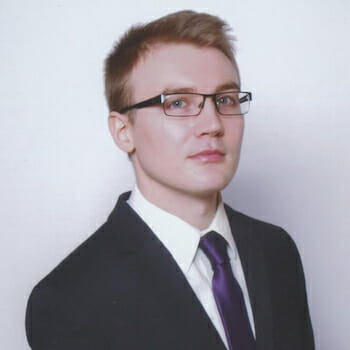
Sir Lawrence Freedman is Emeritus Professor of War Studies at King’s College London and one of Britain’s most influential military strategists. Freedman, the author of landmark works including Ukraine and the Art of Strategy and Command: The Politics of Military Operations from Korea to Ukraine, has long shaped debates over deterrence, escalation, and statecraft. His peer-reviewed essay “The Russo-Ukrainian War and the Durability of Deterrence” examines nuclear signaling and credibility in the current conflict. He also co-writes Comment Is Freed over on Substack, offering precise, timely analysis that bridges scholarship and public understanding.
Freedman’s influence extends beyond academia. A veteran of the UK’s Iraq Inquiry, he remains a leading voice on civil-military relations, modern warfare, and the limits of coercive power. Since Russia’s 2022 full-scale invasion of Ukraine, his analyses have been widely cited for their clarity and restraint.
In this interview with Scott Douglas Jacobsen, Freedman discusses Russia’s evolving nuclear doctrine, arguing that its threats remain tethered to existential scenarios rather than battlefield desperation. He traces how figures such as Dmitry Medvedev use rhetorical bluster without translating it into atomic policy. Freedman also reflects on Kyiv’s civil-military tensions and leadership shifts—most notably, the replacement of Valerii Zaluzhnyi by Oleksandr Syrskyi and Zaluzhnyi’s later appointment as ambassador to the UK. On the battlefield, he notes how inexpensive drones have expanded kill zones and made fronts transparent, pushing Russia toward small-group infiltration while Ukraine defends thinly stretched lines.
Freedman cautions against speculative “what ifs,” distinguishing the difference between winning and merely not losing. Russia’s political objectives, he says, remain unmet. For Ukraine, escalation risks can be managed—so long as deep-strike operations minimize civilian harm and avoid attacks on leadership targets.

Scott Douglas Jacobsen: Thank you very much for joining me today. Since The Durability of Deterrence, what has changed most in Russian nuclear signaling?
Lawrence Freedman: Not a lot has changed. The problem they have is that there’s a clear doctrine—not significantly different from that of other nuclear-armed states—which holds that nuclear weapons are to deter existential threats to Russia. They’re not for use in lesser cases, and, generally speaking, you really don’t want a nuclear war if you can avoid it. They feel, however, that they ought to be getting more value out of their nuclear arsenal.
While Putin has been quite careful in his nuclear threats, others, like Dmitry Medvedev, the former president and now deputy chair of Russia’s Security Council, have been unable to resist opportunities to sound as menacing as possible with every development they dislike. Medvedev talks about Armageddon coming, and Russian state media often goes even further. In practice, when the developments they warned against actually occur—such as Finland and Sweden joining NATO, Western countries sending long-range weapons to Ukraine, or Ukraine striking targets inside Russia—nothing much happens.
They may respond – but not in the nuclear sphere. They’ve therefore created a problem for themselves. When he has been explicit about nuclear contingencies, Putin has reserved his threats for one clear contingency, of NATO actually fighting alongside Ukraine. But they’ve used threats implicitly for a range of other contingencies—all of which have since come to pass, and none of which have warranted nuclear use.
You can see, in several Russian commentators—Sergey Karaganov being the most notable—a lament that in this way, the deterrent impact of Russia’s nuclear arsenal has been eroded. That has led to arguments that perhaps they should lower the threshold for use to make it more credible. Putin has explicitly rejected that argument, but it remains present in Russian debates.
Jacobsen: What civil-military frictions have been shaping Moscow and Kyiv’s operational choices in the current phase of the war?
Freedman: We know more about Ukraine because it has an active press and open discussion. There are the usual wartime tensions—one being the concern that the generals, particularly the commander-in-chief, may become more popular than the president. The president’s staff worries about this and tries to keep the generals in their place. More seriously, there are political imperatives that may seem compelling to President Zelensky—for example, the belief that every piece of territory must be defended—that don’t always make military sense to the generals.
There are various tensions, not only between civilians and the military but within the military itself, over strategic priorities. These were particularly evident in the 2022–2023 period. That phase ended with the commander-in-chief, General Valerii Zaluzhnyi, being removed from his position in early 2024 and later appointed as Ukraine’s ambassador to the United Kingdom. He was replaced by General Oleksandr Syrskyi, who had already been running much of the land war. So yes, there are tensions—but they are not surprising.
There has been a certain amount of sacking of inadequate commanders, but that has been primarily done at the senior military level rather than by Zelensky. Zelensky, on the whole, has done what he should be doing—concentrating on external support, maintaining international backing, and keeping the population’s morale up. However, there are significant issues, with mobilization being the most obvious, that have caused and continue to cause tensions. Insufficient manpower at the front is a real problem. The idea of conscripting 18–25-year-olds is still seen as politically toxic. So, these are significant issues that won’t go away; they’ll keep coming back.
On the Russian side, it’s different. First, Putin hasn’t changed his Chief of the General Staff, General Valery Gerasimov, who’s been in post since around 2012. He’s still there, though he doesn’t appear to be particularly good at his job. He did, however, change the Minister of Defense. Sergei Shoigu has been in office since 2012. The new minister, Andrei Belousov, appears to be more efficient and effective, and has somewhat modernized the Russian operation.
But the military itself, under Gerasimov’s command, has been notable for the lack of originality in its tactics. They’ve stuck with the same formula. Where you’ve seen real innovation on the Russian side has been in the development and use of drones, where they have been quite effective. The big issue came in the summer of 2023 with Yevgeny Prigozhin. Private military contractors were developing their own armies—in this case, the Wagner Group under Prigozhin. Wagner fell out with the Ministry of Defense because they felt they weren’t getting enough ammunition and support.
These disputes were very public throughout the first half of 2023 and led the Defense Ministry to attempt to bring Wagner under its control, threatening Prigozhin’s entire business model. He rebelled. I don’t think he reasonably intended to mutiny as much as he did, but it went further than he expected. He ended up marching toward Moscow after clashing to some degree with loyalist Russian forces. He was persuaded not to pursue it to the end and convinced himself that if he went to Belarus, he could be rehabilitated.
Of course, he wasn’t—he was killed in a plane explosion a few months after the mutiny. That was a symptom of something more. Some generals were clearly sympathetic to Prigozhin, several of whom were dismissed after the mutiny. It was a clear sign of internal tensions in the system, which probably still exist. But you don’t see much of it now surfacing.
There has been consistency in Russian strategy. They continue to press ahead on all fronts. They keep pushing. There’s not much evidence of alternative strategic thinking. From the beginning, Russia could have concentrated its forces and made a significant push before consolidating. Instead, it has maintained a broad front line throughout.

Jacobsen: As far as I know, the front line is probably over a thousand kilometres.
Freedman: Yes, it is—more than 1,200 kilometres. It’s incredibly long. You can see that both sides are currently stretched, and they’re starting to have to move troops from one sector to another. The fighting is most intense in Donetsk. That’s Putin’s biggest priority. He’s more or less secured Luhansk, and the occupation of Donetsk would complete the control of the Donbas. He’s put enormous effort into that, though it hasn’t gone as far as he hoped in terms of occupying it.
Jacobsen: What is a “wartime mentality”? What would adaptation to this mean for procurement and for governance reforms?
Freedman: What you see in Ukraine, which has been impressive and is happening in Russia too (one shouldn’t underestimate the Russians), is the speed of innovation. Ukraine had an army and some weapons, but it was heavily dependent on external sources for additional military equipment and ammunition. That continued well into last year. For key systems such as Patriot, HIMARS, and Storm Shadow, Ukraine still relies on its supporters to deliver. But on drones, it’s producing its own and will soon be exporting them.
There’s even talk of a joint venture with the United States. It’s been an extraordinary period of innovation, born of necessity. The response has been impressive. Decisions are made in weeks, rather than the months or years required by Western procurement agencies. They don’t go through endless rounds of testing. If they think something will work, they try it. The Ukrainians keep their designs simple and concentrate much of the innovation in the software. They use AI quite effectively. Without this adaptability, Ukraine would face significant challenges due to the limited Western supply capacity. The slow pace at which Europe ramped up ammunition production—especially artillery shells—shows the stark difference between being at war and being at peace.
Jacobsen: What about the use of drones for reconnaissance, strikes, and defense? Has this surpassed the expectations of many analysts in terms of efficacy?
Freedman: What’s happened is that the war began with drones being used, but they were larger, more capable, and expensive—used mainly for reconnaissance and strike missions. The key change wasn’t that individual drones became vastly more effective, though what you can now pack into a small drone is impressive; instead, it was that they provided mass. That’s the crucial point—it’s a way of achieving mass, and there’s no other affordable way to do it. Air power and artillery remain more efficient, but they can’t be produced or deployed in such volume.
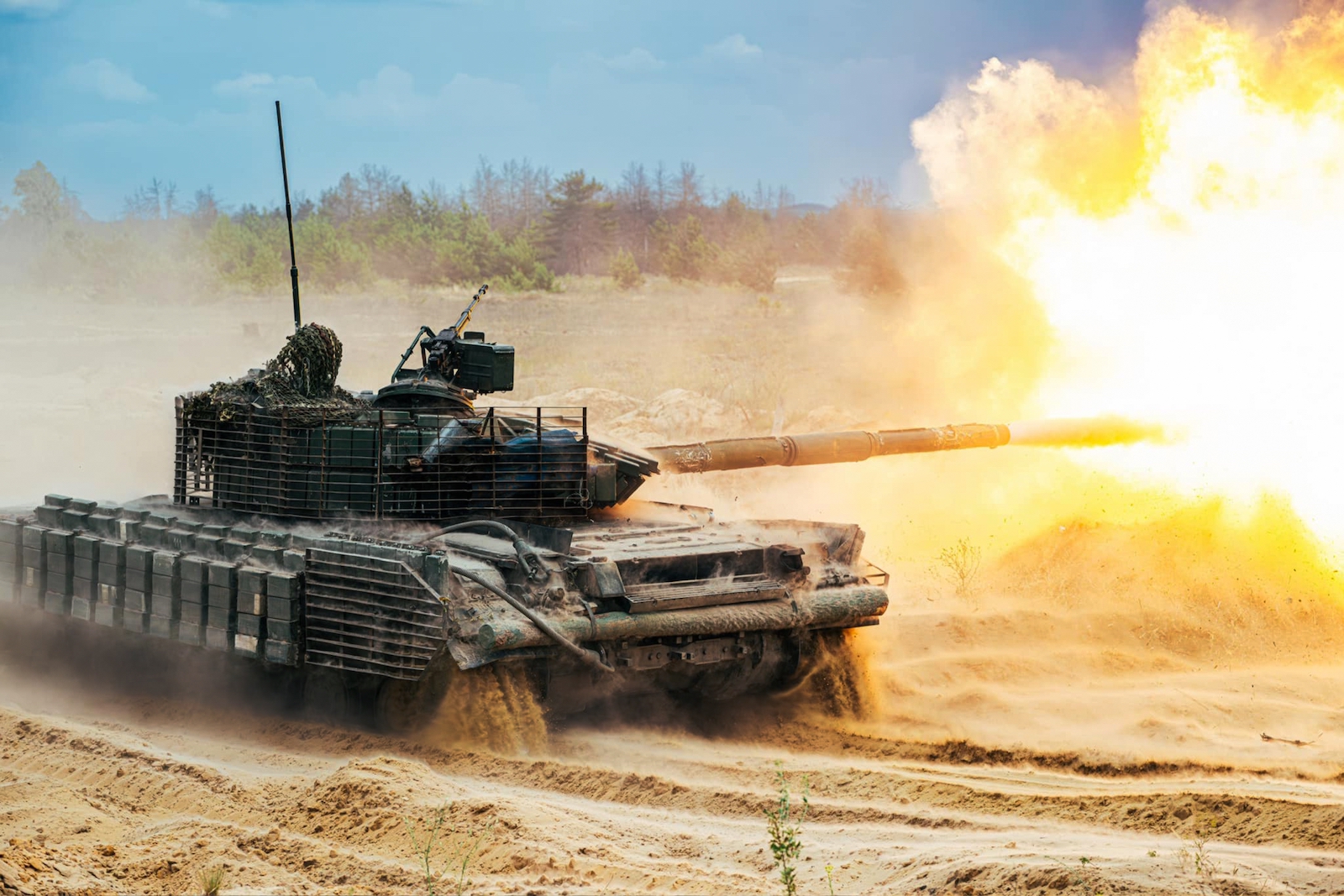
Surveillance has become critical. The battlefield has become transparent; it hasn’t completely dispelled the fog of war, but there’s far less of it than before. This has had a remarkable effect on frontline tactics. You now have a 10–20 kilometre kill zone, where anything lingering too long is likely to be detected and destroyed. Russian tactics have shifted from assaults with armour and large infantry numbers to infiltration by small groups. Ukraine is defending with fragile lines, as massed positions would quickly become highly vulnerable.
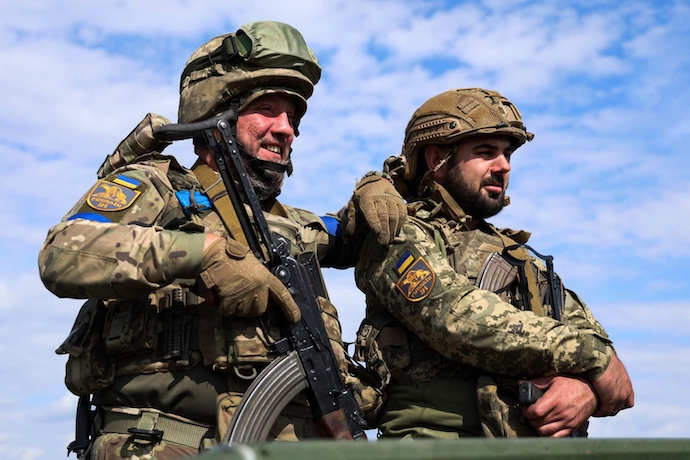
A lot of the time, Ukrainian forces don’t even try to engage directly with the enemy—they report that an enemy is coming. That partly reflects their own manpower shortages, but it’s also a consequence of the nature of this battlefield, a battle arena saturated with drones. The innovation continues, becoming ever more cat-and-mouse. The speed of innovation in both drone defense and counter-defense has been extraordinary, with new models constantly emerging.
And it’s not just drones over the front lines; it’s also those attacking deep into the rear. Russia now regularly mounts attacks with hundreds of drones. Most are shot down, but enough get through to cause damage. Ukraine, in turn, has mounted a very effective campaign using drones against Russian oil facilities—something nobody would have imagined three or four years ago. The situation has evolved extremely quickly.
The central issue now is anti-drone drones. Air defense has become a pressing concern for both sides, particularly for Ukraine. Various systems are being tested that are expected to be cheaper than using sophisticated air defense missiles.
Drones themselves aren’t hard to shoot down—they’re slow—but there are so many of them. That’s where the mass effect comes in. It’s not that individual drones are especially effective; it’s that there are countless ones in the air. Even if 80% are intercepted, the remaining 20% can still inflict significant damage.
Jacobsen: Where do Western media and analysts still get wrong about the war?
Freedman: It’s an inherent challenge. I’m sitting in London, trying to follow the war in Ukraine. There’s plenty of information available, but it’s fragmented, and it’s often unclear whom to trust. You see endless videos showing one side destroying the other, but they never give you the whole picture. It is not easy. And I should say, I’m not immune to these problems—we all suffer from them. One major issue is overthinking and getting too far ahead. People keep asking “what if?” questions. “What if the Russians take Odesa?”—which I saw posed in a newspaper column months ago.
There’s no way Russia could take Odesa right now, so it’s a pointless question. Similarly, back in 2022, we had “What if the Ukrainians retake Crimea—will Russia use nuclear weapons?” They weren’t close to retaking Crimea at the time, so it was an abstract worry. It’s not that such things are impossible, but context matters—you don’t know what else might be happening at the same time. Forward-looking analysis often becomes too speculative. The reality on the battlefield since late 2022 has been that neither side has made significant progress.
Apart from a brief period in mid-2023, following Ukraine’s successful counteroffensives in 2022, Russia has been on a constant offensive. They’ve been pushing continuously. They’ve gained some territory—Avdiivka fell, Bakhmut fell—but other places, like Krokhmalne and Chasiv Yar, haven’t. Chasiv Yar, for instance, was reported to have been lost, but it turns out it hasn’t, at least not yet.
People keep speculating about “what ifs,” assuming momentum. As Russia continues to advance, some think Ukraine will inevitably falter and collapse—but it hasn’t. Then you get the opposite problem: because Ukraine has done better and proved more resilient than expected, people assume it will always continue to do so. You can’t be sure of that either, because Ukraine is stretched, and Russia is pushing very hard right now. It’s challenging to follow a war like this without falling into either optimism or pessimism bias. That’s why I’m careful about predictions. I got it wrong early o,n and I’ve learned from that. It’s better to discuss possibilities and issues than to predict outcomes.
Another thing, and this isn’t a complaint, but an observation: people often conflate who’s inflicting more damage with who’s winning. Just because Russia is advancing doesn’t mean it’s winning. None of Russia’s political objectives has been achieved. It’s taken more territory—roughly doubling what it held in February 2022—but it hasn’t “demilitarized” Ukraine. In fact, Ukraine is now the most militarized state in Europe. For those who claim the war is about NATO expansion, it is noteworthy that NATO has expanded with Sweden and Finland. For those who say it’s about Ukraine’s sovereignty and independence, Ukraine still has both. So none of Russia’s stated political goals have been met. When people say Russia is “winning,” what does that really mean? It certainly hasn’t won.
There’s a crucial distinction between winning and not losing. For Putin, that distinction is everything. I think he believes he can win—his recent remarks at the Valdai Discussion Club suggest as much—because he considers Ukraine to be close to collapse. I don’t find that credible, but that’s clearly his belief. His panic in late September 2022, when he feared he might lose, led to the mobilization of more troops, the conversion of Russia into a war economy, and the expansion of his war aims by annexing four oblasts—none of which he fully controls.
Not losing became an objective in itself, an addition to whatever goals the war began with. Having staked so much on this “special military operation,” failure would be a political catastrophe. Avoiding that outcome has become a goal of its own. That’s one reason I’ve been pessimistic about any peace deal since then. Putin needs something tangible to show for this war. Right now, he has only devastated territory—and little else.
Jacobsen: How should NATO navigate the balance between enabling deep strikes and managing escalation, given the steady stream of red-line rhetoric coming from Moscow?
Freedman: Ukraine is already conducting deep strikes. If Ukraine began launching Western-supplied missiles into the centre of Moscow—say, striking the Kremlin—then, yes, people would be understandably anxious. I’m not sure how Russia would respond, but that’s not something anyone would want to test. They don’t like Ukraine’s current campaign against the oil industry, but there’s not much they can do about it. It’s worth remembering that the Biden administration was initially nervous about attacks on Russian oil refineries, partly due to concerns over global oil prices as much as escalation. The Trump administration, according to the Financial Times, appears more supportive and has reportedly provided intelligence to facilitate such strikes.
If Ukraine continues with a methodical campaign that avoids large-scale civilian casualties or direct attacks on Russia’s political leadership, I don’t see a significant escalation risk. Russia has already escalated plenty. The strikes it’s currently mounting are aimed at destroying Ukraine’s electricity grid—and now its gas infrastructure as well. Many civilians have been killed, cities have been reduced to rubble, and occupied territories have effectively been annexed into Russia. There’s been no shortage of escalation from Moscow, but they’ve avoided using force directly against the West. Even then, they haven’t been passive—there’s been energy coercion, drones drifting into Poland and elsewhere, sabotage operations, and cyberattacks.
Russia hasn’t taken steps that would trigger a direct war with NATO, because it does not want one. From Ukraine’s perspective, the key is to use its capabilities for strategic effect—which it is doing now. Other kinds of campaigns would likely be less effective. Ukraine is essentially running this campaign with Western intelligence support, but it’s fundamentally Ukrainian-led. And there’s no reason why this approach should lead to escalation.
Jacobsen: Sir, thank you very much for your time today. I appreciate both your expertise and the opportunity to speak with and meet you.