Legal Aid in a War Zone: How Ukraine’s Diplomatic Legal Hub Fills the Gaps
Oleksiy Shevchuk is a Ukrainian attorney, public spokesperson, and wartime legal advocate whose work sits at the intersection of bar self-governance, lobbying regulation, business protection, and international legal accountability. He serves as chair of the National Bar Association of Ukraine’s lobbying committee and as an official spokesperson for the Association, positioning him at the center of Ukraine’s evolving legal and institutional response to war.
In January, he was appointed to the competition commission responsible for selecting leadership for the Specialized Anti-Corruption Prosecutor’s Office (SAPO), and in March, he was admitted to Ukraine’s national competition for nomination of a judge to the International Criminal Court. Alongside these roles, he chairs the board of the Ukrainian National Lobbyists Association and leads wartime initiatives through the Diplomatic Legal Hub, a project aimed at addressing the legal and administrative fallout of Russia’s full-scale invasion.
In this interview, Shevchuk discusses the founding, structure, and practical mission of the Diplomatic Legal Hub, which he describes as a non-governmental initiative designed to provide pro bono legal, advocacy, and coordination support to foreign nationals, volunteers, journalists, embassies, and businesses affected by the war. He outlines the persistent gaps in Ukraine’s legal aid system for foreigners, particularly in cases involving cross-border legal complications, and explains how the Hub works to bridge those gaps through documentation, institutional coordination, and direct assistance.
The conversation also turns to the mechanics and limits of compensation, including the role of the Register of Damage for Ukraine and the uncertain future of reparations tied to frozen Russian assets. More broadly, Shevchuk reflects on the longer arc of accountability, arguing that while political and enforcement constraints remain significant, the International Criminal Court still represents the most plausible venue for sustained legal reckoning with Russia’s actions.
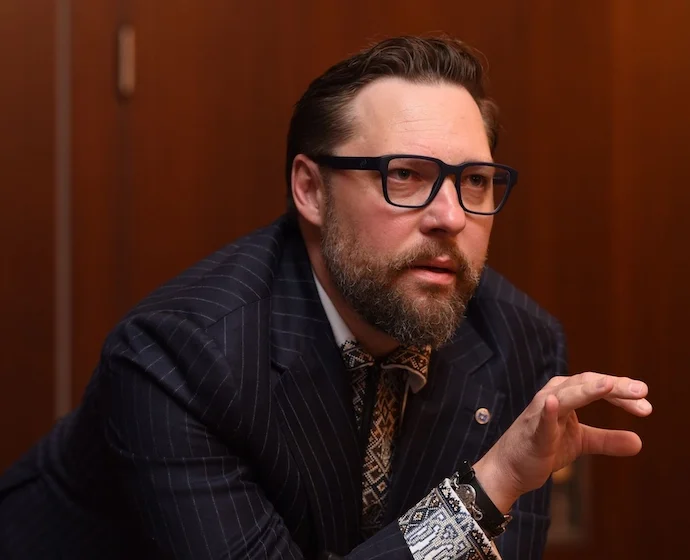
Scott Douglas Jacobsen: What gaps or challenges did you identify that led to the creation of the Diplomatic Legal Hub, and what ultimately made its founding necessary?
Oleksiy Shevchuk: We established the Diplomatic Legal Hub in Ukraine as an NGO designed to support international businesses and individuals affected by Russia’s aggression against Ukraine. The initiative brings together coordinators from multiple sectors to provide legal, advocacy, and related assistance.
We provide pro bono help to businesses damaged by missile strikes and other consequences of the war. We also assist foreign nationals affected by the conflict, including foreign volunteers serving with Ukrainian forces and international journalists working in areas under occupation and under hostilities.
We document cases linked to Russian aggression and communicate them to international media and institutions. We also assist foreign fighters who face international legal complications, including cases involving politically contested attempts to pursue them across borders.
It would not be accurate to say that the International Legion was dissolved. Rather, Ukraine’s Ministry of Defence has stated that the International Legions are being reorganized and integrated into established brigades of the Armed Forces of Ukraine.
We also assist international businesses in preparing claims connected to war damage. The Register of Damage for Ukraine is an official international mechanism for recording evidence and claims related to losses caused by Russian aggression. However, it is not itself a compensation fund or adjudicating body. While the Register already includes categories relevant to legal entities and businesses, some pathways for foreign claimants remain limited or are still being developed.
Jacobsen: How does the Hub approach compensation, diplomatic coordination, and legal support for foreign nationals affected by the war?
Shevchuk: We assist in documenting financial losses and preparing claims connected to damage caused by the Russian Federation. Discussions about compensation often refer to the potential use of frozen Russian state assets, although any repayment mechanism remains a matter of ongoing international legal and political processes. Our work in this area is provided pro bono, including the preparation and submission of documentation.
We have a dedicated unit that works with diplomatic entities, including consulates affected by attacks, such as those in Odesa and other regions. We assist them in properly preparing legal and administrative documents following incidents involving drone or missile strikes.
We maintain communication with embassies and inform ambassadors about developments affecting their citizens, including foreign volunteers, journalists, and business representatives.
A significant challenge is that Ukraine’s legal aid system for foreign nationals is limited. State-provided legal aid generally applies to criminal cases under Ukrainian jurisdiction. If a foreign national faces legal issues initiated by another country, such as extradition requests, access to legal aid within Ukraine is not clearly structured or consistently available in practice.
Although Ukraine is a party to international legal assistance frameworks, the implementation mechanisms remain incomplete in certain areas, particularly regarding cross-border legal protection for foreign citizens. In practice, legal support is still primarily tied to domestic criminal law.
We therefore provide supplementary assistance to foreign nationals navigating these gaps. This includes coordination with embassies and helping individuals restore documents or resolve legal and administrative issues.
For example, we assisted a British citizen and his Ukrainian spouse who lost their identification and official documents during displacement. We helped them restore documentation and notify relevant authorities to clarify their status.
Our network includes coordinators with military and civilian experience, including veterans. Many have firsthand experience of the conflict, which informs their work. Veterans are also involved in related initiatives, including peer support and communication efforts. Their perspectives differ from civilian experiences, and that distinction is important in shaping effective responses.
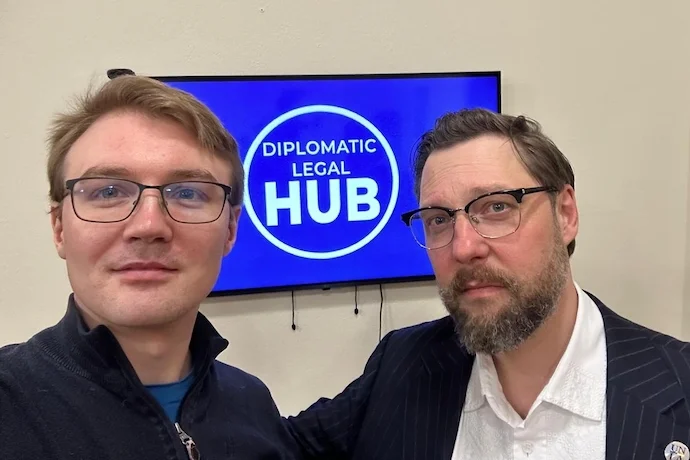
Jacobsen: In what ways does your team’s composition, particularly its mix of legal, civilian, and military experience, shape the Hub’s work and outreach?
Shevchuk: Effective communication with veterans requires people who share that experience. I served in the army for 13 months. I lost both of my parents during the war. I currently hold the rank of captain, although I left active service as a lieutenant. My work was in logistics, but our team includes individuals from multiple branches and operational backgrounds.
One of our coordinators, Yaroslav Kulch, served in the armed forces. Many others in the initiative have military experience, including those who have seen combat. This informs how we approach both legal and humanitarian issues.
We also work with specialists. One coordinator focuses on sleep disorders and therapy for soldiers transitioning out of military service. Many veterans experience insomnia or other forms of sleep disruption. She has developed specific methods to address these conditions, and we have organized forums in Lviv and Kyiv to support this work.
The initiative operates as a private, non-governmental effort funded through fundraising and internal contributions. We are seeking grant support to expand and sustain operations.
We engage with embassies and international partners. For example, we have held meetings with representatives from the Embassy of South Korea and are exploring opportunities to participate in support programs and advisory initiatives. We also communicate with larger diplomatic missions, including Japan, as well as development and cooperation agencies that fund educational and institutional projects.
In return, we provide consultations on Ukrainian law and assist foreign partners in navigating local conditions.
The initiative was founded to support Ukraine’s allies and their citizens. In practice, foreign nationals in Ukraine can face difficulties accessing timely assistance without established networks or institutional support. Our role is to bridge that gap—connecting individuals to embassies, helping resolve urgent issues, and ensuring they are not left without guidance in unfamiliar circumstances.
Our network extends internationally, including professional and personal contacts across Canada and Europe, as well as with international organizations. These relationships support coordination and response when assistance is needed.
Jacobsen: In what ways does your team’s composition, particularly its mix of legal, civilian, and military experience, shape the Hub’s work and outreach?
Shevchuk: We maintain international contacts, including individuals based in Canada and elsewhere, who occasionally refer cases involving foreign nationals. Some of these cases are not directly related to missile attacks or physical destruction but still require legal or administrative assistance.
It is important to understand that operating in Ukraine under wartime conditions is challenging, particularly given legislative gaps. Despite this, we continue to act where institutional mechanisms are limited or absent.
We have assisted foreign volunteers in navigating legal recognition and compensation issues. In at least one case, a foreign fighter was able to secure compensation comparable to that provided to Ukrainian service members after being injured, and later continued medical treatment abroad. Specific details should be handled with caution and verified on a case-by-case basis.
Some aspects of our work involve sensitive or restricted information and cannot be discussed in detail. This includes efforts related to identifying and locating Ukrainian citizens held in detention in the Russian Federation.
More broadly, efforts to locate detainees typically involve coordination with official bodies, legal channels, and international organizations. Any methods used must be understood within legal and ethical constraints, and public discussion of specific operational approaches is limited for security reasons.
In general, our role is to provide support where formal systems are incomplete—connecting individuals with institutions, assisting with documentation, and helping ensure that cases are not lost within complex bureaucratic or cross-border environments.
Jacobsen: How should we understand the significance of the Hub’s work within broader legal processes, particularly in relation to accountability and international justice?
Shevchuk: It is not always visible, but it is important. Part of our work intersects with criminal proceedings that may contribute to international cases concerning the liability of the Russian Federation and its officials. While our role may seem limited, specific actions or methods can support broader legal processes aimed at addressing war crimes and accountability.
The organization is still relatively new—established approximately seven to eight months ago—but it is already engaged in meaningful work.
Jacobsen: Thank you very much for the opportunity and your time, Oleksiy.