
Britain Should Resist the Urge to Pick Sides
Twenty-five years ago, a U.S. president arrived in Britain for a state visit under a cloud of deep political hostility. George W. Bush was widely regarded by many Labour MPs and much of the liberal-left as a reckless warmonger, particularly after the invasion of Iraq—an operation justified by the search for weapons of mass destruction that were never found, launched in the shadow of the attacks that had killed thousands in Manhattan.
My friend Christopher Hitchens—something of an intellectual lightning rod in his own time, not unlike today’s Owen Jones—took a sharply different view. An Oxford-educated polemicist with roots in the left, Hitchens had long documented the brutality of Saddam Hussein. He wrote extensively about a regime that maintained power through detention, torture, and execution, sometimes by grotesque means—such as strapping explosives around a victim’s neck. Hussein had also waged a devastating war against Iran, one that, at the time, had tacit support from Washington.
The United States, for its part, had provided Iraq with billions in military and economic assistance during that earlier conflict. Yet despite later claims used to justify the Iraq War, there was no credible evidence that Saddam had funneled money to Osama bin Laden or his al-Qaeda network, which carried out the 9/11 attacks. That network was instead financed largely by wealthy donors in Gulf states, whose rulers often chose to ignore bin Laden’s declared crusade against Jews, Shia Muslims, and Western democratic values.
At home, Tony Blair relied heavily on intelligence assessments provided by MI6 and its chief, Richard Dearlove—who famously signed correspondence simply with the letter “C.” Years later, Dearlove would lend his voice to the Brexit campaign. The Chilcot Inquiry would ultimately condemn the government’s reliance on flawed intelligence and its failure to properly scrutinize the sources used to justify war.
Today, it is Donald Trump who finds himself the focal point of liberal outrage—criticism that, at times, glosses over uncomfortable realities, including Iran’s long-standing anti-Jewish rhetoric and explicit calls for the destruction of Israel. Trump is frequently portrayed as a pliant ally of Benjamin Netanyahu, whose government has long sought decisive action against Iran.
That confrontation has now come, but its consequences have been far-reaching. What began as a show of force has rippled outward into a broader economic shock, with talk of a “Trump recession” unsettling households and businesses worldwide.
At the same time, Trump has lashed out at traditional allies, directing insults toward leaders such as Keir Starmer and even making personal remarks about the wife of Emmanuel Macron. Across Europe, the reaction has been one of alarm—though not universally so. Viktor Orbán, long aligned with Moscow, remains an outlier, hosting J.D. Vance in a bid to bolster his position ahead of a looming election.
There are echoes here of the past. A quarter-century ago, opposition to Bush’s wars in Iraq and Afghanistan provoked sharp criticism from European leaders, including Jacques Chirac and Gerhard Schröder. Both refused to support military action they viewed as lacking legitimacy under international law, particularly after the United Nations declined to endorse the invasion.
Yet Bush’s response to that dissent was markedly different from Trump’s. Rather than berating or belittling European leaders, he emphasized the importance of transatlantic unity. Speaking in London in 2003, he told MPs and diplomats: “My nation welcomes the growing unity of Europe, and the world needs America and the European Union to work in common purpose for the advance of security and justice.”
That instinct—to prioritize alliance over antagonism—had precedent. Three decades earlier, Lyndon B. Johnson faced sharp criticism from Charles de Gaulle over U.S. involvement in Vietnam. Johnson instructed his aides to avoid responding in kind. France and America, he argued, were not merely allies but longstanding friends, and the rhetorical flare-ups of the moment would pass.
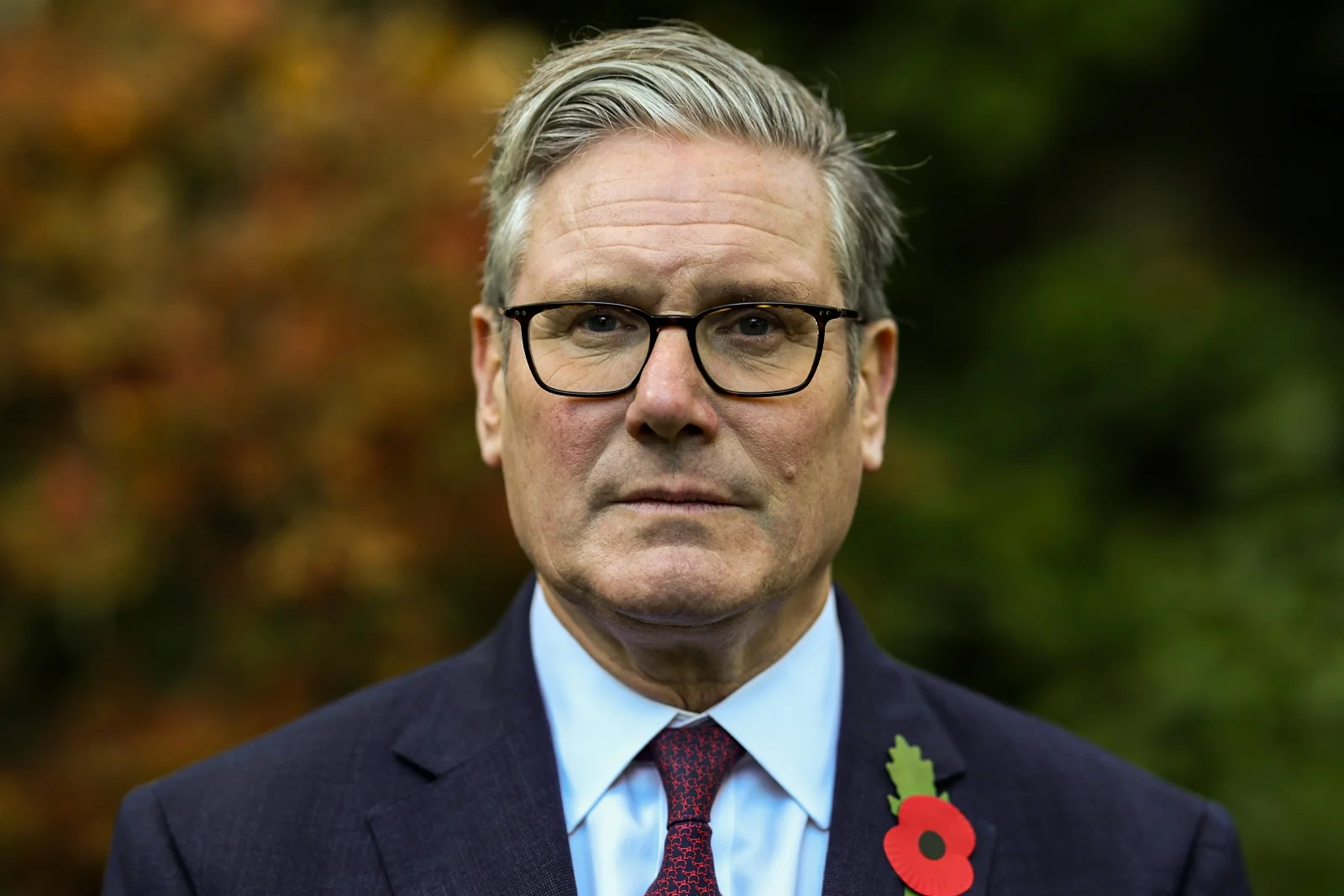
Starmer appears to be drawing from that same playbook. In resisting the temptation to engage in a war of words with Trump, he is betting that restraint will prove more durable than provocation.
For Britain, the stakes are particularly acute. The country’s decision to withdraw from the European Union has already complicated its position in the world. But to frame its future as a binary choice—between America and Europe—is to misunderstand the deeper reality. Britain’s history, interests, and values are inextricably tied to both.
The transatlantic relationship is not merely a matter of convenience. It is rooted in shared commitments to democracy, the rule of law, and freedom of expression—principles that have long defined both sides of the Atlantic. To allow that bond to fracture would not simply weaken Western cohesion; it would embolden those who seek to dismantle it.
Figures such as Vladimir Putin and Xi Jinping would stand to gain from such a rupture. A divided West offers fertile ground for authoritarian influence, while a united one remains a formidable counterweight.
The lesson, then, is less about choosing sides than about preserving a framework. Europe and America belong together—not out of sentimentality, but out of necessity. And Britain, despite its recent political choices, remains a bridge between them.