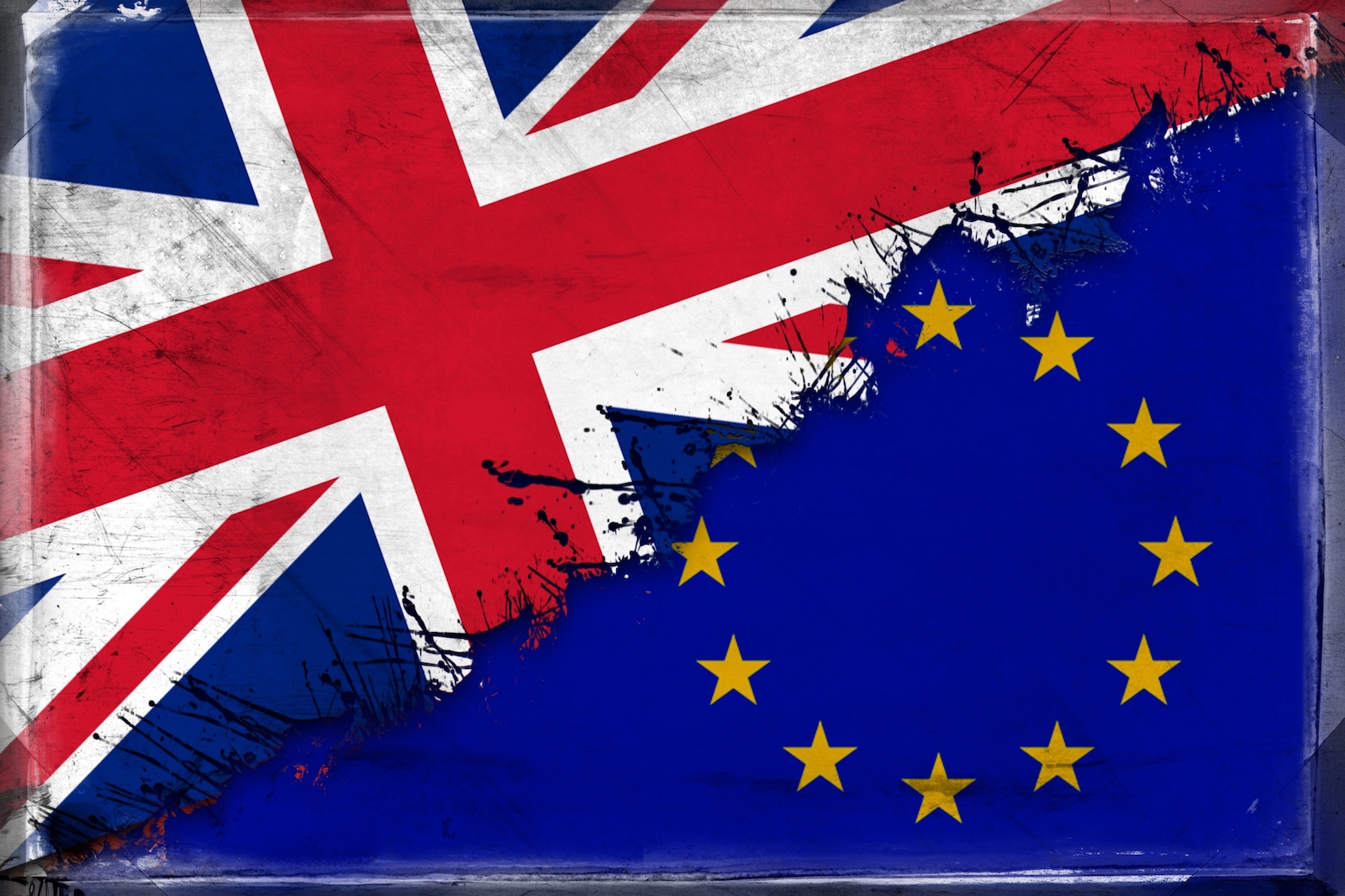

Britain’s Brexit Lies are Wearing Thin
I am an unrepentant Remainer. In Cambridge, where I live—and where I served as President of the Conservative Party in 2016—we mounted an all-party campaign for Remain. The local committee was chaired by former Ambassador Sarah Squire, supported by three vice chairs: Alex Mayer, then head of our Labour MP Daniel Zeichner’s office and now MP for Dunstable and Leighton Buzzard; Baroness Julie Smith, a distinguished academic and now a Liberal member of the House of Lords; and myself. Together, we ran a vigorous campaign that secured more than 75 percent of the vote for Remain in our constituency.
If Britain can hold a general election every five years, surely after a decade it is reasonable to revisit a referendum decided by a narrow margin. The oft-cited line attributed to Clement Attlee—that referenda are the tools of despots and dictators—may be overstated, but it captures something essential about their bluntness. David Cameron’s decision to call one was, at best, a grave miscalculation. The campaign that followed did little to elevate the debate: it was marked by exaggerated claims, strategic fearmongering, and, on the Labour side, a performance that could only be described as lackluster.
Yet the issue has never truly receded. Brexit remains an open wound in British politics, and it now demands a measure of political courage that has so far been in short supply. There are signs—tentative, but real—that voices within Labour are beginning to shift. That shift is overdue. For many of us, Brexit stands as the worst political decision of our lifetimes—a judgment not made lightly, especially by those whose lives span more than eight decades.
The economic case alone is sobering. Writing in The Times on May 19, William Hague noted that leaving the European Union has imposed significant costs on the British public. According to estimates from the National Bureau of Economic Research, investment has fallen by 12 to 18 percent, while employment has declined by 3 to 4 percent as a direct consequence of Brexit. Small and medium-sized enterprises have borne the brunt. HMRC data shows that the number of businesses exporting to the EU dropped by a third after the introduction of new customs checks and bureaucratic hurdles. Meanwhile, immigration has not fallen as promised; if anything, it has risen, exposing the hollowness of claims that Brexit would restore control over Britain’s borders.
But the argument for rejoining the European Union is not merely economic. It is, at its core, strategic and existential. Britain can no longer sustain the illusion that it can thrive indefinitely on past glories. It is a medium-sized nation with ambitions that often exceed its resources. Even maintaining a military capable of defending the country stretches those resources thin. In an era defined by geopolitical competition and uncertainty, Britain’s security and influence are better served through partnership than isolation. Cooperation with European neighbors is not a concession of sovereignty; it is an investment in collective strength and shared values.
There is also a more personal dimension—one that statistics cannot fully capture. I recall arriving at Madrid airport a few years ago on a return journey from the United States. Turning to my companion, I remarked how pleasant it was to be home. She gently corrected me: “Richard, we are in Spain.” Without hesitation, I replied, “No, we are in Europe—our home.” That instinctive response reflects something deeper than political alignment. It speaks to identity, belonging, and a sense of place that transcends national borders.
That is the challenge before us. Europe is not simply a trading bloc or a political arrangement; it is, for many Britons, a natural home and a shared destiny. Rejoining the European Union will not be easy, nor will it be swift. But difficulty is not an argument for inaction. If anything, it underscores the urgency of the task. Britain must decide whether it wishes to remain adrift, clinging to a diminished sense of independence, or to reengage with the continent that has long shaped its history and future.
Rejoining the EU is not a panacea. It will not erase the divisions of the past decade overnight. But it is a necessary first step toward restoring Britain’s economic vitality, geopolitical relevance, and sense of purpose. The longer the country delays, the higher the cost—measured not only in lost investment or diminished trade, but in the erosion of Britain’s place in the world.