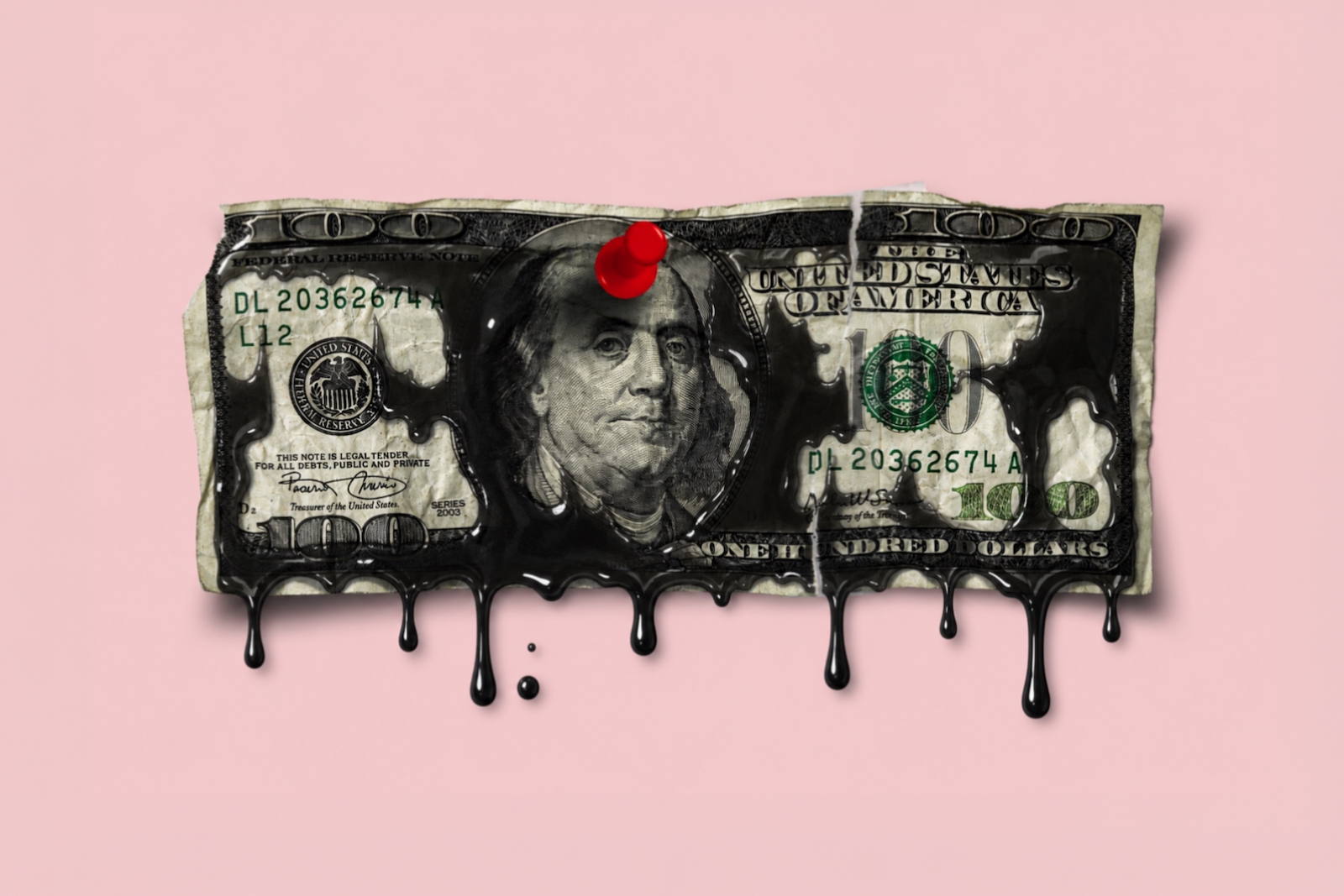


Oil Still Helps Keep the Dollar on Top
Understanding the balance of power in the global economy requires looking beyond which countries produce the most oil or control the largest energy reserves. Economic influence rests on at least three strategic pillars: money, energy, and access to international markets. When these forces reinforce one another, they create an advantage that extends well beyond economics and deep into geopolitics.
The petrodollar system offers one of the clearest examples of this dynamic. It is more than a commercial convention. It is the mechanism through which the world’s most strategically important commodity became closely linked to the currency of a single country, with far-reaching consequences for international finance, monetary policy, and global political relations.
From Oil to the Dollar
After the Bretton Woods system collapsed in 1971 and the United States suspended the dollar’s convertibility into gold, Washington faced a daunting challenge: preserving international confidence in its currency. Over the following decade, closer U.S. economic and security ties with Saudi Arabia, together with the widening practice of pricing oil in dollars, helped consolidate a system in which crude oil was traded predominantly in U.S. currency.
One common misconception deserves clarification. No legal obligation has ever required every barrel of oil in the world to be sold exclusively in dollars. What emerged instead was a powerful network effect. As oil contracts, pricing benchmarks, commodity exchanges, and financial markets increasingly relied on the dollar, using the same currency became cheaper, easier, and more convenient for everyone else.
The crucial issue, then, is not direct control over oil production. The United States neither owns most of the world’s oil reserves nor dictates production levels in the major exporting countries. Its strategic advantage lies elsewhere: It issues the currency used to price and settle much of the trade in one of the global economy’s most indispensable commodities.
If oil is a primary fuel of the world economy, the dollar serves as its common unit of account and a highly liquid means of payment. Governments, corporations, traders, and financial institutions involved in the energy business consequently need access to dollar liquidity. Energy demand, in other words, helps sustain monetary demand.
The Global Demand for Dollars
Central banks hold dollar-denominated reserves, financial institutions maintain dollar liquidity, and oil-exporting countries invest a portion of their earnings in international financial markets. The return of oil revenues to deposits, securities, and other investments is commonly known as petrodollar recycling.
The consequences are substantial. Persistent international demand supports the dollar’s global role and contributes to deep markets for U.S. Treasury securities and other dollar-denominated assets. Those markets, in turn, reinforce the financial infrastructure that makes the currency attractive for trade, borrowing, and investment. The system draws strength from a feedback loop: Dollar use creates liquidity, and liquidity encourages still more dollar use.
According to the International Monetary Fund’s Currency Composition of Official Foreign Exchange Reserves database, the dollar accounted for 56.77 percent of allocated global foreign-exchange reserves in the fourth quarter of 2025. That share is considerably lower than it was at the beginning of the century, but the dollar still stands far ahead of every competing reserve currency.
International trade tells a similar story. Research into the dominant-currency paradigm shows that the dollar is widely used to invoice transactions that do not directly involve the United States. This practice strengthens the currency’s network effects: Firms tend to favor the currency already used by their suppliers, customers, banks, insurers, and commodity exchanges.
Oil alone cannot explain the dollar’s strength. Its position also reflects the scale of the U.S. economy, the depth and liquidity of American financial markets, the abundant supply of assets regarded as safe, and the institutional framework surrounding those markets. Rival currencies have struggled to reproduce all of these advantages at the same time.
This distinction prevents the petrodollar from becoming a misleading catch-all explanation for American monetary power. Oil pricing reinforces the need for dollar liquidity, but countries do not generally have to accumulate a separate reserve of dollars for every barrel they may import. Banks, foreign-exchange markets, and credit arrangements allow payments to be converted and settled through a much larger global dollar system.
The same logic explains why occasional oil transactions in other currencies do not automatically herald the petrodollar’s demise. A shift in settlement currency can be politically and economically significant, particularly for sanctioned states seeking to avoid the reach of the U.S. financial system. But displacing the dollar’s broader role would require a credible alternative offering comparable liquidity, convertibility, financial depth, asset availability, and international trust. That is a far higher bar than conducting a few bilateral transactions in yuan, euros, or another currency.
A Resilient Monetary Architecture
Despite years of discussion about de-dollarization, the dollar remains the leading reserve currency and the dominant currency in international trade and finance. Its resilience comes from mutually reinforcing uses: A currency held in reserve is easier to use in trade; a currency widely used in trade supports deeper financial markets; and deep financial markets make that currency more attractive as a reserve.
The petrodollar is therefore best understood not as a secret treaty or a single, rigid mechanism, but as one component of a much wider monetary architecture. Its importance lies in the way energy trade historically reinforced an already powerful currency, binding commodity markets more closely to global finance.
Ultimately, the debate is not merely about oil. It is about how the currency used to price and settle strategic resources can become a source of enduring economic influence. The dollar’s position is neither immortal nor immune to political overreach, financial fragmentation, or the rise of credible alternatives. But as long as energy remains central to production and trade, the relationship between monetary power and energy security will continue to shape the international system.