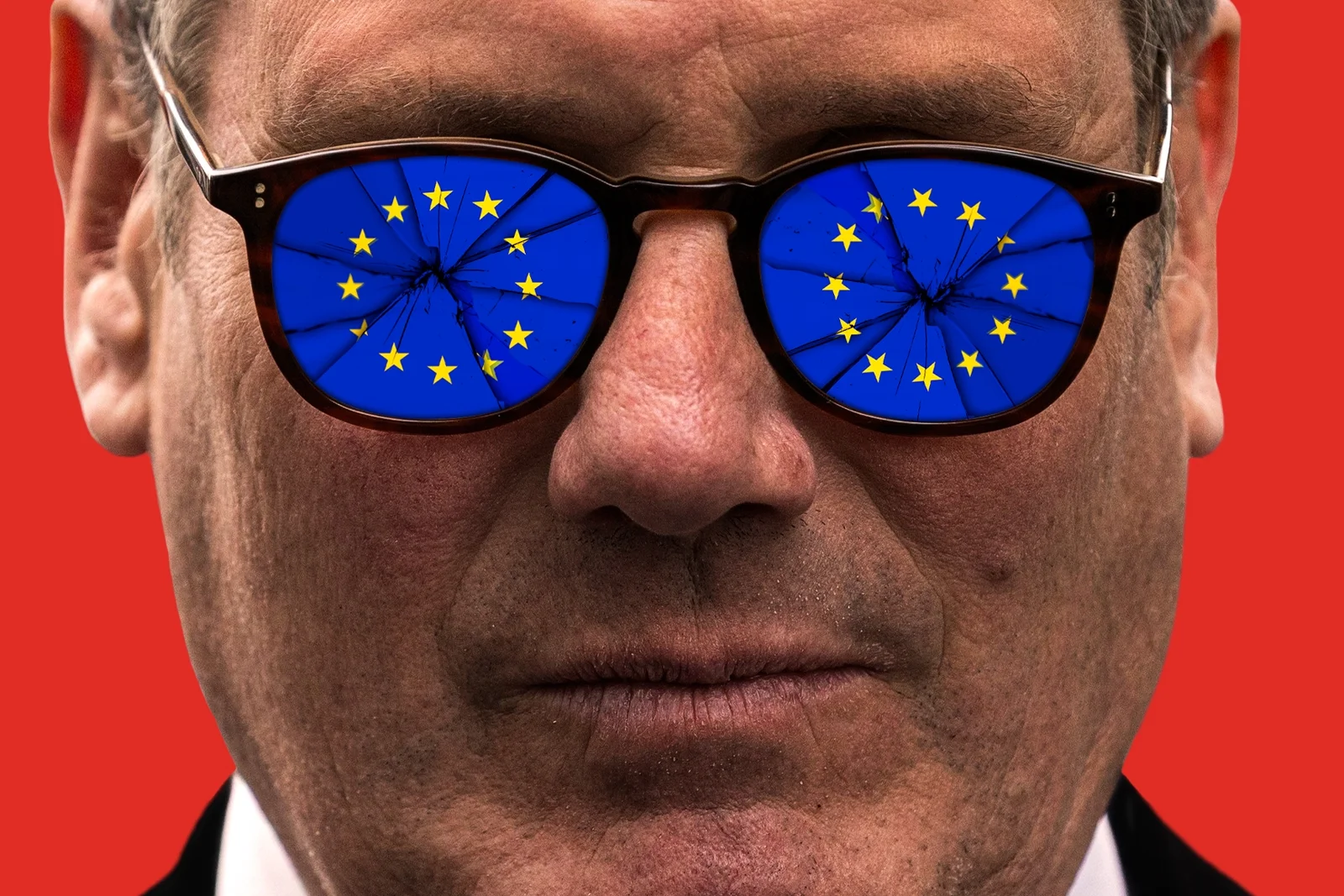

Brexit’s Reckoning is Finally Here
The uncertainty surrounding Keir Starmer’s political future has quietly reopened a debate Labour once treated as politically radioactive: Britain’s long-term relationship with the European Union. Starmer himself had already edged toward closer cooperation and something resembling dynamic alignment with Brussels. Now, some potential successors are going further still, openly entertaining the once-unthinkable prospect of rejoining.
It is a debate long overdue.
For years, Labour operated on the assumption that revisiting Brexit was electorally reckless. Europe became an issue to tiptoe around, an unstable fault line in British politics best left undisturbed. Yet that caution has delivered few tangible rewards. Brexit remains deeply unpopular across broad swathes of the electorate. Poll after poll points to regret, or at least mounting frustration, particularly with its economic fallout. At the same time, Nigel Farage, the chief architect and most effective salesman of Brexit, has re-emerged as Labour’s most potent domestic challenger.
That dynamic presents both a danger and an opportunity.
Assigning responsibility for Brexit is not merely an exercise in historical bookkeeping; it is politically essential. Farage cannot plausibly claim authorship of Brexit while disclaiming its consequences. But apportioning blame, while necessary, is insufficient. Voters are not only interested in who was responsible for the past; they want to know what comes next.
So far, Labour’s answer has been incrementalism: veterinary agreements to ease trade frictions, closer regulatory cooperation, security partnerships, selective participation in EU programmes, and a gradual unwinding of bureaucratic barriers. These measures are pragmatic and, in many cases, overdue. They mitigate some of the more obvious harms of the current arrangement.
But they do not alter the underlying reality. Even the most ambitious form of cooperation short of membership remains structurally inferior to full participation in the European Union.
That reality matters more today than it did in 2016. The world has grown harsher, more fragmented, and less forgiving. Economic security, energy resilience, defence-industrial capacity, technological competition, and geopolitical leverage increasingly depend on scale. They require coordinated action, shared resources, and institutional depth. In such a landscape, standing alone is rarely an expression of sovereignty. More often, it is a symptom of diminished influence.
For the United Kingdom, the costs are becoming harder to obscure: persistently weaker growth, lower levels of investment, reduced strategic weight, and a diminished capacity to shape the very rules that continue to affect it. Within the European Union, too, there is a growing recognition that Europe is stronger with Britain inside rather than lingering in a state of semi-detachment. Defence and security, once peripheral to the EU’s core mission, are moving closer to its centre—and the UK remains one of Europe’s most capable military and strategic actors.
None of this is to suggest that rejoining would be simple. It would not. The EU would demand clarity and commitment. Questions of opt-outs, budget contributions, freedom of movement, and institutional participation would have to be confronted directly, not deferred. These are politically sensitive issues, and they would require a level of candour that British politics has often struggled to sustain.
Yet, in the end, these are details—important ones, certainly—but still subordinate to a broader strategic calculation.
That calculation concerns prosperity, sustainability, resilience, and security. It is about whether Britain, and Europe more broadly, can retain meaningful agency in a world increasingly defined by economic rivalry and geopolitical tension. It is about whether influence is best exercised alone or in concert with others.
Reopening this debate undeniably carries political risks. Brexit remains emotionally charged, and any attempt to revisit it will provoke resistance. But the alternative—persisting with an arrangement that is plainly underperforming—carries risks of its own. Economic stagnation cannot be wished away, nor can political fragmentation be indefinitely managed through avoidance.
Elsewhere in Europe, the mood is shifting. Iceland, after years of hesitation, has once again moved toward EU membership, responding to the same geopolitical and economic pressures reshaping the continent. Britain may, sooner rather than later, find itself confronting a similar reckoning.
In that context, the slogan that defined the Brexit campaign—“taking back control”—begins to look less like a settled conclusion and more like an unresolved question. What if genuine control, in a world of interdependence, is not achieved through distance, but through deliberate, strategic cooperation? What if the very sovereignty Brexit promised is, in practice, better secured through the kind of pooled authority the European Union was designed to provide?