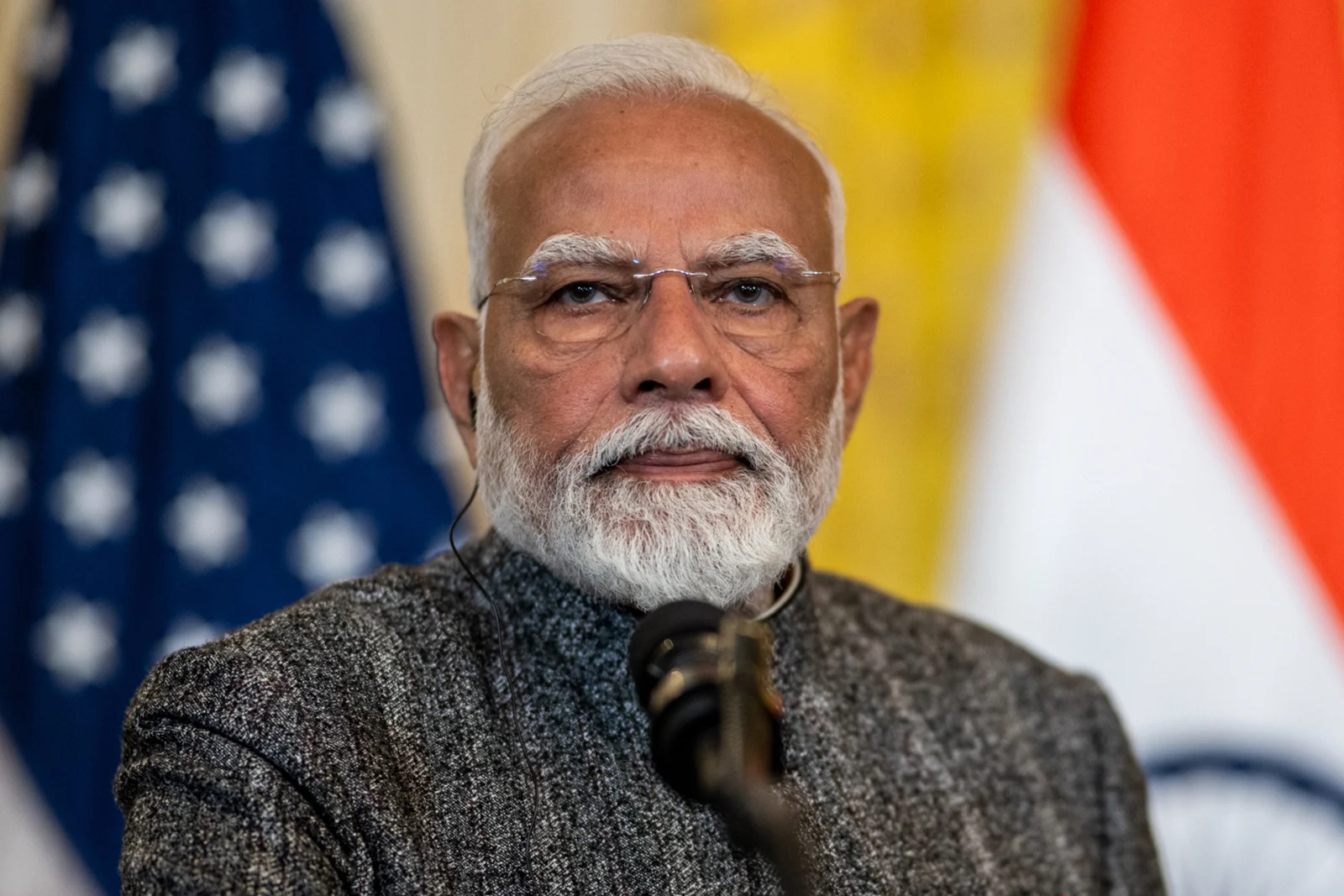

Narendra Modi Will Leave Behind a Broken India
As India’s Prime Minister Narendra Modi nears the end of what is likely to be his final term in office, a reckoning feels inevitable. After three terms marked by grand ambition, partisan dominance, and polarizing governance, Modi’s legacy is poised for intense scrutiny—not merely by political opponents, but by history itself.
Modi came to power promising transformation. Yet many of the most pressing challenges facing India today—economic stagnation, diplomatic friction, rising authoritarianism, and domestic unrest—have been exacerbated, not alleviated, under his leadership. India’s aspiration to reclaim its ancient stature as a Vishwaguru, a moral and civilizational leader on the world stage, now rings hollow in the cacophony of recent failures. The 2025 India-Pakistan war, China’s continued border incursions, and a visible lack of international solidarity during crises like Operation Sindoor all underscore a profound gap between rhetoric and geopolitical reality.
What began as a focused, energetic premiership has veered into an era of dysfunction. Modi’s weakening grip on foreign policy—manifested in frayed relations with key powers such as the U.S., UK, France, and Canada—reflects a broader loss of strategic coherence. The dream of elevating India into a global powerhouse has suffered repeated blows, not least from the absence of robust international alliances during moments of crisis. Instead, Modi’s leadership has appeared increasingly reactive, hamstrung by age, fatigue, and the consequences of wielding unchecked authority in a political landscape drained of serious opposition.
Domestically, his government faces mounting accusations of cronyism, corruption, and a willingness to sacrifice institutional integrity for political gain. From shielding BJP politicians accused of sexual assault—like Brij Bhushan Sharan Singh—to fostering a culture of impunity through the misuse of central investigative agencies, the Modi government has frequently weaponized the machinery of governance against its critics while turning a blind eye to wrongdoing within its ranks.
Nowhere is this institutional corrosion more visible than in the collapse of public trust in law enforcement and the judiciary. The ethnic violence in Manipur, for instance, spiraled into chaos without even a symbolic visit from the prime minister. Nor did he make a serious effort to restore confidence in security forces or engage with the humanitarian disaster on the ground.
Meanwhile, the BJP has mastered a kind of transactional politics that rewards defection. Politicians facing corruption charges have found themselves absolved the moment they pledge loyalty to the ruling party. Ajit Pawar, Chhagan Bhujbal, and others have undergone near-miraculous moral rehabilitations after joining the BJP—an alchemy that mocks the idea of justice and deepens public cynicism.
The health of India’s democracy itself appears to be faltering. The wholesale suspension of opposition MPs from Parliament to avoid uncomfortable debates amounts to a betrayal of democratic norms. When dissent is silenced and meaningful scrutiny is replaced by spectacle, it’s not just the opposition that suffers—it’s the republic as a whole.
The consequences of this decay are now evident in national security as well. The 2025 Pahalgam terror attack that killed 27 tourists is just one glaring example of security lapses. Even India’s military strength, so often touted by the Modi government, is undermined by shortsighted reforms. The Agniveer recruitment scheme, for instance, has been widely criticized for turning military service into a short-term, unstable proposition—undermining morale, professionalism, and readiness. The scheme reportedly drew skepticism from General Bipin Rawat, whose untimely death in a helicopter crash continues to raise unanswered questions.
Economically, Modi’s India has seen immense polarization. While conglomerates like Adani and Ambani enjoy preferential treatment—complete with loan waivers and Z+ security—India’s farmers continue to take their own lives in the face of monsoons, floods, and state neglect. The staggering national debt, which soared to nearly $2.1 trillion by 2025, reflects not investment but excess: wasteful expenditures, parallel economies, and large-scale financial mismanagement.
Communal polarization has become a hallmark of this government. The relentless invocation of “Jai Shree Ram” as a political slogan has weaponized religion and widened sectarian divides. This shift away from India’s pluralistic foundations has alienated Muslim communities and other minorities, undermining both internal cohesion and national progress.
Nor has Modi delivered on his promise to make India a global diplomatic force. Despite countless foreign trips and headline-grabbing summits, India remains locked out of key global platforms like the UN Security Council, AUKUS, NSG, FMCT, and the G8. Modi’s failure to convince the world that India is a long-suffering victim of Pakistan-sponsored terrorism—not its instigator—has severely undercut India’s moral authority abroad.
Equally troubling is the concentration of power within Modi’s office, where a small cadre of handpicked bureaucrats now wields disproportionate influence. This reliance on a tight circle has marginalized senior ministers, diminished transparency, and undermined collective cabinet governance. Modi’s much-touted “ease of doing business” reforms have been blunted by bureaucratic inertia and the rising influence of middlemen.
Perhaps most damning is Modi’s stranglehold over the media. India’s once-vibrant press has largely capitulated to government pressure. News channels in Noida have become euphemistically known as “Modi Media,” echoing the fear and conformity of India’s Emergency years. Print journalism, too, has suffered; few now dare to challenge the state.
It wasn’t always this way. Modi’s 2014 ascent carried the promise of a new political culture: one that would root out corruption, energize the economy, and restore faith in public life. But as his final term advances, the BJP increasingly resembles the very establishment it once sought to replace.
To his credit, Modi did attempt to reorient India’s economy toward global investment. His early moves to cut red tape and simplify regulations reflected genuine strategic vision. But a decade later, that promise lies buried beneath the weight of centralization, cronyism, and creeping authoritarianism.
The party’s strongholds in a few states may offer solace to BJP loyalists, but for Modi himself, the reckoning must be personal. He has presided over a party and a government that, by many measures, betrayed its founding ideals. If there is to be a course correction, it must begin with an honest acknowledgment of these failures—and a return to the vision that once inspired millions.
As Modi contemplates the final chapter of his long political career, the question is not just how history will remember him, but whether he can still shape the future with the moral clarity and democratic integrity he once promised to uphold.