Oleksandr Volkov on Swiss Neutrality, Sanctions, and Ukraine
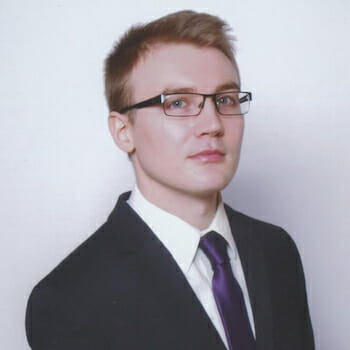
Oleksandr “Sasha” Volkov is a Ukrainian-Swiss advocate originally from Sloviansk in Ukraine’s Donetsk region. Trained in economics, computer science, and German, he moved to Switzerland on a scholarship and became active in the Ukrainian Society of Switzerland. Since Russia’s first invasion of Ukraine in 2014, he has organized demonstrations across Switzerland, lobbied elected officials, challenged Kremlin disinformation, and privately delivered civilian vehicles to support Ukraine’s defence within the limits of Swiss law. Throughout, he has argued for a modern interpretation of Swiss neutrality—one rooted not in passivity but in international law.
In this interview, Scott Douglas Jacobsen speaks with Volkov about one of Switzerland’s defining political debates: whether neutrality should mean equal distance from all belligerents or a principled commitment to international law that distinguishes aggressor from victim. Their conversation explores sanctions against Russia, Swiss security policy, economic warfare, cyber conflict, media freedom, corruption, gender equality, and the future of neutrality in an increasingly unstable world.
 Scott Douglas Jacobsen: How does Switzerland reconcile its long tradition of neutrality with its decision to adopt European Union sanctions against Russia after an act of aggression widely recognized under international law?
Oleksandr Volkov: There are two camps in Switzerland. One is the orthodox camp. The other is a more modern camp. The modern camp says that since 1907, and especially later, Switzerland has signed many agreements that prohibit aggression. Those more recent agreements take precedence, so Switzerland has to make decisions based on them.
That was also the logic behind the decision to introduce sanctions against Russia and to implement European sanctions.
Then came the immediate outcry from the orthodox camp. They said, “You have destroyed Swiss neutrality, so we have to preserve it.” That is how this debate really began. First, under public pressure, the government decided to join the European Union’s sanctions. Then the orthodox camp started to fight back.
Jacobsen: Some advocates of traditional neutrality now want to enshrine a stricter definition of Swiss neutrality in the Constitution. Beyond the traditional and modern interpretations, is there a credible third vision of neutrality being debated in Switzerland?
Volkov: I think there are really only two camps. One is the orthodox camp, which still seems to think Switzerland can defend itself with crossbows, halberds, and similar old instruments of war.
Historically, Switzerland was very effective, and Swiss neutrality was defined in part because Switzerland became very good at applying those rules. But now we have a completely different situation, completely different technology, and a completely different framework of international law.
The second camp argues for modernization. Still, it is not arguing against neutrality. Practically nobody in Switzerland argues completely against neutrality. Almost everyone says Switzerland should retain neutrality and should not join military blocs such as NATO. There are isolated voices calling for NATO membership, but they remain very isolated.
The main position is that Switzerland should remain self-reliant and neutral. The real question is how Switzerland treats aggressive wars. That is the central issue. If Switzerland decides not to differentiate between aggressor and victim, then it undermines much of the modern understanding of international law, especially as it developed after the Kellogg-Briand Pact, the Second World War, and the UN Charter.
Jacobsen: So, for most Swiss, the debate isn’t about whether neutrality should continue but how it should be interpreted. How does that discussion shape Switzerland’s approach to EU sanctions compared with security cooperation through organizations such as NATO or, in North America, NORAD?
Volkov: That is a very good and important question. It has been raised by pragmatic people. I do not think there is a clear theory guiding the current situation. Economic interests are becoming strongly intertwined with security interests. It may still be possible to differentiate them, but it is becoming harder.
For Russia, the use of economic tools has been one of the first instruments of war. It is part of the regular playbook. Russia began its aggression against Ukraine with economic pressure and trade restrictions. It blocked Ukrainian exports at the border and used other economic decisions as leverage.
Returning to Switzerland, the realists argue that Switzerland has to look for a pragmatic definition of neutrality. If Switzerland already has agreements with the European Union on economic matters, it probably also needs agreements on security matters.
Jacobsen: Economic coercion, cyberattacks, espionage, and information warfare increasingly blur the line between peace and armed conflict. Has Swiss thinking on neutrality kept pace with these newer forms of warfare?
Volkov: Yes, like cyber warfare.
Jacobsen: What sanctions has Switzerland officially adopted since Russia’s full-scale invasion of Ukraine, and how closely does it continue to align with the European Union?
Volkov: Switzerland follows the European Union’s sanctions regime quite closely. Usually, with a delay of a few days, Switzerland adopts the same decisions that the European Union takes. For example, if the European Union imposes sanctions on individuals or companies in Russia, Switzerland generally adopts those sanctions as well.
In parallel, there is also the government decree from 2022. It restricts certain trade with Ukraine, especially in dual-use goods and, of course, military goods. This was done to preserve the appearance of neutrality.
At the same time, Russia has already designated Switzerland as an “unfriendly” country, on par with European Union countries. From Moscow’s perspective, Switzerland is no different from the rest of Europe.
Jacobsen: Beyond neutrality, how does Switzerland compare internationally on measures such as corruption, press freedom, peace, and gender equality?
Volkov: Switzerland hosts many relevant international organizations, including the United Nations Human Rights Council in Geneva. Most Swiss people take these issues seriously.
Jacobsen: By most international benchmarks—including press freedom, corruption, governance, and human rights—Switzerland consistently ranks among the world’s strongest performers. Where do you think it still falls short?
Volkov: Yes. Gender equality is probably one of Switzerland’s more problematic areas by comparison. That has historical roots. Switzerland’s social structure remained relatively traditional for a long time, including during and after the Second World War. Women were not drawn into the workforce in the same way or at the same scale as in some other countries.
That history still shapes Swiss society. Women in Switzerland have often remained more tied to traditional family and caregiving roles. There has also been less childcare provision and fewer possibilities for some women to advance their careers compared with countries such as Canada or Iceland.
Jacobsen: Although Iceland does not have an army.
Volkov: Yes, but Switzerland is still strong in many areas. Gender equality is a topic that liberal and left-leaning parties in Switzerland emphasize strongly, and they are vocal in defending women’s rights.
Switzerland also implements the rulings of the European Court of Human Rights, although some of the Court’s decisions are controversial domestically. Still, that is part of Switzerland’s legal and political experience.
Jacobsen: Thank you for the opportunity and your time, Sasha.