Culture

Scott Kurashige on Scapegoating, War, and America’s Racial Amnesia
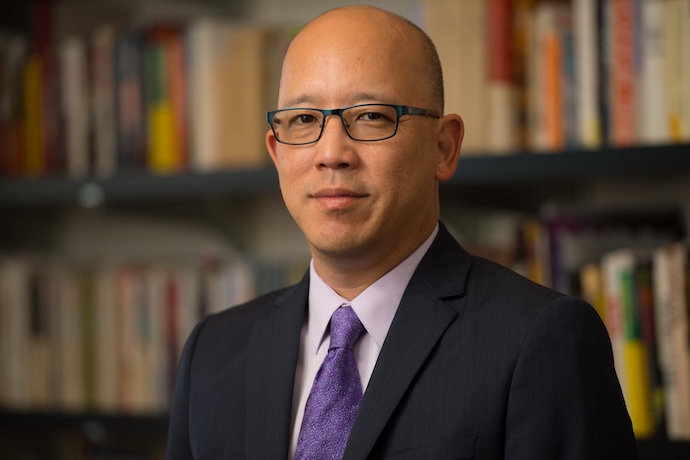
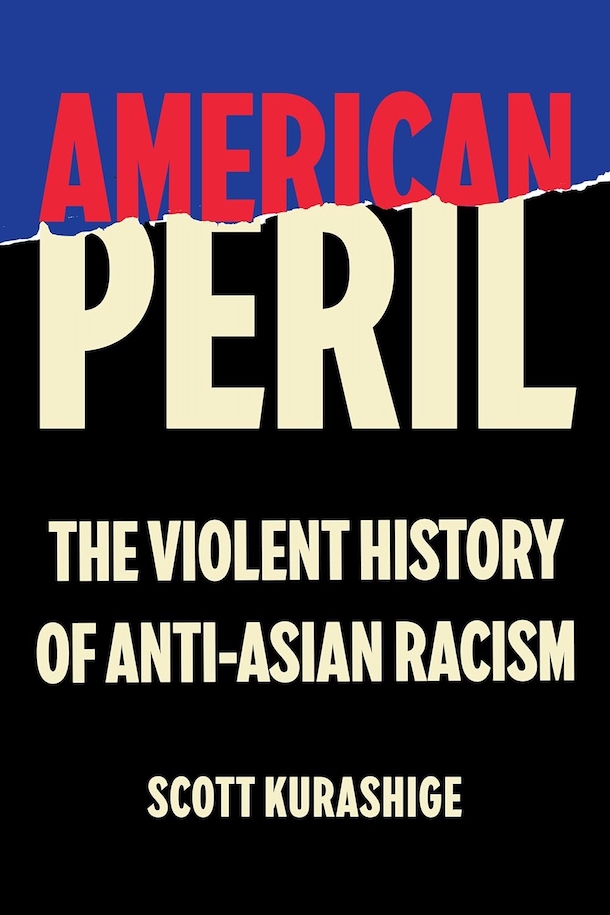
Scott Kurashige is an award-winning historian, writer, and community activist whose work sits at the intersection of race, social movements, and U.S. political history. As President of the James and Grace Lee Boggs Foundation, he has spent more than three decades examining the historical roots and contemporary expressions of anti-Asian racism and violence. His scholarship bridges academic inquiry and public engagement, with a sustained emphasis on multiracial coalition-building and structural analysis of inequality. Kurashige is the author of The Shifting Grounds of Race and coauthor of The Next American Revolution. His latest book, American Peril, explores the enduring history and political function of anti-Asian violence in the United States.
In this wide-ranging conversation, Kurashige reflects on both the historical foundations and present-day realities of anti-Asian violence in America. He traces his intellectual and political formation from the Vincent Chin case to more recent events such as the Atlanta-area shootings, drawing out recurring patterns of scapegoating, legal failure, and collective amnesia. Throughout, he underscores how U.S. foreign policy, war, and racial ideology shape domestic forms of discrimination. While acknowledging incremental gains within the legal system, Kurashige remains sharply critical of approaches that rely primarily on policing and punishment. Instead, he argues for community-based strategies, multiracial alliances, and structural reforms aimed at addressing inequality at its roots and preventing violence before it occurs.
Scott Douglas Jacobsen: What first drew you to the study of anti-Asian racism and violence? In particular, how did your early interests evolve into a sustained academic and research focus on this subject?
Scott Kurashige: It goes back to when I was a college student. I saw the film Who Killed Vincent Chin? after it had received major national attention, and it had a profound effect on me. It tells the story of Vincent Chin, a Chinese American raised in the Detroit area, who in 1982 was celebrating his upcoming wedding with friends when an altercation at a club turned deadly. He was beaten to death by two white men, one of whom scapegoated him for the loss of jobs in the U.S. auto industry to Japanese competition.
At the time, the Detroit auto industry was deeply bound up with economic anxiety, labor tensions, and anti-Japanese trade-war rhetoric. Vincent Chin had nothing to do with the Japanese auto industry, but he became the target of xenophobic resentment directed at Asian Americans as a perceived racial other. His killers were allowed to plead guilty to reduced charges, and a white judge gave them lenient sentences that included a fine and no prison time.
Both the killing and the sentencing helped spark a national movement among Asian Americans and other civil rights allies. For many, the case raised fundamental questions about how such racist violence could happen and how the legal system could produce so little accountability. When I encountered this history, I was struck both by the horror of Vincent Chin’s death and by how little I had learned about Asian American history in school. That absence of historical knowledge and public representation made the film even more powerful.
What also stayed with me was the organizing that followed: Asian Americans mobilizing publicly, building alliances, and helping bring national attention to anti-Asian violence. The Justice for Vincent Chin movement became a turning point in Asian American political consciousness and helped bring the very term “anti-Asian violence” into wider use. That experience helped set me on the path toward researching these issues more seriously.
I eventually moved to Detroit and carried out much of my scholarship and activism there. More broadly, I became interested in the problem of anti-Asian violence. However, I did not complete a book on the subject from when I first saw the film in 1989 until this year.
Another pivotal incident occurred almost five years ago, on March 16, 2021. A series of mass shootings took place in the Atlanta area, targeting massage parlors operated by Asian immigrant women. The shooter killed eight people, six of whom were Asian women.
This occurred during a broader surge in anti-Asian hate incidents amid the COVID-19 pandemic, when prominent political leaders used terms such as “Kung flu” and “China virus,” inflaming xenophobic sentiment not only toward people in China but toward Asian Americans more broadly. Thousands of bias incidents were reported across the United States.
In the aftermath of the shootings, despite the nature of the attacks, the initial response from authorities was to claim that the violence was not racially motivated. Instead, it was attributed to the perpetrator’s supposed “sex addiction” and described as the result of “a really bad day,” as relayed by a sheriff’s spokesperson.
This reflects a twofold pattern of anti-Asian violence: the act itself, which is devastating for victims and their families, followed by a second wave in which the violence is minimized, mischaracterized, or erased. Such responses amount to a form of erasure and gaslighting, framing these events as isolated incidents rather than as part of a broader pattern. They also reveal how many individuals in positions of authority lack the historical knowledge or training to understand anti-Asian violence and respond appropriately.
Jacobsen: The idea of the “Yellow Peril” is often treated as a relic of the past—a historical form of racial ideology. Yet your work suggests it remains both persistent and adaptive. How does the framing of Asians as an internal threat to the United States reflect deeper structural forces within American society, and in what ways do those forces continue to generate violence?
Kurashige: Yes, I think we need to understand how foreign and domestic relations are intertwined, particularly in the case of Asians in the United States. One obvious example is that my mother and her family were deemed enemy aliens during World War II and were placed in U.S. concentration camps. My mother’s youngest brother was born two days after Pearl Harbor, yet he was still somehow deemed a national security threat and incarcerated for four years during the war.
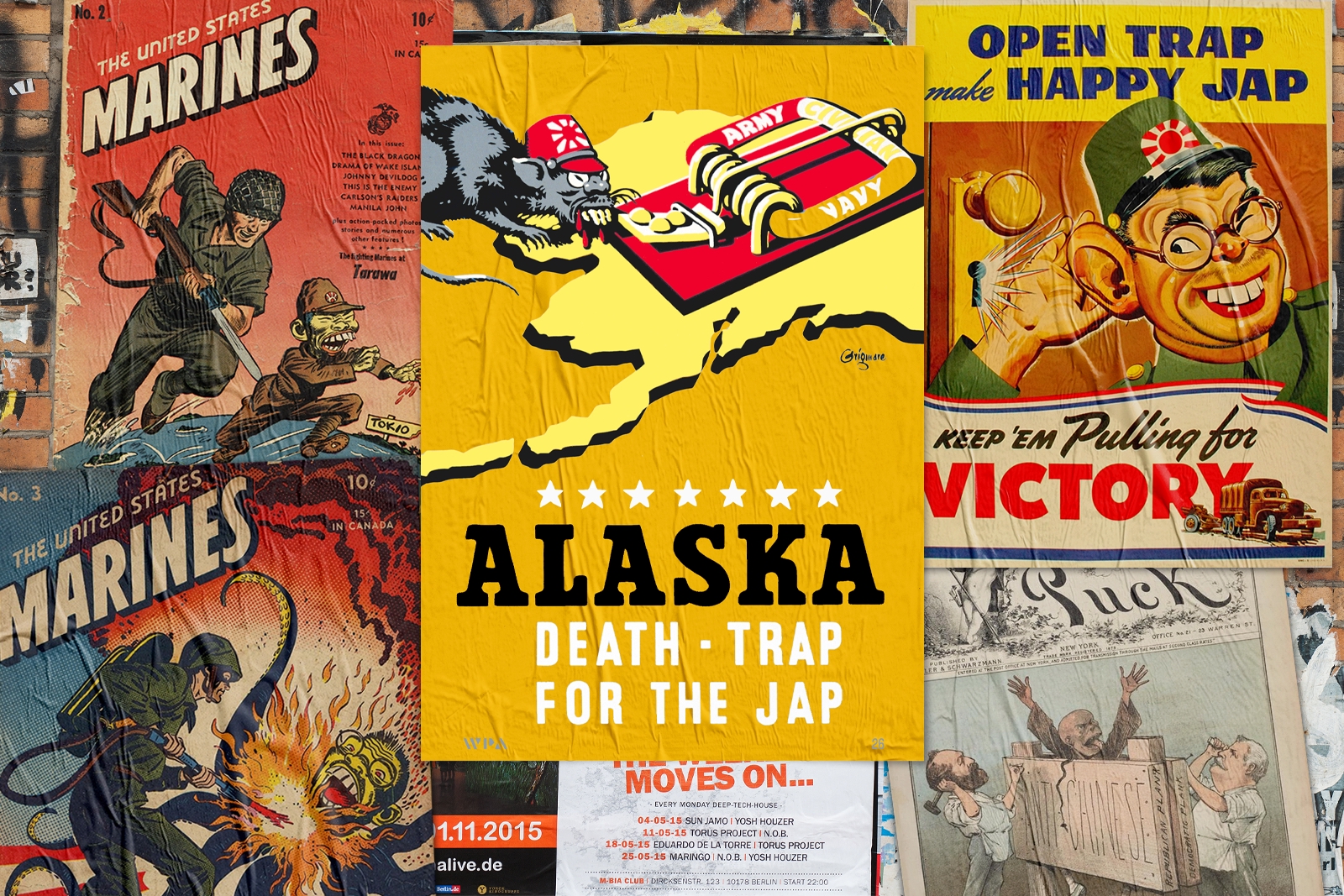
It begins earlier than that. When we look back at the Opium Wars and the unequal treaties that followed, we see that Britain opened ports in China and gained extraterritorial rights, and the United States was able to impose nearly the same terms on China and Japan. In that era, Americans and other Westerners enjoyed privileges that placed them above the law in parts of Asia, while Asian immigrants in the United States were, in many ways, placed below the law. They could not vote. They could not become naturalized citizens because of a law passed by Congress in 1790 and later reaffirmed by the Supreme Court in the 1920s. In most West Coast states, they could not even own land.
As a result, they were forced into low-wage labor and a disenfranchised social position. The inequities of foreign relations shaped their status, and they carried that stigma with them to the United States as immigrants, and later as refugees in the twentieth century, where they were deemed threats to the jobs and livelihoods of American workers. Throughout the American West, we saw Chinese immigrants driven out of dozens of towns—more than one hundred times, perhaps close to two hundred. We see mass lynching and mob violence in places such as Los Angeles in 1871 and Rock Springs, Wyoming, in 1885.
That era of exclusion continued into the twentieth century, and the pattern repeated itself in the Philippine-American War. There were mass civilian casualties overseas, and then Filipinos came to the United States and faced the same stigma, stereotyping, and xenophobia, which eventually culminated in their exclusion from migration under a law passed in 1934. They also faced widespread discrimination in housing, employment, and citizenship rights. The cycle repeated with the Korean War, and again with the Vietnam War, and in many ways it has continued into the present, as we find ourselves in yet another period shaped by war and its consequences.
Jacobsen: Looking across roughly the past century and a quarter, have there been meaningful periods in which Asian Americans—or specific Asian communities—experienced something resembling a reprieve, whether in terms of legal equality or social acceptance? Or has inequality remained the dominant pattern throughout?
Kurashige: I would interpret that question as asking whether there have been signs of progress over time. It is important to note that, in the face of violence and discrimination, Asian immigrants and their descendants—particularly those with U.S.-born birthright citizenship, although that principle has at times come under challenge—have consistently pushed to defend their rights through the courts, protests, strikes, and labor actions. This is a side of history that most people rarely have the opportunity to learn. It is often through independent media, scholarship, and grassroots organizing that this history becomes visible.
There have been moments of progress. In the 1890s, the U.S. Supreme Court affirmed birthright citizenship for U.S.-born Asians. There were also efforts to overturn bans on interracial marriage and to dismantle so-called alien land laws that prevented Asian immigrants from owning property. However, it is important to recognize that these advances were not solely the result of domestic advocacy; they were also shaped by U.S. foreign policy and geopolitical interests.
For example, the Chinese Exclusion Act of 1882, which severely restricted immigration from China and barred Chinese immigrants from naturalization, was repealed more than sixty years later in 1943 largely because China had become a crucial ally to the United States during World War II. Similarly, when Japanese immigrants were granted the right to naturalize in 1952 under the McCarran-Walter Act, that change occurred within the context of Cold War priorities. That same law also introduced provisions that expanded the government’s ability to exclude or deport immigrants on national security grounds, many of which continue to be invoked today.
Progress has often followed an uneven pattern—at times one step forward and two steps back, and at other times the reverse. The large-scale migration of Southeast Asians to the United States beginning around 1975 illustrates this complexity. That migration was driven by the devastation of war in countries such as Vietnam, Laos, and Cambodia. Many of those who had allied with the United States faced persecution, re-education camps, or death after the U.S. withdrawal, forcing them to seek refuge elsewhere.
At the same time, the consequences of war in the region were catastrophic. Cambodia experienced genocide under the Khmer Rouge. Across Southeast Asia, millions were displaced, and many arrived in the United States having lost their homes and livelihoods. This contributed to the growing diversity of American society.
However, after 1975, there was also a significant rise in anti-Asian racism and violence directed at Southeast Asian refugees. In some cases, other Asian Americans were targeted as well, simply because they were racially perceived as resembling the former wartime enemy. Refugees who had fled conflict were sometimes labeled as communists or enemy combatants—the very forces that had displaced them. As a result, many faced discrimination, physical assault, and, in some cases, lethal violence.
This period also coincided with what I and others describe as a counter-revolutionary movement—a broader right-wing reaction seeking to restore a perceived sense of order and national dominance after the U.S. defeat in the Vietnam War. In many ways, this nostalgia for the past reflects a desire to return to a time when Asian immigrants and Asian Americans were not regarded as fully equal and were denied full citizenship rights.
Jacobsen: Volker Türk recently remarked that the world feels “upside down,” a sentiment that resonates with many observers of the current American moment. Against that backdrop, what patterns remain consistent across the historical record of scapegoating, stereotyping, and violence against Asian Americans? And where, if anywhere, do you see meaningful departures from those patterns today?
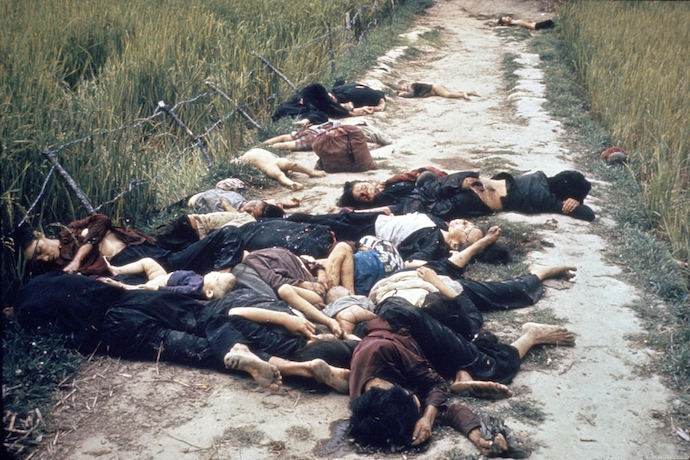
Kurashige: One thing that is sadly consistent is willful amnesia, which many would associate with the arrogance of power. When the Mỹ Lai Massacre occurred, it was a profound atrocity. The U.S. military initially reported it as a successful engagement against enemy combatants. It later became clear that it was the slaughter of hundreds of civilians, especially women, children, and older people. Because of the courage of whistleblowers and journalists, the truth emerged. Yet even then, major commentary often treated it as an isolated incident rather than part of a broader pattern.
That pattern extends well beyond Vietnam. During the Korean War, for example, the massacre at No Gun Ri involved the killing of large numbers of civilians, many of them refugees, by U.S. forces over several days. In the Philippine-American War, U.S. colonial violence included mass displacement, torture, and the killing of civilians. In 1906, at Bud Dajo, U.S. forces killed hundreds of Moros, including many civilians. Although the event drew criticism at the time from figures such as Mark Twain and W.E.B. Du Bois, it was largely erased from mainstream historical memory.
We can trace similar patterns across later wars as well: the firebombing of Tokyo, atrocities during the Korean War, and multiple massacres in Vietnam beyond Mỹ Lai. Each time, the violence is either covered up, minimized, or eventually exposed only to be framed as exceptional. Even when a case becomes widely known, it is often remembered in a way that obscures the broader historical pattern. That is part of what recurs: not only the violence itself, but the refusal to place it in context. Many Americans, including educated professionals and journalists, simply were never taught this history.
What is different today is the degree of demographic diversity in the United States, including within Asian American communities. Earlier migration was concentrated among groups from China, Japan, Korea, India, and, in significant numbers, the Philippines because of U.S. colonial rule. By contrast, there was very little Vietnamese or broader Southeast Asian migration to the United States before 1975. The wars in Vietnam, Laos, and Cambodia transformed that. Later conflicts and upheavals in places such as Afghanistan, Iraq, and elsewhere in the Middle East also contributed to new waves of migration and refuge.
So one major difference is that the United States is now far more diverse, and Asian America itself is far more internally diverse in language, ethnicity, religion, and historical experience. That diversity is meaningful and, in many ways, a source of strength. At the same time, the older patterns of discrimination, stereotyping, and violence have not disappeared. They have adapted to new circumstances. That is why the historical record still matters so much.
Jacobsen: Your work invites a deeper examination not only of what has been attempted, but of what has failed. Let me divide this into two parts. First, why are policing and punitive measures alone insufficient in addressing anti-Asian violence? And second, what alternative or complementary approaches would be more effective in reducing or preventing such violence over the long term?
Kurashige: It is understandable that when people feel they are in danger or under assault, they look to law enforcement for protection. If someone has been victimized, they should be able to call the police and seek redress through the justice system. Yet, on many occasions, those systems have failed.
If we look back to the early twentieth century, there were instances in which police officers or sheriffs were complicit in mob violence against Asian Americans, or even participated in it. That history shapes mistrust and reveals the limits of relying solely on policing. In the case of the murder of Vincent Chin in Detroit in 1982, there were off-duty police officers working nearby as security guards who witnessed the events leading up to the killing, yet their presence did not prevent the violence, nor did it result in accountability proportionate to the crime.
So while we can appreciate why communities call for policing and punishment in response to these attacks, they do not remedy the root causes of the problem. They tend to address incidents after harm has occurred rather than preventing the underlying conditions that produce violence. A more robust approach requires education, historical awareness, community-based interventions, and structural changes that address inequality, scapegoating, and racialized narratives.
When police arrive, it is often after the fact—after a murder or assault has already occurred. A second point is that, particularly since the 1980s and the murder of Vincent Chin, there has been a push for hate crime legislation, enhanced sentencing, and mandatory minimum penalties. When people feel vulnerable, it is understandable that they would seek stricter laws and enforcement. However, the impact of these measures has not always matched their intent.
Hate crime prosecutions are relatively rare because it is difficult to prove motive. Prosecutors must establish what was in the mind of the perpetrator. In the Atlanta shootings five years ago, for example, the perpetrator was raised in a conservative religious environment and framed his actions in terms of personal moral struggle. Yet the violence was directed at Asian women. While historical context can help us interpret such acts, that broader context is rarely available or admissible in a court of law when establishing motive. As a result, prosecutors are often highly selective in pursuing hate crime charges.
What is more common is the expansion of mandatory minimum sentencing and broader anti-crime legislation. These policies have disproportionately affected African American communities and other communities of color, particularly in cities such as Detroit, where residents often face structural inequalities, resource deprivation, and strained relationships with law enforcement. Hate crime laws, when enacted, can become entangled in broader systems of mass incarceration, including long prison terms for nonviolent offenders. They tend to have limited impact on reducing hate crimes or dismantling white supremacist movements, while significantly affecting already marginalized communities.
Some of the most effective responses I have documented come from community organizations and activists who go beyond criminalization. Their focus is on preventing violence before it occurs by building healthier communities. This includes fostering relationships not only within Asian American communities but also with neighboring communities, often in majority non-white cities and neighborhoods.
These efforts involve coalition-building around civil rights as well as broader social issues such as education, housing, healthcare, and childcare. Through these initiatives, Asian American communities have begun to exert greater influence on public policy, improve community well-being, and raise awareness of their concerns. Importantly, this work is reciprocal. Community organizers engage in multiracial coalitions and collective struggles, often beginning from marginalized positions but, through sustained effort, achieving incremental progress and greater empowerment.
Jacobsen: Scott, thank you very much for the opportunity and your time.