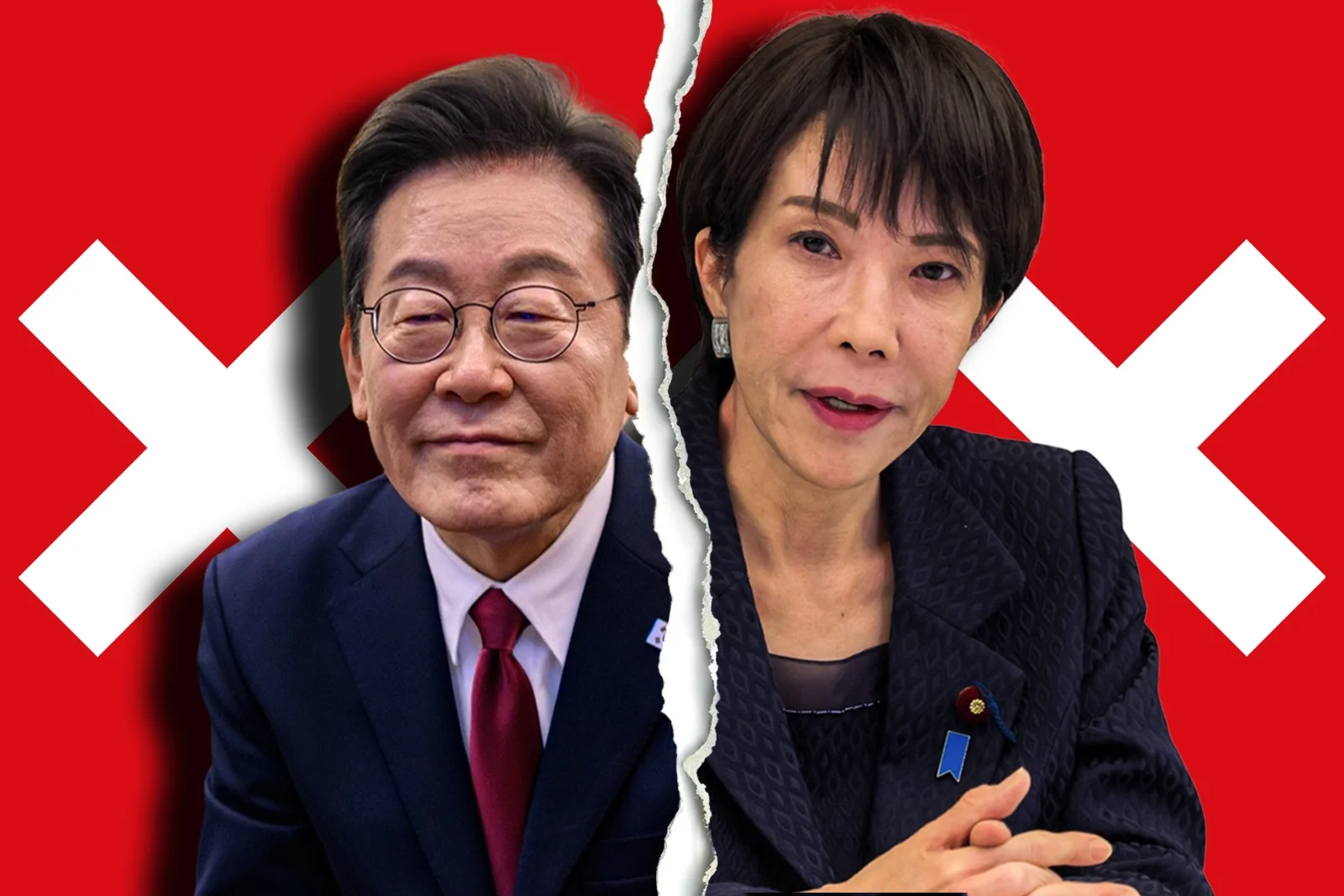

Seoul’s Strategic Blind Spot
As tensions sharpen from the Taiwan Strait to the Korean Peninsula, policymakers face a familiar dilemma made more urgent by events: keeping the United States, Japan, and South Korea aligned. With North Korea’s nuclear capabilities expanding and the China–Russia–North Korea axis consolidating, Seoul’s strategic choices now carry consequences that go well beyond ideology, nationalism, or historical grievance.
This is not just a matter of diplomatic preference. It’s structural. Since 1950, Japan’s security role vis-à-vis South Korea has become one of the central pillars of deterrence in Northeast Asia. Even during periods of political friction, Japan has provided logistical, operational, financial, and technological support because Japan’s own security depends on stability on the Korean Peninsula. The pattern repeats across decades: whenever North Korea escalates its threats or U.S. commitments to South Korea waver, Japan’s defense posture supporting South Korean security expands.
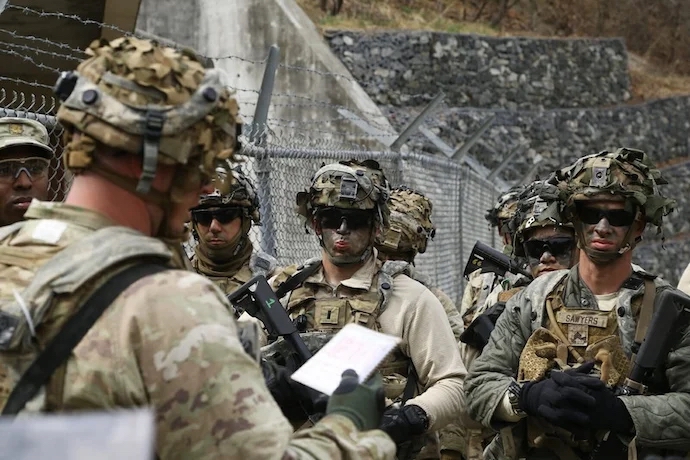
Consider a worst-case scenario: simultaneous crises in the Taiwan Strait and on the Korean Peninsula. In that dual contingency, U.S. assets would be stretched across two major theaters. Intelligence, surveillance, and reconnaissance platforms; missile defense systems; and naval strike groups would need to be divided and synchronized. That level of coordination only works at speed if there is a durable, practiced trilateral mechanism. Without it, force allocation becomes redundant, delayed, and potentially incoherent.
Now imagine Seoul politically distancing itself from Tokyo because of mistrust at the leadership level or public pressure at home. That would introduce immediate risks. Missile inventories could be poorly managed. The sequencing and coordination of strike and defense assets could break down. On paper, Japan’s soon-to-be Tomahawk-capable forces and South Korea’s conventional strike capabilities under its “three-axis” system are interoperable. In practice, that interoperability assumes an agreed plan. Without that plan, it’s just parallel firepower.
Missile defense is an even blunter example. The layered architecture now spans Japan’s SM-3 interceptors and Patriot systems, South Korea’s L-SAM and KM-SAM, and the U.S. THAAD batteries. That system only works if it is choreographed. If coordination frays, critical infrastructure—ports, ammunition depots, logistics hubs, and command centers—can be left exposed, while other areas become redundantly defended. The result is an opening for adversaries that shouldn’t exist.
The same logic applies to the air and maritime picture. If anti-submarine patrols are not synchronized, gaps in coverage emerge. If there is no shared Air Tasking Order (ATO), aircraft are sent up inefficiently, and surveillance assets begin to overlap in some places while going blind in others. That kind of fragmentation doesn’t just lower efficiency. It creates opportunities.

Beyond the tactical and logistical cost, there is a nuclear cost. Trilateral cohesion is itself a signal of resolve, and Pyongyang reads that signal obsessively. If Seoul publicly minimizes Japan’s role in the alliance, North Korea will exploit the opening and attempt to probe the U.S. commitment to South Korea. The nightmare scenario here is nuclear decoupling: doubt in Seoul that the United States would be willing to carry out nuclear retaliation against North Korea if the South were attacked with a nuclear weapon, because doing so could risk dragging Japan into a war it did not choose.
That doubt would be amplified if Japanese public opinion turned against Seoul. In that environment, domestic pressure in Japan could constrain how U.S. Forces Japan (USFJ) can use bases on Japanese soil in the event of a Korean crisis. At the same time, if Seoul slows or limits real-time missile-tracking intelligence sharing with Japan because of historical sensitivities, the entire layered missile defense system becomes less effective. All of this increases the odds of miscalculation and erodes deterrence.
The price of disengagement is not only immediate and military. It is also long-term and structural. The United States and Japan are already moving forward on joint work in AI-enabled command-and-control networks, space-based surveillance, and autonomous maritime systems. If Seoul hesitates politically and excludes itself from that emerging ecosystem, South Korea risks isolating its defense industry from both high-end innovation and export pathways.
This is not hypothetical. The Glide Phase Interceptor (GPI)—a next-generation system being co-developed by the United States and Japan—and advanced unmanned underwater vehicle (UUV) programs are being built with interoperability in mind from the start. If South Korea operates outside that framework, it will end up deploying standalone systems that are technically capable but strategically siloed. Over time, that means a less efficient military and a defense industry that struggles to compete in a world where buyers increasingly want plug-and-play integration with U.S.-aligned systems.
Signaling matters, too. Trilateral cooperation is not just about war plans. It is also about visible unity—exercises, shared doctrine, and real-time intelligence fusion. China, Russia, and North Korea are already stress-testing U.S.–Japan–South Korea cohesion through coordinated bomber flights, cyber operations, and other blended pressure tactics. If Seoul looks reluctant to participate in joint drills, appears hesitant to share intelligence, or resists converging on a common doctrine, adversaries will read that hesitation as strategic loosening.
The inverse is also true. Highly visible joint exercises and intelligence integration make it clear that an attack anywhere in East Asia will trigger a rapid, collective response. That kind of clarity raises the cost of coercion. Ambiguity lowers it. If Seoul slows down coordination in the name of political optics at home, it raises—not lowers—the risk of crisis.
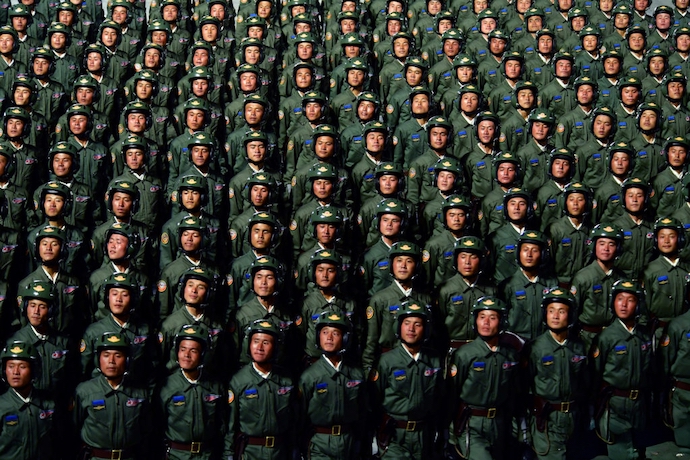
History here is blunt. Japan’s security contributions to South Korea—from logistical support during the Korean War to later-era technological transfers and financial assistance—were not acts of sentimentality or fleeting goodwill. They were driven by structural necessity: Japan cannot afford instability on the Korean Peninsula, and South Korea cannot realistically sustain deterrence alone in an environment shaped by nuclear North Korea and, now, a tightening China–Russia–North Korea bloc.
Even when Tokyo and Seoul were locked in bitter disputes over history, territory, or memory politics, Japan’s security contributions to broader regional deterrence continued with surprising consistency.
This pattern reveals five enduring features of Japan’s role. First, Japan has consistently reinforced Washington’s broader alliance strategy in the region, even during moments of intense strain with Seoul. Its participation has acted as a stabilizing force, ensuring that short-term political disagreements never fully disrupted long-term deterrence. Second, Japan’s defense posture has always been guided more by the evolving threat from North Korea than by sentiment toward South Korea—Tokyo’s calculus remains rooted in security realities, not emotion.
Third, Japan’s commitment to regional defense has proven resilient even when American engagement fluctuated. This reflects Tokyo’s own strategic recognition that its security is intertwined with stability on the Korean Peninsula. Fourth, while political and historical frictions have often dominated headlines, they have not fundamentally obstructed working-level cooperation between Japanese and South Korean defense institutions. Beneath the surface of politics, practical coordination has continued with quiet persistence. Finally, Japan’s recent institutional reforms—particularly the passage of new security legislation—have broadened its ability to participate in combined operations with U.S. and South Korean forces, transforming what was once a limited partnership into a more dynamic framework for collective defense.
Taken together, these facts underline a core reality: deterrence in Northeast Asia is structurally trilateral. Efforts, whether nationalist or populist, to marginalize Japan’s role or rhetorically downgrade its relevance don’t just satisfy a domestic audience. They weaken operational efficiency and create exploitable vulnerabilities.
That structural logic still applies. The strategic environment of 2025 cannot be reduced to “U.S.–China competition.” The China–Russia–North Korea alignment has become more explicit, more coordinated, and more comfortable with provocation. In that environment, coordination among the United States, Japan, and South Korea is not a luxury. It’s how you keep crises from becoming wars. Even minor fissures are opportunities for opponents. If South Korea deliberately pulls back from Japan, Washington and Tokyo will adapt—and that adaptation will, by definition, dilute trilateral coherence and slow response times in the very moments when minutes matter.
Seoul needs to recognize that stepping back from trilateral security cooperation is not an assertion of sovereignty. It is an act of self-harm. The U.S.–Japan–South Korea structure that has underpinned relative stability in Northeast Asia was not built on shared nostalgia or aligned identities. It was built on interdependence under pressure.
In an era defined by the possibility of dual contingencies and the reality of a nuclear-armed North Korea, coordination with Japan is not optional. It is an element of national survival. The task for Seoul is not to politicize cooperation with Tokyo, but to institutionalize it—to lock in defense planning, operational coordination, and shared deterrence architecture at a level that cannot be easily unraveled by the next electoral cycle. The alternative is the erosion of deterrence, a strategic opening for an authoritarian bloc increasingly aligned, and a shift in the Indo-Pacific balance of power that no democracy in Asia can afford to accept.