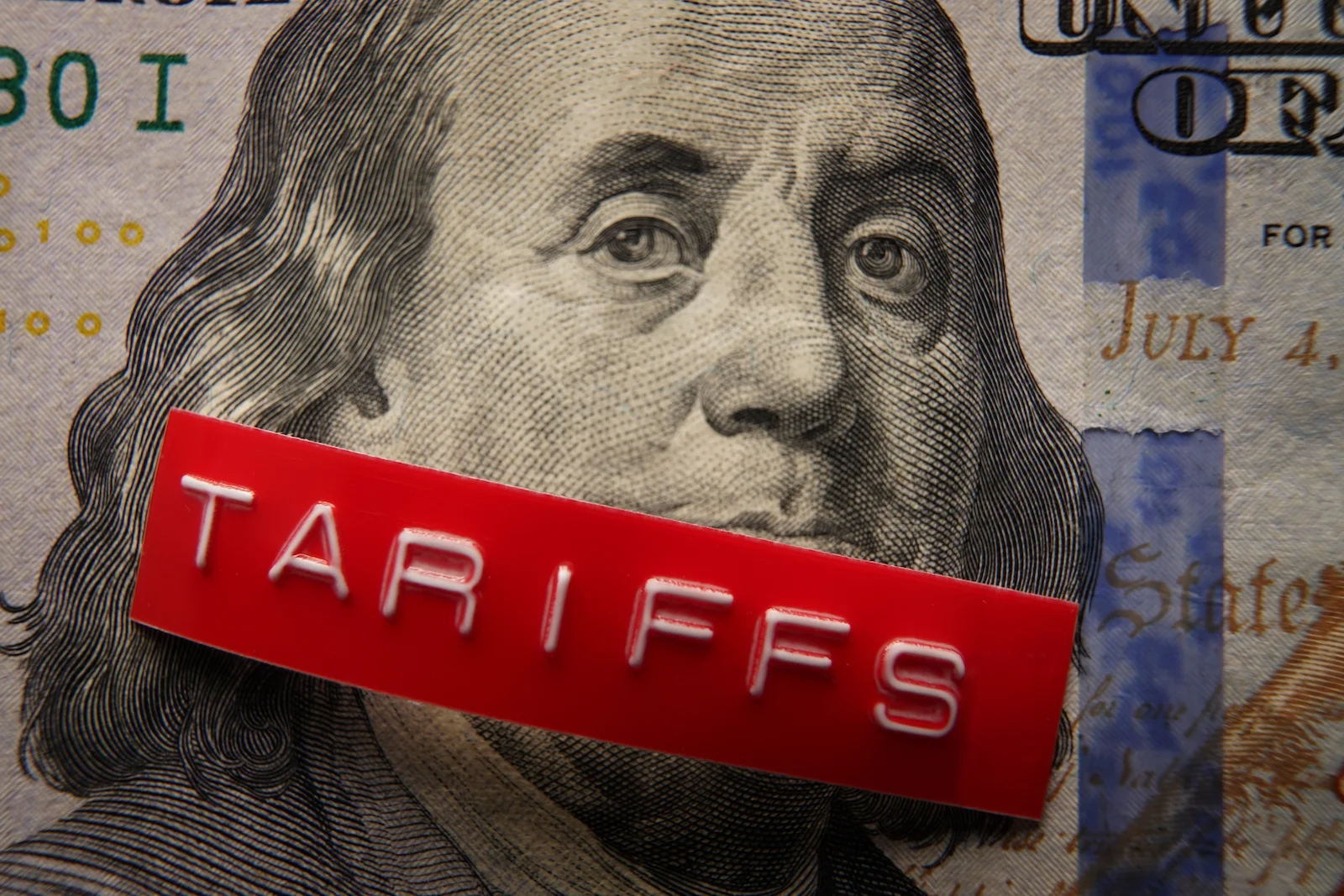

Tariff Wars are Making Global Trade Less Predictable
The growing use of tariffs as instruments of political negotiation marks one of the most consequential shifts in the architecture of the global economy in decades. Recent tensions in trade relations between Brazil and the United States demonstrate that tariffs can no longer be understood solely as economic tools intended to regulate imports, protect domestic industries, or correct market distortions. Increasingly, they serve as instruments of geopolitical influence, capable of reshaping diplomatic relationships and altering the balance of power between states.
As debate over new trade restrictions has intensified, so has scrutiny of the legal and economic implications of using tariffs as a form of international pressure. The most immediate consequence is an increase in the cost of trade, but the broader danger lies elsewhere: the gradual normalization of tariffs as bargaining chips in political negotiations. Once trade barriers are treated as routine instruments of diplomatic leverage rather than exceptional economic measures, uncertainty begins to replace predictability as the defining feature of international commerce.
For more than 70 years, the international trading system has evolved around the principles of legal certainty, transparency, regulatory stability, and the progressive reduction of trade barriers. Institutions such as the World Trade Organization were established precisely to create common rules, constrain unilateral action, and reduce the risk that commercial disputes would escalate into wider political conflicts. No international system has ever been immune to geopolitical pressure, but the postwar economic order has generally favored rules-based cooperation over discretionary intervention.
The politicization of tariff policy threatens that foundation. When governments impose tariffs primarily to secure diplomatic concessions rather than address demonstrable economic harm, commercial decisions become increasingly dependent on political circumstances instead of transparent legal and economic criteria. Investors, exporters, manufacturers, and financial institutions must then weigh geopolitical developments as heavily as the market indicators that once guided their decisions.
The relationship between Brazil and the United States illustrates this emerging dynamic. The two economies are connected by substantial flows of trade, foreign direct investment, technology, energy, and agricultural goods. Any policy decision affecting bilateral commerce therefore reverberates far beyond government negotiating rooms. Changes in tariff structures can influence production costs, investment decisions, supply chains, consumer prices, employment, and the competitiveness of industries on both sides.
From the perspective of economic law, the central issue is not whether sovereign states have the authority to establish tariffs. They unquestionably do. The more important legal question concerns the limits that should govern the strategic use of economic instruments for political purposes. States retain broad discretion to protect legitimate national interests, respond to unfair trade practices, and safeguard economic security. Yet the repeated use of tariffs as political leverage risks weakening the principles on which international trade rests, including proportionality, transparency, due process, good faith, and legal certainty.
That distinction is crucial because the legitimacy of a trade measure depends not only on its existence but also on its purpose and proportionality. Restrictions adopted to remedy identifiable economic distortions differ substantially from those imposed chiefly to influence unrelated political negotiations. As the line between the two becomes harder to discern, the credibility of international trade institutions begins to erode.
Economically, tariffs function as taxes on imported goods. Their immediate effects include higher production costs for companies that rely on foreign inputs and higher prices for consumers. Although tariffs may temporarily shelter selected domestic industries, they can also reduce efficiency, distort competition, encourage the misallocation of resources, and disrupt complex global value chains. Modern manufacturing depends on integrated production networks in which components may cross several borders before reaching consumers. Tariff increases therefore rarely punish foreign exporters alone; they often impose substantial costs on domestic businesses as well.
Brazil’s position exposes these vulnerabilities. As one of the world’s leading exporters of agricultural commodities, minerals, energy products, and manufactured goods, it depends heavily on stable access to international markets. Abrupt changes in tariff policy can reduce export competitiveness, deter investment, shift comparative advantages, and force companies to redesign long-term commercial strategies. Businesses must assess not only exchange rates and production costs but also the possibility that a political dispute could suddenly restrict access to a major market.
Perhaps the most damaging result is the spread of regulatory uncertainty. Investors allocate capital according to expected stability as much as expected profitability. Predictability is among the world’s most valuable economic assets because long-term investment requires confidence that legal and regulatory conditions will remain reasonably consistent. When tariff policy becomes contingent on diplomatic disputes, that confidence weakens. Cross-border investment grows more cautious, financing becomes more expensive, and multinational companies reconsider where to locate production and logistics.
This trend is part of a broader transformation commonly described as the rise of geoeconomics. Economic policy has become an increasingly important weapon in strategic competition among major powers. Tariffs, export controls, industrial subsidies, investment-screening mechanisms, technology restrictions, sanctions, and supply-chain diversification now form part of the standard foreign-policy arsenal. Economic interdependence, once viewed primarily as a source of mutual prosperity, is increasingly interpreted through the logic of national security and strategic rivalry.
Governments have legitimate reasons to protect critical industries and reduce strategic vulnerabilities. But excessive reliance on economic coercion carries serious systemic risks. Protectionist measures frequently invite reciprocal action, setting off cycles of retaliation that weaken international cooperation and diminish overall economic welfare. History offers little evidence that prolonged trade conflicts produce clear winners. More often, they increase inflationary pressure, suppress productivity growth, deter investment, and divide the global economy into less efficient and more politically charged blocs.
For Brazil and the United States, sustained institutional dialogue is therefore essential. Economic disagreements between major trading partners are inevitable, particularly when both possess large and diversified economies. The challenge is to ensure that disputes are managed through transparent legal frameworks that preserve confidence in the international trading system. Tariffs should remain exceptional instruments used to address clearly defined economic problems, not permanent tools of political bargaining.
The debate over tariffs consequently reaches far beyond commercial policy. It concerns the future of international economic governance. As geopolitical competition intensifies, governments will face mounting pressure to subordinate economic policy to broader strategic goals. The critical question is whether they can do so without dismantling the institutional stability that has supported decades of expanding global commerce.
Legal scholarship, economic analysis, and responsible public policy all have an increasingly important role in managing this transition. Sound legal frameworks create predictability. Economic analysis exposes the costs and trade-offs of intervention. International cooperation reduces the incentive for unilateral retaliation. Together, these pillars remain indispensable to an open and resilient trading system.
For lawyers, economists, business leaders, policymakers, and investors, understanding the intersection of law, economics, and geopolitics is no longer optional. The future of international trade will depend not only on each country’s ability to defend its legitimate interests, but also on its willingness to preserve a rules-based order grounded in stability, legal certainty, institutional trust, and long-term cooperation. In an increasingly fragmented world, predictability may prove to be the most valuable economic resource of all.