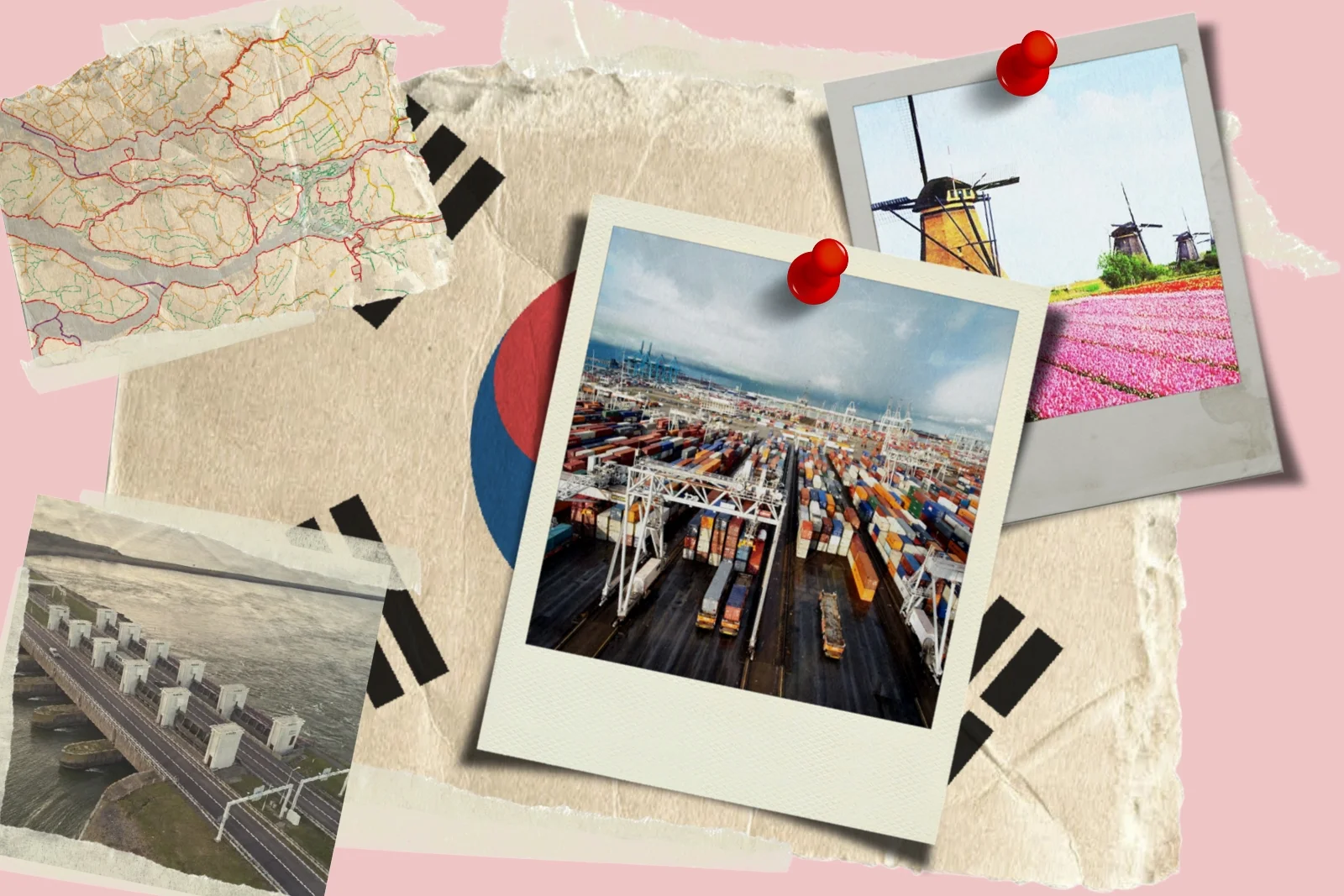

The Dutch Lessons for South Korea
The war in Ukraine has upended many long-standing assumptions about modern warfare. Tanks, fighter jets, and missiles still matter, and in many cases remain decisive. Yet some of the most strategically consequential attacks in the conflict have targeted something far less visible but no less important: critical infrastructure. Russia’s sustained strikes against Ukraine’s energy grid, transportation networks, and communications systems have demonstrated that modern warfare increasingly extends beyond the traditional battlefield.
The same pattern is emerging elsewhere. The sabotage of the Nord Stream pipelines exposed the vulnerability of offshore energy infrastructure. Across Europe and Asia, concerns about the security of undersea communications cables continue to grow. Houthi attacks in the Red Sea disrupted vital shipping routes and highlighted the fragility of global trade networks. At the same time, cyberattacks targeting ports, logistics systems, and transportation infrastructure have become increasingly common. In future conflicts, the ability to protect critical infrastructure may prove just as important as the ability to defend territory.
This reality carries particular significance for the Netherlands and South Korea. Though separated by thousands of miles, both countries rank among the world’s most infrastructure-dependent trading nations. Their prosperity and security rely heavily on ports, energy facilities, digital networks, and maritime transportation systems that are becoming increasingly vulnerable to both military and hybrid threats.
That shared vulnerability creates an opportunity. Amsterdam and Seoul could pioneer a new model of defense cooperation that extends beyond traditional arms sales and procurement agreements. Rather than focusing primarily on weapons systems, the two countries should establish a long-term partnership dedicated to protecting the infrastructure upon which both economic security and military readiness depend.
The strategic logic is straightforward. The Netherlands occupies a unique position within Europe. Home to the Port of Rotterdam, Europe’s largest maritime gateway, the country handles hundreds of millions of tons of cargo annually while serving as a critical hub for both civilian commerce and NATO logistics. As concerns about a potential conflict with Russia intensify, Rotterdam has already begun reserving space for NATO vessels transporting military equipment. The Netherlands also plays a central role in safeguarding North Sea infrastructure, including offshore energy facilities, pipelines, communication networks, and undersea cables.
South Korea faces remarkably similar challenges in Northeast Asia. Ports such as Busan, Ulsan, Pyeongtaek, and Incheon function as indispensable arteries for both commercial activity and military logistics. South Korea depends on maritime trade to a greater extent than most advanced economies, while its energy infrastructure, communications systems, and transportation networks remain exposed to North Korean missile strikes, cyber operations, special forces infiltration, and increasingly sophisticated drone threats.
Recent developments in Europe underscore that these concerns are anything but theoretical. Russian attacks on Ukraine’s energy infrastructure have shown how long-range strikes can cripple civilian life while simultaneously degrading military operations. Meanwhile, North Korea continues to expand its arsenal of ballistic missiles, cruise missiles, drones, and cyber capabilities. In any future contingency on the Korean Peninsula, simultaneous attacks against ports, fuel depots, power plants, transportation hubs, and communications infrastructure would likely occur from the opening stages of the conflict.
In that respect, South Korea has much to learn from the Dutch experience in protecting critical infrastructure, just as it benefits from military cooperation with other NATO allies. A structured partnership between Seoul and Amsterdam could generate practical lessons that strengthen resilience on both sides of the globe.
Four policy recommendations stand out as particularly relevant.
The first should be the creation of a North Sea–Korean Peninsula Infrastructure Defense Dialogue. Unlike existing security consultations, this mechanism would focus specifically on protecting critical infrastructure. Participants should include defense ministries, naval forces, coast guards, intelligence agencies, cybersecurity authorities, port operators, and energy grid managers.
Such a dialogue would enable both countries to exchange assessments of emerging threats to ports, maritime facilities, communications networks, and undersea infrastructure. More importantly, it would create a framework for translating lessons learned in Europe and the Indo-Pacific into practical defense planning.
Particular attention should be paid to undersea infrastructure. In recent years, European governments have become increasingly concerned about threats to undersea cables and offshore energy assets. Northeast Asia faces similar vulnerabilities. Much of South Korea’s digital connectivity depends on undersea communications cables, and any disruption to those systems during a crisis could have serious military and economic consequences.
To address these risks, Amsterdam and Seoul should conduct regular tabletop exercises examining scenarios involving sabotage, cyberattacks, and kinetic strikes against undersea infrastructure. Such exercises should include not only military personnel but also civilian operators responsible for maintaining critical networks.
Maritime infrastructure protection represents another area where cooperation could produce tangible results. Future conflicts may involve large-scale drone attacks against ports, logistics chokepoints, and naval facilities. Ukraine has demonstrated how relatively inexpensive unmanned systems can threaten high-value targets. North Korea’s expanding drone capabilities, potentially enhanced through cooperation with Russia, are raising similar concerns among South Korean defense planners.
In response, the two countries should establish a Joint Critical Port Security Initiative focused on counter-drone technologies, cyber defense, port resilience, and operational continuity during crises. Regular exchanges between the port authorities of Rotterdam and Busan, supported by military and security agencies, would help identify vulnerabilities and share best practices.
The maritime dimension of this partnership should also include naval cooperation. Rather than concentrating exclusively on traditional joint exercises, the Royal Netherlands Navy and the Republic of Korea Navy should place greater emphasis on missions involving infrastructure protection. Cooperative activities could include mine countermeasures, maritime domain awareness, naval infrastructure security, and protection of sea lines of communication.
This approach is particularly relevant in an era of hybrid warfare. Future adversaries may seek to disrupt energy grids, logistics networks, and digital infrastructure without crossing the threshold into open conventional conflict. Developing shared mechanisms to detect, deter, and respond to such activities would enhance resilience in both regions.
The F-35 ecosystem presents another promising avenue for collaboration. As a major logistics and sustainment hub for the aircraft in Europe, the Netherlands plays an important role in maintaining the operational readiness of allied F-35 fleets. South Korea, meanwhile, operates one of Asia’s largest F-35 fleets, with 38 aircraft, second only to Japan. Together, the two countries have a strong interest in protecting the infrastructure that supports advanced airpower.
As modern airpower becomes increasingly dependent on secure logistics, maintenance facilities, and digital mission-support systems, protecting the infrastructure that sustains advanced fighter aircraft becomes a strategic priority in its own right. Both countries should therefore explore opportunities to exchange lessons on defending air bases, maintenance facilities, logistics hubs, and supporting digital networks against missile attacks, drones, and cyber threats.
Ultimately, the case for closer Netherlands–South Korea cooperation extends well beyond bilateral interests. The security challenges confronting Europe and the Indo-Pacific are becoming increasingly interconnected. The next major conflict may not begin with armored divisions crossing borders or fleets clashing at sea. It could start with attacks on ports, undersea cables, energy networks, logistics hubs, and digital systems.
Countries capable of protecting these assets will enjoy a significant strategic advantage. Those that fail to do so may discover that their military capabilities have been degraded long before conventional combat begins.
For that reason, the Netherlands and South Korea should move beyond traditional concepts of defense cooperation. By building a dedicated infrastructure defense partnership linking the North Sea and the Indo-Pacific, both countries can strengthen their own resilience while contributing to a broader effort to prepare democratic nations for the realities of twenty-first-century conflict.
In an age when military preparedness and infrastructure resilience are increasingly inseparable, protecting the systems that sustain national power may become one of the most important defense missions of all.