
The Iran War Is Rewriting America’s Military Footprint
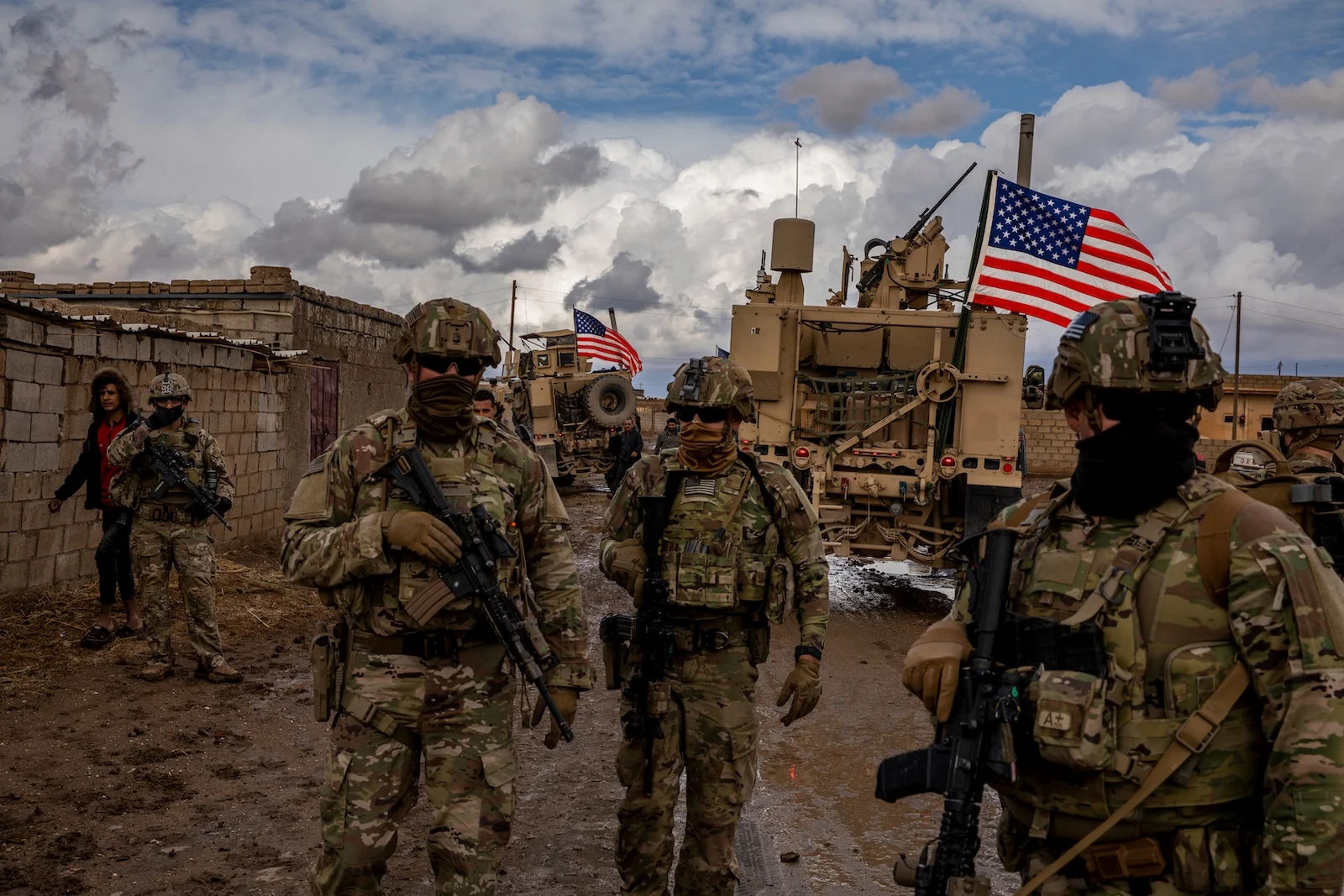
As the war with Iran continues, U.S. military and intelligence officials are quietly discussing whether to reduce the number of personnel and facilities permanently based in the Middle East once the fighting ends. No final decision has been made, but the debate points to what could become one of the most consequential revisions of America’s regional posture in two decades. The options under discussion suggest an effort to replace a large, fixed presence with one that is smaller, more dispersed, and less vulnerable—a shift driven above all by the realities the war has exposed.
The problem is no longer theoretical. A Washington Post analysis of satellite imagery published in May found that Iranian strikes had damaged or destroyed at least 228 structures or pieces of equipment at U.S. military sites across the region, including hangars, air-defense systems, radars, communications equipment, and fuel facilities. That damage helps explain why the Pentagon is rethinking its posture. Officials are weighing whether some facilities damaged in the strikes should be rebuilt as they were. Other options include moving critical facilities underground, dispersing personnel and equipment, and conducting some operations from greater distances. These proposals address vulnerabilities the conflict has already exposed, rather than threats Washington might face in some distant war.
The significance of this debate lies in how heavily the traditional American model in the Middle East has depended on large, permanent bases. Qatar hosts Al Udeid Air Base, home to a forward U.S. command presence and a major combined air operations center. Bahrain hosts the U.S. Fifth Fleet. Kuwait contains major Army logistics hubs, while Saudi Arabia and Jordan provide important air and air-defense facilities used by American forces. For years, this network allowed the United States to keep troops, aircraft, fuel, radar, and command elements close to potential flashpoints and respond quickly. The recent fighting has exposed the limits of that model, even as the need for rapid responses remains.
The larger and more fixed a base is, the more valuable a target it becomes for missiles and drones. Iran has exploited precisely that vulnerability. U.S. facilities in Kuwait, Bahrain, Qatar, Saudi Arabia, Jordan, and elsewhere have come under repeated attack during the conflict. Those attacks show how concentrating people and equipment in a handful of fixed sites raises both the cost of defense and the consequences of a successful strike. What once offered speed and efficiency can also concentrate risk. Protecting those installations requires resources that cannot be devoted to other missions. That is why the current arrangement is increasingly difficult to sustain.
If these discussions become policy, the emerging approach is likely to move away from large bases packed with thousands of permanent personnel and concentrated equipment. In their place could be fewer troops, more dispersed locations, hardened or underground facilities, greater use of drones and other unmanned systems, more temporary deployments, and some operations conducted from outside the immediate region. Such changes would reflect the constraints imposed by the war as much as Washington’s strategic preferences. The United States could retain a substantial role in the Middle East while changing how it operates there under battlefield pressure. Discussions about reducing the U.S. presence in the Persian Gulf already point in that direction, although the scope of any reduction remains unsettled.
In practical terms, the redesign could draw on several familiar approaches. Washington could reduce the number of permanently stationed troops and shift more of the defensive burden to regional partners. Dispersing capabilities could prevent a single strike from disabling a large share of operational capacity. Moving critical command-and-control facilities underground or into more resilient structures could help protect the systems on which other forces depend. Greater reliance on unmanned systems would reduce personnel exposure, while some missions could be conducted from more remote bases or U.S. territory.
Together, these measures could reduce human and financial exposure while fitting more comfortably with the “America First” preference for avoiding large, open-ended overseas commitments. But the immediate driver is more concrete: the war has made the vulnerabilities of the old arrangement impossible to ignore.
There would be costs. Regional allies may read any reduction in the permanent U.S. presence as a weakening of Washington’s commitment, and that perception could diminish American influence. Rebuilding, hardening, or relocating facilities would require substantial resources and cooperation from host governments. A more dispersed network would still need reliable access, supply routes, and coordination among its separate elements. Yet simply restoring the previous architecture would leave the same vulnerabilities in place. In an era of ballistic missiles and relatively inexpensive drones, large bases located close to the threat can become liabilities as well as strategic assets. The conflict has made that trade-off much harder to dismiss.
The debate is therefore about more than the size of America’s military footprint. It concerns whether the infrastructure supporting that presence can withstand the threats it is meant to help contain. A force that is smaller in some places, more dispersed, and better protected could be harder to target without surrendering Washington’s ability to operate in the region. If managed carefully, that change could improve the security of American personnel while preserving a long-term U.S. role. The specific choices remain unsettled, and deliberations should not be mistaken for adopted policy. But the war has raised a question that rebuilding alone cannot answer: whether large, fixed bases should remain the default foundation of American power in the Middle East.