The Middle East Is Learning to Live Without America
The Middle East is entering a period in which its crises are increasingly difficult to understand in isolation. The security turmoil in the Strait of Hormuz, the balance of power produced by the U.S.-Iran war, and, most recently, the Mecca Joint Defence Agreement signed by Turkey, Pakistan, and Saudi Arabia may be different manifestations of the same larger transformation.
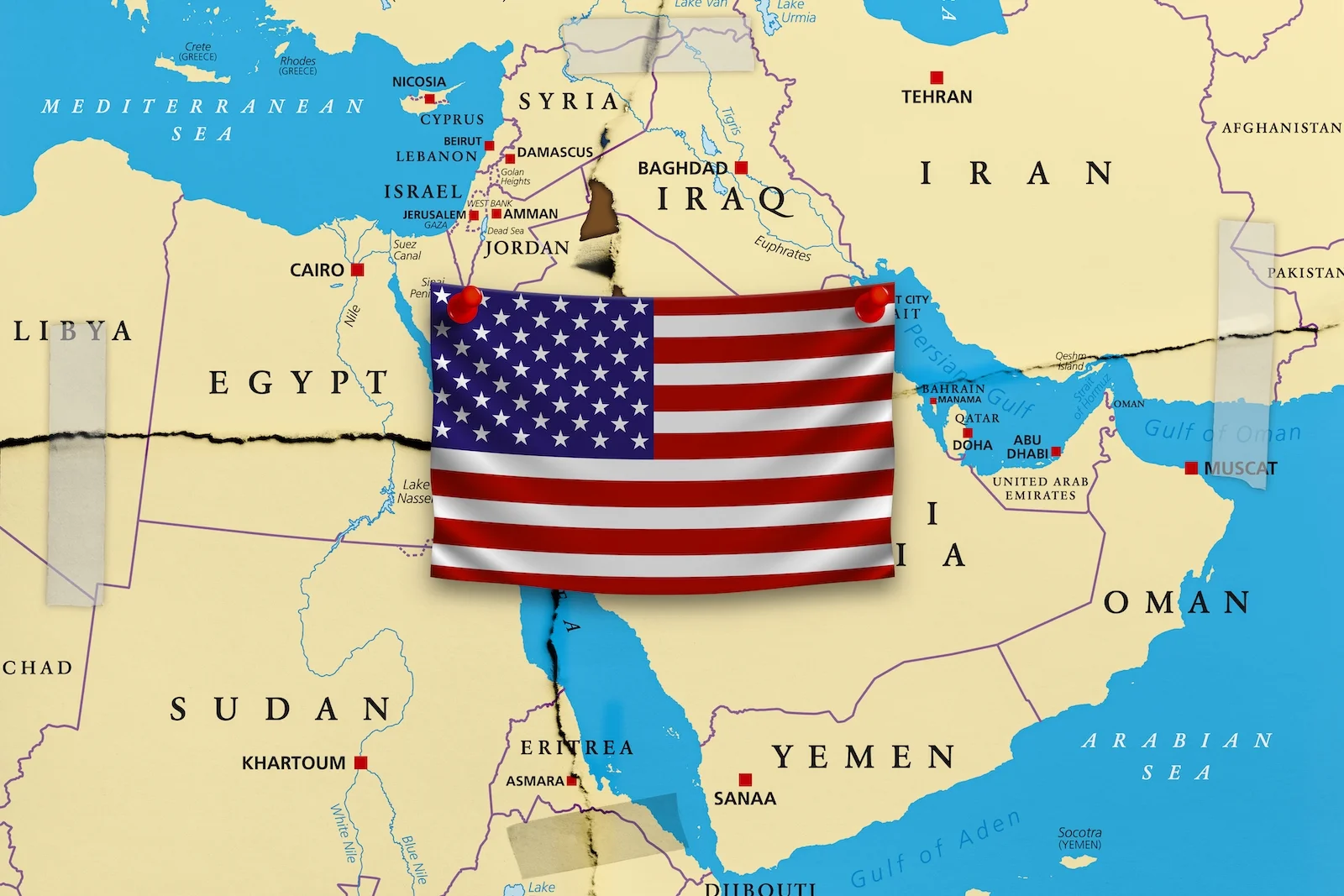
The central question is no longer simply whether the United States is withdrawing from the Middle East. It is whether regional powers are gradually moving away from a system in which Washington serves as their principal security guarantor toward a more layered order in which they assume greater responsibility for their own defense.
The Strait of Hormuz has become one of the clearest laboratories for this transformation.
Before the war, roughly one-fifth of global oil and LNG trade passed through the waterway, making it one of the most consequential arteries in the global economy. Recent disruptions have demonstrated just how vulnerable that artery can be.
According to available data, only five commodity vessels passed through Hormuz on August 15, while no passage was recorded the following day. The previous weekend, the figure had been 31. Before the war, total daily vessel transits exceeded 130.
Hormuz is therefore no longer simply the site of a maritime confrontation between Iran and the United States. It has become an arena in which a larger question is being tested: Who guarantees the security of global energy flows when the traditional guarantor cannot prevent their disruption?
For decades, the answer was largely the United States. American military power, Washington’s relationships with Gulf governments, and the U.S. Navy formed the security umbrella underpinning much of the regional order.
The current crisis has exposed the limits of that arrangement. Despite maintaining enormous military capabilities across the region, the United States has been unable to prevent instability in Hormuz from reverberating through the global economy. Washington and Tehran have made competing claims over control of the Strait, while Iran has linked its full reopening to the United States fulfilling its commitments.
Hormuz is thus more than a strategic card in Iran’s hands. It is evidence that the U.S.-centric security architecture, however formidable militarily, cannot by itself guarantee regional stability.
That is what makes the Mecca Joint Defence Agreement, signed on August 7 by Turkey, Pakistan, and Saudi Arabia, potentially significant.
Its most striking provision is the principle that an armed attack against one party would be regarded as an attack against all three. The full extent of the agreement’s military obligations has not been made public. But reducing it to another exercise in military cooperation would miss its broader significance.
The three countries bring markedly different capabilities to the arrangement. Turkey contributes a rapidly developing defense industry, unmanned aerial systems, electronic warfare capabilities, missiles, naval platforms, and considerable operational experience. Pakistan brings a large and experienced military, strategic capabilities, and a geopolitical position linking South Asia with the Gulf. Saudi Arabia contributes enormous economic resources, a central role in global energy markets, and political influence throughout the Arab world.
Their strength lies less in what they have in common than in how their capabilities complement one another. The agreement could therefore mark the early institutionalization of a geopolitical realignment that has been developing across the region for years.
But there is not yet sufficient evidence to describe the Mecca Agreement as an anti-American bloc.
President Donald Trump’s public support for the agreement makes that interpretation particularly difficult. Trump called it a “big, bold and important first step.” If Washington regarded the arrangement as a direct challenge to the American-led security architecture, such an endorsement would be difficult to explain.
A better description of what is emerging may be controlled strategic autonomy.
Turkey, Pakistan, and Saudi Arabia increasingly appear unwilling to allow their security to depend exclusively on Washington. They want stronger domestic defense industries, greater military coordination, joint production, and more credible deterrence. But they are not, at least for now, attempting to build a regional security architecture that excludes the United States.
The result could be not the replacement of the American security system but another security layer alongside it.
Trump’s support for the Mecca Agreement may also reflect a longstanding American objective: burden-sharing. Washington wants to retain influence in the Middle East without bearing the entire financial and military cost of maintaining its security order.
Greater independent deterrence capacity among Turkey, Pakistan, and Saudi Arabia is therefore not necessarily contrary to American interests. Washington has spent years demanding that partners develop stronger military capabilities and assume greater responsibility for their own defense. A regional arrangement that does precisely that could reduce the burden on the United States without eliminating American influence.
This is where the connection between Hormuz and Mecca becomes clearer.
At first glance, the crisis in the Strait and the trilateral defense agreement appear unrelated. Strategically, however, they point in the same direction. Hormuz demonstrates that external security guarantees have limits. The Mecca Agreement represents one attempt to build greater regional capacity in response.
One exposes the vulnerability; the other suggests a possible answer.
For Saudi Arabia, the security of Hormuz is inseparable from national economic security. For Turkey, instability in the Gulf affects energy prices, trade corridors, and the wider regional balance. For Pakistan, Gulf stability carries substantial economic and strategic consequences. Their interests are increasingly intertwined.
Yet describing what is emerging as a “post-American Middle East” would go too far. The more accurate description is a Middle East becoming less dependent on the United States.
Regional governments are developing alternative diplomatic, economic, and military relationships without severing their ties to Washington. Rather than attaching themselves exclusively to a single great power, they are building overlapping relationships with multiple centers of power.
Pakistan can maintain its strategic partnership with China while improving relations with the United States and building a defense mechanism with Turkey and Saudi Arabia. Riyadh can preserve its security relationship with Washington while expanding economic ties with Beijing and developing military capacity with Ankara and Islamabad. Turkey can remain a NATO member while extending its strategic networks throughout the Gulf and South Asia.
This is not traditional bloc politics. It is multidimensional strategic balancing.
The Hormuz crisis exposed the vulnerability of regional energy security. The U.S.-Iran war revived questions about the limits of external security guarantees. The Mecca Agreement demonstrates the willingness of regional powers to develop deterrence mechanisms of their own.
What is taking place should therefore be understood less as an American withdrawal than as the gradual erosion of an American security monopoly.
The United States remains the most powerful external military actor in the Middle East, and that is unlikely to change soon. But Washington no longer needs to be—and regional governments increasingly do not want it to be—the sole producer of security.
Regional defense networks, bilateral and trilateral agreements, and increasingly autonomous diplomatic mechanisms can coexist with the American-led system. In such an environment, the Mecca Agreement would be less an endpoint than a beginning. Its ultimate importance may lie not only in the obligations it establishes today, but in the countries and security domains it could encompass tomorrow.
So, is the Middle East moving away from a U.S.-centric security order?
Yes—but that does not necessarily mean it is moving away from the United States.
Regional powers are instead building a more autonomous and multilayered system in which they can develop their own military capabilities and security relationships while maintaining ties with Washington.
Hormuz demonstrates why they believe such autonomy is necessary. Mecca offers an early glimpse of what it might look like once institutionalized.
The question facing Washington is no longer simply whether it will remain in the Middle East. It is how the United States will manage its relationship with a region increasingly determined to produce more of its own security.
The American presence may endure. Its security monopoly may not.