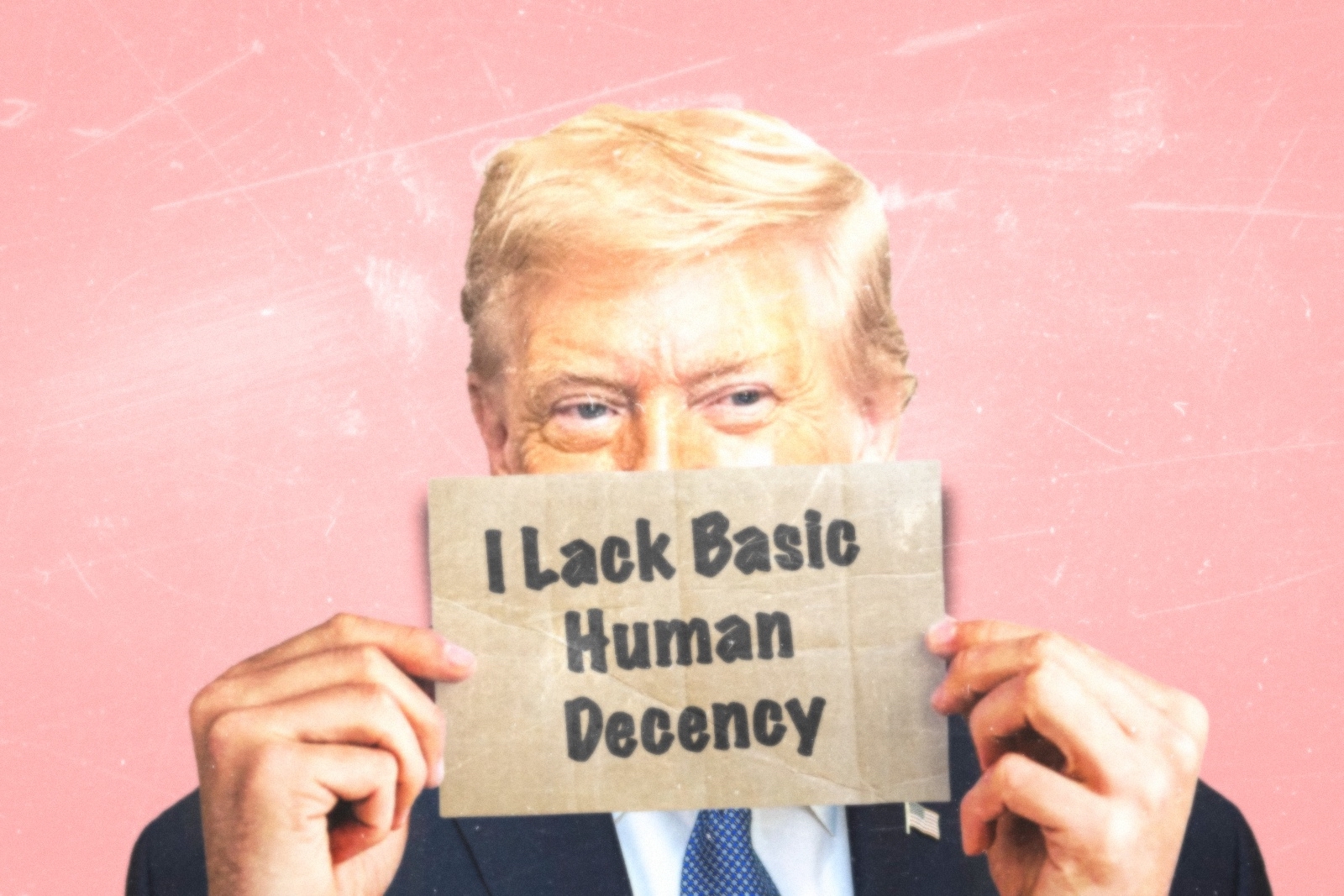

The Myth Behind Trump’s Racist ‘Dirty Countries’ Remark
When President Donald Trump asked during his first term why the United States accepts immigrants from what he called “dirty, disgusting places” like Somalia rather than from countries such as Norway, Sweden, or Denmark, global outrage followed. But the deeper issue isn’t only the insult; it’s the worldview embedded in his phrasing. His remark reduces a complex human phenomenon to a moral hierarchy—clean versus unclean, desirable versus undesirable. To understand what that framing reveals about Western debates on migration, it’s necessary to look beyond the fury of the moment and examine the misconceptions that shape how immigration is discussed in the first place.
This type of rhetoric is not a modern invention. For more than a century, each new wave of immigrants to the United States has been met with suspicion—and often contempt—from those already here. Irish immigrants in the mid-1800s were derided as dirty and irrational. Italians arriving in the early twentieth century were dismissed as criminals. Chinese laborers were caricatured as unassimilable and unclean. These judgments had little to do with the reality of the people arriving and everything to do with the prejudices of those passing judgment. Today, the targets shift—Africans, Muslims, Latin Americans—but the underlying impulse to sort humanity into superior and inferior categories remains stubbornly familiar.
In reality, the forces driving migration have nothing to do with notions of “cleanliness” or moral worth. People move for one fundamental reason: opportunity. Scandinavian nations—often idealized in American political conversations—have strong safety nets, high wages, stable politics, and enviable standards of living. Their citizens have little incentive to leave. Migration patterns reflect disparities, not virtues. Individuals from poorer or conflict-ridden nations are not inferior; they are simply responding to structural inequalities that make life more secure elsewhere.
This dynamic is particularly important for the United States, where demographic trends are reshaping the country. The American population is aging, birth rates have been falling for decades, and multiple sectors—from agriculture to healthcare to logistics—face chronic labor shortages. In fewer than 10 years, the United States will likely have more jobs available than workers to fill them. Immigrants from Africa, Asia, and Latin America keep large parts of the economy running, often stepping into roles that employers struggle to fill. They don’t displace American workers; they fill gaps that otherwise would stall growth. Trump’s framing ignores this reality: immigrants often arrive with education and ambition the United States did not pay to develop—yet benefits from immensely.
The case of Somalia illustrates how misleading the phrase “dirty country” truly is. Somalia faces real, contemporary challenges, but its history is far richer than the caricatures suggest. Medieval Mogadishu was a thriving international port—wealthier, more cosmopolitan, and more globally connected than many European cities of the era, including London. Somali merchants were central to Indian Ocean trade networks linking Africa, Arabia, India, and China. A society fluent in multiple languages and shaped by centuries of exchange hardly fits the image invoked by modern political rhetoric.
The Somali diaspora in the United States reflects that legacy of resilience and adaptation. Somali Americans are multilingual and entrepreneurial, revitalizing neighborhoods, opening businesses, and infusing local economies with energy. Their communities emphasize mutual aid and education, and their children navigate languages and cultures with ease. These attributes do not belong to a “repulsive” people; they belong to survivors, risk-takers, and builders. They strengthen the United States, not burden it.
The danger of Trump’s language is not only its disrespect but its consequences. When political leaders frame immigration as a contest between clean and dirty nations, they encourage the public to see global mobility through a moral lens rather than an economic or historical one. That kind of thinking flattens the real story of migration and complicates diplomatic relationships with parts of the world where U.S. engagement is increasingly crucial. Africa, long marginalized in Western political imagination, is now a central arena of global competition—with China, Turkey, Russia, and Gulf states investing heavily across the continent. Treating African nations as objects of scorn undermines America’s strategic interests at the very moment it can least afford to lose influence.
A productive immigration strategy begins with analysis, not insult. It requires policies that match labor demands with skilled—and willing—workers, expand legal pathways, invest in educational exchange programs, and develop bilateral agreements that benefit both sending and receiving countries. A rational approach replaces fear with planning and recognizes that migration is not a crisis but a permanent feature of the twenty-first-century global system.
The United States has never grown stronger by deciding which nations are worthy and which are not. It has grown by recognizing human potential where others saw deficiency. Immigrants once labeled “dirty” or “undesirable” became cornerstones of American life. Those arriving today—from Somalia, Sudan, Haiti, Central America, and beyond—will shape the nation just as earlier generations did.
Trump’s comments ultimately reveal far more about the distortions within America’s immigration debate than they do about Somalia or Africa. The world is not divided between clean countries and dirty ones. It is divided between places where opportunity flourishes and places where it is scarce. People go where opportunities exist. Nations that understand this—and respond with strategy rather than judgment—will be the ones that thrive in the decades ahead.