The Platform
The Quiet Case for Somaliland’s Sovereignty
01.27.2026
Somaliland has built a stable, democratic, and self-governing state through locally grounded institutions and disciplined patience—long before the world was willing to recognize it.
Since reasserting its sovereignty in 1991, Somaliland has pursued a deliberate and internally driven project of state-building that sets it apart from much of the Horn of Africa. While the region has often been defined by institutional fragmentation and recurring conflict, Somaliland has moved, patiently and largely out of international view, toward democratic consolidation, internal security, and social cohesion.
The break with the former Somali Republic followed a brutal civil war and the near-total collapse of central authority. At that historical juncture, Somaliland faced choices that would prove decisive. Rather than reverting to centralized autocracy or adopting a fragile, clan-based federalism, it pursued a path anchored in self-determination and negotiated consensus. This was not simply a matter of survival. It was an exercise in political construction, premised on the belief that legitimacy, security, and social trust had to precede external validation. Over time, that choice produced a functioning polity capable of governing territory, mediating conflict, and sustaining public order.
What distinguishes Somaliland’s formation is its rejection of externally imposed governance models in favor of a bottom-up approach rooted in local practice. In the years immediately following the 1991 declaration of independence, while international attention remained fixed on Mogadishu, Somaliland’s leaders turned inward. A series of national conferences between 1991 and 1997, most notably the 1993 Borama Conference, became the forum through which peace was negotiated and authority reconstituted. These were not symbolic gatherings. They were prolonged, often arduous deliberations involving clan elders, religious figures, and civic leaders, drawing on customary law to resolve grievances, demobilize militias, and articulate a shared political framework.
The result was a social contract that enjoyed broad legitimacy precisely because it emerged from within society rather than being imposed from above. This process endowed Somaliland’s early institutions with a durability uncommon in post-conflict settings. Peace was not enforced by foreign troops or underwritten by external guarantors; it was bargained, internalized, and defended by local actors with a stake in its survival.
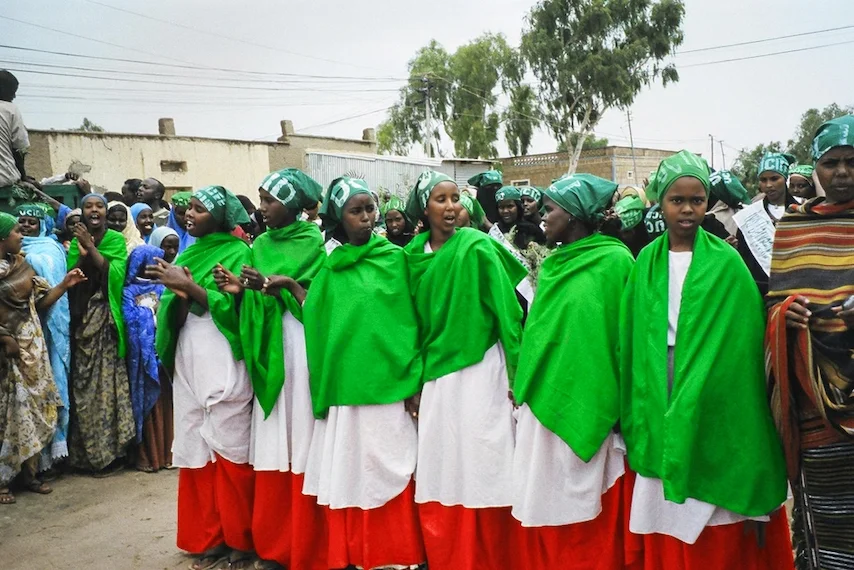
From this foundation emerged a hybrid political system that fused traditional authority with modern state institutions. Central to this arrangement was the formal incorporation of elders into national governance through the Guurti, or House of Elders, which functions as the upper chamber of parliament. The Guurti has served as a stabilizing mechanism, mediating political disputes and ensuring that modernization did not rupture social continuity. Its role in conflict resolution and security oversight helped prevent political competition from sliding into violence and contributed to the consolidation of a national monopoly on force.
As a result, Somaliland developed unified national security institutions rather than the fragmented militia structures common elsewhere in the region. A centralized army and police force now maintain internal order, enabling the state to secure its borders and contribute meaningfully to regional security efforts, including counter-piracy and counter-extremism initiatives along the Gulf of Aden.
Over time, this system evolved. What began as a consensus-driven, clan-mediated order gradually transitioned into a competitive, multi-party democracy grounded in universal suffrage. Over the past three decades, Somaliland has conducted repeated municipal, parliamentary, and presidential elections. International observers have generally described these contests as credible and peaceful. More telling than procedural benchmarks, however, has been Somaliland’s record of orderly transfers of power. Presidents have conceded defeat. Opposition parties have assumed office. Constitutional authority has prevailed over personal rule.
In a region where incumbency often hardens into permanence, this pattern marks a genuine political maturation. Somaliland’s use of biometric voter registration, implemented earlier than in many more affluent states, reflects both institutional ambition and a sustained commitment to electoral integrity. These practices reinforce the reality that Somaliland functions not as a provisional authority but as a self-governing democratic state.
Political stability, in turn, has enabled a measure of economic resilience. Lacking formal recognition, Somaliland has been excluded from international financial institutions and most bilateral aid frameworks. Yet this isolation has fostered fiscal restraint and a reliance on domestic revenue and private enterprise. The economy remains anchored in livestock exports, supported by an unusually advanced telecommunications sector that has expanded access and lowered costs nationwide.
Geography has further shaped Somaliland’s economic strategy. Its long coastline along the Gulf of Aden, and particularly the port city of Berbera, has become central to its regional ambitions. Investments in port modernization and logistics infrastructure aim to position Somaliland as a critical trade corridor for the Horn of Africa, especially for landlocked Ethiopia. These projects are not merely commercial. They assert Somaliland’s relevance to global supply chains and maritime security amid renewed international attention to the Red Sea.
Despite these achievements, Somaliland has operated for more than three decades in a diplomatic vacuum. The absence of de jure recognition has constrained access to credit, limited foreign direct investment, and excluded Somaliland from formal participation in international institutions. In response, Somaliland has pursued what might be described as a diplomacy of pragmatism—engaging states and organizations on the basis of functional cooperation rather than formal status.
Through security partnerships, trade agreements, and development cooperation, Somaliland has secured growing de facto acknowledgment of its sovereignty. It operates its own currency, passport, flag, and national institutions. It does not function as a subordinate federal unit awaiting direction from Mogadishu, but as a parallel and autonomous political entity.
That long campaign of patience and self-reliance reached a turning point in late 2025. On December 26, Israel became the first United Nations member state to formally recognize Somaliland as a sovereign and independent nation. The joint declaration, signed by Prime Minister Benjamin Netanyahu and President Abdirahman Mohamed Abdullahi, marked a diplomatic breakthrough with far-reaching implications.
Recognition transformed Somaliland’s international standing almost overnight. What had long been described as a “silent success” was suddenly a visible strategic partner. The agreement opened new channels for diplomatic engagement and accelerated reassessments in capitals that had previously maintained only informal ties with Hargeisa. Countries including the United Kingdom, the United Arab Emirates, and Ethiopia began reviewing their positions, drawn by Somaliland’s strategic location near the Bab el-Mandeb Strait and its demonstrated capacity for governance and security.
The implications extend beyond bilateral relations. As global attention returns to the Red Sea and the Gulf of Aden, Somaliland’s control over key maritime corridors positions it as a central actor in regional stability. Its trajectory since 1991 challenges prevailing assumptions about post-conflict reconstruction, suggesting that durable peace is more likely to emerge from locally grounded institutions than from externally engineered solutions.
Somaliland’s experience does not offer a universal blueprint. But it does present a compelling case: that democratic legitimacy, patiently constructed and culturally rooted, can endure even in the absence of international recognition. In an era of renewed geopolitical competition, Somaliland stands as a reminder that sovereignty is not conferred solely by diplomacy; it is built, sustained, and defended over time.
Mohamed Nouh Rakaab is a Somali-based social researcher and political analyst specializing in governance, state-building, and political stability in fragile and post-conflict contexts, with a focus on Somaliland and the wider Horn of Africa. His work combines field-based research and political analysis to inform international debates on sovereignty, legitimacy, and sustainable governance.