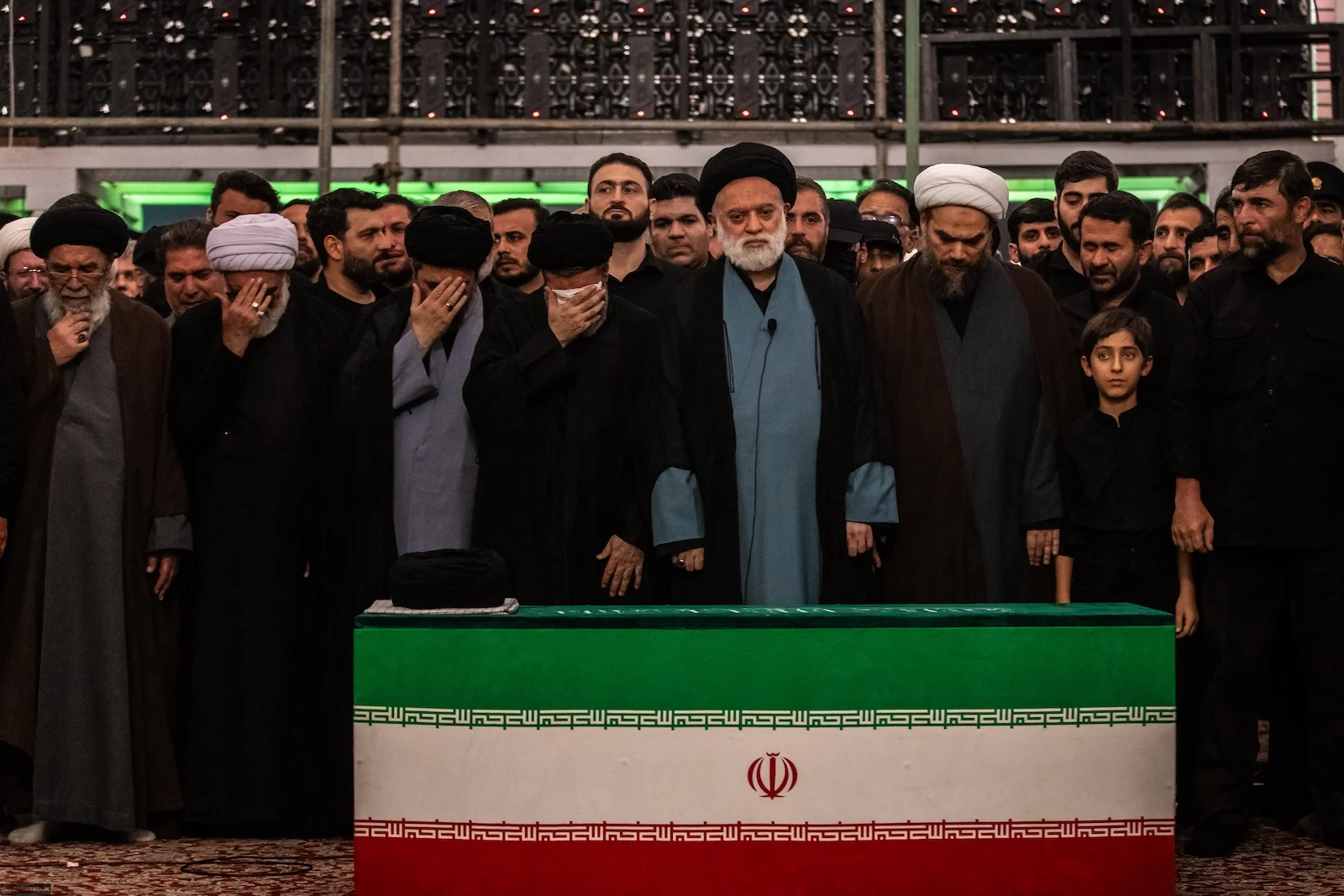

The Slippery Slope of Khamenei’s Killing
Nearly five months after Ayatollah Ali Khamenei was assassinated in U.S.-Israeli strikes, the legal and strategic questions surrounding his death have become more urgent, not less. His successor has pledged revenge, the short-lived U.S.-Iran ceasefire has collapsed, and the two countries are once again exchanging strikes across the region. Few moments in the history of international relations have so starkly blurred the boundary between power and law. The issue is not merely Khamenei, or even the Islamic Republic of Iran. It concerns the future of the international legal order itself.
If the assassination of a state’s highest political authority, carried out without authorization from international institutions or anything resembling due legal process, is accepted as legitimate, what prevents the same logic from being applied tomorrow to another world leader? The presidents of Russia and China, leaders across Africa and Latin America, or even Washington’s own allies could all become subject to a principle whose only meaningful criterion is the will of the stronger power. This is precisely the point at which international law risks descending from a rules-based system into one governed solely by the balance of power.
The United Nations Charter was drafted in the aftermath of the Second World War precisely to prevent the return of such a world. Its underlying philosophy was straightforward: Even the most powerful states were expected to operate within a common legal framework. Yet when the assassination of foreign leaders becomes normalized as an instrument of statecraft, and the international community fails to respond meaningfully, the message sent to the world is unmistakable. Law remains valid only for as long as it does not conflict with the interests of the powerful.
The implications extend well beyond questions of legality. International law performs an essential practical function by reducing uncertainty among states. Even adversaries depend upon certain shared understandings about the limits of acceptable conduct. If those limits become contingent upon military capability rather than universally applicable legal standards, the strategic environment becomes far less predictable. States that conclude existing legal protections are no longer credible may increasingly rely on unilateral deterrence, rather than multilateral institutions, to guarantee their security.
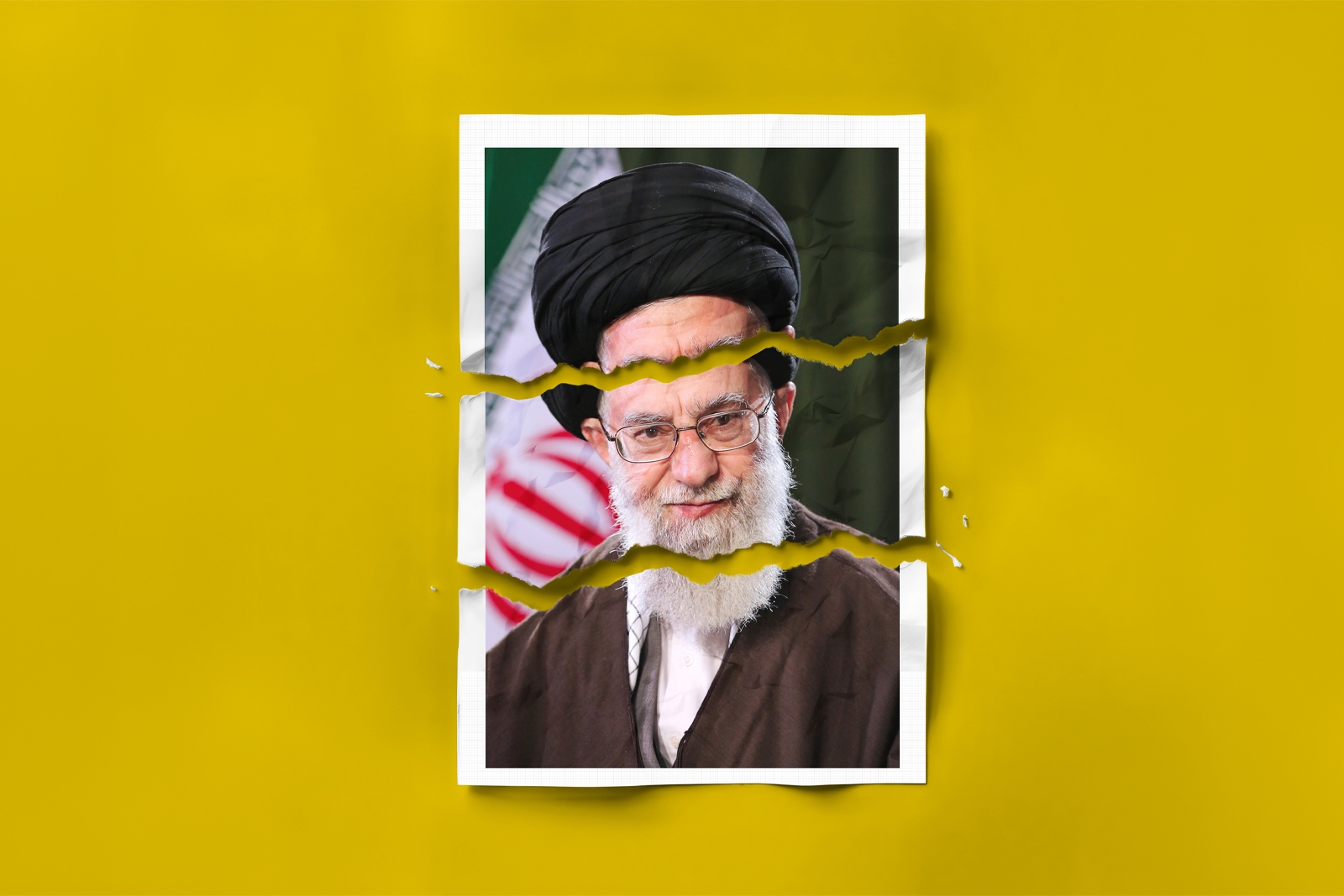
This dynamic carries profound consequences for global stability. Governments that regard themselves as potential targets could reasonably conclude that their political leadership, rather than merely their military assets, has become vulnerable to foreign attack. Such perceptions are likely to strengthen incentives to expand strategic deterrence capabilities, harden command-and-control structures, and reduce reliance on diplomatic assurances. The result would be more than an erosion of legal norms. It would be the emergence of a more dangerous international system characterized by heightened insecurity, accelerating arms competition, and diminishing confidence in mechanisms intended to resolve disputes peacefully.
One may strongly disagree with the policies of the Islamic Republic, just as one may have strongly opposed Khamenei personally. That, however, is a separate question. International law was never designed to protect only those who are popular, admirable, or politically acceptable. Its purpose is precisely to preserve legal principles when they concern individuals who are controversial, hostile, or regarded as enemies. The true value of law is demonstrated when it protects adversaries as well as allies.
The greater danger lies in the gradual normalization of exceptions. Every exception has the potential to become tomorrow’s precedent. Many extraordinary measures adopted during the “Global War on Terror” gradually evolved into ordinary instruments of national security policy. The deliberate assassination of political leaders may likewise become a standard instrument in the foreign-policy toolkit of major powers, employed whenever governments decide that diplomacy is too slow or legal restraint too inconvenient.
Such a development would threaten not only the personal security of national leaders but also the stability of the international system itself. In a world where no head of state or government can feel secure from external targeting, governments will have stronger incentives to accelerate military buildups, reinforce deterrence capabilities, and perhaps even pursue weapons of mass destruction. Mutual suspicion would increasingly displace cooperation, while diplomacy would give way to coercion and the constant threat of retaliation.
The issue, therefore, extends far beyond Iran. The real question is whether the international community still believes in the authority of common legal rules or whether it is gradually accepting that force alone determines legitimacy. If the latter becomes the prevailing principle, the language of international law will lose much of its practical meaning. The world would instead be returning to the pre-1945 logic of international politics, in which power itself constituted the ultimate source of law.
Perhaps most troubling is the relative silence of much of the international community. Such silence is not merely indifference. It risks becoming tacit acceptance of a dangerous new precedent: that a sufficiently powerful military state may unilaterally determine whether the leader of another sovereign country can be eliminated.
There is also a broader institutional concern. International legal norms derive much of their authority not from centralized enforcement but from the expectation that they will be applied consistently across cases. Selective application weakens that expectation. Once major powers appear able to suspend fundamental legal principles whenever strategic necessity is invoked, smaller and middle powers may lose confidence in the neutrality of the international legal order itself. Over time, this erosion of confidence could prove as damaging as any individual violation. International law ultimately depends upon the collective belief that its rules constrain all states, not merely the weak or politically isolated.
History suggests that international orders rarely collapse overnight. They erode gradually through the accumulation of exceptions that eventually become accepted practice. Every precedent that goes unchallenged expands the range of actions considered politically permissible during future crises. The question, then, is not simply whether one particular act can be legally justified, but what kind of international system such justifications create over time. If exceptional measures become routine, the architecture established after 1945 risks being transformed not through formal amendment, but through repeated conduct that steadily redefines the boundaries of lawful state behavior.
Once those boundaries begin to shift, restoring them becomes extraordinarily difficult. States will inevitably cite the conduct of their rivals to excuse their own violations, insisting that standards previously disregarded by powerful countries can no longer be invoked against anyone else. The resulting cycle of accusation and retaliation would not merely expose the hypocrisy of selective enforcement. It would gradually strip international law of its ability to shape state behavior at all.
Should this principle become entrenched, concepts such as the sovereign equality of states, the immunity of senior state officials, the prohibition on the use of force, and the rules-based international order would increasingly resemble historical aspirations rather than operative legal norms. The world would not simply be witnessing another geopolitical crisis. It would be entering a new era in which the rule of law gives way to the law of force, power replaces justice as the organizing principle of international relations, and international law confronts perhaps its most profound crisis of legitimacy since its modern foundation.