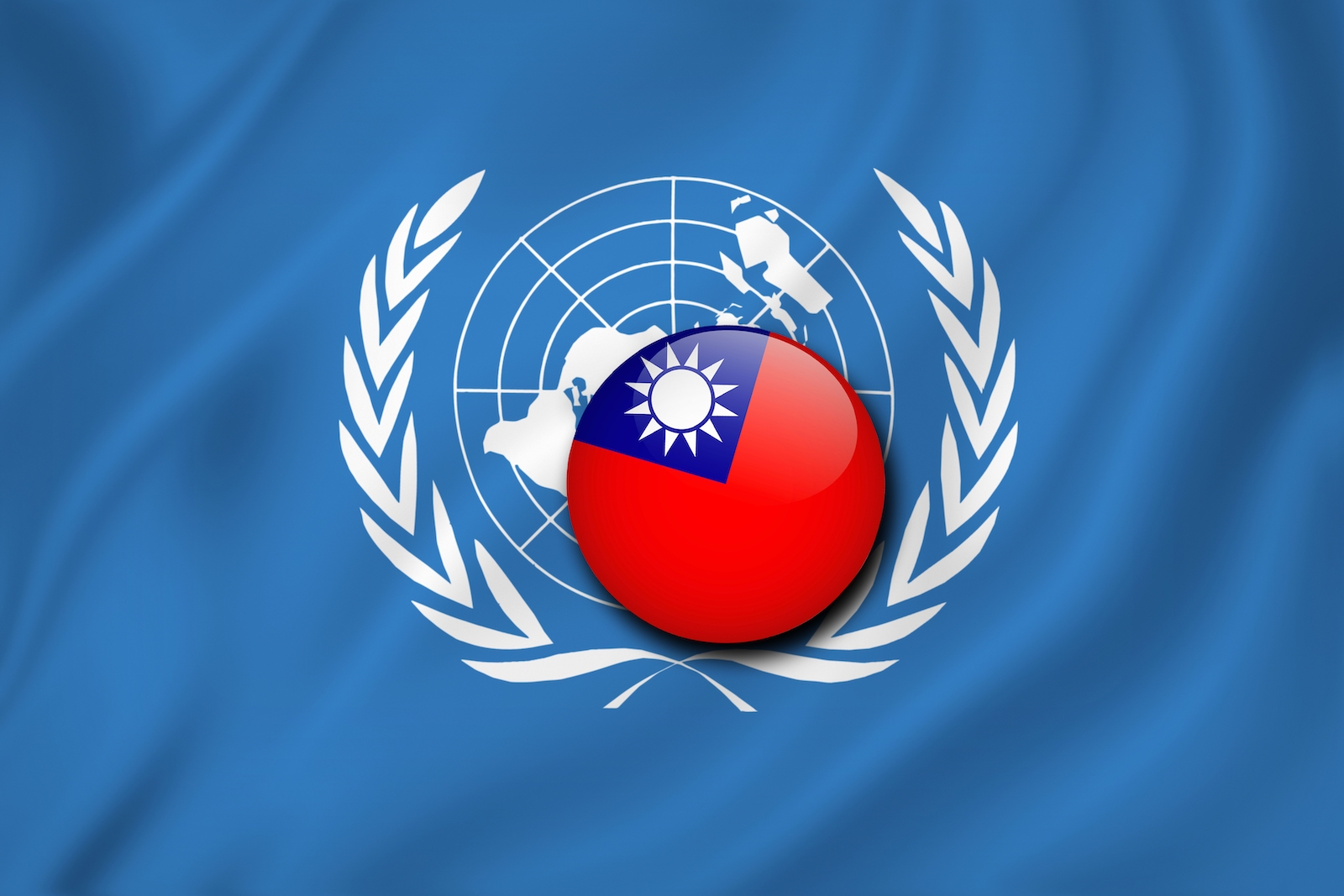

The UN Diminishes Itself by Excluding Taiwan
The rules-based international order is under growing strain. Authoritarian states are testing its safeguards and attempting to bend international rules to their own interests. Even the most fundamental principles enshrined in the United Nations Charter—the peaceful settlement of disputes and the prohibition against the threat or use of force—are now openly challenged and flagrantly flouted.
The international community has reached a critical juncture. It can act collectively to uphold justice, defend the rule of law, and preserve international peace and security. Or it can watch the global order steadily erode, taking freedom, self-determination, and democracy with it.
Few places present that choice more starkly than the first island chain of the Indo-Pacific. Regional security faces mounting pressure from China, which continues to employ gray-zone tactics—including military intimidation, cyber intrusions, disinformation, and economic coercion—to alter established rules and norms without triggering an outright conflict.
On the front line of the defense of freedom and democracy, Taiwan remains committed to preserving the status quo. But peace and stability in the region are not merely Taiwanese concerns. They are shared interests of the international community, with consequences that reach far beyond the Taiwan Strait.
The strait is one of the world’s busiest shipping lanes and a vital artery for global supply chains. Its importance to international security and prosperity is reflected in statements from the G7 and in summit and ministerial declarations issued by Japan, the U.S., the United Kingdom, Australia, New Zealand, and other countries. Together, these statements form a growing international consensus: Peace and stability across the Taiwan Strait are indispensable to the wider world.
The integrity of the rules-based order is also being undermined by China’s deliberate misrepresentation of UN General Assembly Resolution 2758. Adopted in 1971, the resolution addressed the question of China’s representation at the UN. Its text does not mention Taiwan, determine Taiwan’s political status, or preclude Taiwan’s participation in the UN system. Yet Beijing has sought to conflate Resolution 2758 with its so-called “one China principle,” using that interpretation to block Taiwan from the UN and other international organizations. Left unchallenged, this distortion risks establishing a dangerous precedent and could be invoked to justify future military action across the Taiwan Strait.
Despite its exclusion from the UN, Taiwan remains determined to serve as a force for good. Its strengths in advanced manufacturing, disaster preparedness, public health, and democratic governance could make significant contributions to the international community. Exclusion does not merely deprive Taiwan of a voice; it also deprives the world of Taiwan’s expertise.
Taiwan has pursued an integrated, value-added foreign policy centered on strengthening democratic alliances, promoting collective security, and building economic resilience. Working with like-minded partners, it supports democracy, human rights, and freedom around the world. As a leader in semiconductors, artificial intelligence, and other advanced technologies, Taiwan is also committed to creating supply chains that are secure, resilient, and less dependent on authoritarian regimes.
Through its Diplomatic Allies Prosperity Project, Taiwan promotes shared prosperity with its partners. It contributes expertise and resources to technology-driven initiatives designed to address development challenges and strengthen local capacity. Examples include work on an integrated healthcare information system in Paraguay, construction of a strategic oil reserve facility in Eswatini, and cooperation with Palau National Hospital on smart healthcare. These projects have improved data management and institutional efficiency, strengthened energy security, supported industrial growth, and advanced sustainable development.
Khalilur Rahman, president-elect of the 81st session of the UN General Assembly, has made restoring trust and managing institutional transformation the central themes of his presidency. Taiwan shares those objectives and stands ready to help realize them. But trust cannot be restored through selective inclusion, and institutional transformation cannot be credible when a constructive and reliable partner remains shut out.
Restoring confidence in the United Nations must begin with fair and principled treatment of every member of the international community. It requires a renewed commitment to inclusion, to leaving no one behind, to resolving disputes peacefully, and to rejecting both the threat and the use of force. These principles form the foundation of the rules-based international order. They must be applied consistently, not selectively.
The free world needs Taiwan, and a stronger, more credible United Nations needs Taiwan’s meaningful participation. Working with Taiwan would strengthen collective security, reinforce economic and technological resilience, and improve the world’s capacity to withstand authoritarian pressure. Giving Taiwan a meaningful role in the UN system is not a favor to Taiwan. It is a necessary step toward building an international order that is more inclusive, more secure, and more faithful to the principles the United Nations was created to defend.