Twenty-Five Years After 9/11, the Cost of Forgetting
I met Ed Mills on the first day of Army jump school in 2005. Like me, Ed was a college graduate. He joined the Army as a way to jumpstart his career in law enforcement. Ed was from New Castle, Pennsylvania—about two hours from my hometown of Cleveland. With dark hair and piercing eyes, he was proud of the fact that Christina Aguilera once picked him out of a crowd at a Pittsburgh nightclub for a dance. He had a quick wit and a taste for adventure, yet remained grounded and respectful. Ed Mills was the kind of American who seemed cut from the mold of Captain America—or at least how I imagine Brad Pitt might be. We became instant friends.
After completing Airborne School, Ed and I were assigned to different Pathfinder units within the 101st Airborne Division. The Pathfinders were something like the SWAT team of the infantry. Ed and I couldn’t have been more different. Where he was a self-assured natural leader, I was quicker with Star Wars references than a rifle. I was also afraid of heights—not exactly the ideal quality for a paratrooper. We both served in Iraq during the 2005–2006 deployment. Afterward, I left active duty to pursue other goals. Ed remained a Pathfinder. More than anything, he wanted to serve his country with honor.
In 2011, Ed was preparing for his third deployment, this time to Afghanistan. Like many military friends, we kept postponing plans to get together.
“We should definitely get together when I get back,” he told me before he left.
Those were the last words we ever exchanged.
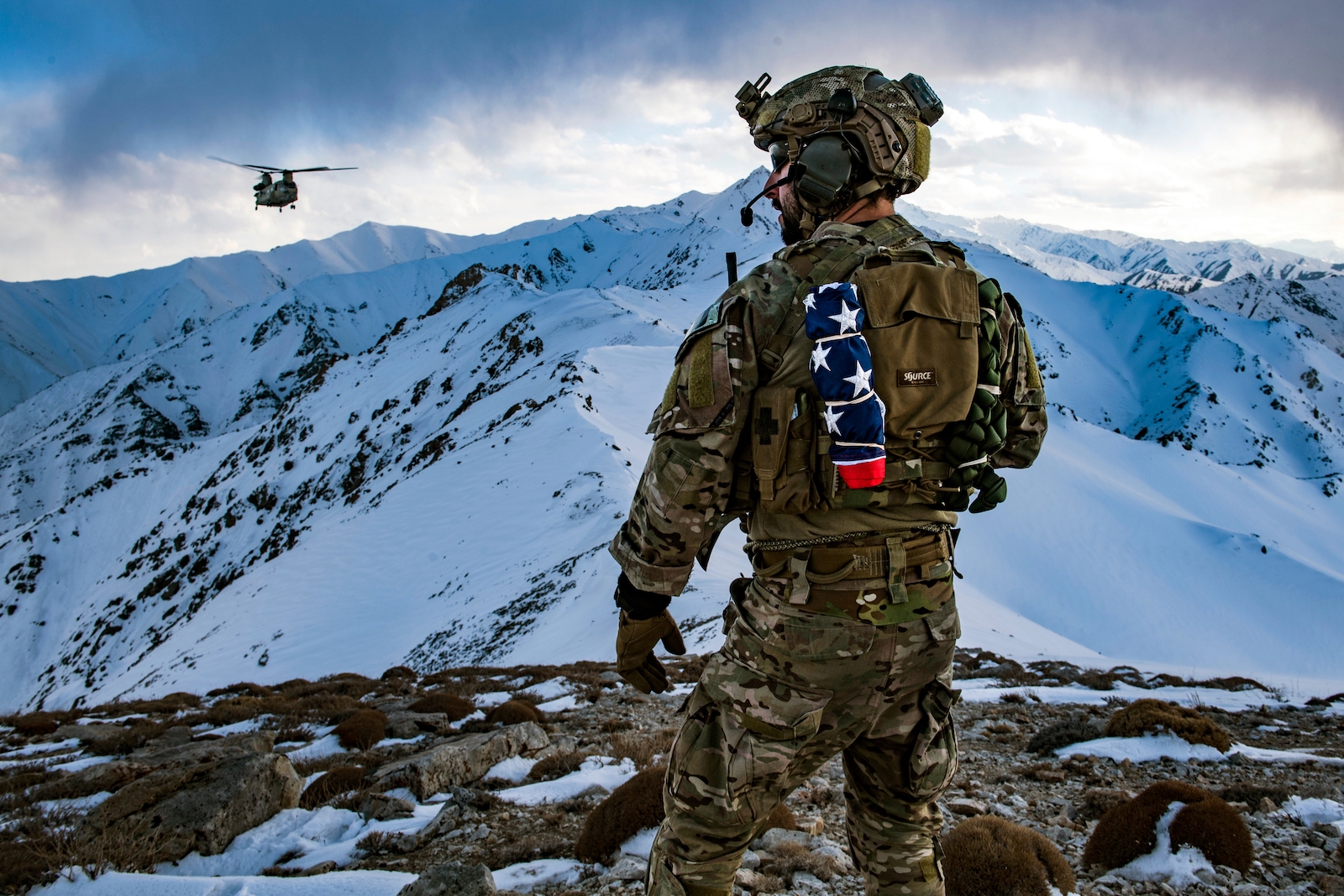
On May 26, 2011, Ed and five other Pathfinders were killed in a sophisticated ambush in a remote Afghan valley. At the time, the attack was tied for the fourth-deadliest day of the war for U.S. forces. In December 2013, the Army announced it would remove the jump-status designation from the Pathfinder companies that Ed and I had joined, citing budget constraints. By 2016, both companies had been deactivated.
It has been nearly twenty-five years since the September 11 attacks. Beyond the thousands of people directly affected that day, the course of countless other lives was altered in its aftermath. I had planned to become a media law attorney. After 9/11, I found myself on a path toward becoming a war crimes prosecutor. Ed wanted to be a police officer. Instead, he became a soldier.
U.S. leaders should refocus the country’s national security priorities to help ensure another catastrophic terrorist attack never happens again. In the years after 9/11, the FBI Inspector General, the 9/11 Commission, and others produced recommendations designed to prevent another major intelligence failure. Those recommendations included sustained funding for counterterrorism efforts, retaining and training intelligence analysts and translators, and improving coordination between operational and analytical units. As the threat evolved—from Osama bin Laden’s core al-Qaeda network to the rise of the Islamic State—many of those recommendations were put into practice.
But over time, complacency began to set in.
The first signs appeared during the Obama administration, when funding reductions were proposed for certain Department of Homeland Security programs central to counterterrorism efforts. During the first Trump and Biden administrations, shifting priorities accelerated that trend. Task forces focused on complex national security threats were reduced or eliminated. The country’s attention moved elsewhere. COVID-19. The events of January 6, 2021. In the absence of another major terrorist attack, counterterrorism steadily faded from the forefront of the national conversation.
By 2025, the second Trump administration had made immigration its overriding priority. The president is, of course, entitled to set his agenda. But inexperienced or overly ambitious officials implementing that agenda also contributed to dismantling many of the post-9/11 safeguards designed to prevent another catastrophic attack. Experienced FBI analysts departed the bureau in large numbers. Agents found themselves balancing immigration enforcement with national security responsibilities. Senior Justice Department officials specializing in national security were removed or forced out.
“You have to have good, experienced, trained people doing this work on a daily basis,” one national security prosecutor recently told The New York Times. “If you don’t, because you demand they do immigration shifts, there is real danger to national security and public safety.”
The U.S. National Counterterrorism Center (NCTC) currently lists 48 international terrorist groups. The list includes familiar names such as al-Qaeda and ISIS. The threat posed by Iranian-backed proxies also cannot be dismissed as tensions with Iran continue to unfold. Yet perhaps the greatest long-term concern lies elsewhere.
Africa is increasingly emerging as the world’s primary breeding ground for Islamist extremism. In 2025, General Michael Langley, then head of U.S. Africa Command, warned that “the Sahel region in Africa is now the epicenter of terrorism on the globe.” Even the conservative Project 2025 warned that Africa-based terrorist groups, if allowed to consolidate their operations, could eventually turn their attention toward plotting attacks against the United States.
One group in particular deserves close attention. Jama’at Nasr al-Islam wal-Muslimin (JNIM), an al-Qaeda affiliate, has steadily expanded across Mali, Burkina Faso, Niger, Benin, and Togo. The organization has gained valuable combat experience fighting Russian mercenaries while consolidating territory at an alarming pace. Twenty-five years ago, al-Qaeda benefited from ungoverned space in which to plan and prepare the September 11 attacks. If JNIM continues to strengthen its foothold, it could eventually enjoy similar freedom to organize attacks beyond the region.
The authors of the 9/11 Commission Report appeared to anticipate this very danger. In 2004, they warned that the greatest threat was not simply terrorism itself, but the complacency that would inevitably follow the passage of time.
“Because al-Qaeda represents an ideology—not a finite group of people—we should not expect the danger to recede for years to come,” they wrote. “No matter whom we kill or capture— including Osama bin Laden— there will still be those who plot against us. Bin Laden has inspired affiliates and imitators. The societies they prey on are vulnerable; the terrorist ideology is potent; and the means for inflicting harm are readily available. We cannot let our guard down.”
Those words remain remarkably relevant a quarter century later.
The United States has avoided another attack on the scale of September 11 not because terrorism disappeared, but because intelligence professionals, analysts, investigators, prosecutors, diplomats, and service members spent decades building institutions designed to prevent one. Those institutions require sustained investment and experienced personnel. Once neglected, they cannot simply be rebuilt overnight.
That is why U.S. leaders, regardless of political party, should recommit themselves to the lessons learned after 9/11. National security rarely commands sustained public attention in the absence of catastrophe, but that is precisely when vigilance matters most.
I often think back to my last conversation with Ed Mills.
“We should definitely get together when I get back.”
He never had that chance.
Neither did thousands of other Americans whose lives were forever altered by the attacks of September 11 and the wars that followed. Some lost loved ones. Others set aside careers and ambitions to answer the country’s call. Ed hoped to become a police officer. Instead, history made him a soldier.
As the twenty-fifth anniversary of 9/11 approaches, the greatest tribute we can pay to those who died that day—and to those like Ed who gave their lives in its aftermath—is not simply to remember their sacrifice. It is to ensure that the hard-earned lessons of the past quarter century are not forgotten through complacency.