Ukraine’s War Crimes Courts Face a Grim Arithmetic Problem
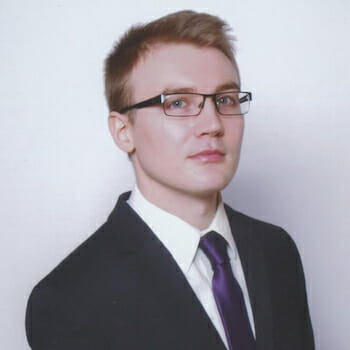
Anna Rassamakhina, a Ukrainian lawyer and international humanitarian law specialist, leads the War and Justice Department at the Media Initiative for Human Rights. Her work sits at the uneasy intersection of law and war: monitoring trials, tracking prosecutorial decisions, and documenting how Ukraine attempts to impose legal order amid ongoing conflict. A graduate of Yaroslav Mudryi National Law University, she has been engaged in human rights work since 2014, including with the Ukrainian Helsinki Human Rights Union.
In this conversation, Rassamakhina offers a clear-eyed assessment of Ukraine’s war-crimes justice system—one that continues to function under fire yet remains overwhelmed by scale. With more than 203,000 registered war crimes but only a fraction reaching court, she outlines the structural bottlenecks, the limits of in absentia prosecutions, and the underused legal frameworks for crimes against humanity. She also examines the asymmetry between Ukrainian and Russian judicial practices, the risks of exposing victims through fragmented public data, and the deeper challenge of translating mass atrocity into coherent legal accountability.
Scott Douglas Jacobsen: At a systems level, how does MIHR monitor Ukraine’s judicial process on war crimes, and what makes that monitoring rigorous and reliable?
Anna Rassamakhina: So, the methods of monitoring. First, we conduct systematic monitoring of court proceedings on war crimes and crimes against national security. We attend hearings; we have been doing this since 2018, for eight years. We visit about 10 to 12 trials a week. So, it is systematic work.
After that, we analyze the results of these trials. We analyze them across many indicators, and we can systematize the findings. Second, we have a unique database of notices of suspicion in war-crimes cases published by the Office of the Prosecutor General. I mean the notices published in in absentia cases, where a suspect has been identified, and the notice must be made public.
So, the Office of the Prosecutor General has to publish them, and we monitor them as well. Then we study these notices, and we systematize and analyze them. Also, there is one more element. It is not exactly monitoring, but MIHR has a very large database of testimonies from victims of war crimes, and that is also a source of information for monitoring. So, it is a complex program.
Jacobsen: Where is Ukraine’s judicial system proving resilient under wartime pressure—and where are its limitations most apparent?
Rassamakhina: A positive and very strong feature is that these trials continue while the war is still ongoing. The first war-crimes trials began in 2022, and they continue. Their number increases each year, although they are still very few. The fact that investigators and courts can do this work during an ongoing war is a strong feature.
At the same time, we have to mention the scale. As of February 2026, Ukraine had registered 203,126 war crimes committed during Russia’s aggression. At the same time, MIHR analyzed 1,000 published notices of suspicion in war-crimes cases, and only 709 of those cases had reached court.
Overall, only 187 people had received in absentia convictions for war crimes out of more than 200,000 registered episodes. So you understand what these numbers mean. Although investigators and courts are working hard and using major resources, the result is still a very small share of cases ending in verdicts.
If a person reads these verdicts, that person may think some Russian soldiers simply committed isolated acts of killing, rape, looting, or arbitrary detention as individual offenders. However, that does not reflect the broader reality. These crimes are part of the Russian Federation’s state policy.
This aspect, that the crimes are systematic, is often not fully reflected in the judgments we have now. Moreover, we can assume it will be reflected automatically going forward.
Jacobsen: With such a vast backlog, what practical steps could meaningfully accelerate investigations and prosecutions?
Rassamakhina: Additional methods of investigation and improved identification of suspects could help, as could ensuring the accountability of commanders. This is a very important point that needs to be addressed in investigative work.
Unfortunately, we do not yet see the responsibility of commanders systematically applied. In my opinion, many of the crimes committed against civilians in Ukraine qualify as crimes against humanity in their legal nature. They are not only war crimes; they involve systematic perpetration.
However, the Criminal Code of Ukraine’s provision on crimes against humanity is not being actively used. At present, six criminal cases have been registered for crimes against humanity, but no individual has been identified as a suspect, and none have reached court.
Jacobsen: How should we understand the obligations of a national judicial system during wartime, particularly regarding fair trial standards and due process?
Rassamakhina: You mean standards of a fair trial, yes?
Jacobsen: To what extent do Ukraine and Russia meet—or fail to meet—those standards in practice?
Rassamakhina: I can speak with confidence about the Ukrainian system. In general, these standards are upheld. There are some local problems. For example, one issue is the passive role of defence lawyers in trials.
By this, I mean that defence counsel representing Russian military personnel are often passive. They rarely take an active position and tend to agree with both the prosecution and the judge. The reasons are understandable: it can be dangerous and unsafe for defenders to act more actively in these cases.
However, evidence is still examined, and the role of defence counsel is formally maintained. These trials are always conducted with legal representation.
Overall, the same applies to the other standards: they are generally respected. We have not identified systematic violations of fair trial standards. This is also influenced by the relatively small number of such trials.
International organizations also monitor these proceedings, and Ukraine has a strong interest in ensuring that these standards are not violated.
That is the situation in Ukraine.
Regarding Russia, the situation is very different. This is not about personal attitude but about observable practice. Trials against Ukrainian prisoners of war and civilians in Russia are conducted on a mass scale—likely in the thousands. These cases are usually framed as terrorism charges.
In these proceedings, fair trial standards are routinely violated. This reflects broader characteristics of the Russian judicial system. It is not limited to Ukrainian defendants; similar violations occur in cases involving Russian citizens as well.
For example, families of prisoners of war and detained civilians often are not informed about the trials. These individuals are held incommunicado, meaning they cannot communicate with the outside world.
I would also add that there are significantly more sentences issued against Ukrainians in Russia than there are sentences against Russian military personnel in Ukraine. Trials in Russia are conducted quickly and at low cost, making it easy to produce large numbers of convictions.
In contrast, in Ukraine, where fair-trial standards are observed, the number of sentences remains low. This creates a situation that appears disproportionate when compared to the scale of crimes committed in Ukraine.
Jacobsen: Could automation or AI meaningfully ease the administrative burden of these cases, or are the constraints fundamentally human and procedural?
Rassamakhina: You mean how to speed up these processes in Ukraine? Unfortunately, I do not see effective ways to do this. Criminal procedure is complex, and trials against Russian military personnel are especially complicated, with a large volume of evidence.
Most of these cases are conducted in absentia, so the accused is not physically present in court. This also adds complexity. It is normal for such trials to last for years. There is no realistic way to reduce them to 6 months or even less than a year. That is simply the nature of criminal proceedings—they take a long time.
Jacobsen: How has the full-scale invasion reshaped the competence and capacity of Ukraine’s legal institutions compared to the post-2014 period?
Rassamakhina: Yes, we can speak about significant changes. For example, judges and investigators have had to learn international humanitarian law. They have not fully mastered it, but this process began in 2022 and continues today.
Investigators, prosecutors, judges, and defence lawyers have become more professional in applying the Geneva Conventions, the Rome Statute, and broader principles of international humanitarian law. These legal frameworks are now being used in trials and reflected in court decisions.
Some applications are not yet of high quality, but in general, these legal norms are now present in proceedings. Before the full-scale invasion, most judges were not familiar with these frameworks. Instead, they relied on other provisions of the Ukrainian Criminal Code, such as terrorism-related charges.
Jacobsen: There’s a growing tension between transparency and protection. How should institutions balance public access to information with the need to safeguard victims?
Rassamakhina: You mean the publication of information about these trials, yes?
Jacobsen: More broadly, what ethical standards should guide the publication of sensitive details in war-crimes reporting, especially in cases involving sexual violence or children?
Rassamakhina: You mean the publication of details of crimes, including sexual crimes. Yes, I understand you. It is a problem.
About a month ago, we at MIHR published research on this issue. We studied how this type of information becomes public.
From my experience, when I compiled a database of notices of suspicion, I was able to identify the names and other personal information of victims of sexual violence. This is because different state registers in Ukraine publish pieces of information. Each register, on its own, does not violate legislation.
However, when these registers are analyzed together, it becomes possible to identify victims’ names, details of crimes, and other sensitive information.
There is no unified state policy addressing this issue. Each state institution—the Office of the Prosecutor General, the courts, and others—applies its own rules and instructions. No one is overseeing the system as a whole to assess how easily this information can be reconstructed.
It does not require special access to identify this information; it can be done using publicly available data.
If we look at notices of suspicion published on the Office of the Prosecutor General’s website, names and personal data are usually redacted. However, the details of crimes—often extremely disturbing details of sexual violence or crimes against children—are not hidden.
By simply opening these documents, one can encounter very graphic and distressing information. You understand what I mean. This is the problem.
Jacobsen: Thank you very much. Have a lovely day.
Rassamakhina: Have a good day. Goodbye.