Vrinda Grover on Holding Russia Accountable for Crimes in Ukraine
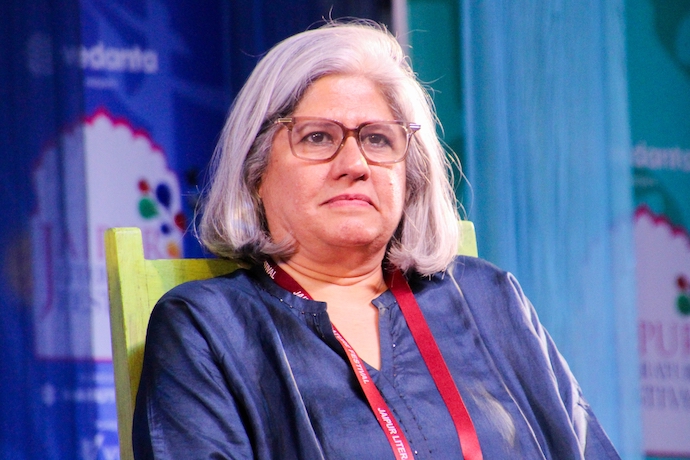
Vrinda Grover is an Indian human rights lawyer practicing before the Supreme Court of India and, since June 2023, a member of the UN Independent International Commission of Inquiry on Ukraine. She previously served as Chair of the Board of the International Service for Human Rights, a position she will hold through 2025. Her litigation and advocacy center on accountability for human rights violations, including extrajudicial executions, torture, and sexual violence. Grover earned her LL.M. from New York University School of Law and was named to Time magazine’s 2013 list of 100 most influential people in the world. She has advised UN mechanisms and civil society coalitions in India and abroad on advancing victim-centered justice.
In this interview, Grover discusses evidence linking Russia’s coordinated short-range drone attacks in southern Ukraine to crimes against humanity. Investigations indicate the deliberate targeting of civilians, homes, and first responders along a 300-kilometer stretch of the Dnipro River’s right bank, generating widespread fear and forced displacement. Grover outlines documented war crimes in Zaporizhzhia Oblast, including deportations and transfers, and details the Commission’s rigorous evidentiary standards, limited UN resources, and collaboration with Ukrainian and international courts. She emphasizes the pursuit of victim-centered justice and the ongoing investigation into systematic violations committed by Russian forces.
Scott Douglas Jacobsen: Southern Ukraine has seen a coordinated campaign of short-range drone strikes, described by investigators as crimes against humanity—acts such as forcible transfer and murder. What patterns point to an organized state policy rather than isolated incidents?
Vrinda Grover: We have been investigating short-range drone attacks on civilian populations for some time. The Commission’s investigations have now found that along almost 300 kilometres of the right bank of the Dnipro River, covering the Oblasts of Kherson, Mykolaiv, and Dnipropetrovsk, short-range drones are being used to target civilians and civilian objects, as well as protected categories such as first responders, ambulances, and fire brigades. Our investigations establish that these short-range drones are operated by military units of the Russian Armed Forces from the left bank of the Dnipro River.
The very nature of these short-range drones allows the operators and military units to see, via live camera feeds, that the drones are targeting civilians, including residential areas and civilian objects such as hospitals, markets, and civilian energy infrastructure. This demonstrates an intentional element in their attacks.
The sequenced nature of the attacks also reveals deliberate intent. For instance, a drone may first target a particular house: the first explosive makes an opening in the roof, and the second explosive is dropped immediately afterward, detonating inside the house and setting it on fire. The deliberate nature of these drone attacks on civilian objects is evident from such patterns. Moreover, when first responders attempt to intervene, to protect or save someone in distress or in need of urgent assistance, vehicles such as fire brigades and ambulances, which are clearly and visibly marked and protected under international law, are also targeted to prevent them from providing aid.
This modus operandi shows a clear, coordinated effort to target the civilian population. It demonstrates a coordinated state policy. We have verified this through documents and statements collected from victims, as well as publicly available videos posted on Telegram channels, all of which point to coordinated actions by the Russian Federation and its authorities. Therefore, we conclude that this constitutes a crime against humanity of murder and forcible transfer, targeting civilians and civilian objects.
These attacks have spread terror among civilian populations living in the affected areas. They have made life unbearable, leaving people with no choice but to flee. Thousands have been forced to abandon their homes, amounting to a crime against humanity involving the forcible transfer of civilian populations.
Jacobsen: Your findings show that thousands of Ukrainian civilians were forcibly transferred or deported, with Zaporizhzhia Oblast especially hard hit. What evidence distinguishes these acts from incidental wartime displacement, marking them instead as war crimes or crimes against humanity?
Grover: At present, we have concluded a war crime. The Zaporizhzhia Oblast, which is now under the temporary occupation and control of the Russian Federation, has been a focal point of such forced transfers. We have been documenting this pattern of forced transfer since the beginning, as the Russian Federation has temporarily occupied various parts of Ukrainian territory. Earlier, in 2022 and 2023, we found evidence of the forced transfer of Ukrainian civilians to territory controlled by the Ukrainian government.
Now, from the Zaporizhzhia Oblast, we are finding that civilians are being deported from a checkpoint, where they are directed to cross over into Georgia. In this process, we find various entities of the Russian Federation coordinate their actions. Persons, particularly those believed to have shown or expressed allegiance to the Ukrainian government, are detained or arrested, and some are subjected to torture. Often, at very short notice, they are then transported in convoys to the checkpoint from which they are directed to cross into Georgia.
During the house searches that precede these arrests and detentions, their documents are frequently confiscated. Some individuals are given new documents, while others are left without any. They are forced to leave behind their families, their homes, their work. We have concluded that this constitutes a war crime.
Jacobsen: Legal classification matters. Some acts constitute crimes against humanity, others war crimes. What realistic pathways exist for accountability—through national courts or international mechanisms?
Grover: As far as legal classification is concerned, the Commission makes a legal determination based on its own investigations. The cases that we present, the conclusions that we make, and the findings that we present are based on independently gathered and corroborated evidence obtained through multiple sources.
It is only when the Commission finds evidence of a modus operandi —a concerted, coordinated set of actions by authorities of the Russian Federation, whether by the armed forces or other state entities —directed against a civilian population, and showing a pattern of widespread and systematic violations that indicate a coordinated state policy.
It is then that we make a legal determination of crimes against humanity. In some instances, under our 2022 mandate, our initial findings may indicate a war crime. However, as we continue investigating, the pattern of coordinated actions pursuant to a state policy emerges, and the Commission then concludes that crimes against humanity have occurred. In our previous reports, we have concluded the crimes against humanity of torture, enforced disappearances by Russian authorities, and in our latest October report, for the murder of civilians by short-range drone attacks, as well as the forcible transfer of population through spreading terror by drone attacks, along the right bank of the Dnipro river by Russian armed forces.
In terms of accountability mechanisms, in Ukraine, under the Office of the Prosecutor General, a very large number of crimes are being investigated and prosecuted. Trials are ongoing. Additionally, there is the International Criminal Court.
The Commission’s evidence and findings are made available, with the consent of victims, following a victim-centred approach throughout our investigations and documentation processes. Our findings, investigations, and evidence are provided both to domestic authorities and to international judicial forums, and both are in communication with the Commission.
Jacobsen: For clarification—some international media reports on war crimes are accurate, others less so. Which publicly stated or implied claims has the Commission reviewed but found insufficient evidence to establish as part of a consistent pattern qualifying as a war crime?
Grover: The Commission relies exclusively on its own investigations. There are other bodies conducting investigations and documentation. There is, of course, a lot reported in the media about this ongoing armed conflict. However, we report only on matters that we have independently investigated and corroborated, including through witness testimonies.
There are challenges. The Commission, being independent and objective, examines violations by both parties. We have sent over 30 formal communications to the Russian Federation since the start of our mandate. However, regrettably, the Russian Federation has not responded to any communication.
For instance, allegations have also been made by the Russian Federation, including claims regarding drone attacks, which we have attempted to investigate. However, we are unable to conclude our investigations due to a lack of access to the territories and documents, concerns about the safety of witnesses, and the absence of a response from the Russian authorities. Without access, we are unable to make findings or draw conclusions regarding such allegations.
If something appears in the media that we are already investigating, we take that into account, but our capacity is limited. We are a small Commission in terms of resources and staff. As you may know, there is a severe liquidity crisis at the United Nations. Due to budget constraints, the Commission’s staff and investigative capacity have been significantly reduced. For example, we, the three Commissioners, are now visiting Kyiv after a year because of a lack of resources. Our investigators, of course, regularly visit Ukraine to conduct on-site investigations.
Therefore, we cannot investigate all the violations. We investigate thoroughly and rigorously, in accordance with the evidentiary standards of scrutiny we maintain. We do pursue every allegation made in the public domain. We follow specific patterns of violations, as documented in our previous reports, that include torture and enforced disappearances. We have documented conflict-related sexual violence, sexual and gender-based violence, against both men and women in detention. We have concluded that it is a war crime against male detainees and prisoners of war held in detention. So, we have been investigating a range of human rights, international humanitarian, and international crimes. The Commission’s investigations also identify certain entities and authorities that have committed these violations. It is an ongoing process.
Jacobsen: Despite the liquidity crisis and limited staffing under your mandate, and drawing on recent missions and field interviews, what emerging priorities are shaping the next report—regional or oblast focus areas, specific victim groups, or evolving weaponry trends?
Grover: I will refrain from enumerating the Commission’s future priorities, as that is presently an internal discussion. So, you will excuse me for not elaborating on that at present.
However, I can say this: during the present visit of the Commissioners to Ukraine in November 2025, we met with victims, listened to their concerns, and heard firsthand the challenges they continue to face. We also interacted with NGOs working across a range of issues.
During this visit, we also met with Ukrainian authorities, including the Ministry of Foreign Affairs, the Ombudsman, and the Office of the Prosecutor General. In addition, we met with members of the Diplomatic Corps in Kyiv.
We have thus engaged with a broad cross-section of individuals and institutions to understand their concerns and identify the issues. As I mentioned, our investigators conduct both remote and field investigations. That work will continue as we prepare our next report, scheduled for March at the conclusion of the current mandate.
Jacobsen: Thank you for your time. I appreciate it.