What Nigeria Wants from London Now
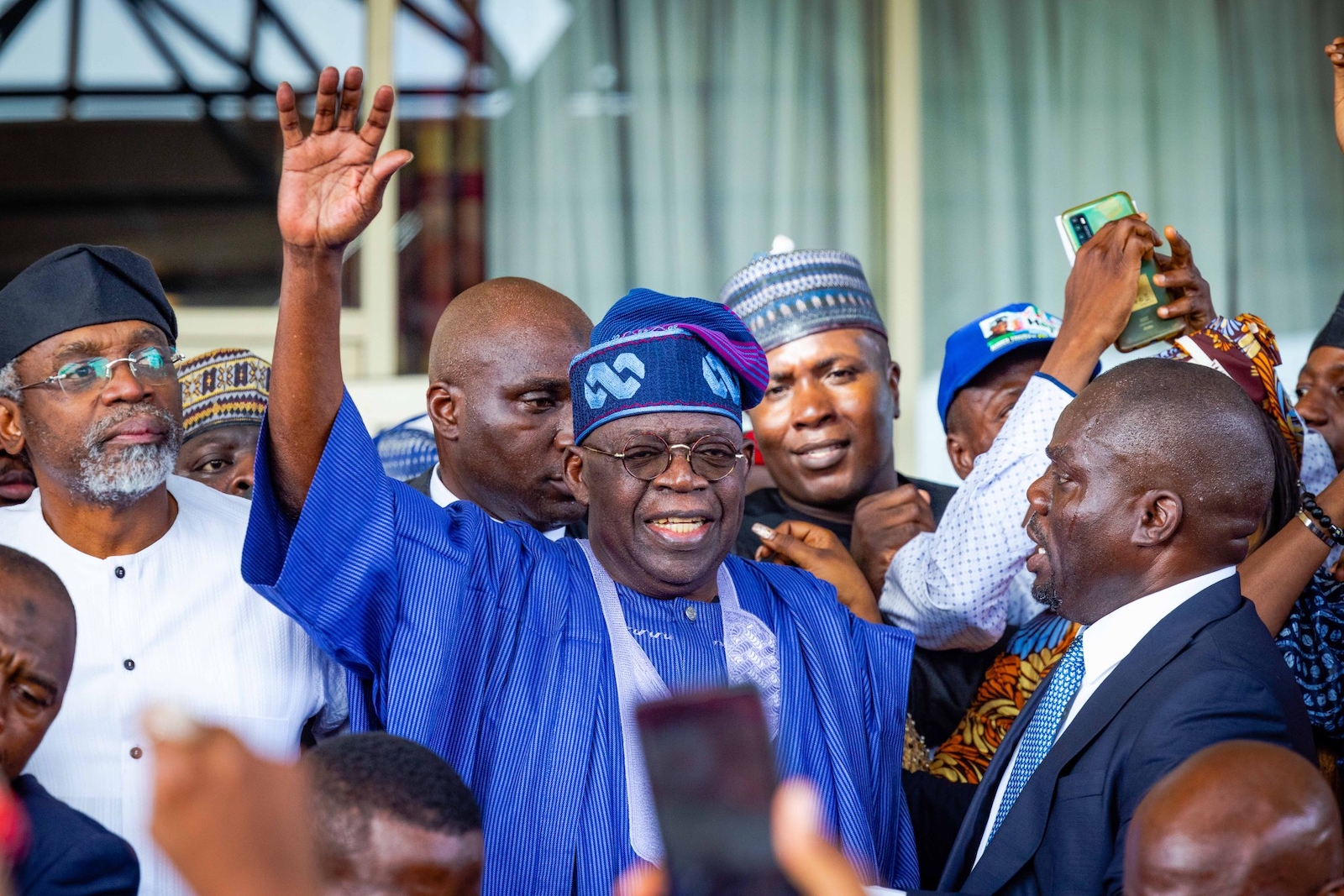
Early this week, President Bola Ahmed Tinubu travels to the United Kingdom for what may prove to be one of the most consequential diplomatic engagements of his presidency. It will mark the first time in nearly four decades that a Nigerian leader undertakes a state visit to Britain—an absence that, in itself, underscores the significance of the moment. Few visits by African leaders in recent memory have carried such a blend of symbolism and strategic weight.
History offers a useful parallel. In November 1977, Egyptian President Anwar Sadat traveled to Jerusalem, becoming the first Arab leader to set foot in Israel since the biblical Exodus. It was a gesture that transcended diplomacy. Sadat’s visit signaled a reordering of assumptions—a willingness to rethink entrenched relationships shaped by conflict, suspicion, and inherited narratives.
Tinubu’s journey to London lacks that dramatic rupture, but its implications may prove just as meaningful in quieter ways. Nigeria and the United Kingdom are not estranged powers. They are bound by language, legal systems, and an unusually dense web of institutional and human ties. Yet it is precisely this familiarity that risks obscuring the need for renewal. The importance of this visit lies not in nostalgia, but in recalibration.
The agenda reflects that shift. Investment, financial cooperation, technology partnerships, security coordination, education linkages, and diaspora engagement dominate the formal program. Beneath these categories lies a broader message: both countries are repositioning a long-standing relationship for a markedly different global landscape.
Few Africa–Europe partnerships possess the institutional depth of Nigeria–UK relations. From colonial administration through independence in 1960 and into six decades of postcolonial diplomacy, the two countries have remained interconnected across governance, finance, education, and security. These ties are not merely historical artifacts; they continue to shape present realities.
The human dimension alone is striking. More than 300,000 Nigerians reside in the United Kingdom, forming one of the largest African diaspora communities in Europe. Nigerian students are also among the most prominent foreign cohorts in British universities, reinforcing a steady exchange of ideas, skills, and influence.
Economically, the relationship is substantial, though underrealized. Bilateral trade in goods and services reached approximately £8 billion in the four quarters ending mid-2025. UK exports to Nigeria stood at £5.6 billion, while imports from Nigeria totaled £2.3 billion. Nigerian exports remain heavily concentrated in oil and gas, while British exports span industrial machinery, refined petroleum products, pharmaceuticals, consumer goods, and financial services.
Yet these figures tell only part of the story. Financial ties extend well beyond trade flows. Nigeria remains one of the world’s largest recipients of diaspora remittances, with inflows reaching roughly $21 billion in 2024. A significant portion originates from Nigerians in the United Kingdom, making the diaspora corridor one of the most consequential economic bridges between the two countries.
British investment, meanwhile, has long played a role in Nigeria’s economy, though at levels that fall short of potential. The stock of UK foreign direct investment stood at approximately £385 million in 2023—an indicator not of insignificance, but of unrealized scale. A central aim of this visit will be to unlock new capital flows into infrastructure, energy, technology, and financial services.
Security cooperation forms another pillar, often overlooked but deeply substantive. For more than three decades, British and Nigerian forces have collaborated on training, intelligence sharing, and counterterrorism strategy. The Royal Military Academy Sandhurst has served as a formative institution for Nigerian officers, shaping professional norms and leadership structures within the armed forces.
This cooperation has evolved in recent years through the UK–Nigeria Security and Defence Partnership. The framework encompasses counterterrorism operations, financial tracking of illicit networks, intelligence coordination, cybersecurity, and responses to kidnapping. British support has extended to strengthening Nigeria’s National Counter-Terrorism Centre and developing the Multi-Agency Kidnap Fusion Cell—both designed to improve coordination across security agencies.
Operational assistance has been tangible. British teams have trained Nigerian Special Forces units, including the so-called Panther units, and supported the development of counterinsurgency facilities. Equipment provisions have included counter-IED systems and other non-lethal military hardware aimed at enhancing Nigeria’s capacity to confront insurgent groups.
These efforts reflect a shared understanding: stability in West Africa is inseparable from Nigeria’s internal security. As instability in the Sahel increasingly spills southward, this dimension of the relationship is likely to feature prominently in Tinubu’s discussions in London.
Despite ongoing diplomatic engagement, a state visit of this scale has not occurred in nearly four decades. The last comparable moment dates back to the late 1980s, during a very different political era. The passage of time alone explains the need for a reset.
The global context has shifted. Britain, recalibrating its role after Brexit, is seeking deeper partnerships beyond Europe. Nigeria, under Tinubu, is pursuing structural reforms aimed at stabilizing the macroeconomy and restoring investor confidence.
Those reforms are significant. Exchange-rate unification, subsidy removal, fiscal restructuring, and tax reforms are reshaping Nigeria’s economic framework. The objective is not merely stabilization, but credibility—signaling to global partners that Nigeria is open for business under new terms.
For the United Kingdom, the message is unmistakable. Nigeria is not seeking aid. It is seeking investment, technology transfer, and partnerships grounded in mutual benefit.
The deeper significance of this visit lies in what it reveals about Nigeria’s evolving diplomatic posture. The country is no longer content to operate within relationships defined primarily by history. It is asserting a more strategic approach—one centered on economic agency, geopolitical relevance, and narrative influence.
The United Kingdom faces its own choice. It must determine whether it engages Nigeria as a legacy partner or as a contemporary strategic ally. Too often, London has appeared a distant observer when contentious narratives about Nigeria surface in global discourse, despite possessing one of the most sophisticated institutional understandings of the country among Western capitals.
Recent international debates, including those surrounding allegations of religious persecution, illustrate how a more measured and informed British voice could have shaped perceptions more constructively. Silence, in such moments, carries its own consequences.
A renewed partnership, therefore, must extend beyond trade figures and ceremonial visits. It requires candor, engagement, and strategic alignment.
When Tinubu arrives in London, he will not simply be visiting a former colonial center. He will be engaging a country whose financial markets, universities, diaspora networks, and security institutions remain deeply intertwined with Nigeria’s trajectory.
If Turkey represents a corridor connecting regions, the United Kingdom represents something else entirely: a gateway into global financial, technological, and diplomatic ecosystems.
This moment carries weight beyond policy. Tinubu arrives as the steward of a nation of more than 230 million people, bearing the accumulated expectations of a generation seeking stability, opportunity, and global relevance. Whether one views his leadership with optimism or caution, the timing of this visit places it squarely within a period of transformation.
The task before both countries is straightforward in principle, if not in execution: to ensure that a relationship built by history becomes one shaped by shared ambition.