
Trump’s Iran Gamble Hardened the Regime It Meant to Break
Washington and Jerusalem framed escalation as deterrence. What they have produced instead is a harder succession in Tehran, a widening war, and a more costly strategic distraction for the United States.
When presidents choose war, the first question is not whether missiles strike their targets. It is whether force serves a political end worth the price. By that standard, Donald Trump’s war on Iran already looks less like a demonstration of strategic clarity than a case of strategic overreach. The administration presented escalation as a means to restore deterrence, diminish the Iranian threat, and strengthen America’s position.
Instead, in the aftermath of the U.S.-Israeli strike that killed Ali Khamenei, Tehran elevated Mojtaba Khamenei—a figure long tied to the regime’s most coercive networks—to supreme leader. The war did not fracture the Islamic Republic at its core. It consolidated it. The failure was political, not merely military: rather than generating leverage, the war hardened Iran’s succession and imposed new strategic costs on the United States.
That failure is visible in three places: the weakness of the case for imminence, the absence of a coherent political objective, and the strategic burdens the war has already imposed on Washington.
The first problem lies in the administration’s most tenuous claim: imminence. In closed-door briefings, Pentagon officials told Congress there was no intelligence indicating Iran was preparing to strike American forces first. Just days earlier, talks in Geneva had ended without agreement, but Omani mediators still pointed to signs of progress. A president can make the case for preventive force. What he cannot do credibly is present such a war as an unavoidable act of immediate self-defense when his own intelligence briefers cannot sustain the claim.
The second problem is that the administration never settled on a clear political objective. Trump and his advisers moved restlessly from one rationale to another—degrading missiles and nuclear infrastructure, hinting at regime change, speculating about selecting Iran’s next leader, and ultimately demanding “unconditional surrender.” Lawmakers leaving classified briefings reported no discernible exit strategy. Even some Republicans expressed unease that the possibility of American ground troops had not been definitively ruled out. This was not deterrence anchored in strategy. It was escalation untethered from a coherent theory of success.
That is why Mojtaba Khamenei’s rise matters so much. It is not merely a succession story; it is the clearest measure available of whether this war produced political leverage. If policymakers in Washington and Jerusalem believed that decapitation might fracture the regime, divide the security elite, or create space for a more pragmatic order, the opposite has occurred. Power has consolidated around a figure associated for years with the system’s hardest edges and deepest security ties. Airpower can eliminate a leader. It cannot determine the nature of the regime that follows.
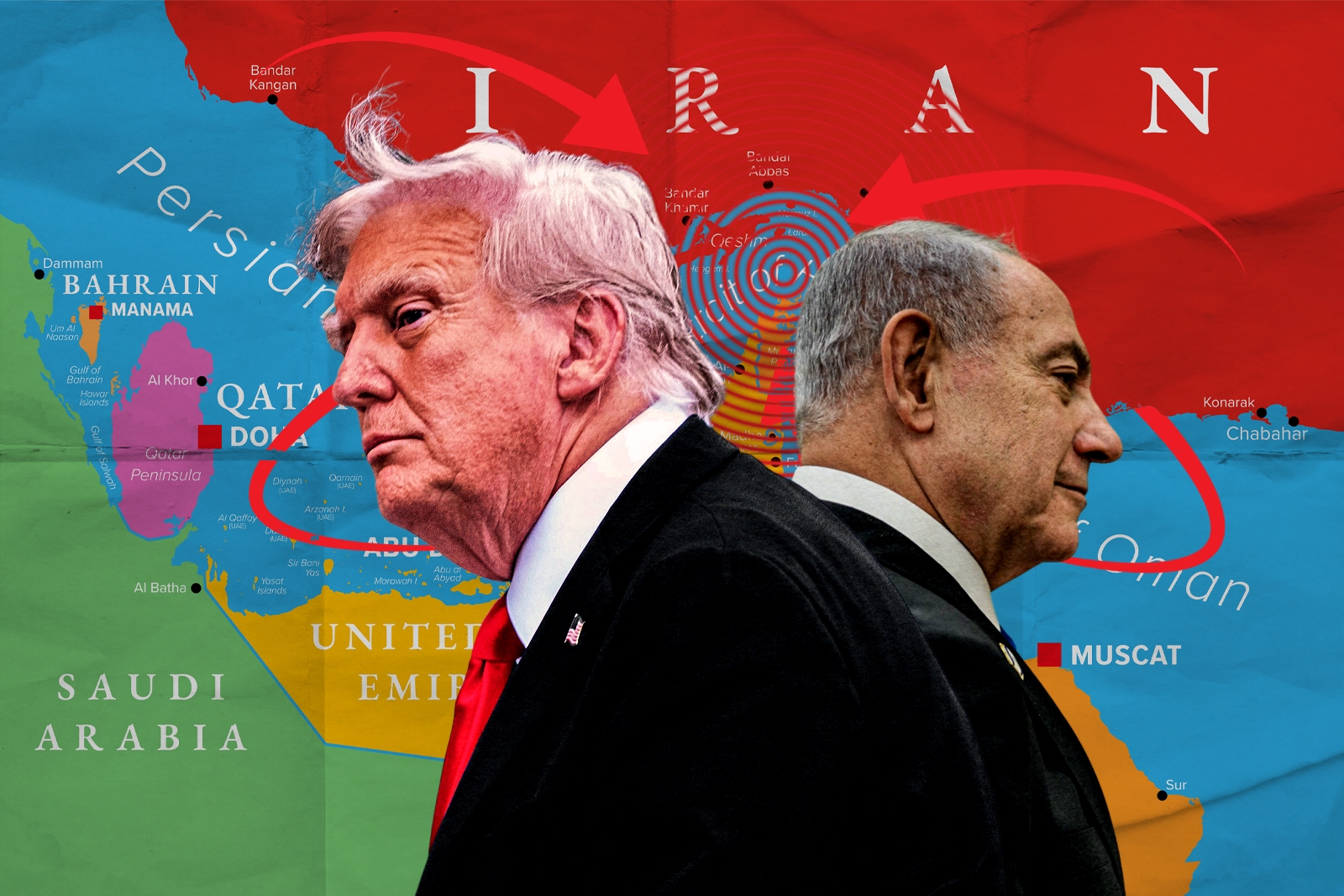
This is also where Benjamin Netanyahu enters the story—not as a caricature, but as a leader pursuing his own strategic priorities, which Washington too often appeared to absorb. Reporting on the Trump-Netanyahu relationship consistently placed Iran at the center of their discussions, with Netanyahu long pressing for strikes on Iranian nuclear facilities. More revealing still, Secretary of State Marco Rubio initially suggested that the United States acted because Israel was prepared to do so—a formulation he later walked back. Whether a misstatement or an unguarded truth, it captured a deeper problem: the United States risked drifting into war on an Israeli timeline without first defining a distinctly American end state.
For a president elected on promises to avoid new Middle Eastern entanglements, that is no minor error. It is a strategic inversion. “America First” was meant to signal discipline in the use of force, particularly in a region that has consumed American blood, treasure, and attention for decades. Instead, Trump chose a war of choice whose costs are already becoming clear: thirteen U.S. service members killed, gasoline prices climbing, and a domestic mood in which 56 percent of Americans oppose military action in Iran, despite the war being framed as a show of strength.
The economic consequences are as predictable as they are counterproductive. Oil has surged past $100 a barrel as attacks and counterattacks disrupt production, shipping lanes, and investor confidence across the Gulf. Markets do not distinguish between a “limited operation” and a campaign for surrender; they price risk. That risk now runs through a Strait of Hormuz that carries roughly one-fifth of the world’s oil supply, amplifying inflationary pressure and delivering another external shock to American consumers. A president who built his political appeal in part on the price of gasoline might have anticipated that risk before escalating.
Then there is the broader strategic contradiction. The administration’s own 2026 National Defense Strategy emphasizes the need to prioritize homeland defense, deter China in the Indo-Pacific, and rebuild the defense industrial base for more consequential threats. Yet the war with Iran is already consuming munitions stockpiles to the point that defense executives have been summoned to the White House to accelerate production. Washington is once again devoting operational bandwidth to the Persian Gulf while insisting its central challenge lies elsewhere. Great powers rarely lose primacy in a single dramatic defeat. More often, they erode it by diverting resources to secondary theaters without a clear political objective.
Trump’s defenders will argue that it is too soon to judge. They will contend that decapitation may yet weaken Tehran over time, disrupt elite cohesion, and restore deterrence even if the political effects are not immediately visible. In a narrow military sense, uncertainty remains. Wars evolve. Outcomes shift. But politically and strategically, enough is already clear to draw a central conclusion. The promise was that force would restore control. The reality is a harder succession in Tehran, a more ambiguous mission for Washington, and a mounting bill for the United States. That is not a persuasive picture of victory. It looks, instead, like a losing gamble.
The central point bears repeating: the war did not produce political leverage. It produced a more entrenched leadership in Tehran and a costlier strategic distraction for Washington. Trump did not demonstrate control over escalation. He wagered that decapitation, coercion, and shock would yield political advantage. He assumed the regime would splinter, the region would be subdued, and Americans would be spared the cost. On each of those counts, events have moved in the opposite direction. Trump gambled on Iran. He did not break the regime. He hardened it—and left the United States to absorb the consequences.