
Books

What ‘Swiftynomics’ Reveals About Women, Work, and Power
For decades, economists have struggled to explain a paradox at the heart of modern capitalism: women’s educational attainment and labour-force participation have risen steadily, yet gender gaps in pay, power, and economic security remain stubbornly persistent. Much of the explanation lies not in markets alone, but in what markets fail to count.
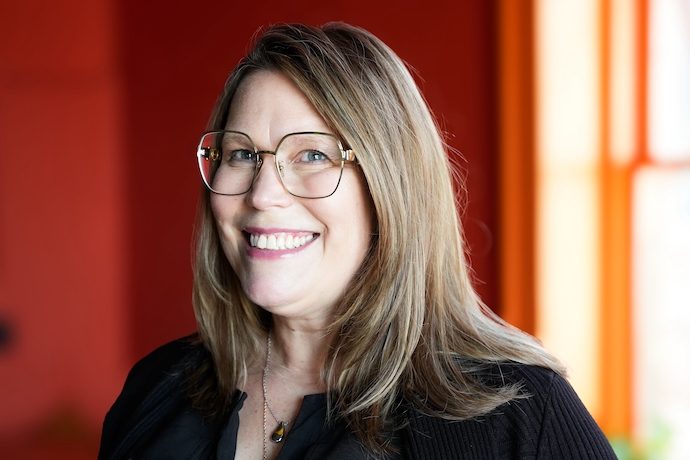
Misty L. Heggeness, an economist and associate professor at the University of Kansas School of Public Affairs & Administration, has spent her career interrogating those blind spots. A former senior advisor at the U.S. Census Bureau, Heggeness now focuses on the economic value of care—both paid and unpaid—and the cultural narratives that shape how women move through work, family, and public life. She is the author of Swiftynomics, a book that uses Taylor Swift’s career as a cultural lens to explore women’s economic agency across the life course, and the co-founder of The Care Board, a Sloan Foundation–supported data project that makes visible the labour long excluded from official statistics.
In this conversation, Heggeness discusses how women’s paid and unpaid work has evolved across generations, why domestic technology and service economies produce uneven benefits, how culture acts as both accelerator and brake on economic participation, and why redefining what counts as “work” is essential to building a more accurate—and more equitable—economic system.
 Scott Douglas Jacobsen: How do you define Swiftynomics as an economic concept, and what does the term capture about women’s roles as economic actors that more traditional frameworks tend to overlook?
Misty Heggeness: Swiftynomics is about understanding how women move through their lives and careers as economic agents. The goal is to highlight the many ways women are economically active and contribute to society today. Taylor Swift is the muse.
Jacobsen: That’s interesting. I’ve conducted several interviews in which Taylor Swift has come up, including on major podcasts and in discussions focused on how economics translates into ticket sales, cultural clout, and personal branding. The idea works because it extends beyond Swift herself to figures such as Oprah Winfrey and other prominent billionaires—Jeff Bezos’s ex-wife, MacKenzie Scott, for example—pointing to a broader pattern rather than a single outlier. When thinking about how women move through their lives, how does women’s economic output—strictly from a financial perspective—change across the lifespan when they are active participants in the formal economy? There is, of course, a separate and important conversation about the informal economy.
Heggeness: One of the best ways to understand this is to look at the work of Claudia Goldin, who won the Sveriges Riksbank Prize in Economic Sciences in Memory of Alfred Nobel in 2023. It is often called the “Nobel Prize in Economics,” but it is technically a separate prize administered by the Nobel Foundation. Goldin’s work has examined long-run changes in women’s labour-force participation and earnings, including how these patterns differ across cohorts and over time.
Historically, women have always done substantial economic work, but their participation in paid formal employment varied widely by class, place, and period. In many eras, paid work outside the home was more common among lower-income women, including domestic service and other wage labour, while marriage and motherhood often reduced or interrupted formal employment for many middle- and upper-class women. As women’s educational attainment increased—especially in the mid-20th century and later—more women entered paid work and professional occupations, though many still exited or reduced paid work around marriage and childbearing.
A typical mid-to-late 20th-century pattern was that many women worked before marriage, then stepped back from paid work during the early child-rearing years, and later returned—often into jobs with limited advancement compared to continuous career paths. More recently, a larger share of women have pursued higher education, entered longer-term careers, and either stayed in the workforce through childrearing or stepped away for shorter periods, reflecting changing norms, opportunity structures, and constraints.
Overall, women’s relationship to the formal economy has shifted substantially across decades and generations.
Jacobsen: Since at least the mid-20th century, particularly in more developed societies, daily life has become increasingly automated—washing machines being a familiar example. While this has reduced the time required for domestic labour, it has by no means eliminated it, and research consistently shows that women continue to perform a disproportionate share of unpaid domestic and care work. How does this persistent imbalance shape women’s economic lives over time?
Heggeness: It definitely has an impact. I will start with two points. One concerns an ongoing debate about whether innovation in domestic technologies has helped or hindered women.
The intuitive assumption is that it helps because it reduces the time required to wash clothes, cook meals, and complete other household tasks. However, an alternative argument suggests that these innovations may, at least initially, have worsened women’s situation.
Before domestic automation, household labour was often shared among family members. Washing clothes without a washing machine, for example, was so labour-intensive that women typically relied on children or other household members for help. Domestic work was often communal—led by women, but involving many people.
With automation, these tasks became easier for a single person to complete. While this freed up time for children or other adults in the household, it also meant that one person still had to perform the work, and that person was usually the mother. As a result, domestic labour shifted from a shared activity to one that was more isolated for women.
This pattern was most pronounced early in the adoption of household technologies—such as the transition from hand-washing clothes to washing machines or from open fires to stoves.
Today, however, innovation and service delivery function differently. Many contemporary services have meaningfully freed up time for parents, including mothers. I will give a personal example.
I have two teenagers, and my spouse works in another city. He works remotely from our home part of the time, but he also travels frequently for audits and evaluations. As a result, I often manage the household alone with my children. I also have a full-time job as a professor, which typically means working more than forty hours a week. My children have extracurricular activities, so there is a great deal to coordinate.
Since the pandemic, innovations in service delivery have been constructive. If I am teaching and cannot get home in time to prepare a meal before my child needs to leave for an activity, I can use food delivery services in a pinch. My children do not drive yet, so transportation can also be a challenge. On one or two occasions, we used Uber to bring our son home from school when neither of us could pick him up.
These types of paid service innovations help make life more manageable for people—both women and men—who are balancing careers with family responsibilities. Grocery delivery is another example. It removes the time required to drive to the store, shop, and return home. Meal services such as HelloFresh similarly reduce planning and preparation time.
 Jacobsen: Does a woman’s level of education meaningfully shape how this economic pattern unfolds over the course of her life? Given that women are now, on average, highly educated—though outcomes continue to vary sharply by sector—how central is education to your analysis? Are there particular industries or segments of the labour market where you observe the most pronounced shifts, divergences, or volatility in women’s economic output and participation within the formal economy?
Heggeness: Socioeconomic status definitely matters. If a woman wants to free up time from domestic chores and activities, she usually has to rely on paid services or live close to relatives. Women without nearby family networks or in lower-paying jobs face greater constraints because they cannot afford to pay for services.
There is also a significant emotional and mental burden involved in balancing these demands. That stress exists across the income distribution, but it is compounded when households have lower incomes and fewer resources. This can be due to lower individual earnings or to being a single parent, in which household income is substantially lower than it would be with another adult present.
One area that deserves closer attention is how women at the lower end of the earnings distribution—women without another adult in the household or without family nearby—have their ability to be productive and actively engaged in the workforce constrained. These structural conditions often limit their capacity to balance multiple, time-intensive responsibilities.
Jacobsen: Are there metrics that are now—or are beginning to become—mainstream that incorporate unpaid labour alongside paid labour markets, offering a more complete and accurate picture of women’s economic lives?
Heggeness: Yes. Alongside publishing Swiftynomics—which uses Taylor Swift as a cultural reference point to examine women’s roles in the economy—I have also worked on a parallel project funded by the Sloan Foundation. This project is a public data dashboard called The Care Board, which is available at careboard.org. It is one of my long-term passion projects.
Before entering academia, I worked for about twelve years in federal statistical agencies. That experience made me acutely aware of the limitations of official economic statistics and how much women’s economic work and agency are overlooked. When I moved into academia, I wanted to address those gaps directly.
The Care Board incorporates forms of economic activity that are often excluded from traditional measures, including unpaid household labour and care work. These activities are folded into broader economic indicators to provide a more complete picture of how monetary value is created.
One of the most striking findings relates to labour participation. Traditional statistics show that fathers have very high labour-force participation rates—typically in the mid-90 percent range—although this has declined slightly over the past decade as household roles have become more fluid. Mothers’ labour-force participation in the formal economy was historically lower, often in the low-to-mid 60 percent range, but today it is closer to 70-75 percent.
If we look only at paid labour, men are more economically active than women. However, when unpaid work is included—such as cooking, cleaning, laundry, and childcare—a different picture emerges. On average, women perform about 1 additional hour of total work than men.
That extra hour may seem modest daily, but over the course of a year, it adds up to several additional months of work. When economic activity is measured comprehensively, women are, in fact, more economically active than men.
Correcting how work is captured in economic statistics challenges deeply held assumptions about labour, productivity, and contribution. One of the central goals of the Care Board project is to produce more accurate estimates of total economic activity, particularly the work performed by women that has long gone uncounted.
Jacobsen: Culture matters for economics beyond the attention economy; broader cultural narratives shape economic behavior and outcomes. As women’s visions for their own lives expand—and as society’s acceptance of women’s broader roles grows—economic output is affected. How do competing cultural narratives act as accelerators or constraints on women’s economic participation and their ability to realize their potential?
At one end, some narratives confine women primarily to the home, limiting their participation in public and economic life. More moderate versions permit work outside the home but restrict it to a narrow range of socially acceptable roles. In contrast, other narratives argue for full participation across economic and intellectual life on equal footing with men. As these frameworks coexist and compete over time, do their cultural ebbs and flows meaningfully shape the degree to which women can contribute within the formal economy?
Heggeness: Possibly. As an economist by training, I frame this in terms of economic principles. Economics is often mistaken for finance, banking, or investment, but at its core, it is about how people allocate limited resources.
Individuals have preferences—things they enjoy and things they do not. They use their available resources, including time and skills, to maximize outcomes they value, whether that is income, satisfaction, or other goals.
At the macro level, economic growth and development depend on how well a society harnesses its available talent. A well-functioning economy aligns people’s skills, abilities, interests, and preferences with productive activities as efficiently as possible. When this alignment is effective, productivity increases and economic growth follows.
From this perspective, gender norms that restrict who is expected or allowed to do certain kinds of work are economically inefficient. The focus should not be on what men or women are “supposed” to do, but on matching individuals’ skills, interests, intellect, and talents with the roles they are best suited to perform.
People tend to perform best at tasks that bring them satisfaction and meaning. When individuals find their work fulfilling, they are generally willing to invest more effort and persist longer than when they are constrained to roles that do not align with their interests. This alignment benefits both individual well-being and overall economic performance.
My view is this. Society needs people to do many different kinds of work. We need people to build roads. We need people to work in competent, ethical governments that spend public resources wisely. We also need people to raise the next generation.
That can mean becoming a teacher and educating children in schools, but it also means raising one’s own children to be ethical, healthy, and productive members of society. If someone prefers to raise their children at home, they should be supported in doing so.
If someone wants to work outside the home and place their child in high-quality, affordable childcare—where that child is well cared for and educated—they should also be supported.
We do ourselves a disservice when we get trapped in culture wars over whether women should stay home, work outside the home, hold only limited jobs, or pursue any career available to men. From an economic perspective, the question is misplaced.
What matters is aligning people—regardless of gender—with the work they are best suited to do. That alignment is what ultimately supports economic growth.
I also think society would be better off if people focused less on policing others’ choices and more on developing themselves into the best versions of who they can be. If more people did that, culture-war conflicts would lose much of their force.
Women, in particular, have become more resistant to being pulled into false binaries, such as stay-at-home mothers versus working mothers. Attempts to reignite those divisions still occur, but they no longer resonate the way they once did.
There has always been an ebb and flow in public discourse about women’s roles. One additional point is that these debates limit men as well. When we prescribe roles for women, we implicitly prescribe roles for men—often assuming that men should always be full-time participants in the labour market.
That assumption excludes men who want to stay home with children or who are partnered with higher-earning spouses. Restrictive gender norms constrain everyone, not just women.
Jacobsen: We are also living through a period of renewed social stereotyping, much of it intensified by social media. On one end is the “manosphere”; on the other, women are often flattened into caricatured identities—such as the “boss babe” or the “tradwife”—frequently aligned with political orientation. These simplified representations may resemble some lived experiences, but they rarely capture whole, complex individuals.
Heggeness: I will add an aside: I actually find the so-called tradwives interesting because they are working. Many of them are active on social media and generating income. They have found a way to balance staying home, caring for their families, and earning money.
Tradwives are not stay-at-home, non-working mothers. They are participating economically—sometimes quite successfully—often by provoking strong reactions.
Jacobsen: Turning back to Swiftynomics, where can readers find the book, and are there any aphorisms or lines from the research you conducted over the past year that you feel especially capture its core themes?
Heggeness: The book is available through major retailers, including Bookshop.org, which supports independent bookstores.
Rather than identifying a single favourite quote, I structured the book so that each chapter opens with a quotation from Taylor Swift—drawn from interviews, magazine articles, or award speeches. I had not expected to find a fitting quote for every chapter, but her public statements articulate women’s lived experiences so clearly that I was able to match a quote to each theme.
The chapters cover topics such as women’s economic eras—loosely aligned with different phases of Swift’s career—as well as motherhood, misogyny, and generational relationships. One chapter, for example, reflects on women who came before us and those who come after, drawing on Swift’s reflections about her grandmother, Marjorie, and her mother, Andrea. I am particularly proud of how those quotations frame each chapter and connect personal experience with broader economic themes.
Jacobsen: Misty, thank you very much for your time and your expertise.
Heggeness: Great. Thank you very much for your time.