Why Nuremberg Still Matters: Gurgen Petrossian on Prosecuting Russian War Crimes
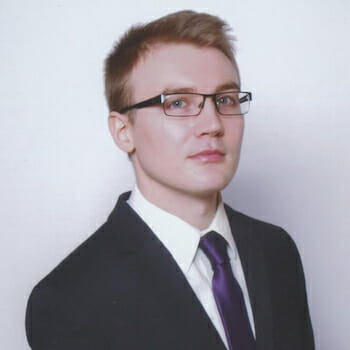
Dr. Gurgen Petrossian serves as Senior Officer for International Criminal Law at the International Nuremberg Principles Academy, where he works on accountability for genocide, crimes against humanity, and war crimes. An Armenian legal scholar by training, he lectures on international criminal law at Friedrich-Alexander University Erlangen–Nürnberg and at the Catholic University of Eichstätt–Ingolstadt. His research and practice stretch across international criminal law, human rights, and procedural justice, with significant experience in conflict-related sexual violence, victims’ rights before the International Criminal Court (ICC), and the intersection of business and human rights. He has also advised a major German textile company on supply-chain due diligence and currently chairs the German-Armenian Lawyers’ Association.
I spoke with Petrossian about how the legacy of Nuremberg shapes contemporary efforts to hold Russia accountable for its aggression against Ukraine. In our conversation, he delineated three interconnected layers of justice: the work of the International Criminal Court, the expanding role of universal jurisdiction in Europe, and the daily prosecutions carried out by Ukrainian courts. He emphasized the persistent challenges these systems face—from enforcing ICC arrest warrants and proving command responsibility to harmonizing Ukrainian law with the Rome Statute. Drawing on lessons from Syria, Iraq, the Yazidi genocide, and the specialized trials that followed Nuremberg, Petrossian highlighted the demanding evidentiary standards, the danger of media narratives preempting legal judgments, and the urgent need to train the next generation of jurists in humanitarian, human-rights, and international criminal law.

Scott Douglas Jacobsen: In terms of international law, which category of crime is the most significant and carries the greatest legal justification and weight?
Gurgen Petrossian: Thank you very much for having me. As we have this conversation, we mark a significant moment in international criminal justice—the 80th anniversary of the Nuremberg Judgment. This connects directly to the Russian–Ukrainian war and Russia’s aggression against Ukraine.
We need to differentiate between three levels. One is the International Criminal Court. The second is universal jurisdiction. The third is the Ukrainian courts, which address international crimes daily.
At the International Criminal Court level, we have one of the most significant developments: the ICC arrest warrants issued for the President of the Russian Federation and the Russian Presidential Commissioner for Children’s Rights, for the unlawful deportation and transfer of Ukrainian children. Additional investigations into war crimes and crimes against humanity committed on Ukrainian territory are ongoing. A central challenge remains the execution of ICC arrest warrants, as Russia does not recognize the jurisdiction of the ICC and does not surrender suspects.
The second level is universal jurisdiction, under which certain national courts have the legal authority to prosecute war crimes, crimes against humanity, and genocide regardless of where they were committed and irrespective of the nationality of the perpetrator or victim. Several European states—such as Germany, France, the Netherlands, and the Nordic countries—have expanded laws allowing prosecution of foreign nationals involved in atrocity crimes abroad. This system has previously led to the arrest and conviction of individuals implicated in conflicts such as those in the former Yugoslavia, Rwanda, and Syria.
A similar process is occurring today. When a suspected perpetrator enters the territory of a state that applies universal jurisdiction, they may be investigated and prosecuted. European prosecutors and specialized war-crimes units monitor individuals who may have participated in crimes in eastern Ukraine or other affected regions.
The third level is the Ukrainian court system. Ukrainian courts are actively prosecuting violations of international humanitarian law, including cases related to torture, unlawful detention, deliberate attacks on civilians, and the destruction of civilian infrastructure. Ukraine has initiated thousands of investigations and continues to expand its capacity to document and prosecute war crimes committed on its territory.
Killing of prisoners of war, killing of other protected persons under international humanitarian law. Another major topic is the creation of a special tribunal for Ukraine to try the crime of aggression, which is not within the International Criminal Court’s jurisdiction. How this will develop remains a significant question. Even though the Council of Europe and Ukraine have signed the statute, it still must be ratified. There are many logistical questions: Who will finance it? How will it function? And so on. So the tribunal on aggression is still an open question—how it will be implemented and exercised in practice.
Jacobsen: In your ASIL Insights essay, you outline how Germany has become a leading venue for prosecuting atrocity crimes through universal jurisdiction. As new evidence from Ukraine reaches European courts, how is Germany recalibrating this tool of international justice? And what legal or practical limits should we keep in mind as its role expands?
Petrossian: First, if I begin with the risks, for German prosecutors, it is always difficult and a significant challenge to try cases involving crimes committed abroad. They do not always understand the language. They do not have access to the crime scene. They mostly rely on victims who are present in Germany. This creates a significant prosecutorial challenge because you do not always have the complete set of evidence needed to prosecute someone you have never met who committed a crime outside Germany. It is always a difficult task.
But there are opportunities. Victims are present in Germany. Victims are witnesses. Their testimonies represent the crime scenes themselves, and they can advise prosecutors about whom to prosecute and for which crimes—if there is sufficient evidence. Germany has prior experience with cases involving Syria and Iraq. German prosecutors and courts are well-equipped to handle such cases. The legal foundation is in place. Germany can prosecute effectively as soon as the perpetrators are physically on German territory, as I mentioned earlier. That is one of the key requirements under German procedural law: the suspect must be present in Germany to initiate prosecution.
Jacobsen: When you train Ukrainian judges in prosecuting and adjudicating war crimes, what limits or gaps are you seeing in the Ukrainian domestic courts?
Petrossian: Thank you for asking this—it is one of the most relevant questions and a central issue we face in the Ukrainian system. Fortunately, Ukraine has become a member of the International Criminal Court, and it is in the process of aligning its legal system with the Rome Statute. This means incorporating crimes against humanity and properly listing war crimes. This is precisely where the problem lies: defining and listing war crimes.
In that region, countries such as Georgia, Armenia, and Ukraine have traditionally relied on the Geneva Conventions. They were parties to the Geneva Conventions, but did not fully incorporate the war crimes provisions into their domestic law.
The best example remains Germany, where war crimes are listed explicitly in domestic law. German law specifies what constitutes war crimes—war crimes against persons, war crimes against property. In the Geneva Conventions, these definitions are more vague, and as a result, they were not fully implemented into national legislation. We see the same issue in Ukraine.
I hope the Ukrainian legal system will advance in this area, listing war crimes more specifically. The more precisely war crimes are defined, the easier it becomes for judges to understand and apply them.
Jacobsen: What types of allegations are prosecutors actually advancing in court to meet the legal threshold for war crimes—moving beyond generic references to the Geneva Conventions and demonstrating, through evidence, that a specific crime was committed?
Petrossian: It is essential to prove all the elements of the war crimes committed against victims—civilians or prisoners of war. Another major issue concerns command responsibility, a core aspect of the international criminal justice system. It is not only soldiers who commit crimes, but commanders who are responsible through omission.
Not only soldiers but commanders are also liable for crimes committed by their subordinates. Their role involves omission rather than commission. They are responsible when they do not prevent, stop, or punish crimes committed by their troops. This is new for many Ukrainian judges and prosecutors: how to apply command responsibility and connect a commander’s omission with an international crime committed by a subordinate. This connection is crucial.
Unfortunately, it is not an easy task. Prosecutors must establish all elements and the logical chain between the crime itself and the commander’s omission. At the international level, we have already seen a failure on this issue: the Jean-Pierre Bemba Gombo case. Bemba, the former vice president of the Democratic Republic of Congo, was accused based on his role as a commander—specifically, for failing to prevent, stop, or punish crimes committed by his subordinates in the Central African Republic. The ICC ultimately overturned his conviction. It is essential to learn from that failure and to bring evidence that clearly shows the link between the crime scene and the remote commander—whether in a command center or elsewhere. It is not an easy task.
Jacobsen: We have seen moments when international law has been enforced with real effect—Duterte’s case in the Philippines this year, for instance, is likely to reverberate for some time. Yet there are many situations in which arrest warrants are issued but never executed. With that tension in mind, could you offer an analogy that explains how international criminal law and universal jurisdiction operate across different contexts, particularly as they relate to Russia’s aggression against Ukraine? I’m looking for something from your experience that gives readers a fuller sense of how this system actually operates in practice.
Petrossian: The best scenario and the best analogy is Nuremberg. If we speak about aggression, that was the first—and, unfortunately, still the only—example in which the crime of aggression, then called “crimes against peace,” was punished. It is not an easy task to prosecute aggression, but we must distinguish between two things. One: Starting a war is already a crime. And two: during a war, certain acts are prohibited, which means the war produces additional violations of international law—war crimes, crimes against humanity, even genocide. So there are two levels: the war itself as a crime, and the crimes committed during the war.
As you mentioned, we have a positive example today from the Philippines, where the former head of state was arrested and transferred to the ICC—even though the Philippines withdrew from the ICC. But we also have depressing examples: the ICC being sanctioned by two major powers, the United States and Russia, because of the Israel–Gaza situation and the Russian–Ukrainian conflict. The ICC now faces substantial political pressure and influence.
But if we look at history, we also have good examples. In the Mali situation, we already have two judgments from the International Criminal Court. And we have hundreds of cases from the Syria and Iraq conflicts—prosecuted in Germany, France, Sweden, and the Netherlands—where different perpetrators, “small fish” and “middle fish,” have been convicted for various crimes, including genocide. One groundbreaking German case involved the Yazidi genocide; that was the first conviction of its kind. We also have crimes against humanity cases involving former Assad regime officials who tortured victims in detention facilities.
We also have war crimes cases involving former jihadists who travelled from Germany or Europe to Syria and Iraq and committed atrocities such as sexual slavery and the recruitment of children into armed groups. These are the smaller, incremental steps. And we must remember that the system of international criminal justice we have today is relatively new. The International Criminal Court has existed for only 25 years and was built on the experience of the ICTY and ICTR—institutions also created in the post–Second World War era.
So we are making small steps. It is developing. The path is not easy because, as mentioned, it faces political influence and pressure from countries that do not wish to engage with international criminal justice. But after the Second World War, the international community showed that there is no alternative to conflict resolution if we cannot sit down and determine who the perpetrators were, which international crimes were committed, and how those perpetrators should be punished.
Jacobsen: This war has now stretched nearly four years as a full-scale invasion—and more than eleven if we include the annexation of Crimea and the conflict in parts of Donbas. That span has given Ukraine time to train a new generation of judges and lawyers, many of whom you’ve worked with directly and influenced at the ground level.
For those who hope to enter the legal field—or become judges—and want to focus specifically on these issues, which areas of law should they be training in? Every graduate student eventually specializes, and for those concerned with implementing international law in cases involving aggression or other grave crimes, there are increasingly complex situations to consider.
Vrinda Grover, a Commissioner for the Commission on Ukraine, recently described short-range drones striking civilians across a roughly 300-kilometre stretch along the left bank of the Dnipro River, classifying such incidents as a war crime of killing civilians. Examples like this raise important questions about specialization. For aspiring legal practitioners motivated by this war to pursue justice-oriented work, where should their focus lie?
Petrossian: That is a fundamental question. For the judges of Ukraine, there is no significant difference in their formal roles. The Ukrainian legal system assigns criminal or state-security cases to judges, who receive them daily as prosecutors bring them forward. The key issue is ensuring that judges understand how international justice works—what comes from the ICC, ad hoc tribunals, and hybrid courts —and how different states address these cases at the national level.
Now I understand. Mainly for the students, yes. One of the essential fields is international humanitarian law—understanding what it regulates, what is protected and what is not, whether a situation falls under an international or non-international armed conflict, and how to differentiate between them.
Another aspect is international human rights law, because when a perpetrator—or alleged perpetrator—appears before a court, it does not mean the person is already guilty. That person also has rights: to defend himself, to present evidence, and to avoid self-incrimination. If we want a fair trial, we need to respect the rights of the accused.
And the third is, of course, international criminal justice—understanding how it developed, what its primary purpose is, and what was tried in Nuremberg. The Nuremberg Judgment is not only the main trial against the chief perpetrators but also twelve additional trials that examined different fields and groups of perpetrators involved in the broader system of international crimes. We have the Doctors’ Trial, we have the Industrialists’ Trial, and many others. These cases are relevant for Ukraine as well. We should not forget that many Russian companies are assisting the war, and through aiding and abetting, they may have made themselves criminally liable. There are many historical analogies we can apply today.
We see different professions involved. We also see lawyers in Russia prosecuting Ukrainians who are fighting against Russia or prosecuting Russian dissidents. For example, if a military court issues convictions based on false accusations, it can also constitute a war crime. How do we target those judges, prosecutors, industrialists, commanders, and even ministries? These issues were already discussed here in Nuremberg.
Of course, we must understand the experience on the ground in modern situations—in Yugoslavia, in Kosovo, in the Central African Republic —where hybrid systems have already established distinct jurisprudence and developed an understanding of various international crimes. We have Cambodia, the ECCC, and national domestic jurisprudence. Another significant development is the Genocide Network within the EU Eurojust, a cooperation mechanism among prosecutors that strengthens international criminal justice on the Ukrainian side.
It is always valuable to understand these different fields of law, e.g., international humanitarian law, international human rights law, international criminal justice, and, of course, international law in general: how it works and how the International Court of Justice can support national judges and prosecutors. All in all, these three main fields—humanitarian law, human rights law, and international criminal justice—together with the existing jurisprudence, form the foundation.
Jacobsen: There is a crucial difference between making an allegation and actually meeting the legal standard required to prove it. Even when a commission determines that a war crime has occurred, translating that finding into a prosecutable case—and then meeting the evidentiary threshold in court—remains a formidable barrier. In today’s media ecosystem, accusations can be quickly adopted for political ends, amplified by influential actors, and repeated as though a state has already been legally found to have committed a particular crime. With that dynamic in mind, I’d like to give you wide latitude here: where do you think media coverage of Russian aggression against Ukraine has overstepped, and what should journalists be watching for to maintain appropriate proportionality between the claims they report and the crimes actually being alleged?
Petrossian: That is a difficult question. As I already mentioned in the Bemba case at the ICC, as soon as there was an arrest warrant against Jean-Pierre Bemba Gombo—who was the vice president, a well-known figure in Africa and in the Democratic Republic of Congo—the media almost immediately declared him guilty. Everyone assumed he was guilty. But after ten years of proceedings, we found that he was not guilty because the legal standard was not met.
In media coverage, both globally and in conflict zones, we often hear that mass atrocities are being committed and that a particular head of state is a war criminal. But to prove that, as you correctly noted, we must reach the legal bar—and that bar is very high. A person alleged to be a war criminal also has the right to defend themselves.
That is the court’s task. The prosecutor must bring evidence that makes it crystal clear—beyond a reasonable doubt—that the person is guilty. That is the highest bar we have. If the evidence does not reach that bar, then the person is not guilty. This is the most challenging task for the prosecution: proving the case and collecting the necessary evidence.
In international crimes, as mentioned, this is not an easy task. You must prove that mass atrocities were committed, and that a specific accused individual forms one part of that larger pattern of large-scale violence against the population. One of the comparatively more straightforward tasks is proving a war crime, because a war crime is an incident committed within the framework—the chapeau—of an armed conflict. We have the Kenyatta case, the Ruto and Sang case, and the Gbagbo case involving the former president of Côte d’Ivoire. In all of these, the prosecution was unable to prove guilt beyond a reasonable doubt.
It is not an easy task. Of course, the media plays a significant role in maintaining the balance between criminal allegations and political allegations. That distinction is essential.
Jacobsen: In many ways—particularly in the age of social media—we are dealing with a kind of four-tiered information system. Social platforms create the first, unfiltered layer of reporting; journalism and traditional media form a second layer through fact-checking, analysis, and interpretation. A third tier emerges when political actors take those narratives and translate them into policy positions, often refracted through partisan framing. Only at the fourth and highest level do we reach legal determinations, where meeting the evidentiary standard for an international crime or war crime gives the global community a firmer basis for moral and legal judgment.
With that structure in mind, is there anything you think the media should be watching closely over the remainder of this quarter and into the first quarter of next year when it comes to this war in particular, bearing in mind that it is unfolding alongside numerous other ongoing conflicts?
Petrossian: Thanks to the media—and especially social media—we know what is happening in conflict zones. Without that, we are blind; we do not see what happens on the ground. We saw this in Sudan, where the internet was unavailable to the population for a long time. But the recent attack on the city in Darfur, and the crimes committed there on a large scale, showed the entire world what is actually happening on the ground and the cruelty involved.
But social media—especially with AI systems and digital evidence—poses another challenge for the judicial system: verifying evidence collected from platforms and the press. Journalists play a vital role in verifying this data. They are our eyes—the eyes of prosecutors and the general public—bringing awareness of what is happening in different situations.
But journalists must also be equipped to differentiate: What is a crime against humanity? What is a war crime? Is it a war crime at all? It is not always crystal clear that a war crime has been committed during an armed conflict. Different rules and principles must be applied in proceedings to determine whether, for example, a hospital being bombed or a civilian object being struck is indeed a war crime. From a first impression, it appears to be a war crime, but legally speaking, many factors must be proven and discussed before determining whether it was or was not a war crime.
Understanding what constitutes mass-scale violence against a population—and what elevates it to an international crime—is crucial. Journalists are another important frontline in distinguishing what exactly is happening and where such allegations should be addressed: before the ICC, before national courts, or before independent fact-finding missions.
Digital evidence can make prosecutors’ work easier, but it also makes it more difficult to prove cases in court because of the high threshold required in the criminal justice system. For example, I receive many videos of atrocities in Telegram channels. As an expert in the field, it is sometimes easy to distinguish and understand what is happening. Still, for a random person, the video can be misleading or emotionally manipulative.
For a prosecutor, it is not enough to watch a video and use it as evidence. The prosecutor must verify the metadata behind the digital material: where it was taken, when it was taken, and under what circumstances. A video clip may last two or three seconds, but those seconds can be crucial in proving something in a criminal case. It can be geolocated. We can determine the exact time it was filmed. From uniforms, we can determine who was present at the conflict zone. This helps significantly.
But it also makes the prosecutor’s job more difficult because the defence can challenge everything—and that is what makes a trial fair. The defence has the opportunity to challenge all evidence.
Jacobsen: Gurgen, thank you very much for your time today.
Petrossian: Thank you very much.