
Why the UK Can’t Ignore Asia’s Twin Flashpoints
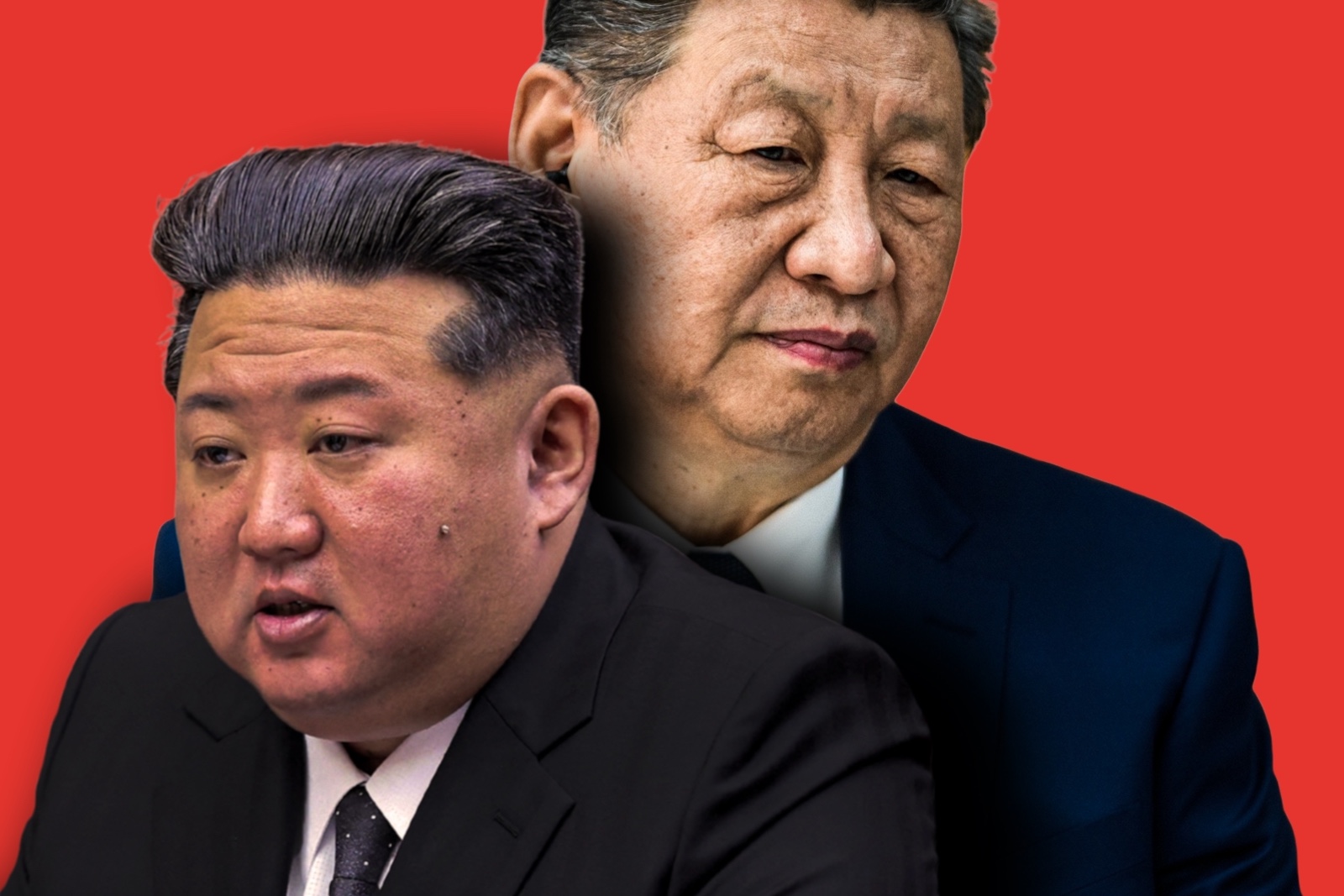
A recently released report by the Atlantic Council sketches a disquieting future: a near-simultaneous military confrontation in the Taiwan Strait and on the Korean Peninsula. This is not a speculative thought experiment drawn from distant hypotheticals. As coordination between China and North Korea deepens, the prospect of a multi-front crisis involving U.S. allies in Northeast Asia is becoming increasingly plausible. The implications, however, extend far beyond the Indo-Pacific. For the United Kingdom and its European partners, the specter of U.S. strategic overstretch is no longer abstract. It is an emerging challenge that demands immediate strategic attention.
The report’s most unsettling finding concerns the credibility of extended deterrence. In a simulated scenario in which North Korea employs tactical nuclear weapons against South Korea, the United States opts not to respond with nuclear force. The rationale—avoiding rapid escalation with China—is understandable. Yet the downstream effects of such restraint could be profound. By declining to respond in kind, Washington risks weakening the perceived reliability of its nuclear guarantees. For allies sheltered under the U.S. nuclear umbrella, particularly Japan and South Korea, the episode raises an uncomfortable question: would the United States honor its commitments in circumstances that might place the American homeland at risk? This is the classic dilemma of nuclear decoupling, now rendered starkly contemporary.
A second dilemma emerges from the problem of prioritization. Should crises erupt simultaneously in Taiwan and on the Korean Peninsula, the United States would be forced to divide finite military resources across two major theaters. Carrier strike groups, long-range bombers, missile-defense assets, and logistics capacity cannot be conjured without limit. Add the possibility of renewed instability in Europe, and even a superpower may find itself stretched thin. Strategic dominance, after all, is contingent not merely on capability, but on availability.
Although the Guardian Tiger tabletop exercises focused primarily on Northeast Asia, their implications for Europe are difficult to ignore. As the war in Ukraine grinds on, Russia could exploit any major distraction in the Indo-Pacific to advance its revisionist ambitions—whether along NATO’s eastern flank or in the Baltic region. In such a context, deterrence failure in one theater would not remain contained. It could rapidly and unpredictably cascade into a broader global crisis.
This is where Britain’s strategic calculus becomes critical. With its expanding Indo-Pacific posture—signaled by the deployment of a carrier strike group and its participation in AUKUS—the UK occupies a position that increasingly bridges the Atlantic and Pacific theaters. London cannot afford to treat crises in East Asia and Europe as sequential problems to be addressed one at a time. A simultaneous confrontation in Taiwan and Korea, compounded by Russian opportunism, would require coordinated responses across three interconnected regions.
The core challenge is one of signaling and capacity. Deterrence must be credible across all theaters at once. Reliance on U.S. primacy alone is no longer sufficient; greater burden-sharing is essential. European allies, including the UK, should intensify their contributions to NATO’s eastern defenses, allowing Washington greater flexibility to concentrate on Indo-Pacific contingencies without leaving Europe exposed. At the same time, deeper security integration with Japan, Australia, and South Korea would reinforce regional stability while preserving alliance cohesion through shared responsibility.
Britain, in particular, should assume a leading role in articulating a globally coherent deterrence posture. UK policymakers must recognize that the post–Cold War rules-based order cannot be sustained by rhetoric alone. It requires material readiness, strategic foresight, and coordinated planning. The experience of 1941—when Axis powers launched nearly simultaneous offensives across continents—should not be dismissed as a historical anomaly. It is a reminder of how quickly localized conflicts can merge into systemic crises when deterrence falters.
In practical terms, this calls for enhanced interoperability and joint operational planning across theaters. While NATO’s primary focus remains Europe and the North Atlantic, the UK should proactively pursue trilateral planning exercises that link NATO, AUKUS, and U.S. Indo-Pacific Command (INDOPACOM). The objective is not institutional fusion, but resilience: preventing the fragmentation of alliance coordination during a multi-theater crisis. Just as crucial is ensuring that nuclear-deterrence signaling remains unambiguous—not only to adversaries, but also to allies who might otherwise contemplate independent nuclear paths.
Finally, political leadership must keep pace with military realities. As in Washington, Tokyo, and Seoul, policymakers in London must internalize that deterrence is not merely a function of weapons systems or defense budgets. It rests on shared strategic perception and political resolve—the willingness to uphold global commitments even under intense pressure.
With its historical experience, global networks, and credible military capabilities, the UK is well-positioned to serve as a linchpin in an era of multidirectional deterrence. But that potential will remain unrealized unless London acts decisively. The time to prepare is now—before scenario-based dual crises cease to be exercises and become events.