
The New Arsenal of the Stateless
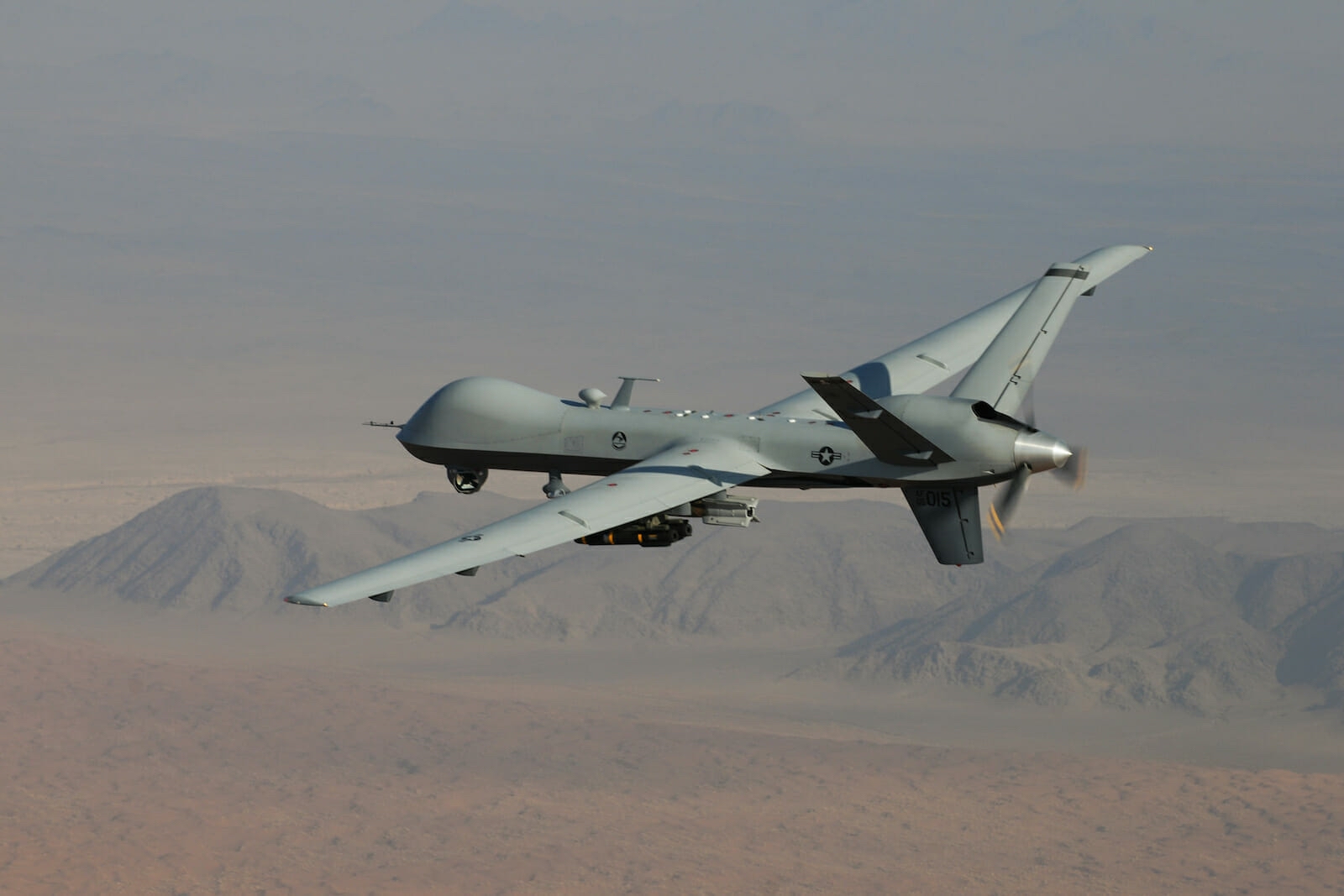
On January 28, 2024, an explosive-laden drone struck the U.S. outpost known as Tower 22 in Jordan, killing three American soldiers and wounding a dozen others. The attack was not unprecedented. Violent non-state actors have used drones before.
Yet the strike marked something more consequential: a visible shift in the character of modern warfare, where technologies once tightly controlled by advanced militaries are now routinely deployed by decentralized and often clandestine groups. It is no longer surprising that violent non-state actors (VNSAs) have learned not only to acquire drones, but to adapt, weaponize, and integrate them into their operational strategies.
Haugstvedt’s data on annual drone attacks underscores the scale of this transformation, documenting 1,107 attacks between 2017 and 2023, an average of 184.5 attacks per year. These figures are poised to increase as VNSAs continue to exploit commercially available drones, lowering the barriers to entry for capabilities that were once the preserve of states.
In the absence of meaningful regulation, the international community remains increasingly vulnerable to these evolving threats.
The Geneva Convention mandates the humane treatment of noncombatants during armed conflict. Yet the application of international customary law has become increasingly fraught, in large part because of the ambiguity surrounding what constitutes “armed conflict.”
Article II of the Geneva Convention defines armed conflict as “all cases of declared war or of any other armed conflict between two or more of the High Contracting Parties, even if the state of war is not recognized by one of them.” The operative phrase is “declared war,” implying the formal involvement of legitimate governmental institutions.
In practice, however, modern warfare rarely conforms to this framework. States seldom issue formal declarations of war, instead conducting military operations under the rubric of national security or self-defense. VNSAs operate within a similar gray zone, engaging in sustained violence while avoiding the legal designation of war.
International law has struggled to keep pace with these realities, leaving significant gaps in its ability to classify and regulate contemporary forms of conflict. As a result, applying the Geneva Convention to prohibit drone attacks by VNSAs, particularly in civilian-populated areas, remains both legally and practically challenging.
The Arms Trade Treaty offers another potential mechanism for regulation, aiming to establish international standards governing the transfer of conventional arms and ammunition.
Yet drones occupy an ambiguous position within this framework. They are not, by definition, conventional weapons, and demonstrating their classification as such presents considerable legal hurdles.
Moreover, many drone attacks conducted by VNSAs have occurred in regions such as the Middle East and North Africa, where governance structures are often weak or fragmented. In these environments, the absence of effective state control enables VNSAs to experiment with commercially available technologies, adapt them for violent purposes, and move weapons across porous borders with relative ease.
The diffusion of drone technology thus intersects with broader issues of governance and state capacity, further complicating efforts at regulation.
States themselves recognize the strategic value of drones, which helps explain the absence of serious efforts to restrict their proliferation. Rather than limiting access, governments have largely focused on developing counter-drone capabilities designed to detect, track, and neutralize unauthorized systems.
NATO, for example, has pursued initiatives such as Project FlyTrap 4.5, in which U.S. forces tested counter-drone technologies in Germany as part of broader efforts to strengthen alliance air defenses.
Yet much of this focus remains oriented toward traditional state-based threats, particularly Russia and its allies. The weaponization of drones by VNSAs, though no longer novel, is still often treated as a secondary concern. This is a dangerous miscalculation.
In a globalized world, access to drone technology is no longer restricted, and the capacity to weaponize it is not confined to states. National security strategies must therefore account for the growing role of VNSAs, many of which rely on advanced technologies and transnational networks to project violence and amplify their impact.
At the same time, nation-states continue to invest heavily in emerging military technologies, framing these developments as essential to enhancing security and reducing battlefield casualties through automation.
Yet this dynamic reinforces a familiar paradox. As states innovate, they also accelerate the diffusion of these technologies beyond their control.
In an increasingly unregulated security environment, VNSAs are able to appropriate, modify, and deploy these tools in ways that challenge state authority and destabilize existing political orders.
The weakening of collective security frameworks, including strains within alliances such as NATO, further underscores a growing reliance on technological solutions in place of coordinated international responses.
Without robust regulatory mechanisms and sustained international cooperation, the proliferation of emerging military technologies risks entrenching the status quo while increasing the likelihood of regional conflict, mass displacement, and long-term instability.